
Saudi Arabia is in the midst of an architectural renaissance. From the futuristic skylines of Riyadh to the giga-projects of NEOM and the Red Sea, the Kingdom is not just building structures; it's crafting a new identity. This ambitious vision demands a new generation of building materials—materials that can withstand the region's unique climate, enable breathtaking designs, and align with a national commitment to sustainability. This is the world into which Epoch Stone has emerged, not merely as an alternative, but as a revolutionary force in modern construction.
For decades, architects and developers have navigated a trade-off. Do you choose the timeless beauty of natural stone, with its immense weight and installation challenges? Or the uniformity of synthetic panels, which can sometimes lack character and soul? Epoch Stone dissolves this dilemma. It is a material born of innovation, designed to offer the best of all worlds: the aesthetic richness of nature, the performance of advanced technology, and the flexibility to bring the most daring architectural concepts to life. This article explores what Epoch Stone is, why it's so perfectly suited to the Saudi Arabian context, and how it is already shaping the landscape through remarkable success stories.
At its core, Epoch Stone is the commercial brand name for a groundbreaking category of material known as Modified Cementitious Material, or MCM. But to simply call it by its technical name is to miss the magic. Let's peel back the layers and understand what makes it so special. It's not quarried stone, nor is it a simple plastic or ceramic composite. Think of it as a form of "reconstituted earth," a high-tech alchemy that transforms natural ingredients into a material with extraordinary properties.
The manufacturing process is key to its unique characteristics. Unlike traditional ceramics or cement products that require intense heat (often over 1200°C), Epoch Stone is created through a low-temperature firing process. The primary ingredients are natural mineral powders, soils, and sand—the very elements of the earth. These are combined with water and a modifying agent, then shaped and cured at temperatures below 150°C. This low-energy process is the first clue to its environmental credentials, but the results are what truly captivate the construction industry.
The unique manufacturing process endows Epoch Stone with a suite of properties that seem almost contradictory, setting it apart from any traditional building material.
To cater to diverse architectural needs, Epoch Stone is offered in several distinct series, each optimized for specific applications:
A material, no matter how advanced, is only as good as its performance in a specific context. For Saudi Arabia, with its extreme climate, bold design ambitions, and a deep-rooted cultural heritage, Epoch Stone is not just a good fit—it's a perfect one. Let's explore why.
The Saudi environment is one of extremes. Searing heat, powerful UV radiation, abrasive sandstorms, and coastal salinity pose a formidable challenge to any building material. Epoch Stone was practically engineered to thrive in these conditions.
Imagine a facade that doesn't just endure the 50°C summer heat but helps to mitigate it. The composition of Epoch Stone, particularly in lighter colors, has a lower thermal conductivity than dense materials like concrete or stone. This can contribute to a building's overall thermal insulation, reducing the energy load on cooling systems—a significant factor for both cost and sustainability.
The relentless sun is another enemy. It fades colors and degrades plastics and paints. Epoch Stone's colors are an integral part of the material, created from mineral pigments that are inherently UV stable. A facade clad in Epoch Stone will retain its intended color and vibrancy for decades, resisting the washed-out look that can plague other materials. When it comes to the frequent sandstorms, the material's high density and surface hardness prevent the pitting and abrasion that can damage softer finishes. And in coastal cities like Jeddah or Dammam, its immunity to salt spray and moisture means no rust, no corrosion, and no efflorescence (the white, chalky deposits that can mar masonry).
Saudi Arabia's new architectural language is one of dynamism, fluidity, and iconic forms. Architects behind projects like the King Abdullah Financial District or the future structures of NEOM are pushing the boundaries of what's possible. They need materials that can keep up.
This is where Epoch Stone truly shines as a provider of `customizable building materials`. The Flexi-Veneer series allows architects to design flowing, curvilinear structures without the complex and costly process of cutting and fitting faceted stone or metal panels. The 3D Sculpt series empowers them to integrate culture and identity directly into the building's skin. Imagine a hotel lobby with a wall that replicates the texture of desert sand dunes, or a university building whose facade features intricate, modern interpretations of Islamic geometric patterns. With Epoch Stone, these are not just artistic concepts; they are achievable realities.
This versatility also extends to heritage and tradition. While perfect for futuristic designs, Epoch Stone can be manufactured to flawlessly replicate the look and feel of traditional materials like adobe, Najdi limestone, or Hijazi coral stone. This allows for the construction of buildings in historical areas that are visually authentic and contextually sensitive, yet benefit from modern durability, weather resistance, and ease of construction. It bridges the gap between the past and the future.
Sustainability is no longer a buzzword; it's a cornerstone of Saudi Arabia's Vision 2030. The Kingdom is actively seeking innovative ways to build more responsibly. Epoch Stone aligns perfectly with these goals, establishing it as one of the most compelling `green building materials` on the market today.
The true measure of any material is its performance in the real world. In Saudi Arabia, Epoch Stone is already leaving its mark on a variety of projects, each demonstrating its unique problem-solving capabilities. Here are a few illustrative case studies.
The Challenge: A developer was building an exclusive gated community of luxury villas in northern Riyadh. The design brief called for a sleek, contemporary aesthetic that conveyed opulence and permanence, while also nodding to the local environment. They needed a material for the extensive `exterior wall cladding` that could handle Riyadh's intense sun and dry, dusty conditions. Critically, the architectural design featured large, monolithic walls punctuated by grand, curved entranceways and sweeping archways—a challenge for traditional masonry.
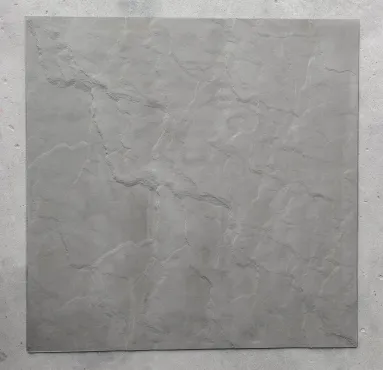
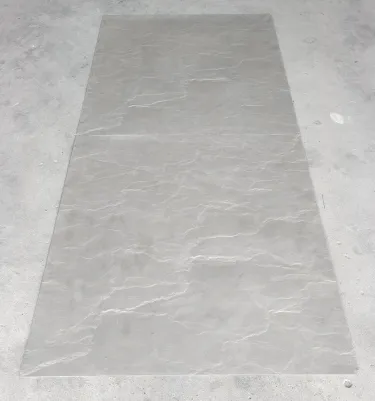
The Epoch Stone Solution: The project team opted for a dual-product strategy. For the large, flat facade areas, they selected Epoch Stone Grand Panels in a custom-tinted light travertine finish. The large format of the panels created a powerful, seamless look, evoking solid blocks of quarried stone. For the dramatic curved entrances and interior feature columns, they used Epoch Stone Flexi-Veneer in the exact same travertine finish. The material was simply unrolled and adhered to the curved substrates, creating a flawless, continuous surface that would have been impossible to achieve with natural stone without dozens of unsightly joints and incredible expense.
The Outcome: The result was a stunning success. The villas have a sense of timeless grandeur, perfectly blending modern minimalism with the gravitas of stone. The developer reported that the installation speed for the cladding was nearly three times faster than a similar project they had completed using natural stone, resulting in a 20% saving on labor costs and a significant reduction in the overall project timeline. Years later, the facades show no signs of fading or staining, and a simple periodic power wash is all that's needed to keep them looking pristine, even after major dust storms. The homeowners benefit from a beautiful home with a durable, low-maintenance exterior.
The Challenge: An international architecture firm designed a landmark 40-story office tower on the Jeddah Corniche. Their vision was a building that mirrored the fluidity of the Red Sea, with a facade that appeared to ripple and shimmer. The immense challenges were the building's height, the corrosive saline environment, and the structural load of the facade. Traditional concrete or GFRC panels for such a 3D effect would be astronomically heavy, requiring a much bulkier and more expensive steel superstructure. Metal panels were a risk due to potential corrosion.
The Epoch Stone Solution: This project was a perfect candidate for Epoch Stone 3D Sculpt and Pro-Grade series. Working closely with the architects, the technical team developed a system of lightweight panels with a custom-molded, wave-like profile. The panels, finished in a pearlescent white that shifts color with the sun, were engineered to interlock seamlessly. Because the Epoch Stone system was a fraction of the weight of the alternative GFRC proposal, the building's primary structural steel requirement was reduced by an estimated 15%. The panels were manufactured off-site and lifted into place, dramatically speeding up the envelope-closing phase of construction.
The Outcome: The tower is now an iconic part of the Jeddah skyline. Its facade is a testament to what's possible when visionary design meets material innovation. The building appears light and dynamic, a stark contrast to the heavy, monolithic towers around it. After several years of exposure to the harsh coastal climate, the facade shows zero degradation. There is no rust, no spalling, and no fading. The project demonstrated that Epoch Stone is not just a cladding material but a key enabling component of next-generation, high-performance building design.
The Challenge: Building in Al-Ula, a region of immense natural beauty and historical significance, comes with a unique responsibility. A developer planned a luxury boutique hotel designed to blend organically with the surrounding sandstone canyons. The goal was for the architecture to feel as if it were an extension of the landscape, not an imposition upon it. Using actual quarried stone was not only unsustainable but would also fail to capture the nuanced, weathered textures of the ancient rock formations. The project required absolute authenticity and sensitivity.
The Epoch Stone Solution: This project showcased the pinnacle of Epoch Stone's customization capabilities. A team was sent to the site to digitally scan and photograph the local sandstone cliffs. This data was used to create a bespoke series of Epoch Stone Flexi-Veneer. The team replicated not just the color variations—from deep red to sandy yellow—but also the intricate textures, water stains, and weathered patterns of the natural rock. This hyper-realistic `MCM flexible stone` was then applied to the hotel's organically shaped structures, which were built using a cost-effective and rapid blockwork method. The material was flexible enough to wrap around every curve and undulation, creating a completely seamless, natural-looking skin.
The Outcome: The hotel is widely praised as a benchmark for sensitive, contextual architecture. Guests often touch the walls, surprised to learn they are not looking at ancient, hand-carved stone. The building merges with its environment, respecting the spirit of the place while offering all the durability and performance of a modern structure. The project met strict environmental and heritage guidelines, and its success has opened up new possibilities for responsible development in historically significant locations across the Kingdom.
Beyond aesthetics and performance, Epoch Stone presents a compelling business case for developers, contractors, and property owners. Its advantages in installation and its long-term lifecycle value are transforming project economics.
The traditional process of installing heavy cladding materials is slow, labor-intensive, and carries significant safety risks. It requires heavy lifting equipment, extensive scaffolding, and skilled masons. Epoch Stone turns this paradigm on its head. The process is more akin to high-tech finishing than heavy construction. Sheets are easily carried by one or two workers, can be cut on-site with a simple knife, and are applied using a specially formulated adhesive. This results in faster installation, smaller crews, a safer work environment, and dramatically less on-site noise, dust, and waste.
To put this in perspective, let's compare Epoch Stone to some common alternatives in a table format:
| Feature | Epoch Stone | Natural Stone Slab | Ceramic Tile | Aluminum Panel |
|---|---|---|---|---|
| Weight (per m²) | Epoch Stone"> ~5-8 kg | ~50-80 kg | ~15-25 kg | ~5-10 kg |
| Installation Speed | Epoch Stone"> Very Fast | Very Slow | Slow | Fast |
| Design Flexibility | Epoch Stone"> Very High (curves, 3D) | Very Low (rigid, flat) | Low (small units, flat) | Moderate (can be bent) |
| On-Site Waste | Epoch Stone"> Minimal | High (cutting, breakage) | Moderate (cutting, breakage) | Low |
| Durability & Weathering | Epoch Stone"> Excellent (UV, water, impact) | Good (can stain, heavy) | Good (brittle, grout fails) | Good (can dent, scratch) |
| Lifecycle Value | Epoch Stone"> Excellent (low maintenance, long life) | Good (high initial cost) | Fair (maintenance of grout) | Fair (risk of delamination/denting) |
The true cost of a building material is not its price per square meter. It is the total cost over the building's entire life. When you factor in the savings from reduced structural requirements, faster construction schedules, lower labor costs, minimal maintenance, and potential energy savings, the value proposition of Epoch Stone becomes undeniable. It is an investment that pays dividends for decades, ensuring the building not only looks magnificent on day one, but remains a high-performing, low-maintenance asset for its owners and occupants.
The architectural journey of Saudi Arabia is one of the most exciting stories in the world today. It's a story of ambition, innovation, and a deep respect for heritage. To write this story, the Kingdom needs more than just concrete and steel; it needs materials that can inspire, perform, and endure. Epoch Stone has proven itself to be such a material.
From the sweeping curves of a coastal skyscraper to the authentic textures of a desert resort, Epoch Stone provides the palette for architects to paint their visions. Its resilience against the harsh climate ensures that these visions will last, and its sustainable credentials ensure they are built responsibly. As Saudi Arabia continues to build its future, Epoch Stone is poised to be an integral part of its foundation, cladding its landmarks and telling a story of progress, beauty, and ingenuity for generations to come.
Recommend Products












