
When we look at a building, the first thing we notice is its façade. It's the structure's skin, its public face, the element that defines its character and its place in the environment. For centuries, architects and builders have faced a persistent challenge: how to choose a cladding material that is not only beautiful but also resilient enough to withstand the tests of time, weather, and human activity. The choice often involves a difficult trade-off between stunning aesthetics, long-term durability, installation feasibility, and, of course, budget.
Traditional materials like natural stone, brick, and stucco have long been the go-to options. They carry a legacy, a sense of permanence and reliability. But as our architectural ambitions grow and our understanding of building science deepens, their limitations have become increasingly apparent. We see the immense weight of granite straining a building's frame, the slow decay of mortar joints in a brick wall, or the unsightly cracks that spiderweb across a stucco finish. These are not just cosmetic issues; they speak to deeper problems of maintenance, longevity, and structural integrity.
What if there was a way to break free from this compromise? What if we could have the timeless beauty of natural materials without their inherent weaknesses? This is the question that drove the innovation behind Epoch Stone. Developed by COLORIA GROUP, a global leader in architectural solutions, Epoch Stone isn't just another cladding product. It's a fundamental rethinking of what a building's exterior can and should be. It represents a leap forward, a material engineered for the demands of the 21st century, offering unparalleled durability that doesn't just match, but decisively outperforms traditional cladding. In this article, we'll take a deep dive into why Epoch Stone is the superior choice for any project that values longevity, performance, and lasting beauty.
So, what exactly is this revolutionary material? At its heart, Epoch Stone is the culmination of decades of research and development in materials science, specifically in the field of MCM (Modified Cementitious Material). This isn't just a fancy acronym; it's the key to everything that makes Epoch Stone so special. COLORIA GROUP has perfected a process that transforms common, natural inorganic materials—like soil, sand, and stone powder—into a high-performance architectural material.
Imagine taking the fundamental essence of earth and stone and re-engineering it at a molecular level. Through a low-temperature firing process, these raw materials are modified, creating a new material with a unique, interwoven structure. This process gives Epoch Stone a remarkable combination of properties that simply don't exist together in nature or in traditional man-made materials. It's both incredibly strong and surprisingly flexible. It's lightweight yet solid. It's resistant to fire and water while remaining breathable.
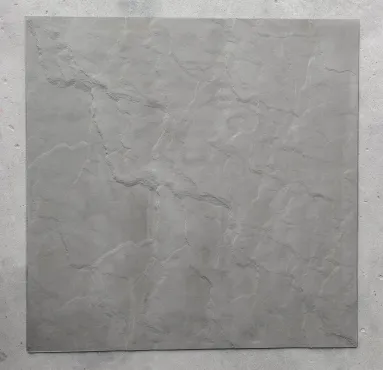
Unlike synthetic polymers or plastics, Epoch Stone's DNA is rooted in the earth. This connection to natural elements is what allows it to replicate the textures, colors, and feel of quarried stone, aged wood, or classic brick with astonishing realism. However, by modifying its core structure, we eliminate the very vulnerabilities that plague those materials. The result is a material that has the soul of nature but the strength of advanced engineering. The color, for instance, isn't a surface-level coating; it's integrated throughout the entire body of the material. This means that even if it gets scratched or chipped, the color remains consistent, unlike a painted surface or a laminated panel.
Furthermore, the manufacturing process itself is a testament to modern, sustainable thinking. The low-temperature firing consumes a fraction of the energy required to fire traditional ceramics or process quarried stone. It leverages recycled content and minimizes waste, positioning Epoch Stone not just as a durable choice, but as an environmentally responsible one. This green credential is no longer a "nice-to-have" in modern construction; it's a critical requirement for forward-thinking projects, and Epoch Stone delivers on that front without compromising an ounce of performance.
The true measure of a cladding material is how it performs in the real world over decades. Let's break down how Epoch Stone stacks up against the most common traditional options, point by point. This is where its engineered advantages truly shine.
Natural stone is the benchmark for luxury and perceived permanence. Its beauty is undeniable, but it comes at a significant cost, and not just a financial one.
The charm of a brick façade is timeless, but the construction method is ancient and fraught with potential issues.
Stucco offers great design versatility and good insulation, but its reputation for durability is often questionable.
Sleek and modern, metal panels are popular for commercial buildings but have their own set of durability challenges.
| Feature | Epoch Stone (MCM) | Natural Stone | Brick & Mortar | Stucco / EIFS |
|---|---|---|---|---|
| Weight & Structural Load | Epoch Stone (MCM)"> Extremely Lightweight. Minimal structural load, easy to transport and install. | Extremely heavy. Requires significant structural reinforcement and heavy machinery. | Heavy. Puts considerable load on foundations. | Relatively lightweight, but system adds some weight. |
| Flexibility & Crack Resistance | Epoch Stone (MCM)"> Highly Flexible. Resists cracking from impact, settlement, and seismic activity. | Brittle. Prone to cracking under stress or impact. | Rigid system. Mortar joints are a primary point of cracking and failure. | Very rigid. Highly prone to cracking with any building movement. |
| Water & Weather Resistance | Epoch Stone (MCM)"> Highly Water-Resistant & Breathable. Prevents water ingress but allows vapor to escape. No freeze-thaw damage. | Porous. Susceptible to staining, water damage, and freeze-thaw cycles. | Porous brick and mortar joints allow water penetration. Prone to efflorescence. | Can trap moisture if not perfectly installed, leading to mold and rot. |
| Color Stability & Maintenance | Epoch Stone (MCM)"> Integral Color. Superior UV resistance, no fading, never needs painting. Low maintenance. | Good color stability but can stain. Requires periodic sealing and cleaning. | Color is stable, but mortar requires repointing. Cleaning can be difficult. | Surface painted. Fades, chips, and peels. Requires repainting every 5-10 years. |
| Installation Speed & Cost | Epoch Stone (MCM)"> Fast & Efficient. Large, lightweight panels install quickly with adhesive, reducing labor costs. | Slow, complex, and expensive. Requires skilled labor and heavy equipment. | Very slow and labor-intensive. Requires skilled masons. | Multi-step process that is highly weather-dependent. |
While its superior durability is a game-changer, the benefits of choosing Epoch Stone extend far beyond simple resilience. COLORIA GROUP engineered this material to be a holistic solution, addressing the core needs of modern architecture: design freedom, construction efficiency, and environmental responsibility.
For architects and designers, the creative palette has never been broader. Traditional materials have physical limitations that dictate design. You can't easily curve a granite slab, and creating intricate custom textures in brick is prohibitively expensive. Epoch Stone shatters these limitations. Because it is formed in a mold, it can be shaped into virtually any form, texture, or pattern imaginable.
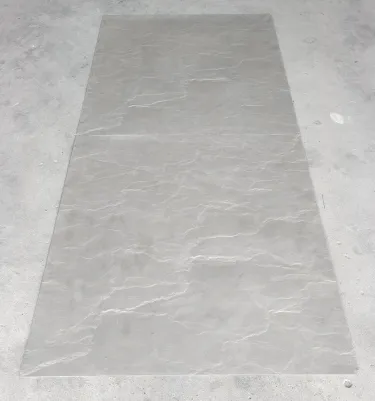
Want the look of massive, seamless stone panels for a monumental lobby? The MCM Big Slab Board Series delivers that grandeur without the weight and installation complexity. Dreaming of a unique, parametric façade with intricate, flowing patterns? The MCM 3D Printing Series makes this a reality, allowing for bespoke textures that turn a building into a work of art. From hyper-realistic wood grain and weathered steel to completely novel geometric designs, the only limit is the designer's imagination. This ability to customize allows for true architectural expression, enabling every project to have a unique and powerful identity.
In construction, time is money. The efficiency gains from using Epoch Stone are substantial and impact multiple phases of a project. The lightweight nature not only reduces the need for expensive structural over-engineering but also drastically cuts down on transportation costs. On-site, handling is safer and requires less manpower and machinery.
The installation process itself is a major advantage. Applying large panels with adhesive is significantly faster than mechanical fixing of heavy stone or the painstaking process of bricklaying. This accelerated timeline means the building can be enclosed sooner, allowing interior work to begin earlier and ultimately leading to a faster project completion date. For commercial projects, this means opening for business sooner and starting to generate revenue. For any project, it means a significant reduction in labor costs—often one of the largest expenses in construction.
Today, building green isn't an option; it's an obligation. Epoch Stone is an inherently sustainable product. Its production process uses less energy and creates fewer emissions than quarrying stone or firing traditional ceramics. It incorporates natural and recycled materials, reducing the strain on virgin resources.
But the biggest sustainability win is its longevity. The most sustainable building is one that lasts. By creating a façade that resists cracking, fading, and water damage, Epoch Stone dramatically extends the building's life cycle. It reduces the need for frequent repairs, repainting, or premature replacement, all of which consume materials, energy, and generate waste. A building clad in Epoch Stone is a building designed for the long term, minimizing its environmental footprint over decades of use. This commitment to sustainability can also contribute to achieving certifications like LEED, adding further value to the property.
The versatility of Epoch Stone makes it the ideal solution for a vast range of applications. It's robust enough for high-traffic public buildings and durable enough for towering skyscrapers. It's refined enough for luxury residences and adaptable enough for large-scale developments, where products like the MCM Project Board Series provide consistent quality and performance across thousands of square meters. Whether it's an exterior façade that needs to brave the elements or an interior feature wall that needs to make a statement, Epoch Stone delivers.
COLORIA GROUP's global presence is a testament to the material's proven performance in diverse and demanding environments. In the scorching heat and abrasive sandstorms of the Middle East, for example, our agency in Saudi Arabia has seen Epoch Stone façades maintain their color and integrity where other materials quickly degrade. From the freezing winters of Northern Europe to the humid, salt-laden air of coastal regions, Epoch Stone has proven its mettle. This real-world validation confirms that its engineered durability isn't just a laboratory claim; it's a field-tested reality.
This material is more than just a product line for COLORIA GROUP; it's the embodiment of our mission as a one-stop solution provider. We are committed to pushing the boundaries of what's possible in building materials, providing our clients with solutions that are not only high-quality and innovative but also intelligent and sustainable. Epoch Stone is the flagship of this philosophy.
The choice of a cladding material is one of the most critical decisions in the life of a building. For too long, that choice has been a series of compromises. Epoch Stone, powered by COLORIA GROUP's advanced MCM technology, decisively ends that era of compromise.
It offers the aesthetic richness of traditional materials with none of their weaknesses. It provides a level of durability—resistance to cracking, water, fading, and impact—that is simply in a different league. This is coupled with unparalleled design freedom, significant installation and maintenance cost savings, and a powerful sustainability story. Epoch Stone is not merely an alternative to traditional cladding; it is its evolution. It is the smarter, stronger, and more sensible choice for anyone looking to build structures that are not only beautiful on day one, but that remain beautiful and resilient for generations to come. This is the future of the building façade, and it's available today.
Recommend Products












