
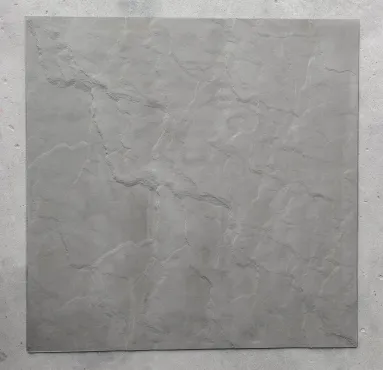
We've all felt that heart-stopping moment. The sickening crunch of a bicycle handlebar scraping against a pristine garage wall. The dull thud of a moving box corner colliding with a beautiful lobby facade. Or the simple, everyday anxiety of living in a space, worrying that one wrong move could permanently mar the surfaces that define its character. In the world of architecture and design, beauty has often come at the price of fragility. Traditional materials, for all their aesthetic appeal, can be unforgiving. A moment of carelessness can lead to a lifetime of looking at an ugly chip, a spiderweb crack, or a costly, complicated repair.
This is a problem that plagues homeowners, property managers, and developers alike. Natural stone, while majestic, is notoriously brittle and heavy. A sharp impact can easily cause a chip or fracture that is difficult, if not impossible, to seamlessly repair. Stucco and plaster are susceptible to dents and cracks from even minor collisions. But what if there was a material that offered the aesthetic richness of traditional finishes with a level of resilience built for the real, unpredictable world?
This is where the conversation changes. We're stepping into a new era of architectural materials, one where durability and design are no longer mutually exclusive. At the forefront of this revolution is Epoch Stone, a groundbreaking innovation from the experts at COLORIA GROUP. This isn't just another wall covering; it's an engineered shield for your building. This article will take a deep dive into the incredible, almost surprising, impact resistance of Epoch Stone and explore why its underlying technology makes it the smartest, most durable choice for modern construction projects, inside and out.
To truly appreciate the toughness of Epoch Stone, we need to look beneath its beautiful surface. Epoch Stone is the flagship brand from COLORIA GROUP, representing the pinnacle of their decades-long expertise in advanced building materials. The secret to its remarkable properties lies in its core composition: a technology known as Modified Cementitious Material , or MCM.
Now, the term "Modified Cementitious Material" might sound overly technical, but the concept is beautifully simple and elegant. Imagine taking the basic building blocks of our planet—natural elements like common soil, mineral powders, and sand—and combining them in a completely new way. Unlike traditional cement or ceramics that rely on intense, high-temperature firing in a kiln (a process that consumes massive amounts of energy), MCM is formed through a low-temperature thermo-chemical process. This isn't burning; it's a controlled transformation.
This process has profound implications. First, it's incredibly eco-friendly. By avoiding high-temperature kilns, the carbon footprint is drastically reduced. It allows for the use of a wide range of natural and even recycled materials, turning what might be considered waste into a high-performance architectural product. But the real magic, the part that gives Epoch Stone its superhero-like resilience, is in the "Modified" part of its name.
During the manufacturing process, a special polymer-based modifying agent is introduced. This agent creates a microscopic, three-dimensional web-like network throughout the material. Think of it like the rebar in reinforced concrete, but on an incredibly fine, molecular scale. This polymer network interlaces with all the mineral particles, binding them together not with rigid brittleness, but with a tough, inherent flexibility.
This is the fundamental difference between Epoch Stone and almost any other hard-surfacing material. When a traditional material like a ceramic tile or a slab of marble is struck, the impact energy has nowhere to go. It travels through the rigid crystalline structure until it finds a weak point, and then—crack! The material shatters.
Epoch Stone behaves completely differently. When it receives an impact, that microscopic polymer "safety net" goes to work. It absorbs the shock and dissipates the energy across a wider area. The material can flex ever so slightly on a microscopic level, absorbing the blow rather than fighting it. This ability to yield without breaking is the very definition of toughness, and it's what separates Epoch Stone from the pack. It's the difference between a pane of glass and a sheet of bulletproof polycarbonate; one is hard but brittle, the other is hard and tough.
Knowing the science is one thing, but how does this resilience translate to real-world situations? The title of this article isn't hyperbole; Epoch Stone's ability to withstand accidental damage is its defining feature. Let's explore some common scenarios where traditional materials would fail, but Epoch Stone excels.
Consider the busiest areas of any building: hallways, entry foyers, kitchens, and ground-floor exteriors. These are zones of constant activity. Imagine a bustling hotel lobby. Luggage carts are rolled around, guests bump their suitcases against walls, and cleaning crews maneuver heavy equipment. On a traditional painted or wallpapered wall, every one of these minor impacts leaves a mark—a scuff, a tear, a dent. On a wall clad with thin stone veneer or ceramic tile, a harder knock could easily lead to a noticeable chip or a hairline crack, turning a luxury finish into a maintenance headache.
Now, picture that same lobby clad in Epoch Stone. When a luggage cart scrapes along the wall, the material's surface hardness resists scratching. If a heavy suitcase corner makes a solid impact, the sound is a dull, absorbed "thud," not a sharp, worrying "crack." The internal polymer network dissipates the force, preventing the localized stress that causes other materials to fail. The wall remains pristine. This level of durability is a game-changer for commercial spaces, where maintaining a perfect appearance is crucial for brand image.
Let's move outside. The walls of a residential garage or a commercial parking structure are some of the most abused surfaces in any building. Car doors are swung open, bumpers misjudge distances, and tools or equipment are leaned against them. With a standard concrete or stucco finish, these walls quickly become a battlefield of scrapes, gouges, and crumbling corners.
Cladding these areas with Epoch Stone provides an active defense system. Its toughness means that a car door swinging open and hitting the wall is far less likely to cause any damage—to the wall or the car door. Its resistance to chipping and spalling (the flaking of a surface) means that even in a high-traffic garage, the walls will maintain their structural integrity and appearance for years, not months. This reduces the constant cycle of patching, sanding, and repainting, saving significant time and money over the life of the building.
To put this in perspective, let's compare Epoch Stone (MCM) directly against other common cladding materials. The differences are stark and highlight the clear advantages of this advanced technology.
| Attribute | Epoch Stone (MCM) | Natural Stone (e.g., Marble, Granite) | Ceramic / Porcelain Tile | Stucco / EIFS |
|---|---|---|---|---|
| Impact Resistance | High | Low to Medium (Brittle) | Low (Very Brittle) | Low (Prone to Dents/Cracks) |
| Flexibility | High (Can wrap curves) | None (Rigid) | None (Rigid) | Minimal (Prone to cracking) |
| Weight | Very Light (Approx. 4-6 kg/m²) | Extremely Heavy (50-80 kg/m²) | Medium to Heavy (15-25 kg/m²) | Medium |
| Installation Difficulty | Easy (Light & Flexible) | Very Difficult (Heavy, requires special equipment) | Moderate (Brittle, requires precise cutting) | Moderate (Multi-step process) |
| Repairability | Good (Can be patched or replaced easily) | Difficult (Hard to match veining, costly) | Difficult (Grout lines, color matching) | Moderate (Patching is often visible) |
| Long-Term Value | Excellent (Low maintenance) | Fair (High initial and repair costs) | Poor (Prone to costly repairs) | Poor (Requires frequent upkeep) |
As the table clearly shows, Epoch Stone isn't just a minor improvement; it represents a fundamental shift in performance. Its high rating in impact resistance, combined with its lightness and flexibility, creates a product that is simply more practical and reliable for the demands of modern living and construction.
The core benefit of impact resistance isn't confined to a single type of product. The genius of COLORIA GROUP's technology is how this durable Modified Cementitious Material base can be adapted into a wide family of products, each carrying the same DNA of toughness while offering unique aesthetic and functional advantages. Let's explore how this resilience manifests across the Epoch Stone collection.
Perhaps the most visually stunning demonstration of the MCM technology is the MCM Flexible Stone series. This product does something that seems impossible: it combines the authentic look and texture of natural stone with the pliability of a thick fabric. You can literally take a sheet of it and bend it around a curved column or a wavy, organic wall feature.
This flexibility is directly linked to its impact resistance. Because the material is designed to bend, it is inherently excellent at absorbing impacts. It "gives" when struck, distributing the force harmlessly. This makes it an ideal choice not just for creative architectural expressions, but also for high-traffic corners and edges. Where a rigid material would have a sharp, brittle corner that's easily chipped, MCM Flexible Stone can wrap around that corner in one continuous, seamless piece. This eliminates a major weak point and creates a finish that is both more beautiful and exponentially more durable. It truly delivers the beauty of stone with none of its fragility.
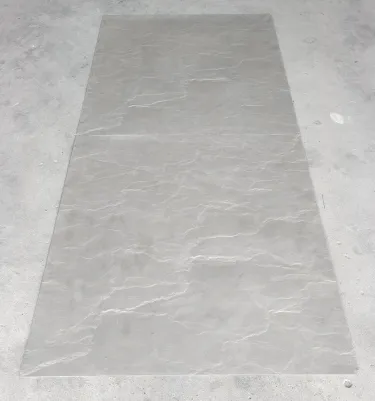
Architects and designers love the clean, monolithic look of large-format panels. The MCM Big Slab Board Series caters to this demand for grand scale, offering expansive panels that dramatically reduce the number of grout lines for a seamless, high-end appearance. However, with traditional materials like oversized porcelain or natural stone slabs, "large format" also means "high risk." These materials are incredibly heavy, difficult to transport, and notoriously prone to cracking from stress or minor impacts during installation.
The MCM Big Slab Board Series completely rewrites this script. Because the boards are based on the lightweight and tough MCM technology, they are a fraction of the weight of their traditional counterparts. This makes them safer and easier to handle on-site, drastically reducing the risk of costly breakage. But more importantly, their inherent impact resistance means they can withstand the rigors of installation and the realities of daily life once in place. The fewer seams in a wall also mean fewer structural weak points, and a single large panel is better able to distribute an impact force over a wide surface area, further enhancing its overall resilience. It allows for the bold aesthetic of a massive slab without the associated fragility and logistical nightmares.
The ultimate expression of customization is the MCM 3D Printing Series . This innovative line allows for the creation of intricate patterns, bespoke textures, and unique, three-dimensional surfaces that can turn a wall into a work of art. One might assume that such detailed, artistic features would be delicate and purely decorative.
This is another instance where Epoch Stone defies expectations. The underlying strength of the Modified Cementitious Material ensures that these 3D-printed designs are not fragile. The same microscopic polymer network that protects a flat slab also reinforces every curve, line, and contour of a 3D-printed panel. This means an architect can design a stunning, tactile feature wall for a busy commercial space without having to worry that it will be easily damaged. It's functional art, built with a resilience that ensures the creative vision will endure for years to come, withstanding bumps and scrapes that would destroy more delicate decorative finishes.
The initial decision on a building material is often driven by upfront cost and aesthetics. However, the smartest investment is one that considers the total cost of ownership over the building's entire lifespan. This is where the superior durability of Epoch Stone translates directly into significant financial and practical benefits.
Every chip, crack, or dent in a building's facade costs money to fix. Labor has to be called in, materials have to be matched, and sections of the building may be temporarily out of commission. For a commercial property, this means disruption and recurring operational expenses. For a homeowner, it means constant, frustrating upkeep.
Because Epoch Stone is so resistant to the accidental damage that plagues other materials, the need for these repairs is drastically minimized. Walls stay looking new for longer, without constant intervention. This reduction in maintenance isn't a small saving; over a period of 10, 20, or 30 years, it can add up to a substantial sum, making Epoch Stone one of the most cost-effective choices on the market in the long run.
A building that is free from visible damage simply looks better and feels more valuable. For a commercial enterprise, a clean, undamaged facade communicates professionalism and quality. For a residential property, it enhances curb appeal and directly contributes to its market value. The resilience of Epoch Stone is an investment in preserving this aesthetic integrity. It ensures that the architect's original vision is not slowly eroded by the wear and tear of daily life. The building continues to look as good as the day it was completed, protecting the owner's investment and pride of ownership.
Finally, there is an intangible but incredibly important benefit: peace of mind. Choosing a material like Epoch Stone means you no longer have to worry about those everyday accidents. You can move furniture without anxiety, let your kids play in the yard without cringing, and operate a business without budgeting for constant wall repairs. It's about creating spaces that are not just beautiful, but also livable and stress-free. This confidence in your building's ability to stand up to the real world is a value that cannot be overstated.
In the end, Epoch Stone from COLORIA GROUP represents more than just a new product; it's a new philosophy. It's the understanding that buildings are not static objects in a museum; they are dynamic environments where life happens. And life, by its very nature, involves a few bumps along the way.
By harnessing the innovative power of Modified Cementitious Material , Epoch Stone provides an unparalleled defense against accidental damage. Its remarkable impact resistance, proven in scenarios from busy hallways to residential garages, sets a new standard for durability. This core strength is expressed across a versatile product family, from the uniquely pliable MCM Flexible Stone to the grand and seamless MCM Big Slab Board Series .
Choosing Epoch Stone is a decision to build for reality. It's an investment in longevity, low maintenance, and enduring beauty. It's about selecting a material that is not only visually stunning and environmentally conscious but is also fundamentally tough, resilient, and ready for whatever life throws at it. For architects, developers, and homeowners who demand both elegance and endurance, the choice is clear: build with a material designed not just to look good, but to last.
Recommend Products












