
For centuries, the story of architecture has been a story of weight. From the colossal stones of the pyramids to the marble-clad facades of classical temples and the dense concrete of modernist towers, a building's strength and permanence were often directly associated with its mass. Heavier meant sturdier, more durable, and more imposing. But in the 21st century, this age-old paradigm is being challenged. Architects, engineers, and developers are increasingly recognizing the significant drawbacks of excessive weight in construction—a challenge that goes far beyond mere logistics. This is where a revolutionary approach, which we'll call "Epoch Stone," championed by industry leader COLORIA GROUP, is rewriting the rules of building design and performance.
The core idea behind Epoch Stone is simple yet profound: to deliver the aesthetic beauty, texture, and durability of traditional materials like natural stone, granite, and terracotta, but at a fraction of the weight. This isn't just a minor improvement; it's a fundamental shift that addresses some of the most pressing issues in modern construction, including structural load, seismic safety, installation efficiency, and environmental sustainability. By leveraging decades of expertise in material science, COLORIA GROUP has pioneered a new generation of materials that unlock unprecedented design freedom while making buildings safer, more economical, and greener. This article delves into the critical problem of structural load and explores how the lightweight design philosophy of Epoch Stone offers a comprehensive and compelling solution.
Every structure, from a single-family home to a super-tall skyscraper, is in a constant battle with gravity. Engineers categorize the forces acting on a building into two main types: "live loads" (temporary forces like people, furniture, and snow) and "dead loads" (permanent forces from the building's own structural and non-structural components). The facade, or the building's exterior skin, is one of the most significant contributors to the dead load. When you clad a large building in thick panels of natural stone or precast concrete, you are adding thousands of tons of static weight that the entire underlying structure must be designed to support.
This added weight creates a costly and complex domino effect that ripples through the entire project:
In essence, the choice of a heavy facade material imposes a "weight tax" on nearly every other aspect of the building's design and construction. It's a tax paid in money, materials, time, and safety.
Recognizing these profound challenges, the material scientists at COLORIA GROUP focused on developing a solution from the ground up. The result of their decades-long research and development is a breakthrough product category: **Modified Cementitious Material (MCM)**. This is the technology that powers the Epoch Stone concept. But what exactly is it?
Unlike traditional cement, which is rigid, heavy, and energy-intensive to produce, MCM is a completely different class of material. It is a composite material primarily made from natural inorganic powders (like common soil, stone powder, and colored mineral sand) mixed with a small amount of water-based polymers. This mixture undergoes a unique low-temperature firing and curing process—typically between 100-120°C. This is drastically different from the 1200°C or higher temperatures required for traditional ceramics and porcelain, resulting in a massive reduction in energy consumption and carbon emissions.
The magic of MCM lies in its molecular structure. Through this innovative process, the inorganic particles form a cross-linked network, giving the material its signature properties: it is incredibly lightweight, surprisingly flexible, yet exceptionally durable, breathable, and resistant to fire, water, and fading.
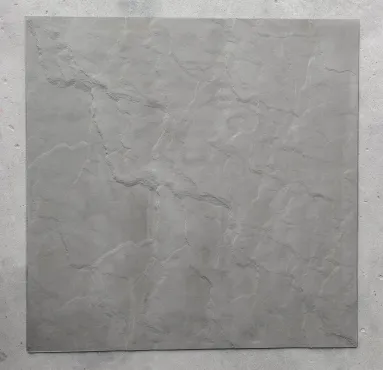
COLORIA GROUP has refined this technology to create a stunning array of products that replicate the world's most sought-after finishes. By precisely controlling the composition and texture, they can create surfaces that are visually and texturally indistinguishable from natural slate, travertine, sandstone, wood grain, and even woven leather. It's this fusion of nature-inspired aesthetics and advanced material science that defines the Epoch Stone philosophy.
The theoretical benefits of MCM are made tangible through COLORIA GROUP's diverse product series, each designed to address specific architectural needs while adhering to the core principle of lightweight design.
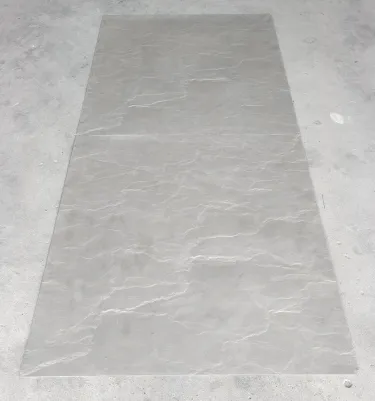
Modern architecture often favors clean lines and monolithic surfaces. The **MCM Big Slab Board Series** caters directly to this trend. These are large-format panels, often measuring several square meters, that provide a seamless, high-impact finish for both exterior facades and interior statement walls. Traditionally, achieving this look with a material like a large marble slab would be prohibitively heavy and expensive.
An MCM Big Slab Board, however, is typically only 3-8mm thick and weighs around 4-8 kg per square meter. Compare this to a 3cm thick slab of natural granite, which can weigh over 80 kg per square meter. This staggering 90-95% reduction in weight means architects can design expansive, stone-like facades on high-rise buildings without overloading the structure. Installation is faster, requires less heavy machinery, and can be done by smaller crews, translating directly into significant cost savings.
What happens when a design calls for curves, columns, or complex, non-linear surfaces? With traditional rigid materials, this is an architectural nightmare, requiring custom cutting, intricate joinery, and often resulting in a compromised aesthetic. This is where the **MCM Flexible Stone** series truly shines. As its name suggests, this material is pliable. It can be easily bent to a certain radius, allowing it to wrap smoothly around cylindrical columns, follow the contour of an archway, or create undulating, wave-like wall features.
This flexibility opens up a new world of creative possibilities that were previously impossible or impractical with real stone. Imagine a building lobby where the reception desk, feature walls, and support columns are all seamlessly clad in a continuous, flowing stone texture. The material's lightweight nature means it can be applied to almost any substrate, including lightweight partitions or existing structures, without requiring any additional structural support. This makes the **MCM Flexible Stone** an ideal choice for both new builds and imaginative renovation projects.
Pushing the boundaries of customization even further, COLORIA GROUP's **3D Printing Series** represents the pinnacle of bespoke surface design. This innovative line leverages digital technology to create highly intricate, three-dimensional textures and patterns on MCM panels. Architects and designers can move beyond standard finishes and develop truly unique surfaces that reflect a project's specific identity or artistic vision.
Whether it's a custom-designed geometric pattern, a corporate logo embossed into a wall, or an artistic relief that plays with light and shadow, the **3D Printing Series** makes it possible. The process starts with a digital design file, which is then translated into a physical, textured panel through a proprietary manufacturing process. Despite the complex surface, the panels remain thin, lightweight, and easy to install, offering unparalleled design freedom without the weight penalty. This is particularly valuable for creating iconic feature walls, branded environments in commercial spaces, or adding a layer of artistic expression to a building's facade.
| Material Comparison | Epoch Stone (MCM) | Natural Stone (e.g., Granite) | Traditional Ceramic Tile |
|---|---|---|---|
| Average Weight (per m²) | Epoch Stone (MCM)"> 4-8 kg | 60-90 kg (at 2-3cm thickness) | 15-25 kg |
| Average Thickness | Epoch Stone (MCM)"> 3-8 mm | 20-30 mm | 8-12 mm |
| Flexibility | Epoch Stone (MCM)"> High (can wrap around curves) | None (rigid) | None (rigid) |
| Installation Complexity | Epoch Stone (MCM)"> Low (lightweight, easy to cut) | High (requires heavy lifting equipment) | Medium |
| Environmental Impact | Epoch Stone (MCM)"> Low (low-temp production, less transport fuel) | High (quarrying, heavy transport) | Medium (high-temp firing) |
The benefits of adopting a lightweight design philosophy with COLORIA GROUP's MCM products are not just theoretical; they are tangible, measurable, and impactful across the entire lifecycle of a building.
The future of construction is not about building bigger and heavier, but about building smarter, safer, and more sustainably. The "weight problem" is a fundamental challenge that has silently dictated architectural possibilities and inflated costs for generations. The Epoch Stone concept, brought to life by COLORIA GROUP's advanced **Modified Cementitious Material** technology, offers a decisive answer to this challenge.
By providing a one-stop solution that combines the timeless beauty of natural materials with the cutting-edge benefits of lightweight, flexible, and customizable design, COLORIA GROUP is not just selling a product; it is pioneering a new philosophy. It is a philosophy where structural load is minimized, design creativity is maximized, and environmental responsibility is integrated into the very skin of our buildings. As architects and builders around the world, from the dynamic market of Saudi Arabia to emerging global hubs, continue to seek more efficient and inspiring ways to build, the lightweight revolution is proving that sometimes, the most powerful and enduring solutions are also the lightest.
Recommend Products












