
Choosing the right skin for a building is one of the most critical decisions a homeowner, architect, or developer will ever make. This outer layer, the facade, is more than just decoration. It's the building's first line of defense against the elements, a primary determinant of its curb appeal, and a lasting statement of its quality and character. For decades, the choice often boiled down to traditional materials like brick and wood, or the seemingly practical, budget-friendly option: vinyl siding.
Vinyl rose to prominence as the easy answer. It was inexpensive, quick to install, and promised a future free from the drudgery of painting. But as millions of homes were wrapped in this plastic shell, its limitations became increasingly apparent. The tell-tale sheen, the vulnerability to impact and extreme weather, and the environmental questions surrounding its production and disposal began to weigh on the minds of discerning builders and buyers.
Now, a new era of material science is dawning, and with it comes a revolutionary challenger to the status quo. We're calling it "Epoch Stone" for the purpose of this discussion—a term representing a new generation of advanced cladding materials, epitomized by products based on Modified Cementitious Material (MCM). This isn't just another siding option; it's a fundamental shift in what's possible for building exteriors. It promises not just to look better and last longer, but to do so with a conscience for design freedom and environmental responsibility.
This article will take a deep dive into the matchup: the established incumbent, vinyl siding, versus the innovative contender, Epoch Stone. We'll move beyond surface-level claims and scrutinize every aspect, from raw durability and weather performance to aesthetic authenticity and long-term value. Which material truly stands the test of time? Let's find out.
At its core, vinyl siding is made from polyvinyl chloride (PVC) resin. It's a plastic, and that's both its primary selling point and its greatest weakness. Through a process of extrusion, this plastic is formed into interlocking panels designed to be nailed to a building's exterior sheathing. Its popularity surged in the latter half of the 20th century as a cost-effective alternative to wood siding, which required constant scraping and painting.
The initial appeal is undeniable. It's lightweight, which simplifies transportation and installation. The color is mixed into the material itself, so it won't chip like paint. And from a distance, the embossed wood grain patterns can offer a passing resemblance to the real thing. However, this is where the story often starts to unravel. The "wood grain" is a repeating, machine-made pattern. The seams between panels are an unavoidable reality. And its performance over a decade or two, especially in climates with four distinct seasons, can be a story of gradual degradation.
Epoch Stone is a different beast entirely. It represents a category of materials born from advanced engineering, with Modified Cementitious Material (MCM) at its forefront. This isn't your grandfather's concrete or your father's synthetic stucco. MCM is a composite material created from a carefully balanced blend of natural ingredients: unfired clay, mineral powders, quartz sand, and other inorganic materials. These components are combined and then cured at a low, controlled temperature—a process that is significantly less energy-intensive than firing traditional bricks or ceramics.
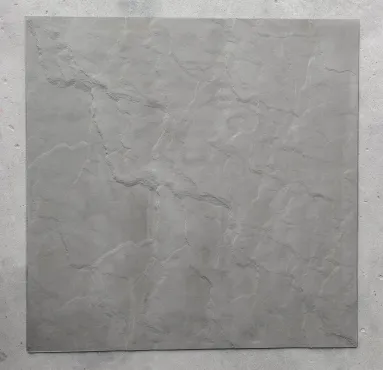
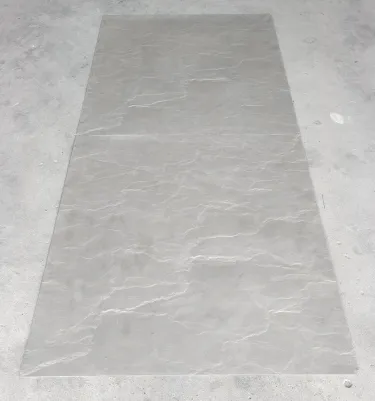
The result is nothing short of remarkable. It's a material that possesses the soul of stone and earth, yet has the flexibility and light weight of a modern polymer. It can be formed into an almost limitless array of textures, shapes, and sizes. Do you want the timeless elegance of Italian travertine, the rugged charm of split-face slate, or the clean lines of polished concrete? MCM can deliver all of these with astonishing fidelity. Furthermore, it's not limited to mimicking stone. It can replicate the look of wood, leather, brick, or even custom-designed artistic patterns. This is where products like MCM Flexible Stone shine, offering the authentic look and feel of quarried stone but with a fraction of the weight and the ability to bend around curves.
A building's facade is a shield. It must withstand sun, rain, wind, hail, and the occasional stray baseball. Durability isn't a feature; it's a fundamental requirement. Here, the differences between vinyl and Epoch Stone become stark.
Vinyl Siding: We've all seen it: the tell-tale circular crack or punched-out hole in a vinyl-sided house. Because it's a thin, relatively brittle plastic, vinyl is highly susceptible to impact damage. A lawnmower kicking up a rock, a severe hailstorm, or even a ladder leaned carelessly against the wall can cause permanent damage. In cold weather, this brittleness is exacerbated, and a minor bump can shatter a panel. Repairing it means sourcing a replacement panel, hoping the color still matches the now-faded original, and dealing with the ugly reality of a patch job.
Epoch Stone (MCM): This is where the "flexible" nature of MCM technology truly proves its worth. While it has the hardness and feel of stone, it also has an inherent resilience. It absorbs impact rather than shattering. A blow that would puncture vinyl might leave a mere scuff mark on an MCM panel, if anything at all. This resilience gives architects and homeowners peace of mind, knowing the building's exterior isn't a fragile shell but a robust and forgiving skin. It's designed for the real world, where accidents happen.
Vinyl Siding: Vinyl has a significant coefficient of thermal expansion. This means it expands in the heat and contracts in the cold—a lot. Installers must account for this by hanging the panels loosely, which can lead to rattling in high winds. In extreme heat, dark-colored vinyl can warp, buckle, or sag. Under the relentless assault of UV radiation from the sun, the colors inevitably fade. A vibrant blue can become a washed-out gray over a decade, and the fading is often uneven, creating a blotchy, tired appearance. In deep-freeze conditions, as mentioned, it becomes brittle and prone to cracking.
Epoch Stone (MCM): MCM materials are exceptionally stable. They are virtually unaffected by temperature swings, from the scorching heat of a desert sun to the bitter cold of a northern winter. This stability is why they are trusted on projects in demanding environments around the globe, from the Middle East to colder northern regions. The color in MCM is an integral part of the material, derived from natural mineral pigments. It is UV-stable and incredibly fade-resistant, ensuring that the building looks as intended not just for a few years, but for many decades. Furthermore, MCM is non-combustible, typically achieving a Class A fire rating, providing an invaluable layer of safety that plastic siding simply cannot offer. It doesn't melt, it doesn't drip, and it doesn't propagate flames.
Vinyl Siding: While the vinyl panels themselves are waterproof, the system as a whole is not. It's designed as a water-shedding system, with weep holes to let moisture out. However, improper installation, wind-driven rain, or damage can allow water to get trapped behind the siding, leading to rot, mold, and mildew on the building's sheathing. The hollow space behind the panels can also become an inviting home for insects and other pests.
Epoch Stone (MCM): MCM panels are waterproof and breathable. They are installed with specialized adhesives and grouts that create a monolithic, water-impermeable surface, much like a high-performance tiling system. This eliminates the risk of water getting trapped behind the cladding. The inorganic nature of the material means it is inherently resistant to mold, algae, and fungus. There's nothing for them to feed on. Similarly, it offers no appeal or entry point for insects or rodents. It creates a solid, impenetrable barrier that protects the structure's integrity.
If durability is the science, aesthetics is the art. How a building looks and feels contributes enormously to its value and the enjoyment of those who use it. This is where the philosophical divide between the two materials is widest.
Vinyl Siding: Vinyl's biggest aesthetic challenge is its lack of authenticity. It's trying to look like something it's not—usually wood. The illusion is rarely convincing up close. The plastic sheen, the repetitive stamped grain, and the visible seams between each 12-foot panel constantly remind the observer that this is a facade in the most literal sense. It lacks depth, a tactile quality, and the subtle, natural variations that make traditional materials so appealing.
Epoch Stone (MCM): Authenticity is the very essence of MCM. Because it is made from natural clays and minerals, it possesses a natural, matte finish and a depth of texture that plastics can never replicate. When MCM is designed to look like slate, it doesn't just have a picture of slate on it; it has the clefts, the layers, and the subtle color variations of real slate because it was molded from it. The texture is not an embossed pattern; it's an integral part of the material. Running your hand over an MCM wall is a tactile experience that conveys quality and permanence. Whether it's the rough-hewn feel of sandstone or the smooth finish of polished concrete, the material feels real because, in a fundamental way, it is.
This is perhaps the most exciting area where Epoch Stone leaves vinyl far behind.
Vinyl Siding: Your choices are limited to what's in the manufacturer's catalog. You can pick a profile (e.g., Dutch Lap, Clapboard), a texture (usually one or two "wood" grains), and a color from a pre-determined palette. That's it. There is no room for true architectural expression. Every house on the block with the same "Pewter Gray" siding looks essentially the same.
Epoch Stone (MCM): This is where the game changes. With MCM, the architect's and designer's imaginations are the only real limits.
A responsible choice in the 21st century must consider not only the initial cost and performance but also the environmental impact and the total cost of ownership over the building's entire life.
Vinyl Siding: The production of PVC is an energy-intensive process that involves chlorine gas and creates toxic byproducts, including dioxins. At the end of its life, which is often shortened by fading or damage, vinyl is incredibly difficult to recycle and most of it ends up in landfills, where it will persist for hundreds of years. If it accidentally combusts in a house fire or landfill fire, it can release harmful hydrochloric acid and other toxins into the atmosphere.
Epoch Stone (MCM): The environmental story for MCM is a world apart. Its primary ingredients are natural and abundant soils and minerals. The low-temperature curing process uses up to 80% less energy than producing traditional ceramics or concrete. It releases no toxic substances during production or installation. Most impressively, at the end of its very long life, MCM products can be broken down and returned to the earth as regular soil for agriculture, or they can be recycled back into new MCM products. This "cradle-to-cradle" lifecycle represents the pinnacle of green building material philosophy.
| Feature | Epoch Stone (MCM) | Vinyl Siding |
|---|---|---|
| Initial Cost | Epoch Stone (MCM)"> Higher investment | Low upfront cost |
| Lifespan | Epoch Stone (MCM)"> 50+ years, with minimal degradation | 15-25 years before significant fading or damage |
| Maintenance | Epoch Stone (MCM)"> Minimal. Resists dirt, mold, algae. Simple washdown. | Requires regular washing to prevent mildew. Prone to staining. |
| Durability | Epoch Stone (MCM)"> Excellent. Impact-resistant, UV-stable, fire-resistant (Class A), waterproof. | Poor. Brittle in cold, warps in heat, prone to cracking/punctures, fades in sunlight. |
| Aesthetic Authenticity | Epoch Stone (MCM)"> High. Natural look and feel of stone, wood, etc. Deep texture. | Low. Obvious plastic sheen, repetitive patterns, visible seams. |
| Design Freedom | Epoch Stone (MCM)"> Virtually unlimited. Custom shapes, sizes, textures, and ability to wrap curves. | Very limited. Restricted to catalog of standard panels and colors. |
| Environmental Impact | Epoch Stone (MCM)"> Low. Made from natural materials, low-energy production, recyclable. | High. PVC production is toxic, energy-intensive, non-biodegradable. |
| Resale Value Impact | Epoch Stone (MCM)"> Significantly increases curb appeal and perceived value. | Often seen as a budget option; can sometimes lower the value of a high-end property. |
| Total Cost of Ownership | Epoch Stone (MCM)"> Lower over the long term due to longevity and no replacement costs. | Higher over the long term due to potential replacement cycles and repairs. |
The choice between Epoch Stone (MCM) and vinyl siding is more than a simple comparison of materials; it's a choice of philosophy. Vinyl siding represents a philosophy of "good enough for now." It's a short-term solution to a long-term need, prioritizing upfront cost savings above all else, and in doing so, it compromises on durability, beauty, and environmental stewardship. It's a disposable solution in a world that is increasingly demanding permanence and sustainability.
Epoch Stone, and the innovative MCM technology it represents, embodies a different philosophy: an investment in lasting value. It acknowledges that the skin of a building should be as robust and timeless as its foundation. While the initial investment may be higher, the return is paid out over decades in near-zero maintenance, unwavering performance, and an aesthetic that doesn't just mimic nature but honors it. It empowers architects and owners to create buildings that are not only beautiful and resilient but also responsible. For those building for the future—not just for today—the choice is becoming clearer than ever. The age of plastic cladding is fading, and a new epoch of authentic, durable, and inspiring materials is here.
Recommend Products












