
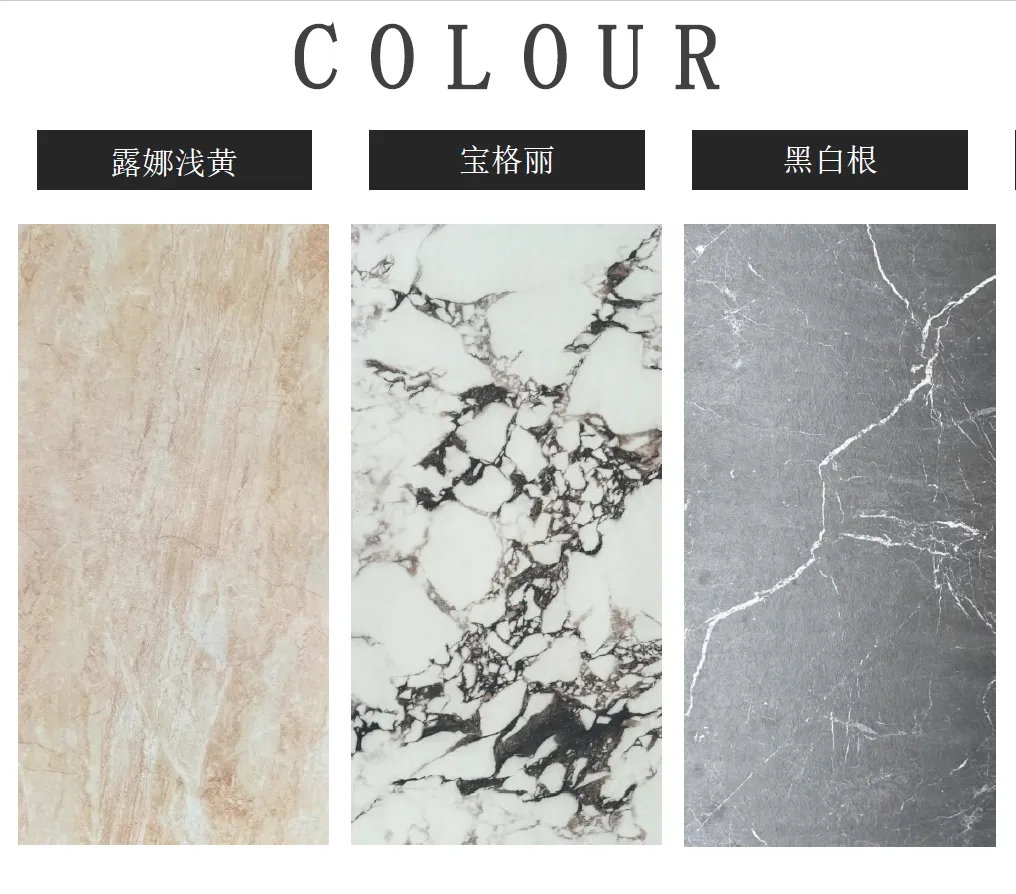
There's a moment in every old city where marble whispers history. Walk through the lobby of a 1920s hotel, and you might pause to trace the veined patterns of the floor—swirls of cream and gray that once felt as permanent as the stars. Or run a hand along the cool surface of a marble fireplace in a heritage home, its edges softened by decades of hands and hearth heat. For centuries, marble has been more than a building material; it's a symbol of endurance, luxury, and human creativity. But for all its grandeur, this stone carries a quiet weight—one that architects, designers, and homeowners have grappled with for generations. It's this tension between marble's timeless beauty and its practical limitations that gave rise to a revolution: the MCM marble series . Today, we're not just preserving marble's legacy—we're reimagining it.
Marble has always been the muse of creators. The ancient Greeks carved it into gods and heroes, believing its translucence captured the divine. Renaissance artists like Michelangelo chiseled it into masterpieces, seeing in its layers the potential for human emotion. Even today, a slab of polished marble can transform a room—its smooth surface reflecting light, its unique veining telling a story millions of years in the making. In homes, it's the countertop that elevates a kitchen from functional to elegant; in commercial spaces, it's the lobby wall that whispers "arrival." Marble doesn't just decorate—it dignifies.
But ask anyone who's lived with natural marble, and they'll share a more complicated love story. A friend once described her 19th-century apartment in Rome: "The marble floors are stunning, but I've learned to panic at the sound of a dropped wine glass. One spill, and you're staring at a stain that no amount of polishing can erase." Another designer lamented a hotel project where a single slab of rare marble cracked during installation, delaying construction by weeks and blowing the budget. These stories aren't just anecdotes—they're the reality of working with a material shaped by nature, not human needs.
Natural marble, for all its beauty, comes with a list of challenges that feel increasingly out of step with our fast-paced, sustainable world. Let's start with weight: a standard 2cm-thick slab of marble weighs roughly 50kg per square meter. That's not just a number—it's a structural concern. Older buildings weren't designed for such loads, and even modern structures require reinforced foundations to support marble-heavy designs. Then there's porosity: marble is like a sponge, absorbing liquids that lead to stains, and its calcium content makes it vulnerable to acids (hello, lemon juice, vinegar, even rainwater). Maintenance becomes a ritual—sealing every few months, avoiding harsh cleaners, living in constant fear of scratches from furniture or high heels.
Sustainability is another growing concern. Quarrying natural marble involves heavy machinery, deforestation, and habitat disruption. Each slab is unique, but that uniqueness comes at a cost: for every usable slab, tons of stone are discarded as waste. And as demand grows, so does the pressure on ancient quarries, some of which have been supplying marble for millennia. It's a cycle that feels at odds with our collective push for eco-conscious design.
Enter Modified Composite Materials, or MCM—a category of engineered materials designed to marry the aesthetic of natural stone with the practicality of modern technology. Think of MCM as marble's smarter, more adaptable cousin. It starts with a base of recycled minerals, polymers, and fibers, layered and compressed to mimic the texture and appearance of natural stone. The result? A material that's up to 80% lighter than natural marble, yet just as durable. It's flexible enough to bend around curves, resistant to stains and scratches, and crafted with minimal environmental impact. For designers, it was a revelation: suddenly, marble's beauty wasn't confined to floors and countertops. It could climb walls, wrap columns, even adorn furniture—all without the logistical nightmares of traditional stone.
The MCM marble series took this innovation further. Instead of generic "marble-look" panels, manufacturers began creating hyper-specific collections that honored natural stone varieties while adding new possibilities. Want the honeyed tones of travertine? There's an MCM version. Crave the drama of black marble with gold veins? Done. But what truly set MCM apart was its willingness to experiment—to take marble's classic appeal and infuse it with modern design trends. Today, the MCM marble series isn't just about replication; it's about reimagination.
The magic of MCM marble lies in its precision. Here's a simplified peek behind the curtain: first, recycled stone powders (from marble, granite, and other natural stones) are mixed with a polymer binder and reinforcing fibers. This mixture is pressed into thin sheets, then treated with advanced digital printing technology to replicate the exact veining, color, and texture of natural marble. Finally, a protective coating is applied to enhance durability and resistance to UV rays, moisture, and stains. The process uses 90% less water than traditional stone quarrying and generates minimal waste—making it a favorite among eco-conscious brands.
Within the MCM marble series, two innovations stand out for their ability to transform spaces: MCM flexible stone and MCM big slab board series . Let's start with flexible stone—a material so pliable it can be rolled up like a carpet (though we don't recommend that). Imagine wrapping a curved staircase in marble-like panels, or creating a backsplash that follows the gentle curve of a kitchen island. Before MCM, such designs would require custom-cutting natural marble into tiny, expensive pieces, leaving unsightly seams. Now, flexible stone bends to the architect's vision, creating seamless, flowing surfaces that feel both organic and intentional.
Take the travertine (starry green) variant, part of the MCM flexible stone lineup. Traditional travertine is beloved for its porous, honeycomb texture, but its neutral tones can feel limiting. MCM's starry green travertine takes that classic texture and infuses it with a deep, emerald hue, dotted with subtle metallic flecks that catch the light like distant stars. It's a modern twist on a Roman classic—perfect for a boutique café wall or a home accent piece that demands attention without overwhelming.
Then there's the MCM big slab board series, which redefines scale. Natural marble slabs rarely exceed 3 meters in length, and even those are heavy and prone to cracking. MCM big slabs, by contrast, can reach up to 6 meters long and 2.4 meters wide—creating the illusion of a single, uninterrupted expanse of marble. For commercial spaces, this is game-changing. Imagine a hotel lobby with a 10-meter wall clad in lunar peak silvery MCM big slabs: the surface shimmers like moonlight on water, with a cool, silvery tone that makes the space feel expansive and serene. Because the slabs are lightweight, installation is faster and cheaper, and there's no need for extra structural support. It's luxury without the logistical headache.
And for those who crave a blend of marble and metal, there's the foamed aluminium alloy board (vintage silver) , often paired with MCM marble series panels to add contrast and depth. The vintage silver finish has a soft, brushed texture that complements the smoothness of MCM marble, creating a look that's equal parts industrial chic and timeless elegance. It's the kind of combination that makes a restaurant wall feel both modern and welcoming—like a conversation between old and new.
Let's talk about the day-to-day benefits—the ones that make homeowners and contractors breathe easier. For starters, installation is a breeze. Traditional marble requires skilled masons, heavy lifting equipment, and careful sealing. MCM marble panels, on the other hand, can be cut with standard tools, glued directly to surfaces, and require no sealing. A team of two can install a kitchen backsplash in an afternoon, compared to a full day for natural stone. That speed translates to lower labor costs and less disruption—music to the ears of anyone undertaking a renovation.
Durability is another win. MCM marble is scratch-resistant, stain-proof, and UV-stable, meaning it won't fade in sunlight. A homeowner in Arizona, where temperatures soar and sun beats down relentlessly, recently shared that her lunar peak silvery MCM outdoor patio has retained its shine after three years—no cracking, no discoloration. "I used to worry about my kids dragging chairs across natural stone," she said. "Now? I don't even think twice." For commercial spaces like airports or shopping malls, where foot traffic is constant, MCM's resistance to wear and tear is a budget-saver. No more frequent replacements or costly repairs—just long-lasting beauty.
Then there's sustainability. MCM marble uses recycled materials, reduces quarrying waste, and requires less energy to produce than natural stone. Many manufacturers also offer panels made with low-VOC (volatile organic compound) binders, making them safer for indoor air quality. For LEED-certified buildings, MCM marble is often a key component in earning green building credits. It's a small but meaningful way to reduce our carbon footprint without sacrificing style.
Residential: The Curved Kitchen Renovation
Sarah, a homeowner in Chicago, dreamed of a kitchen with a curved island and backsplash. "I wanted marble, but every contractor told me it would be impossible—too heavy, too expensive, too hard to bend," she recalls. Then she discovered
MCM flexible stone
in
travertine (starry green)
. "The installers rolled the panels out like wallpaper, curved them around the island, and glued them on. It looks like a single slab of green travertine, but it's so light I could lift a panel myself. And when my son spilled grape juice on it? I just wiped it up with a cloth—no stain, no panic." Today, her kitchen is the heart of the home, a space where beauty and practicality coexist.
Commercial: The Boutique Hotel Lobby
The designers of The Luna Hotel in Miami wanted a lobby that felt "otherworldly"—a space that transported guests to a moonlit landscape. They chose
MCM big slab board series
in
lunar peak silvery
for the main wall, paired with
foamed aluminium alloy board (vintage silver)
accents. "The big slabs created this seamless, glowing surface that reflects light from the floor-to-ceiling windows," says lead designer Mia Chen. "And because they're lightweight, we didn't need to reinforce the wall—saving us both time and money. Guests often stop to take photos; they can't believe it's not real marble."
Public Space: The Community Library
The new downtown library in Portland needed a durable, low-maintenance floor that could withstand thousands of visitors daily. The design team opted for MCM marble series panels in a classic white marble pattern. "We wanted the warmth of marble without the upkeep," explains project manager James Reed. "Kids run here, books get dropped, coffee spills—and the floor still looks brand new after two years. Plus, the recycled content aligned with our sustainability goals. It's proof that public spaces can be beautiful and practical."
The evolution of the MCM marble series is far from over. Manufacturers are already experimenting with 3D printing to create even more intricate textures, from the rough-hewn look of ancient marble columns to the smooth polish of modern countertops. There's also a focus on color innovation—think marble panels that shift hue depending on the light, or glow-in-the-dark variants for accent walls. And as sustainability becomes increasingly central to design, we'll see more MCM marble made from 100% recycled materials, with zero-waste production processes.
But perhaps the most exciting development is the democratization of marble's beauty. For too long, natural marble was a luxury reserved for the few—out of reach for many homeowners and small businesses. MCM marble changes that. It's affordable, accessible, and adaptable, meaning more people can bring a touch of timeless elegance into their spaces. Whether you're renovating a tiny apartment kitchen or designing a sprawling office complex, MCM marble series offers a way to honor tradition while embracing progress.
Marble has always been a storyteller. For centuries, it told tales of empires, artists, and visionaries. Today, the MCM marble series is writing a new chapter—one where beauty isn't weighed down by practicality, where sustainability and luxury go hand in hand, and where anyone can bring a piece of marble's magic into their world. It's not about replacing natural marble; it's about expanding what marble can be. So the next time you walk into a space with MCM marble walls or floors, take a moment to appreciate the innovation. Feel the lightness, the durability, the artistry. It's marble, reimagined—and it's just getting started.
Recommend Products












