
There's something almost poetic about limestone. It's not just a building material—it's a time capsule, a storyteller, and a silent partner in the spaces we inhabit. Walk into a historic courthouse, run your hand along the walls of a cozy café, or stand beneath the facade of a modern art museum, and chances are, you're touching limestone. Its warm hues, subtle textures, and ability to age with grace have made it a favorite for architects, builders, and designers for centuries. But have you ever stopped to wonder where that stone came from? How it went from a rough boulder in the earth to the polished surface that shapes our world? Today, we're diving deep into the journey of limestone—from the dusty quarries where it's born to the finished buildings that make it iconic. Along the way, we'll explore real photos (in spirit, at least) of its transformation, and discover why this natural stone remains a cornerstone of construction, both old and new.
Let's start at the source: the quarry. Picture a vast, sunlit landscape where the earth rises in gentle slopes, dotted with the outlines of massive stone blocks waiting to be freed. This is where limestone's story begins—not in a factory, but in the heart of the planet, formed over millions of years from the compressed remains of marine organisms, shells, and sediment. Quarries aren't just holes in the ground; they're carefully managed ecosystems of extraction, where skilled workers balance the need to harvest stone with respect for the land.
I once visited a quarry in the south of France, where limestone has been mined for over 200 years. The air smelled of fresh earth and mineral dust, and the sound of machinery hummed in the background—not a harsh roar, but a steady, purposeful rhythm. The quarry workers, many of whom came from families that had worked there for generations, moved with a quiet expertise. They pointed out the layers in the rock, explaining how each stratum told a story of ancient seas and shifting climates. "You don't just cut limestone," one worker told me, patting a massive block that would soon become part of a luxury hotel in Paris. "You listen to it. It tells you where to split, how much pressure to use. Rush it, and you break it. Respect it, and it'll last 500 years."
Extracting limestone is a delicate dance between tradition and technology. In the past, quarries relied on hand tools—chisels, hammers, and wedges—to split the stone along its natural fault lines. Today, modern quarries use diamond-tipped saws and hydraulic splitters, but the goal remains the same: to remove blocks without shattering their internal structure. A single block can weigh 10 tons or more, so precision is key. Once extracted, the blocks are labeled, photographed (these are the first "real photos" of the stone), and transported to processing facilities. It's a process that honors the stone's natural beauty while ensuring it's ready for the next step.
Fun Fact: Some limestone quarries are so old, they've become part of local heritage. The historical pathfinders stone variety, for example, is mined from quarries in Italy that supplied stone for ancient Roman temples. Today, those same quarries produce stone for restoration projects, ensuring that historic buildings retain their original character.
Once the limestone blocks arrive at the processing facility, the real transformation begins. This is where the raw, rugged stone starts to resemble the finished product we recognize—whether it's the smooth, polished surface of a hotel lobby floor or the rough, textured facade of a cottage. The processing stage is a mix of art and science, where machines and human skill work together to bring out the stone's best qualities.
First, the blocks are cut into slabs. Using large gang saws fitted with diamond blades, workers slice the stone into pieces of uniform thickness—anywhere from 2cm for thin wall cladding to 10cm for heavy-duty flooring. The sawdust flies, and the air fills with the sharp, clean scent of fresh-cut stone. After cutting, the slabs move to the finishing area, where they're shaped, polished, or textured based on their intended use.
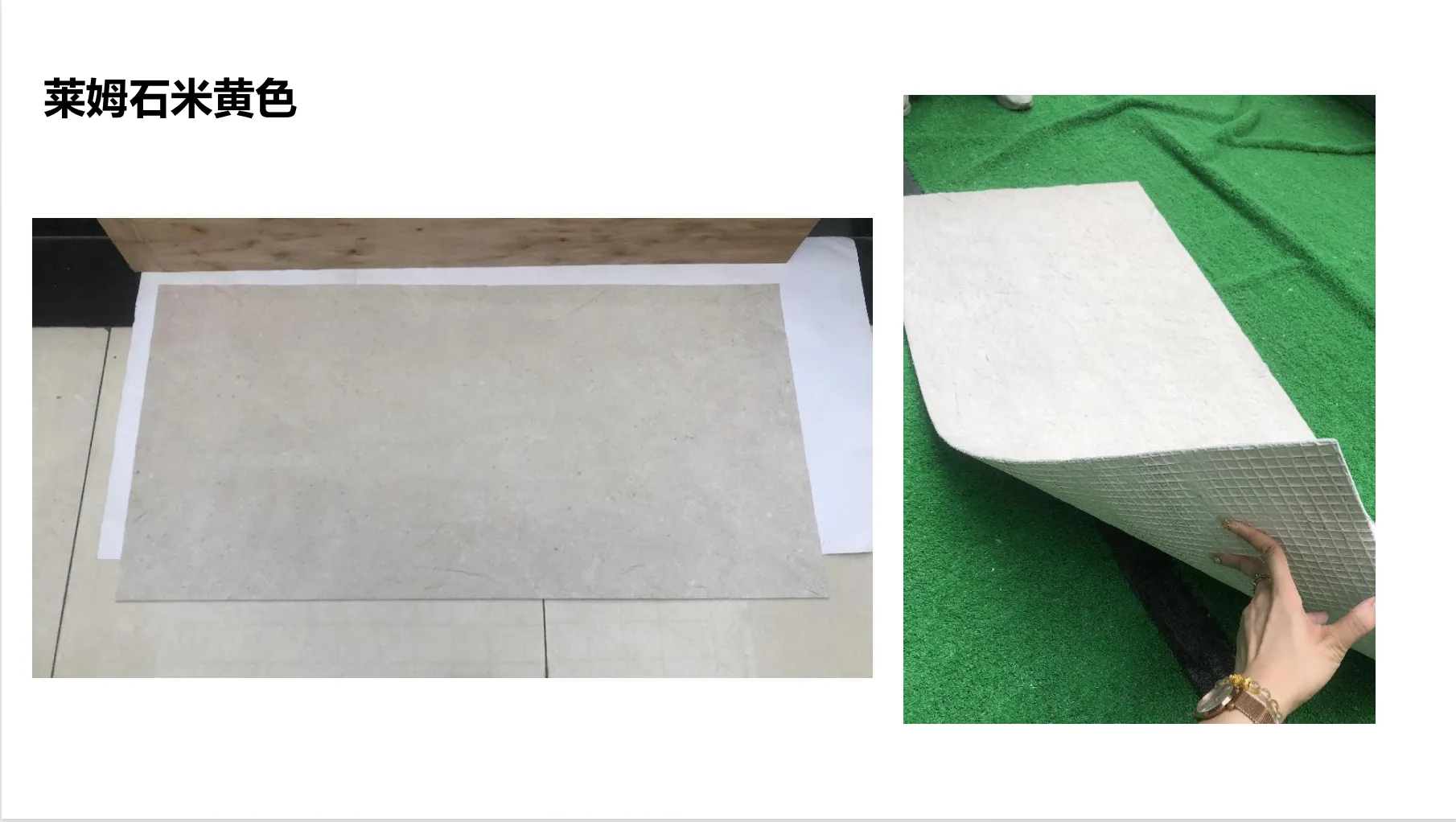
Take lime stone(beige) , one of the most popular varieties. Its soft, creamy color and subtle veining make it a favorite for both interiors and exteriors. To achieve a polished finish, slabs are run through a series of abrasive pads, starting with coarse grit and moving to finer ones, until the surface shines like a mirror. For a more rustic look—think a countryside villa or a boutique restaurant—workers might use a bush-hammer, which leaves the stone with a rough, pitted texture that feels warm and tactile underfoot. Other finishes include honed (matte, smooth), sandblasted (lightly textured, for slip resistance), or split-faced (rough, with the natural cleft surface exposed).
I spoke with a master finisher in Spain who specializes in masonry stone , the type used for traditional brickwork and wall cladding. He showed me a slab of limestone that had been "flamed"—treated with a high-temperature torch to create a rough, non-slip surface ideal for outdoor patios. "Every finish has a purpose," he explained, running his hand over the stone. "Polished limestone is elegant, but it's not meant for a driveway. Flamed stone is tough, but it wouldn't work in a formal dining room. You have to match the finish to the space, just like you'd match a paint color to a room's lighting."
Quality control is paramount here. Each slab is inspected for cracks, uneven coloring, or flaws. The best slabs are set aside for high-end projects, while others might be cut into smaller tiles or used for decorative accents. By the end of the processing stage, the limestone has been transformed from a raw block into a material with personality—ready to take its place in the built world.
Now, let's talk about where limestone shines: in building applications. From ancient pyramids to modern skyscrapers, this stone has proven its versatility, durability, and timeless appeal. Let's explore some of the most common ways limestone is used, and why it remains a top choice for architects and designers.
Limestone's ability to withstand the test of time makes it a staple in historical construction. Think of the Great Pyramids of Giza, where limestone blocks (some weighing over 2 tons) were quarried and transported with remarkable precision. Or the Parthenon in Athens, whose marble-like limestone columns have stood for over 2,500 years, their details still crisp despite centuries of wind and rain. In Europe, cathedrals like Notre-Dame de Paris and St. Paul's in London rely on limestone for their facades, its light color reflecting sunlight and giving the buildings an ethereal glow.
Restoration projects often turn to historical pathfinders stone to match the original materials. This variety is mined from the same quarries that supplied stone for ancient structures, ensuring that repairs blend seamlessly with the existing architecture. For example, when workers restored the Roman Colosseum in the 20th century, they used limestone from the Tivoli quarries—just as the ancient Romans did. It's a way of honoring the past while ensuring these landmarks endure for future generations.
Limestone isn't just for old buildings. Modern architects love it for its clean lines, natural beauty, and ability to complement contemporary materials like glass and steel. Take the Getty Center in Los Angeles, where 1.2 million square feet of travertine limestone (a type of limestone) clads the buildings, its warm beige tones contrasting stunningly with the blue California sky. Or the Burj Khalifa in Dubai, where limestone accents add warmth to the skyscraper's sleek, modern facade.
One of the reasons limestone works so well in modern design is its versatility. Fair-faced concrete —a type of concrete left exposed to show its natural texture—has become popular in contemporary architecture, but limestone offers something concrete can't: organic variation. No two limestone slabs are exactly alike; each has unique veining, color shifts, and texture, adding depth and character to minimalist spaces. A modern home with limestone walls feels grounded, yet light—like it belongs in the landscape, not just on it.
Step inside a high-end restaurant, a luxury hotel, or a stylish home, and you're likely to find limestone indoors, too. Its warm, neutral tones make it a perfect backdrop for any decor style, from rustic to contemporary. Limestone flooring is a classic choice—durable enough for high-traffic areas like entryways, yet elegant enough for bedrooms and living rooms. Polished limestone floors reflect light, making spaces feel larger, while honed or textured limestone adds warmth and traction (ideal for bathrooms or kitchens).
Walls are another popular spot for limestone. A feature wall clad in lime stone(beige) can transform a plain room into a cozy retreat, its subtle texture adding visual interest without overwhelming the space. In commercial settings, limestone wall panels create a sense of luxury and permanence—think bank lobbies, boutique stores, or office reception areas. Even smaller accents, like fireplace surrounds, countertops, or backsplashes, benefit from limestone's beauty. A limestone countertop in a kitchen feels timeless, and unlike synthetic materials, it develops a rich patina over time, telling the story of meals prepared and memories made.
Limestone isn't just for indoor use—it's equally at home in outdoor spaces. Its resistance to weathering, frost, and UV rays makes it perfect for patios, walkways, pool decks, and garden walls. Textured or split-faced limestone tiles provide excellent traction, even when wet, making them a safe choice for outdoor areas. In landscaping, limestone boulders or decorative rock add a natural, organic element, blending with plants and water features to create serene outdoor retreats.
I recently visited a backyard in Portland, Oregon, where the homeowner had used masonry stone to build a retaining wall and patio. The stone, with its rough, irregular edges, looked like it had been there for decades, even though the space was brand-new. "I wanted something that felt like it belonged to the land," the homeowner told me. "Limestone does that. It doesn't fight the environment—it works with it."
| Limestone Type | Color/Texture | Common Applications | Key Benefit |
|---|---|---|---|
| Historical Pathfinders Stone | Off-white, subtle veining | Heritage restoration, historic buildings | Matches original materials for authenticity |
| Lime Stone(Beige) | Creamy beige, soft texture | Interior walls, flooring, countertops | Warm, neutral tone complements any decor |
| Masonry Stone | Rough, irregular edges, earthy hues | Outdoor walls, patios, walkways | Durable and slip-resistant for outdoor use |
| Polished Limestone | Shiny, smooth surface, varied colors | Luxury interiors, high-end flooring | Reflective finish adds elegance |
| Split-Faced Limestone | Rough, natural cleft surface | Exterior cladding, accent walls | Adds rustic, organic character |
In a world of synthetic materials and quick fixes, why does limestone continue to be a top choice for builders and designers? The answer lies in its unique combination of beauty, durability, and sustainability. Unlike man-made products, limestone is a natural resource, quarried from the earth with minimal processing. It's non-toxic, recyclable, and biodegradable, making it an eco-friendly choice for green building projects. And while it may cost more upfront than materials like concrete or vinyl, its longevity more than makes up for it. A limestone building can last for centuries with proper care, whereas synthetic materials often need replacement every 20-30 years.
But there's more to it than practicality. Limestone has a soul. It carries the marks of its formation—the tiny fossils hidden in its layers, the veins of color that tell of ancient seas, the texture that feels alive under your fingertips. It ages gracefully, softening over time rather than deteriorating, and each scratch, stain, or weathered edge adds to its character. In a world that often values the new and the shiny, limestone reminds us of the beauty of imperfection and the power of endurance.
I'll never forget the words of that French quarry worker I met years ago. As we stood looking at a row of limestone blocks destined for a museum in New York, he said, "Stone is permanent. Buildings fall, empires rise and fall, but stone remains. When you work with limestone, you're not just building a wall or a floor. You're leaving something for the future. Someone a hundred years from now will touch this stone and wonder who put it there. That's the magic of it."
From the quarries where it's carefully extracted to the finished buildings that shape our lives, limestone is a material that connects us to the past, grounds us in the present, and prepares us for the future. Its journey is one of skill, respect, and artistry—a testament to the power of human ingenuity and nature's generosity. Whether it's the historical pathfinders stone restoring a medieval castle, the lime stone(beige) warming a modern home, or the masonry stone defining an outdoor oasis, limestone doesn't just build spaces—it creates legacies.
So the next time you walk past a limestone building, take a moment to look closer. Touch its surface, notice its texture, and imagine the journey it's taken. From the depths of the earth to the world above, limestone is more than a building material. It's a story—one that's still being written, one stone at a time.
Recommend Products












