
Exterior cladding is the skin of a building—a protective layer that shields against the elements, yes, but also a canvas that tells a story. It's the first impression, the silent conversation between architecture and the world around it. For too long, cladding materials have prioritized function over feeling, leaving buildings feeling cold, generic, or disconnected from their surroundings. But today, a new generation of materials is changing that narrative. Among them, gradient color rammed earth board stands out—not just as a product, but as a bridge between nature, tradition, and modern design.
Imagine walking down a street where each building wears a facade that feels alive: soft beiges melting into warm terracottas at dawn, deep grays blending into subtle greens as the sun sets. That's the magic of gradient color rammed earth board. It doesn't just cover walls; it transforms them into dynamic, evolving surfaces that respond to light, weather, and time. In a world craving authenticity, this material doesn't just meet the moment—it defines it.
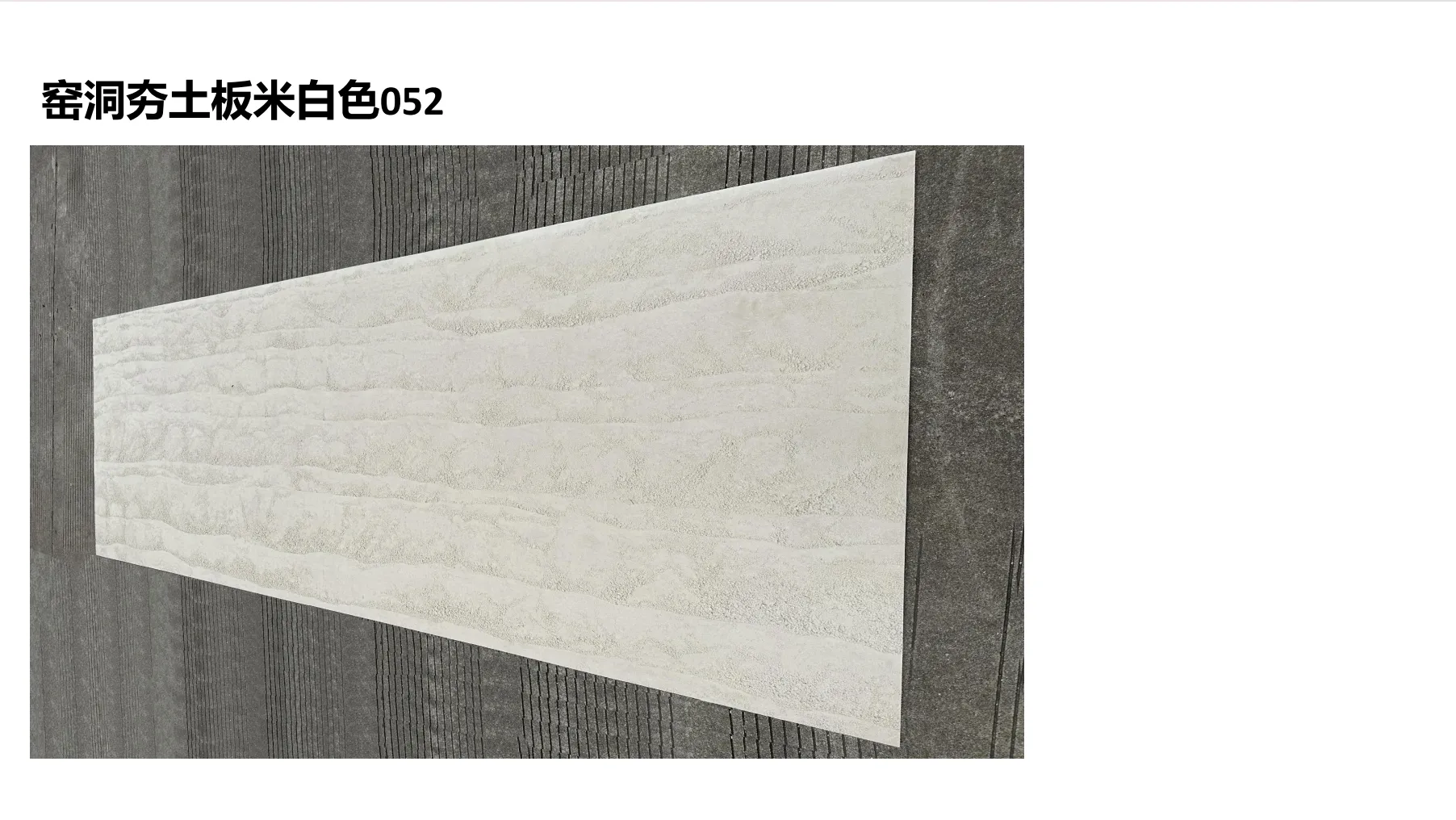
At its core, gradient color rammed earth board is a modern reimagining of one of humanity's oldest building techniques: rammed earth. For centuries, civilizations from China to Africa used compressed soil to create durable, weather-resistant structures. Today, this tradition is being reborn with a contemporary twist. Instead of a single, uniform hue, gradient color rammed earth board layers natural pigments and soils to create seamless transitions between tones—think of it as a watercolor painting rendered in stone.
Each board is crafted by compressing layers of mineral-rich soils, clays, and iron oxides in a mold, then curing them to form a dense, solid panel. The result? A surface with the raw, tactile texture of traditional rammed earth, but with the added dimension of color gradients that shift and deepen depending on the angle of light. No two boards are identical; like a fingerprint, each carries the unique marks of the materials and the hands that made it. It's a material that feels both ancient and new—rooted in the earth, yet designed for the demands of modern architecture.
But gradient color rammed earth board isn't just about looks. It's part of the broader MCM (Modified Composite Material) family, which includes innovations like mcm flexible stone and mcm big slab board series. This means it inherits the best of MCM technology: lightweight yet strong, easy to install, and built to last. Unlike traditional rammed earth, which requires on-site mixing and ramming, these prefabricated boards arrive ready to install, cutting down on construction time and waste. It's tradition, reimagined for the 21st century.
What makes gradient color rammed earth board more than just a pretty face? Let's break down its advantages—from sustainability to versatility—that make it a top choice for architects, homeowners, and designers alike.
In an era of climate consciousness, the materials we choose for our buildings matter. Gradient color rammed earth board checks every box for sustainability. Its core ingredients—soil, clay, and natural pigments—are sourced locally whenever possible, reducing transportation emissions. Unlike synthetic cladding materials (think vinyl or fiber cement), it contains no harmful chemicals or volatile organic compounds (VOCs), making it safe for both the environment and the people who live and work in the buildings it adorns.
Perhaps most importantly, gradient rammed earth board is inherently low-carbon. Traditional manufacturing processes for cladding often involve high heat (like firing ceramic tiles) or energy-intensive chemical treatments. Rammed earth, by contrast, relies on mechanical compression—no extreme heat, no toxic byproducts. And when a building reaches the end of its life, the boards can be recycled or returned to the earth, leaving minimal waste. It's a circular approach to building that honors the planet's limits.
Let's talk about the obvious: gradient color rammed earth board is stunning. But its beauty isn't just skin-deep. Unlike painted or printed cladding, which can look flat or artificial, the gradients here are organic—created by layering natural pigments that react differently to light. A board that starts as a soft "rammed earth board (khaki)" at the bottom might fade into a warm "rammed earth board (red)" at the top, mimicking the way sunlight tints desert sands at sunset. Or it could blend "rusty red" with "cloud-dragon" gray, evoking the rugged beauty of mountain ranges.
The texture adds another layer of depth. Run your hand over the surface, and you'll feel the subtle ridges and valleys left by the compression process—no two boards have the same pattern. This tactile quality makes buildings feel more approachable, more human. It's the opposite of the sleek, sterile facades that dominate modern cities; instead of pushing people away, it invites them to touch, to linger, to connect.
And the customization options are endless. Want a gradient that matches the local landscape? A manufacturer can blend pigments to echo the hues of nearby hills or coastlines. Prefer a bold statement? Opt for a striking transition from "rammed earth board (gradient)" in fiery oranges to deep purples. This flexibility means gradient rammed earth board can adapt to any architectural style—from minimalist modern homes to rustic farmhouses to cutting-edge commercial spaces.
Beauty without durability is just a fleeting trend. But gradient color rammed earth board is built to last. Thanks to its dense, compressed structure, it's highly resistant to weathering. Rain, wind, snow, and even extreme temperatures (from scorching desert heat to freezing winters) barely leave a mark. Unlike wood, it won't rot or warp; unlike some natural stones, it resists cracking or chipping. And because the pigments are mixed into the material itself—not just painted on—the colors won't fade or peel, even after decades of sun exposure.
Take the "gobi rammed earth board" variant, inspired by the harsh conditions of the Gobi Desert. Designed to withstand sandstorms and intense UV radiation, it's a testament to the material's toughness. Homeowners in coastal areas, too, have embraced it: its resistance to saltwater makes it ideal for beachfront properties, where other cladding materials might corrode or degrade quickly.
While gradient color rammed earth board shines as exterior cladding, its uses don't stop there. Thanks to its lightweight nature (a key advantage of MCM materials like mcm flexible stone), it's equally at home indoors. Imagine a feature wall in a living room, where a gradient from "rammed earth board (light yellow)" to "rammed earth board (khaki)" creates a cozy, sunlit atmosphere. Or a restaurant bar clad in gradient red and rusty red, evoking warmth and energy.
It also pairs beautifully with other materials, opening up endless design possibilities. Combine it with "lunar peak silvery" for a modern, celestial vibe, or with "travertine (starry blue)" to bring a touch of the night sky to a facade. Architects often mix it with "mcm big slab board series" for a layered look—using the big slabs for large, smooth sections and gradient rammed earth for accent walls or entryways. The result? A building that feels cohesive yet dynamic, with textures and colors that play off each other.
Gradient color rammed earth board isn't just for show—it's a practical, versatile material that enhances spaces of all kinds. Let's explore some real-world applications where it has transformed ordinary buildings into extraordinary ones.
Nestled in the hills of northern California, a modern cottage uses gradient color rammed earth board to blend into its surroundings. The facade transitions from "rammed earth board (gradient)" in soft beiges at the base to warm terracottas at the roofline, mirroring the golden grass and red soil of the hills. Large windows frame views of the landscape, while the cladding's texture adds depth, making the house feel grounded, as if it grew from the earth itself.
Inside, the same material wraps around a fireplace wall, creating a seamless flow between indoor and outdoor spaces. The homeowners wanted a home that felt "connected to the land," and gradient rammed earth delivered. "It changes with the light," they note. "In the morning, it's soft and warm; at sunset, it glows like it's on fire. It's never the same, and that's the beauty of it."
In a bustling coastal town in Bali, a boutique hotel chose gradient color rammed earth board for its facade, pairing it with "bali stone" accents and "wood line" details. The gradient—from "rammed earth board (khaki)" to "rammed earth board (red)"—evokes the island's sunsets, while the rough texture contrasts beautifully with the smooth, cool Bali stone. Guests often comment on how the hotel feels "inviting" and "unpretentious," a welcome change from the sleek, corporate resorts nearby.
Down the street, a café used "travertine (starry blue)" for its countertops and gradient rammed earth board in "rusty red" for its exterior walls. The combination of cool blue and warm red creates a vibrant, energetic space that draws in passersby. "People stop to take photos of the facade all the time," says the owner. "It's become a landmark—not just for the coffee, but for the way the building makes them feel."
In a small town in Italy, a new museum dedicated to local history wanted a facade that paid homage to the region's agricultural past. The architects chose gradient color rammed earth board in "rammed earth board (gradient)" from soft yellows to deep browns, reminiscent of the soil used for centuries to grow wheat and olives. They paired it with "historical pathfinders stone" accents, creating a dialogue between the old and the new.
"The museum is about preserving our heritage," explains the lead architect, "so we wanted a material that felt timeless. Gradient rammed earth does that—it's ancient, but the gradient gives it a modern edge. Visitors say it feels like walking into a story, not just a building."
In a busy urban park in Seoul, a community center uses gradient color rammed earth board to soften its modern lines. The facade transitions from "rammed earth board (light yellow)" to "rammed earth board (khaki)," creating a warm, approachable vibe that invites families, joggers, and artists to gather. Nearby, a children's playground features low walls clad in the same material, its texture perfect for little hands to explore.
"Cities can feel so cold, with all that concrete and glass," says the park's designer. "Gradient rammed earth adds warmth—literally and figuratively. On sunny days, the cladding absorbs heat and radiates it back at night, keeping the space cozy. And visually, it's a reminder of nature, even in the middle of the city."
Gradient color rammed earth board is just one of many innovative cladding materials on the market. How does it stack up against popular alternatives like lunar peak series, travertine, and mcm big slab board? Let's take a closer look.
| Material | Key Features | Best For | Sustainability | Durability |
|---|---|---|---|---|
| Gradient Color Rammed Earth Board | Organic color gradients, natural texture, lightweight (MCM technology) | Homes, boutique hotels, cultural spaces seeking warmth and connection to nature | High: Natural materials, low carbon footprint, recyclable | Excellent: Weather-resistant, fade-proof, crack-resistant |
| Lunar Peak Series (Silvery, Golden, Black) | Metallic sheen, sleek, modern look; includes "lunar peak silvery," "lunar peak golden," "lunar peak black" | Contemporary commercial buildings, high-end offices, minimalist homes | Moderate: Synthetic pigments, but durable (long lifespan reduces replacement waste) | Very Good: Resistant to corrosion, but may show fingerprints/scratches |
| Travertine (Starry Green, Starry Blue, etc.) | Natural stone with unique veining; includes "travertine (starry green)," "travertine (starry blue)," "travertine (vintage gold)" | Mediterranean-style homes, luxury resorts, classical architecture | High: Natural stone, but heavy (transportation emissions higher) | Good: Durable, but porous (requires sealing to prevent staining) |
| MCM Big Slab Board Series | Large, smooth panels in various finishes; lightweight, easy to install | Large commercial facades, warehouses, modern apartments | Moderate: Composite material, but recyclable and long-lasting | Excellent: Impact-resistant, weatherproof, low maintenance |
What stands out? Gradient rammed earth board's biggest advantage is its emotional resonance. While lunar peak series offers sleek modernity and travertine brings classical elegance, gradient rammed earth connects on a deeper level—it feels alive, personal, and rooted in nature. It's the material for those who want their building to tell a story, not just make a statement.
That said, it's not a one-size-fits-all solution. For a high-rise office in a financial district, lunar peak silvery might be the better choice for its polished, professional look. For a historic renovation, travertine (vintage gold) could honor tradition. But when warmth, sustainability, and uniqueness are priorities, gradient color rammed earth board is hard to beat.
One of the perks of gradient color rammed earth board is its ease of installation. Unlike traditional rammed earth, which requires on-site mixing and ramming (a labor-intensive process), these boards are prefabricated in factories. They arrive cut to size, ready to be attached to a building's frame using simple mounting systems. This not only speeds up construction but also reduces waste, as there's no excess material left on-site.
Installation teams will typically start by preparing the building's sheathing, ensuring it's flat and secure. Then, they'll attach furring strips to create an air gap between the sheathing and the cladding—this helps with insulation and moisture management. Finally, the gradient rammed earth boards are screwed or clipped into place, with minimal gaps between them to maintain the seamless look of the gradient.
Maintenance is equally straightforward. Unlike wood, which needs painting or staining, or travertine, which requires regular sealing, gradient rammed earth board needs little more than an occasional wash with mild soap and water. Its dense structure resists mold and mildew, and its pigments are fade-resistant, so the colors will stay vibrant for decades. For areas with heavy rain or snow, a yearly inspection to check for loose boards or damaged mounting hardware is recommended, but that's about it.
One thing to note: while gradient rammed earth board is moisture-resistant, it's not completely waterproof. In areas with extreme rainfall, it's best to pair it with a waterproof underlayment behind the cladding to prevent water from seeping into the building's structure. This is a simple step that ensures the material performs optimally for years to come.
As architecture continues to evolve, so too will the materials we use to build. Gradient color rammed earth board is poised to play a big role in the future of sustainable, human-centered design. Here are a few trends to watch:
Biophilic Design: Biophilic design—the practice of connecting buildings to nature— is gaining momentum as we learn more about the mental and physical benefits of being surrounded by natural elements. Gradient rammed earth board fits perfectly into this trend, with its earthy colors, organic textures, and connection to natural materials. Expect to see more buildings using it to blur the line between indoors and outdoors, creating spaces that reduce stress and boost wellbeing.
Custom Gradients: As demand grows, manufacturers are expanding their color options. Soon, homeowners and architects may be able to create fully custom gradients, mixing and matching hues to match specific landscapes, brand colors, or artistic visions. Imagine a hotel chain using a signature gradient across all its properties, or a homeowner replicating the colors of their favorite sunset.
Integration with Smart Technology: While gradient rammed earth board is inherently low-tech, it can pair with smart building systems. For example, researchers are exploring ways to embed thin, flexible solar panels into the boards, turning facades into energy-generating surfaces without sacrificing aesthetics. Or, using the material's thermal mass to help regulate indoor temperatures, reducing reliance on heating and cooling systems.
Heritage Conservation: In historic districts, where traditional materials are often required, gradient rammed earth board offers a way to blend old and new. Its natural look and texture complement historic architecture, while its modern durability ensures buildings stand the test of time. We're already seeing it used in the restoration of old barns, cottages, and even castles, where it honors the past while meeting modern safety and performance standards.
Gradient color rammed earth board is more than just a cladding material. It's a movement—a shift away from cold, generic architecture and toward buildings that feel alive, connected, and human. It's a reminder that beauty and function don't have to be mutually exclusive; that sustainability can coexist with style; and that tradition can inspire innovation.
Whether you're building a cozy home, a bustling café, or a grand cultural center, gradient rammed earth board offers something no other material can: a story. It's the story of the earth beneath our feet, of the sunrises and sunsets that paint our skies, of the traditions that shape us and the future we're building. In a world that often feels disconnected, that story is more important than ever.
So the next time you walk past a building clad in gradient color rammed earth board, take a moment to notice it. Touch its texture, watch how its colors shift with the light, and let it remind you: great architecture isn't just about walls and roofs. It's about how a building makes you feel. And with gradient rammed earth, that feeling is always warm, always alive, and always deeply human.
Recommend Products












