
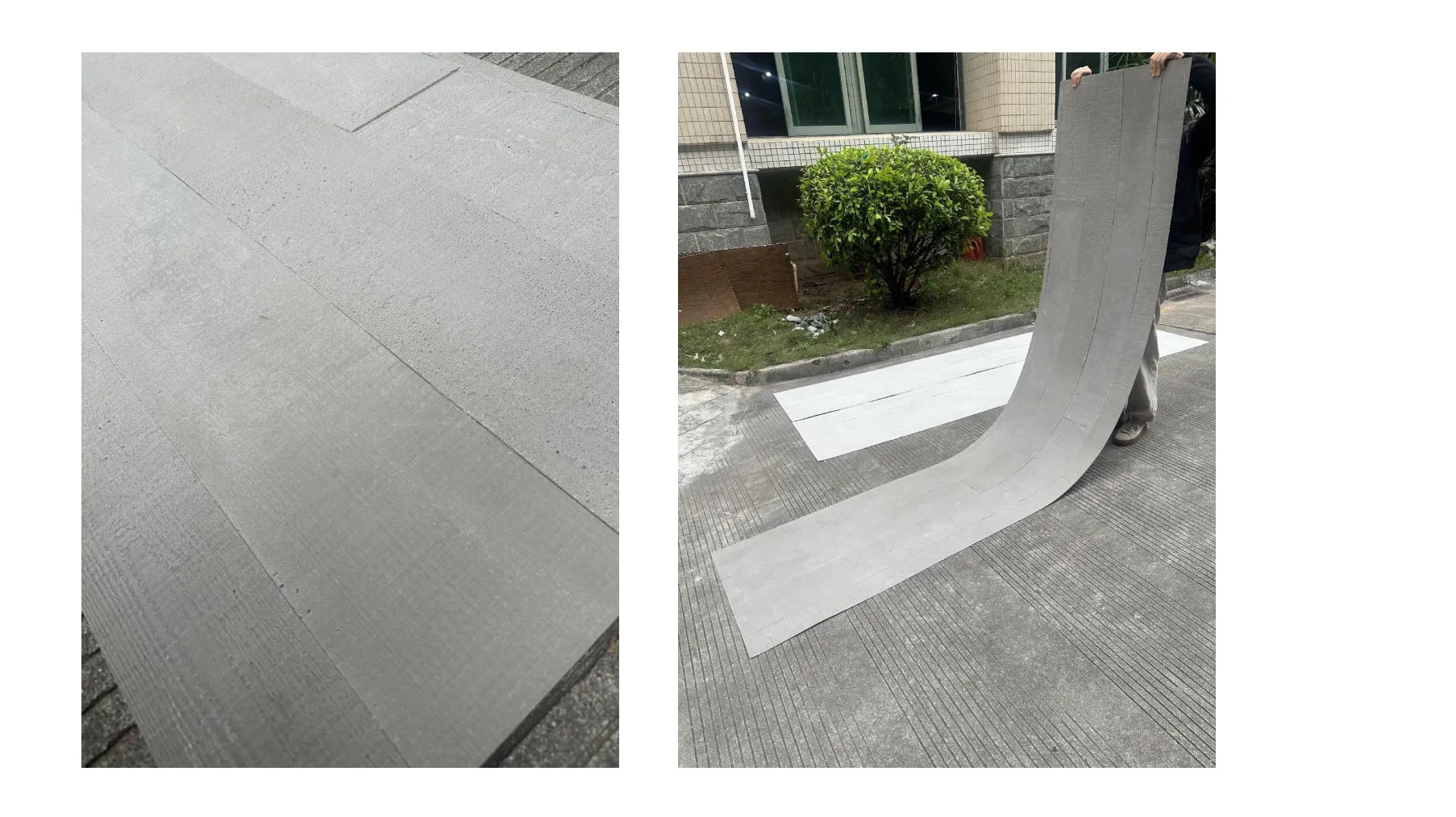
How MCM's innovative materials are turning buildings into stories—one texture, one color, one slab at a time.
Walk down any street in a modern city, and you'll notice a quiet revolution happening on building facades. Gone are the days when exterior walls were just blank canvases—flat, uniform, and forgettable. Today's cladding is a language. It speaks of warmth, of resilience, of connection to place. It's the difference between a house and a home, between a office building and a landmark.
Think about it: a café with walls that look like weathered barn wood might make you crave a cozy latte. A museum wrapped in stone that shimmers with hidden color could spark curiosity before you even step inside. Exterior cladding isn't just about protecting a building from the elements anymore. It's about evoking emotion, reflecting brand identity, and even nudging us toward more sustainable living.
Enter MCM's Big Slab Series—a collection that doesn't just follow these trends; it's setting them. Among its standout stars? The Wood-Cement Board, a material that defies expectations by blending two opposites: the organic warmth of wood and the industrial strength of concrete. But it's not alone. From the raw honesty of fair-faced concrete to the celestial glow of travertine (starry green) and the otherworldly shimmer of lunar peak silvery, this series is a masterclass in how cladding can transform spaces.
MCM has never been one to play it safe. For years, the brand has carved a niche in creating cladding that marries cutting-edge technology with a deep respect for natural materials. The Big Slab Series takes this philosophy further, focusing on larger, more impactful panels that reduce installation time without sacrificing detail. It's cladding designed for the way we live now—fast-paced, but hungry for authenticity.
"We wanted to create materials that don't just cover buildings, but complete them," says a senior designer at MCM, when asked about the series' inspiration. "Too often, cladding feels like an afterthought. We wanted to flip that: make it the starting point of a building's story."
And what a story it is. Let's dive into the materials that are making architects, designers, and homeowners alike sit up and take notice.
If the Big Slab Series had a protagonist, it would be the Wood-Cement Board. At first glance, you might mistake it for reclaimed wood—rich, warm grain patterns that curl and twist like they've been shaped by decades of wind and rain. Run your hand over it, though, and you'll feel the subtle heft of concrete, a reminder that this isn't just about looks.
"The magic is in the balance," explains a product engineer at MCM. "We take recycled wood fibers and blend them with high-performance concrete, then press them into panels that mimic the texture of everything from oak to teak. The result? A material that won't warp, rot, or fade like real wood, but still feels alive."
Real photos of the Wood-Cement Board (even without seeing them) paint a vivid picture: imagine a residential facade where the panels are laid horizontally, their grain running like a river across the walls, interrupted only by black metal windows. Or a commercial space where vertical strips of Wood-Cement contrast with sleek glass, creating a rhythm that feels both grounded and modern. It's versatile, too—stain it to deepen the wood tone, or leave it raw for a more industrial edge.
Pro Tip: Pair Wood-Cement Board with lighter materials like lunar peak silvery for a striking contrast. The warmth of the wood grain plays beautifully against the cool metallic sheen, creating a facade that feels both earthy and futuristic.
The Wood-Cement Board may steal the spotlight, but the Big Slab Series is a ensemble cast. Let's meet a few more members that are turning heads:
There's a reason fair-faced concrete has become a darling of minimalist design. It's unapologetically raw—no paint, no polish, just the natural texture of poured concrete, with all its tiny air bubbles and subtle color variations. In the Big Slab Series, MCM's take on fair-faced concrete is elevated: panels that are surprisingly lightweight (thanks to advanced manufacturing) but retain that signature "handmade" look.
Imagine a boutique hotel where the lobby walls are clad in fair-faced concrete, their cool gray surfaces offset by warm wooden furniture and soft lighting. It's a material that doesn't demand attention, but commands respect. "It's about letting the process show," says an architect who recently used it in a residential project. "Those small imperfections? They're what make the building feel human."
Travertine has long been loved for its porous, almost honeycombed texture, but MCM's travertine (starry green) takes it to another level. This isn't your average beige travertine. Here, the stone is infused with tiny, iridescent green particles that catch the light—subtly during the day, more dramatically at dusk. It's like someone took a bucket of starlight and mixed it into the stone, creating a surface that feels alive with movement.
"We had a client who wanted their beach house to feel connected to both the ocean and the night sky," recalls a designer. "Travertine (starry green) was the answer. During the day, it blends with the sand and sea; at night, those green flecks glow like bioluminescence. It's magical."
If travertine (starry green) is the night sky, lunar peak silvery is the moon itself. This material has a metallic base with a soft, matte finish that shimmers without being flashy. It's cool to the touch, with a texture that's smooth but not slippery—like polished stone dusted with stardust. It's perfect for buildings that want to make a statement without shouting.
A recent office complex in downtown Chicago used lunar peak silvery panels on its upper floors, where they catch the city's skyline light and reflect it back, turning the building into a beacon at night. "It's bold, but not brash," says the project's lead architect. "Lunar peak silvery has this quiet confidence that fits the brand's ethos perfectly."
With so many options, how do you choose? Here's a quick breakdown of what makes these materials unique, and where they shine brightest:
| Product Name | Core Appeal | Texture & Color Notes | Best For | Sustainability Highlight |
|---|---|---|---|---|
| Wood-Cement Board | Warmth + Durability | Natural wood grain patterns; available in light oak, dark walnut, and driftwood gray | Residential homes, cafes, boutique stores | Made with 30% recycled wood fibers and low-VOC binders |
| Fair-Faced Concrete | Raw Honesty | Smooth with tiny air bubbles; classic gray, with optional white or charcoal tints | Museums, art galleries, minimalist homes | High-recycled content aggregate; reduces need for paint/coatings |
| Travertine (Starry Green) | Celestial Beauty | Porous, honeycombed texture; earthy base with iridescent green speckles | Beach houses, resorts, statement walls | Locally sourced travertine; water-efficient manufacturing |
| Lunar Peak Silvery | Modern Elegance | Matte metallic finish; silvery base with subtle blue undertones | Corporate buildings, high-rise apartments, luxury hotels | 100% recyclable aluminum core; energy-efficient production |
Numbers and specs are one thing, but seeing these materials in action? That's where the magic truly hits. Let's look at two projects that brought the Big Slab Series to life:
In a trendy neighborhood in Portland, a new café wanted to balance its industrial location with a welcoming vibe. The solution? Wood-Cement Board for the main facade, laid horizontally to mimic the look of a reclaimed barn. The team added accents of travertine (starry green) around the entrance and windows, creating pops of color that draw the eye. "The contrast is everything," says the café owner. "People walk by and say, 'That looks like a place I want to spend time in.'" Inside, the same Wood-Cement lines the walls, tying the exterior and interior together into a cohesive, inviting space.
A tech company in Seattle wanted a building that reflected its innovative spirit—forward-thinking, but grounded in sustainability. The design team opted for large panels of lunar peak silvery on the upper floors, which catch the Pacific Northwest's diffused light and give the building a sleek, futuristic look. The lower levels? Fair-faced concrete, adding weight and stability. "It's like the building is reaching for the sky, but has its roots firmly planted," explains the architect. The result? A structure that employees are proud to call their workplace—and that passersby can't help but photograph.
The Big Slab Series is just the beginning. As technology advances and our hunger for meaningful design grows, we can expect even more innovation from MCM and the industry at large. 3D printing, for example, is already being explored to create custom textures that were once impossible—think cladding that mimics the ripples of a river or the cracks of desert earth. And sustainability will only become more central; MCM is already experimenting with biobased binders in its Wood-Cement Board and exploring ways to capture carbon during manufacturing.
But perhaps the biggest trend? Cladding that doesn't just look good, but does good. Materials that improve air quality, insulate better to reduce energy use, or even grow moss (yes, living cladding is on the horizon). The future of exterior design isn't just about aesthetics—it's about creating buildings that work with the planet, not against it.
For now, though, the Big Slab Series stands as a testament to what's possible when innovation meets intuition. It's cladding that doesn't just cover buildings. It completes them. It turns structures into stories. And in a world that's more disconnected than ever, that's a powerful thing.
So the next time you pass a building that makes you stop and stare, take a closer look at its walls. Chances are, it's not just stone or wood or concrete. It's a conversation. And MCM is leading the dialogue.
Recommend Products












