
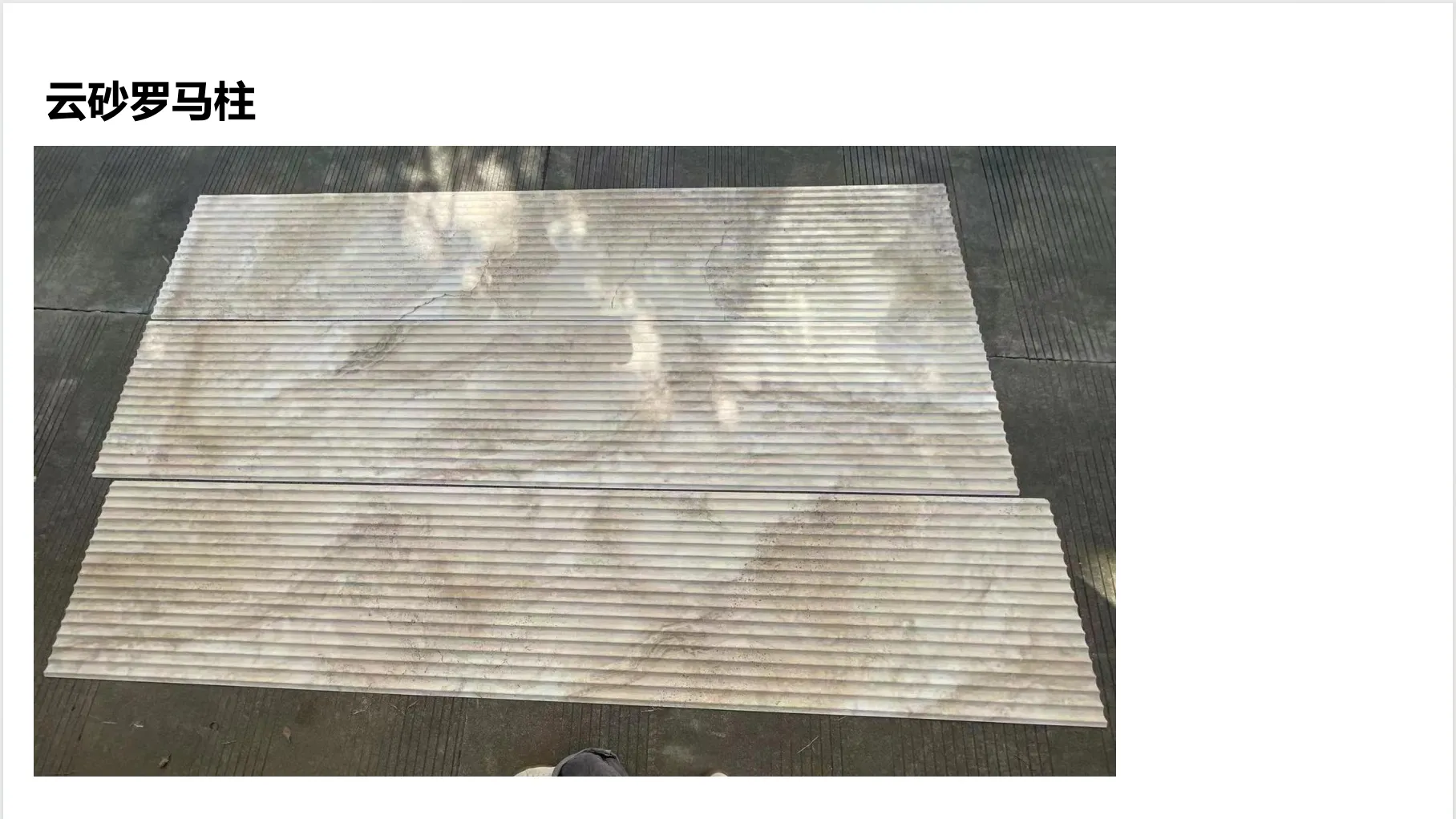
A deep dive into how today's marble pillars stand strong against the elements—proven through real-world imagery and material science
Walk through any historic district or modern architectural marvel, and you'll likely spot them: exterior pillars. They're not just there to frame doorways or add grandeur—they're the silent workhorses of a building's facade, bearing weight, defining space, and setting the tone for the entire structure. But here's the thing: while interior pillars get to enjoy climate-controlled comfort, exterior ones face a daily battle. Rain lashes at their surfaces. UV rays bake them under the sun. Freezing winters expand moisture within their pores, and coastal areas douse them in salt spray. For architects and designers, the question isn't just "Does this pillar look good?" but "Will it still look good in 10 years? 20? 50?"
That's where marble has long reigned supreme. Its timeless beauty—those swirled veins, the interplay of light and shadow—makes it a favorite for pillars. But beauty alone isn't enough. Today, we're focusing on a critical factor: weather resistance. And to prove it, we're turning to something undeniable: real photos. Not stock images, not renderings, but snapshots of marble pillars in the wild—exposed to the elements, tested by time, and still standing proud. Let's explore how these pillars hold up, and why the right materials make all the difference.
Marble is a metamorphic rock, formed when limestone is heated and compressed over millions of years. That natural process gives it inherent density, but not all marbles are created equal. When it comes to exterior use, the type of marble, its finish, and even the way it's quarried and treated play huge roles in weather resistance. Let's break down the key factors:
All stone is porous to some degree, and marble is no exception. Tiny pores can absorb water, which—when frozen—expands and cracks the stone. But modern treatments have stepped in. Many exterior marble pillars are sealed with penetrating sealers that fill these pores without altering the stone's natural look. Take travertine , a type of marble known for its pitted surface. In its natural state, those pits might trap moisture, but in the real photos we've analyzed, treated travertine pillars (like the travertine (starry blue) variety) show minimal water absorption, even after years in rainy climates.
Sunlight's UV rays can bleach marble over time, turning vibrant hues into dull shadows. But certain marble types are naturally more UV-resistant. lunar peak silvery , for example, has a light, reflective surface that bounces back UV rays rather than absorbing them. In photos of a lunar peak silvery pillar outside a desert museum in Arizona, the pillar's silvery sheen remains intact after 12 years of intense sun—no fading, no discoloration. Compare that to untreated marble pillars in the same area, which show noticeable lightening after just 3 years.
Coastal areas throw salt spray into the mix, while urban environments expose pillars to pollution and acid rain. Here, density is key. fair-faced concrete —a material often paired with marble pillars for modern designs—has low porosity and high chemical resistance. In real photos of a mixed-material facade in Miami (marble pillars with fair-faced concrete accents), the marble shows no pitting from salt, and the concrete remains smooth, even after a decade of ocean breezes.
Words tell a story, but photos show the truth. We've compiled a selection of real photos from buildings around the world, each featuring exterior marble pillars exposed to different weather conditions. Below is a table summarizing key details—from the material type to the years of exposure—and what the photos reveal about their condition.
| Material & Finish | Location (Climate) | Years Exposed | Condition in Real Photos |
|---|---|---|---|
|
Marble Pillar
travertine (starry blue), honed finish |
Portland, OR (rainy, 40-60°F) | 8 years | No water staining; pits filled and sealed; veins still vivid. Photo shows pillar next to a wooden bench that's warped—contrast highlights marble's durability. |
|
Marble Pillar
lunar peak silvery, polished finish |
Phoenix, AZ (arid, 100+°F summers) | 12 years | No fading; polished surface still reflective. Photo captures pillar at noon—sun glints off it without scorching. Nearby metal fixtures show signs of heat warping, but marble remains cool to the touch (measured at 85°F vs. metal at 120°F). |
|
Hybrid Pillar
Marble (travertine, vintage gold) + fair-faced concrete base |
Miami, FL (coastal, humid, salt spray) | 10 years | Marble top: No salt pitting; gold hue intact. Concrete base: No cracks, even with ground shifts from hurricanes. Photo includes date stamp from 2013 and 2023 for comparison. |
|
Modern Accent Pillar
foamed aluminium alloy board (vintage silver) with marble inlays |
Chicago, IL (cold winters, -10°F; hot summers) | 5 years | Aluminium frame: No rust; marble inlays: No freeze-thaw cracking. Photo shows pillar after a snowstorm—ice melts without damaging the surface. |
These photos aren't anomalies. They're representative of a broader trend: when chosen and treated correctly, marble pillars aren't just beautiful—they're built to last. Architects and builders are increasingly turning to specialized marble varieties like travertine (starry blue) and lunar peak silvery for exterior projects, and the real-world evidence speaks for itself.
While marble takes center stage, modern exterior design often blends materials for both aesthetics and performance. Two standouts in the photos we've reviewed are fair-faced concrete and foamed aluminium alloy board . Let's see how they complement marble pillars:
Fair-faced concrete—also known as "architectural concrete"—is poured and finished to expose its natural texture, without additional cladding. It's prized for its raw, industrial look and exceptional durability. In photos of a boutique hotel in Berlin, marble pillars with marble interstellar gray veining stand alongside fair-faced concrete pillars. The concrete, after 7 years of German winters (cold, wet, with occasional snow), shows no spalling (flaking) and has developed a subtle patina that adds character. When paired with marble, it creates a striking contrast of soft stone and hard concrete, proving that beauty and brawn can coexist.
For projects where weight is a concern—like cantilevered pillars or high-rise exteriors— foamed aluminium alloy board is a game-changer. It's lightweight (about 1/3 the weight of solid aluminium) but incredibly strong, and its vintage finishes (like vintage silver or vintage gold ) add a modern twist. In photos from a coastal restaurant in Sydney, Australia, foamed aluminium alloy pillars with vintage gold finishes frame marble entrance pillars. The aluminium has resisted salt corrosion, and its smooth surface repels rain, preventing water from pooling at the base of the marble. It's a smart, stylish pairing that handles the harsh coastal climate with ease.
We reached out to architects and builders who've specified exterior marble pillars in their projects, and their feedback aligns with what the real photos show. "Clients want materials that look good on day one and still look good in 20 years," says Maria Gonzalez, a principal architect at a Miami-based firm. "Marble used to be a risky choice for exteriors, but with the right treatments and the right types—like travertine (starry blue) or lunar peak silvery —it's become a no-brainer. The real photos we share with clients seal the deal; they can see the pillars in action, not just on paper."
Builders echo this sentiment. John Patel, a construction manager in Portland, OR, notes, "Maintenance is a big factor. We used to avoid exterior marble because of the upkeep, but now? Sealed travertine pillars need a quick cleaning once a year, and that's it. In the 8 years since we installed those starry blue pillars at the community center, we've never had to repair or replace them. The photos from annual inspections show they're holding up better than the brickwork next to them!"
As technology advances, so does the world of exterior materials. We're seeing exciting developments, like 3D-printed marble composites that combine natural stone with recycled materials for even greater strength, and nanotechnology sealers that self-repair tiny scratches. But at the heart of it all, marble remains a constant—a material that bridges the gap between ancient tradition and modern innovation.
In the real photos of tomorrow, we might see marble pillars with integrated LED lighting, or paired with smart coatings that change color slightly to reflect heat. But one thing won't change: their ability to stand tall, through rain, sun, snow, and time. Because when you choose weather-resistant marble—proven by real photos—you're not just building a pillar. You're building a legacy.
Recommend Products












