
There's a moment in every homeowner's journey when you step back and really look at your house—and realize it's time for a change. For Sarah, that moment came last spring as she stood in her driveway, staring up at the exterior of her 1990s colonial home. The once-charming stone facade had faded to a dull, uneven gray; chips and cracks spiderwebbed across the surface, and the heavy slabs seemed to weigh not just on the walls, but on her patience too. "It felt like the house was stuck in a time warp," she says now, shaking her head. "I wanted something that felt fresh, durable, and true to the home's character—but traditional stone? It was just… too much."
If you've ever tackled an exterior renovation, you know the struggle. The options feel endless, but so do the compromises: natural stone is beautiful but heavy and high-maintenance; vinyl is cheap but looks plastic; wood ages quickly and needs constant sealing. Sarah spent months scrolling through design blogs, visiting showrooms, and even driving around neighborhoods, snapping photos of homes she admired. Then, during a late-night search for "lightweight exterior stone alternatives," she stumbled on something that made her pause: COLORIA MCM's rough granite stone and big slab board series. The rough granite real pictures alone were enough to spark her curiosity—but it was the before-and-after stories that convinced her to dig deeper.
In this article, we're diving into Sarah's renovation journey, exploring why traditional exterior materials often fall short, and how MCM (Modified Composite Material) products like COLORIA's rough granite stone and big slab board series are redefining what's possible for home exteriors. Whether you're a homeowner dreaming of a refresh, a designer hunting for the perfect texture, or an architect balancing aesthetics with structural sense, this is the story of how one material transformed a tired facade into something timeless—and why it might just be the solution you've been searching for too.
Before we talk about the "after," let's linger on the "before"—because understanding the problem is key to appreciating the solution. For Sarah, and for countless others, traditional exterior materials come with a laundry list of frustrations that go beyond just looks.
Weight = Stress (for Your Home and Your Budget) Natural granite, limestone, even brick—these materials are heavy. We're talking 50-100 pounds per square foot heavy. For older homes like Sarah's, that weight isn't just a hassle during installation; it can put real strain on the structure. "Our contractor mentioned that the original stone might have been contributing to the cracks in our foundation," she recalls. "He said adding more heavy material could make things worse." Beyond structural risks, heavy materials mean higher shipping costs, more labor (you need a crew just to lift and position them), and longer installation timelines. Sarah got a quote from a mason who estimated 6-8 weeks of work—time she didn't have, and money she didn't want to spend.
Maintenance: A Never-Ending To-Do List Traditional stone fades. It chips. It absorbs water, leading to mold, mildew, and even freeze-thaw damage in colder climates. Sarah was tired of power-washing twice a year, touching up sealant every 18 months, and staring at new cracks after every storm. "I'd walk outside after rain and see new stains on the stone," she says. "It felt like the house was aging faster than I was." Wood isn't better—rot, termites, and peeling paint turn "charming" into "chaotic" in just a few years. Even concrete, once hailed as low-maintenance, can crack, stain, and require resurfacing.
Design Limitations: Stuck in the "Same Old" Maybe the biggest letdown? The lack of flexibility. Traditional materials often come in fixed sizes, limited colors, and rigid textures. Sarah wanted a mix of depth and modernity—something that felt organic but not outdated. "I showed my designer a photo of a European cottage with rough-hewn stone, and she said, 'We can't get that texture here without importing stone, and that'll cost a fortune,'" Sarah remembers. "It felt like I had to choose between 'boring' and 'bank-breaking.'"
It was during a late-night deep dive into "lightweight stone alternatives" that Sarah first encountered MCM. Short for Modified Composite Material, MCM is a blend of natural minerals, polymers, and reinforcing fibers—engineered to mimic the look and feel of natural stone, wood, or concrete, but with none of the drawbacks. "I read that it's 70% lighter than traditional stone," she says, "and I thought, 'That can't be right.'" But as she explored COLORIA's website, scrolling through case studies and product pages, she started to believe. Especially when she clicked on the rough granite real pictures section.
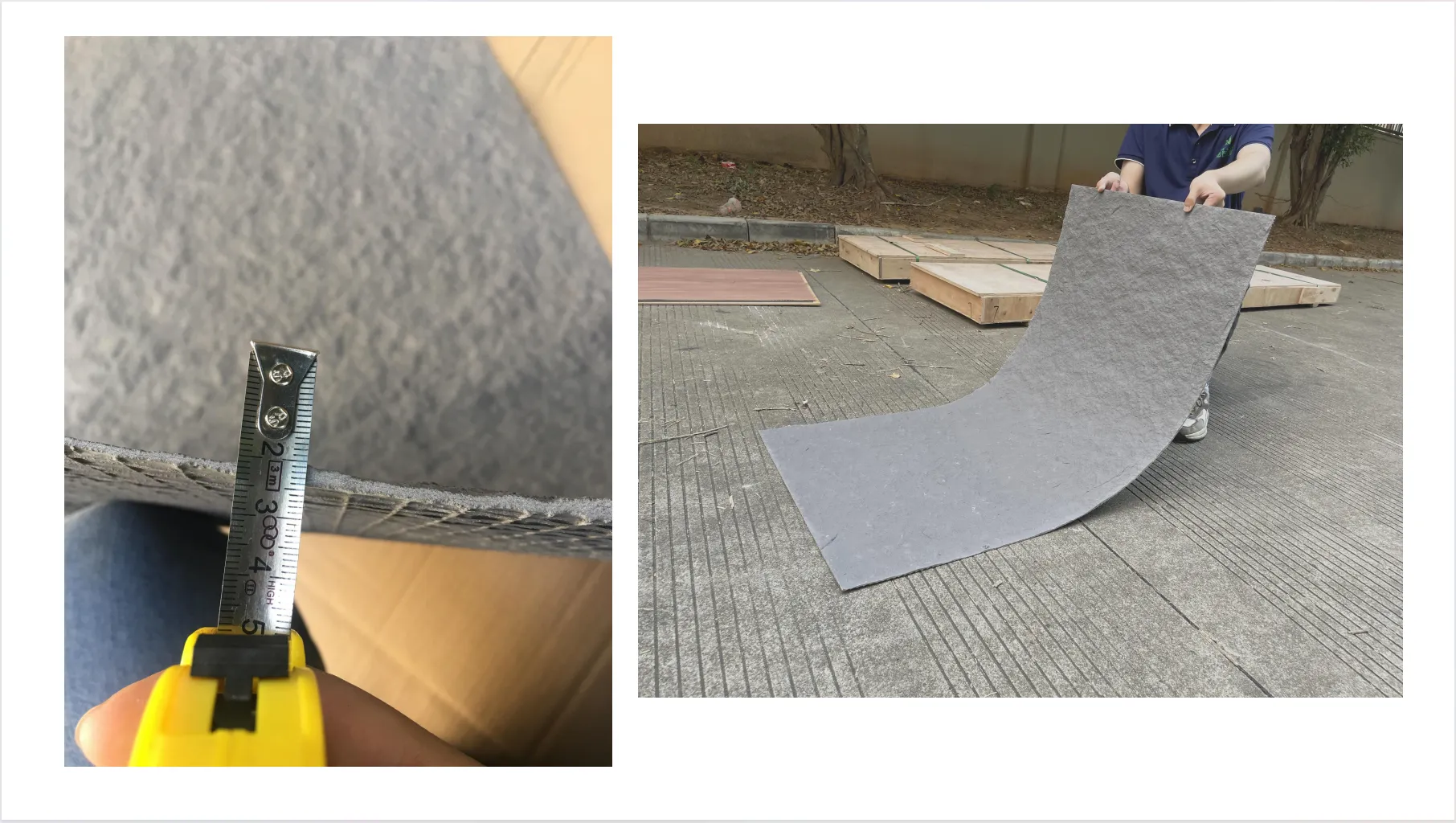
"The photos looked… real," she says. "Not like that fake stone veneer you see at big-box stores—this had texture, depth, the subtle variations you get with natural granite. I could see the rough, hewn edges, the flecks of mineral in the medium grey and dark grey options. It was exactly the look I wanted, but without the weight or the hassle." Intrigued, she reached out to COLORIA's team, who sent her physical samples. "Holding that sample in my hand? That's when I was sold," Sarah says. "It felt solid, but light—like a fraction of the weight of the stone on my house. And the texture? It wasn't just printed on; it was part of the material. You could run your hand over it and feel the roughness, the character."
MCM isn't just a material—it's a design philosophy. By combining natural elements with modern engineering, brands like COLORIA have unlocked possibilities that traditional materials can't match. For exteriors, that means panels that are flexible enough to wrap around curves, large enough to create seamless walls (thanks to series like the MCM big slab board series ), and durable enough to withstand harsh weather, UV rays, and the test of time. "Suddenly, the 6-8 week installation estimate dropped to 2 weeks," Sarah says. "And the cost? About 30% less than importing natural rough granite. It was like all the problems I'd been stressing over—weight, time, money, maintenance—just… vanished."
Of all the MCM products COLORIA offers, it was the rough granite stone that stole Sarah's heart. Available in rough granite stone (medium grey) and rough granite stone (dark grey) , these panels are designed to capture the raw, earthy beauty of granite quarried from mountain sides—without the environmental impact or logistical nightmare of transporting heavy stone.
"What I love most is the variation," Sarah says. "Natural granite has those unique mineral deposits, those little flaws that make it feel alive. COLORIA's rough granite doesn't just mimic that—it embodies it. The medium grey has these subtle silver flecks that catch the sunlight, and the dark grey has hints of charcoal that make the house feel grounded. It's not a flat, uniform color; it's dynamic. Like the stone is breathing."
But it's not just about looks. The rough texture isn't just for show—it's functional too. "Our old stone was so smooth that rainwater would pool on it, leading to stains," Sarah explains. "The rough surface of the MCM granite lets water run off easily, so we don't get those ugly watermarks. And because it's non-porous, mold and mildew can't take hold. I haven't had to power-wash since installation—and that alone is a win."
For designers and architects, the rough granite stone opens up a world of creative freedom. It pairs beautifully with modern elements like black metal windows or wooden accents, adding warmth without feeling rustic. "I worked with my designer to mix the medium and dark grey panels," Sarah says. "We used the dark grey on the lower half of the house and the medium grey above, with a thin strip of white trim in between. It's like the house has depth now—layers, instead of just one flat surface." And because the panels are part of the MCM big slab board series , there are fewer seams, creating a sleek, cohesive look that traditional stone (which often requires grout lines) can't match.
If rough granite stone is the "what" of Sarah's renovation, the MCM big slab board series is the "how." Traditional stone veneers or panels are often small—12x12 inches or so—meaning hundreds of pieces to install, each requiring precise alignment and grout. The result? A busy, disjointed look, and a lot of time (and labor costs) spent on installation. The big slab series changes that with panels as large as 4x8 feet, creating expansive, seamless surfaces that make a bold statement.
"Our contractor couldn't believe how easy these were to install," Sarah says. "Because they're lightweight, two guys could carry a 4x8 slab—no crane needed. And since there are fewer pieces, they went up fast. We went from a house covered in scaffolding to a finished exterior in 10 days. I kept waiting for a catch, but there wasn't one."
The large size also means fewer grout lines, which isn't just aesthetically pleasing—it's practical. Grout is a magnet for dirt, mold, and mildew, and it cracks over time, requiring constant repair. With big slabs, those problems disappear. "I used to hate looking at the grout lines on my old stone—they were always dirty, no matter how much I cleaned," Sarah says. "Now, the exterior is one smooth, continuous surface. It looks so much more modern and put-together."
But the big slab series isn't just for modern homes. It's versatile enough to complement any style—from minimalist to cottagecore. "We added a few smaller accent panels around the front door to break up the expanse, and it balanced perfectly," Sarah says. "It's like having a blank canvas—you can mix sizes, colors, and textures to create exactly what you want."
Let's talk specifics. Sarah's home, built in 1992, had a facade of chipped, faded limestone in a washed-out beige. The roof was a dull brown, the trim was peeling white, and the whole house felt… tired. "I'd pull into the driveway and think, 'This doesn't feel like my house,'" she says. Now? "I catch myself staring at it when I come home. It feels like a brand-new house, but with the same bones—the best of both worlds."
The Before: The original exterior featured small, irregular limestone panels in a flat beige. The mortar between them was cracked and discolored, and several panels had chipped, exposing the underlying structure. "The worst part was the front porch," Sarah says. "The stone had started to bow outward, and the contractor said it was a safety hazard. We had to rope it off to keep guests from standing there." The color was uneven—some panels had faded to almost white, others were streaked with dark water stains. "It looked like the house was wearing a dirty, old jacket," she adds.
The Vision: Sarah wanted a warmer, more textured look—something that felt grounded but modern. She drew inspiration from Scandinavian design, which often pairs natural textures with clean lines. "I wanted the house to feel approachable, not imposing," she says. "But I also wanted it to stand out—not blend in with every other beige house on the block." After consulting with her designer, she settled on a palette of rough granite stone (dark grey) for the lower half of the house and rough granite stone (medium grey) for the upper half, with crisp white trim and black metal accents (window frames, light fixtures) to add contrast.
The After: Today, Sarah's home is unrecognizable—in the best way. The dark grey rough granite panels wrap around the lower level, from the foundation to the windowsills, grounding the house in rich, earthy tones. Above, the medium grey panels climb to the roofline, their subtle silver flecks catching the sun and adding dimension. The white trim pops against the stone, and the black metal windows (a new addition) tie the whole look together. "The front porch is now my favorite spot," Sarah says. "We replaced the old, cracked stone with big slab rough granite panels, added a wooden bench, and now I sit out there every morning with my coffee. It feels like a little oasis."
The transformation isn't just visual—it's functional too. "Our energy bills have gone down," Sarah notes. "The MCM panels have built-in insulation, so the house stays cooler in summer and warmer in winter. And I haven't had to do a single thing to maintain the exterior—no sealing, no power-washing, no touch-ups. It still looks as good as the day it was installed, six months later."
And the rough granite real pictures ? They don't lie. "I posted photos on Facebook, and so many people asked if we'd torn the house down and rebuilt it," Sarah laughs. "It's wild how much of a difference the exterior makes. The house feels happier now—like it finally matches the life we live inside."
Still on the fence? Let's break it down. Here's how traditional rough granite stacks up against COLORIA's MCM rough granite stone and big slab series:
| Feature | Traditional Rough Granite | COLORIA MCM Rough Granite |
|---|---|---|
| Weight (per sq ft) | 30-40 lbs | 8-10 lbs (70% lighter) |
| Installation Time (1,000 sq ft) | 4-6 weeks (requires 4-6 workers) | 1-2 weeks (requires 2-3 workers) |
| Durability | Prone to chipping, cracking, and fading; requires sealing every 1-2 years | Impact-resistant, UV-stable, water-resistant; no sealing required |
| Aesthetic Flexibility | Limited colors/sizes; requires grout lines; difficult to curve | Multiple colors (medium grey, dark grey, etc.); large slabs (no grout); flexible for curves |
| Long-Term Cost | High upfront cost + ongoing maintenance (sealing, repairs) | 30-40% lower upfront cost + minimal maintenance |
| Structural Impact | May require structural reinforcement; risk of stress on walls/foundation | Lightweight; no structural reinforcement needed |
Sarah didn't just choose MCM—she chose COLORIA. And there's a reason why. Beyond the innovative materials, COLORIA stands out for its commitment to quality, design, and customer support. "From the first phone call, their team was incredible," Sarah says. "They sent samples right away, walked me through the different options, and even connected me with a local installer who had experience with their products. It didn't feel like a sales pitch—it felt like they genuinely wanted to help me get the look I wanted."
COLORIA's focus on design is evident in every product, from the rough granite stone to the MCM big slab board series . They collaborate with architects and designers to stay ahead of trends, ensuring their materials don't just meet current needs, but anticipate future ones. "They have a whole line of 3D-printed MCM panels now," Sarah notes. "I didn't need that for my house, but it's cool to see they're always innovating."
Sustainability is another priority. MCM uses fewer natural resources than traditional stone, and COLORIA's manufacturing process minimizes waste and emissions. "That was important to me," Sarah says. "I wanted to make a choice that was good for my home and good for the planet."
And then there's the warranty. COLORIA stands behind its products with a 15-year warranty against fading, cracking, and delamination. "That peace of mind is priceless," Sarah says. "Knowing that if something goes wrong, they'll fix it? That's the kind of company you want to work with."
Sarah's story isn't unique. It's the story of homeowners, designers, and architects everywhere who are tired of compromising between beauty and practicality, between tradition and innovation. It's the story of discovering that there's a better way—and that better way is MCM.
Whether you're renovating a 1990s colonial, designing a modern commercial space, or building your dream home from the ground up, COLORIA's rough granite stone and MCM big slab board series offer a canvas for creativity. Lightweight, durable, beautiful, and affordable—they're not just materials; they're a solution. A solution that turns "I wish" into "I can."
So, what are you waiting for? Dive into the rough granite real pictures , request samples, talk to the COLORIA team. Your exterior deserves to tell a story—and with MCM, it can be a story of beauty, durability, and joy. Just ask Sarah.
"Every time I pull into my driveway, I smile," she says. "That's the power of a great exterior. It's not just a house anymore—it's home."
Recommend Products












