
It was a crisp autumn morning when Sarah first noticed the cracks. She'd been standing on her front porch, sipping her coffee and admiring the way the sunlight hit the limestone exterior of her 1980s home—a feature she'd always loved for its warm, earthy charm. But that day, the light caught something else: thin, spiderwebbed lines snaking across the stone, like tiny rivers cutting through dry land. "Probably just the weather," she told herself, brushing it off. But over the next few months, those cracks deepened. Then came the discoloration: patches of beige stone fading to a dull gray, as if the house itself was losing its vitality. By the time winter rolled around, chunks of limestone had started chipping off, leaving rough, jagged edges where smooth texture once was. That's when Sarah knew: her "charming" exterior was slowly falling apart.
For years, Sarah had prided herself on maintaining her home's original character. The limestone (beige) exterior was one of the reasons she'd bought the house—its soft, natural hue complemented the oak trees in her yard, and it felt timeless, like something out of a storybook. But as the years passed, that "timeless" quality started to feel more like a burden. Traditional limestone, she learned the hard way, is equal parts beauty and hassle. Heavy, porous, and prone to weathering, it didn't stand a chance against the harsh New England winters, where freezing rain and snow seeped into those tiny cracks, expanding and widening them with each freeze-thaw cycle. Summers weren't kinder: intense UV rays bleached the color, while humidity encouraged mold growth in the stone's crevices. By the time Sarah called a mason to inspect, he delivered the news she'd been dreading: "You're looking at major repairs—patching, sealing, maybe even replacing entire sections. And honestly? It'll just happen again in a few years."
The cost estimate made her wince: $15,000 for repairs that might not even last a decade. Worse, the process would take weeks—tarps covering her yard, dust everywhere, her family displaced from the front entrance. "There's got to be a better way," she thought, scrolling through home renovation forums that night. That's when she first saw the term: MCM flexible stone . A quick Google search led her down a rabbit hole of before-and-after photos (the real kind—no filters, just raw, unedited shots of homes transformed) and testimonials from homeowners who'd swapped traditional stone for these modern panels. Intrigued, she clicked on a video of a contractor installing what looked like limestone but handled like a lightweight sheet. "Flexible, durable, weather-resistant," the voiceover said. Sarah leaned in. Maybe this was the solution she'd been searching for.
Sarah spent the next two weeks researching MCM products, poring over websites, and even calling local suppliers. What she learned surprised her: MCM (Modified Composite Material) isn't just a fancy name for fake stone. It's a blend of natural minerals and high-performance polymers, engineered to mimic the look and texture of traditional materials—like limestone, granite, or wood—without the drawbacks. "Think of it as stone, reimagined," one supplier explained. "Lightweight enough to install without heavy machinery, flexible enough to conform to curved surfaces, and tough enough to stand up to salt, rain, snow, and UV rays."
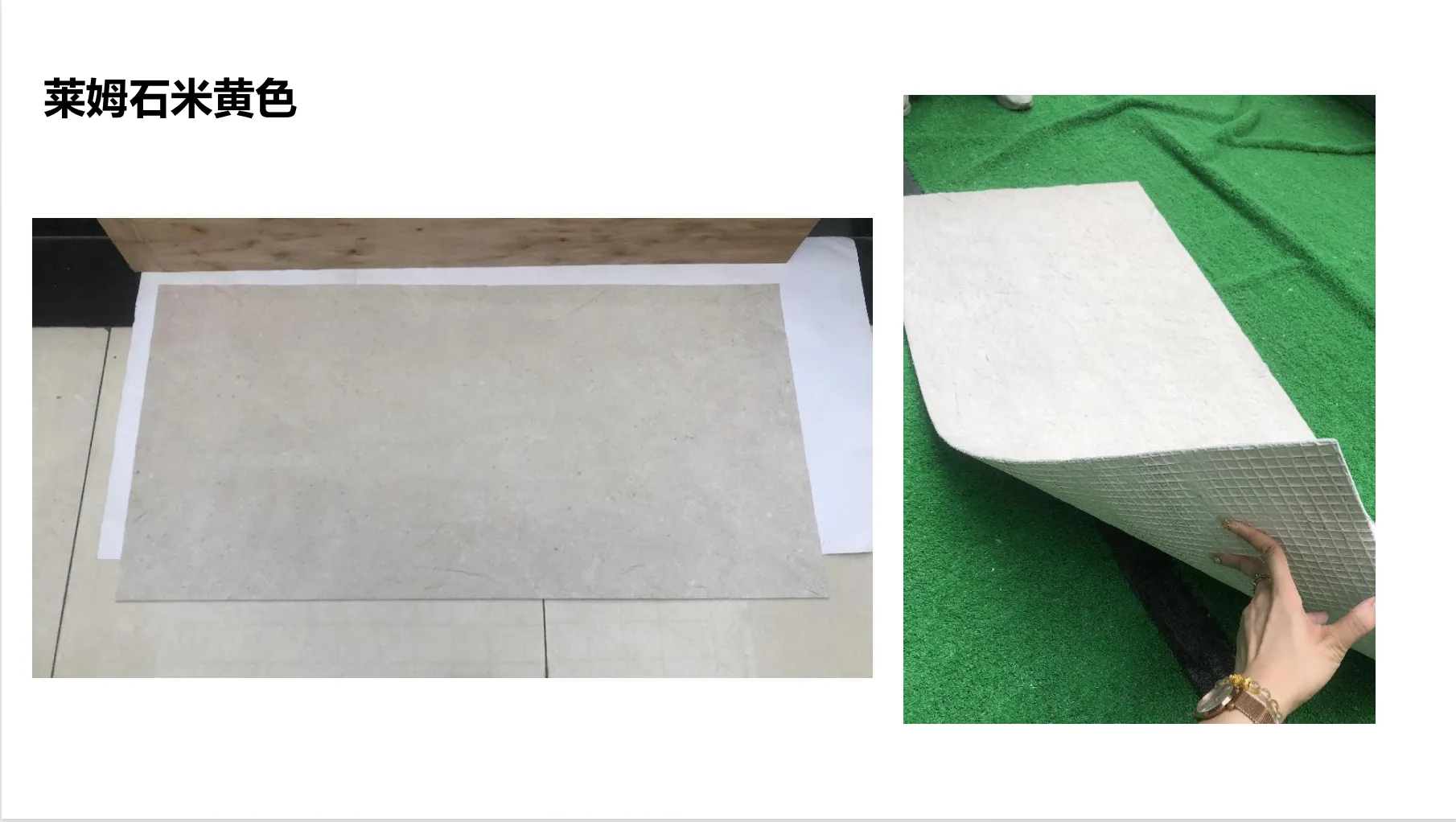
But Sarah was skeptical. She'd seen "imitation stone" products before—cheap, plastic-looking panels that peeled or faded within a year. What made MCM different? She scheduled a visit to a showroom, where she ran her hand over samples of MCM flexible stone in lime stone(beige). To her surprise, it felt real—cool and slightly rough, with the same organic texture as her old limestone. The color was consistent, too, without the blotchy fading she'd grown used to. "We use natural pigments and a multi-layered coating," the sales rep told her, "so the color stays true for decades, not years." He showed her a sample that had been subjected to accelerated weather testing: 5,000 hours of UV exposure, salt spray, and temperature cycles. It looked as good as the day it was made. Sarah was sold—almost. There was just one question: Could it really replicate the charm of her original limestone?
To ease her doubts, the rep pulled up a portfolio of exterior renovation projects, including one that looked eerily similar to her home: a 1970s colonial with a weathered limestone exterior. The "before" photos could have been snapshots of Sarah's house—cracked, discolored, and tired. The "after" photos? Stunning. The new MCM flexible stone in lime stone(beige) looked identical to the original, but smoother, brighter, and flawlessly uniform. "The homeowner was worried about losing that 'old-world' feel," the rep said. "Now, neighbors stop to ask if she restored the original stone. They can't believe it's not the real thing."
Armed with newfound confidence, Sarah started planning. She knew she wanted to stick with the beige limestone aesthetic—she loved how it complemented her landscaping—but she also considered other MCM options, just to be sure. There was fair-faced concrete , with its sleek, industrial vibe, which looked amazing on modern homes. And wood grain board , which would have added a warm, rustic touch, perfect for a cabin-style exterior. But neither felt "right" for her traditional home. Then there was boulder slab —a bold, textured option that mimicked the look of rough-hewn stone—but Sarah worried it might overpower her home's delicate architecture. In the end, the lime stone(beige) MCM flexible stone felt like the perfect compromise: familiar yet improved, classic yet durable.
Next came choosing a contractor. Sarah hired a local company with experience installing MCM products, who walked her through the process step by step. "Traditional limestone installation requires a concrete foundation, mortar, and weeks of curing time," the contractor explained. "MCM flexible stone? It's lightweight—about 80% lighter than natural stone—so we can install it directly over your existing exterior with minimal prep work. No heavy machinery, no messy mortar, and we can finish the whole house in three days, not three weeks." Sarah breathed a sigh of relief. No more living in a construction zone for months on end.
Installation day arrived, and Sarah hovered nervously as the crew got to work. First, they pressure-washed the old limestone to remove dirt and loose debris, then applied a primer to ensure the MCM panels would adhere properly. Next, they measured and cut the panels to fit around windows, doors, and architectural details—something Sarah had worried about, given her home's quirky angles. "The flexibility of MCM makes this easy," the lead installer said, bending a panel slightly to fit around a curved window sill. "Natural stone would crack if you tried that."
Watching the panels go up was surreal. Each sheet locked into place with a simple click system, eliminating the need for grout or mortar. By lunchtime, the front facade was done, and Sarah could already see the difference. The new stone was brighter, with a consistent color that made the old limestone look dingy by comparison. Neighbors stopped by to watch, with one asking, "Did you paint the stone? It looks brand new!" Sarah laughed. "Wait until you see the whole house."
By the end of day three, the job was finished. Sarah stood in her driveway, staring up at her house, almost unrecognizable in the best way possible. The cracks, chips, and discoloration were gone, replaced by smooth, uniform panels that glowed in the afternoon sun. The texture was just as rich as the original limestone, but without the imperfections that had bothered her for years. It was like looking at her home for the first time—again.
To truly capture the change, Sarah dug up old photos of her exterior, taken when she first moved in, and compared them to new shots. The difference was staggering. In the "before" photos, the limestone looked tired: patches of gray marred the beige, cracks spiderwebbed across the surface, and the stone around the foundation was chipped and uneven. In the "after" photos, the MCM flexible stone was a revelation: the color was a warm, consistent beige, the texture, and the edges crisp and clean. Even the way the light hit the house was different—it reflected off the smooth panels, making the whole exterior feel brighter and more alive.
| Feature | Before: Traditional Limestone (Beige) | After: MCM Flexible Stone (Lime Stone(Beige)) |
|---|---|---|
| Appearance | Discolored (faded beige to gray), cracked, chipped edges, uneven texture. | Consistent warm beige color, smooth uniform texture, crisp edges, no cracks or chips. |
| Durability | Porous; prone to water damage, freezing/thawing cracks, UV fading, and mold growth. | Non-porous, UV-resistant, freeze-thaw resistant, and mold/mildew-proof; rated to last 50+ years. |
| Maintenance | Required annual sealing, regular power washing, and occasional patching of cracks. | Low maintenance: simply hose down with water; no sealing, patching, or special cleaners needed. |
| Installation Time | 3-4 weeks (foundation prep, mortar application, curing time). | 3 days (minimal prep, click-and-lock installation, no curing time). |
| Cost (Initial + 10-Year Upkeep) | $15,000 (repairs) + $5,000 (annual sealing/maintenance) = $20,000 total. | $8,000 (installation) + $0 (maintenance) = $8,000 total. |
| Weight | Heavy (80-100 lbs per sq ft), requiring structural support. | Lightweight (10-15 lbs per sq ft), no additional structural support needed. |
Sarah's decision to go with MCM flexible stone wasn't just about looks—it was about practicality, too. Traditional limestone had become a financial drain, with annual sealing costs and the looming threat of future repairs. MCM, by contrast, was a one-time investment that would save her money in the long run. "The upfront cost was about half of what repairs would have been," she says, "and I'll never have to pay for sealing or patching again. It's like putting money in the bank."
Then there was the installation process. Traditional limestone requires heavy machinery to transport and lift the slabs, which can damage lawns and landscaping. MCM flexible stone, being lightweight, was carried by hand—no ruts in Sarah's yard, no broken flower beds. The click-and-lock system also meant no messy mortar, which would have stained her walkways and patio. "The crew cleaned up each day, and by the end, you could barely tell they'd been there—except for the brand-new exterior," Sarah laughs.
But perhaps the biggest surprise was the flexibility of the material. When a severe storm hit six months after installation—with 60 mph winds and driving rain—Sarah held her breath, remembering how her old limestone would leak after heavy rains. The next morning, she inspected the exterior: not a single crack, not a drop of water inside. "The MCM panels interlock so tightly, and the backing is waterproof," the contractor later explained. "Even in a storm, nothing gets through."
Sarah didn't just choose MCM over traditional limestone—she chose it over other modern cladding options, too. She'd considered vinyl siding, which is cheap but looks artificial, and fiber cement, which is durable but heavy and prone to chipping. Even other stone alternatives, like cultured stone, felt clunky and inconsistent compared to MCM. "Cultured stone still requires mortar, and the color can vary from batch to batch," she says. "MCM is so precise—every panel matches perfectly, and the installation is so clean."
She also toyed with the idea of mixing materials: maybe fair-faced concrete on the first floor and wood grain board on the second, for a layered look. But the more she thought about it, the more she wanted a cohesive exterior. "My home has a classic design," she says. "Mixing materials might have felt too busy. The MCM flexible stone in lime stone(beige) ties everything together beautifully."
Another factor? Sustainability. Sarah is environmentally conscious, and she was impressed to learn that MCM flexible stone is made from recycled materials and requires less energy to produce than traditional stone. "Mining limestone is hard on the planet," she says. "MCM uses 80% less natural resources and generates 60% less carbon emissions during manufacturing. That mattered to me."
Two years have passed since Sarah's renovation, and her MCM flexible stone exterior still looks as good as the day it was installed. The color hasn't faded, even after two harsh winters and a scorching summer. There are no cracks, no chips, and no signs of mold or mildew, even in the shaded areas of her home. "I hose it down once a season, and that's it," she says. "It's like having a 'set it and forget it' exterior."
Neighbors still comment on how "well-maintained" her home is, assuming she spends weekends scrubbing the stone. "I just smile and say, 'It's all thanks to MCM,'" she laughs. Even her insurance company took notice: after switching to MCM, her homeowners' insurance premium dropped by 10%, thanks to the material's fire resistance and durability. "They said it reduces the risk of exterior damage claims," she explains. "Who knew a cladding upgrade could save on insurance?"
Perhaps the best part, though, is the peace of mind. Sarah no longer worries about cracks spreading or chunks of stone falling off. She doesn't lie awake during storms, fretting about leaks. "My home feels solid now, like it can handle anything," she says. "And it still has that warm, inviting look I fell in love with. MCM didn't just fix my exterior—it gave me my home back."
Sarah's exterior renovation wasn't just about fixing cracks or updating her home's look—it was about reclaiming her peace of mind. What started as a frustrating problem turned into an opportunity to discover a material that's as practical as it is beautiful. "I never thought I'd say this, but I'm grateful for those cracks," she jokes. "They led me to MCM flexible stone, and now I can enjoy my home without the stress."
For anyone considering an exterior renovation—especially those struggling with traditional stone—Sarah has this advice: "Don't assume you have to stick with what's 'original.' There are better options out there that can save you time, money, and headaches. MCM flexible stone isn't just a replacement for limestone—it's an upgrade. And the before-and-after photos? They don't lie."
As for Sarah? She spends her weekends on her front porch again, sipping coffee and admiring her home—not for its flaws, but for its perfection. The sunlight hits the MCM flexible stone, casting a warm glow, and for a moment, she forgets it's not the original limestone. Then she remembers: it's better.
Recommend Products












