
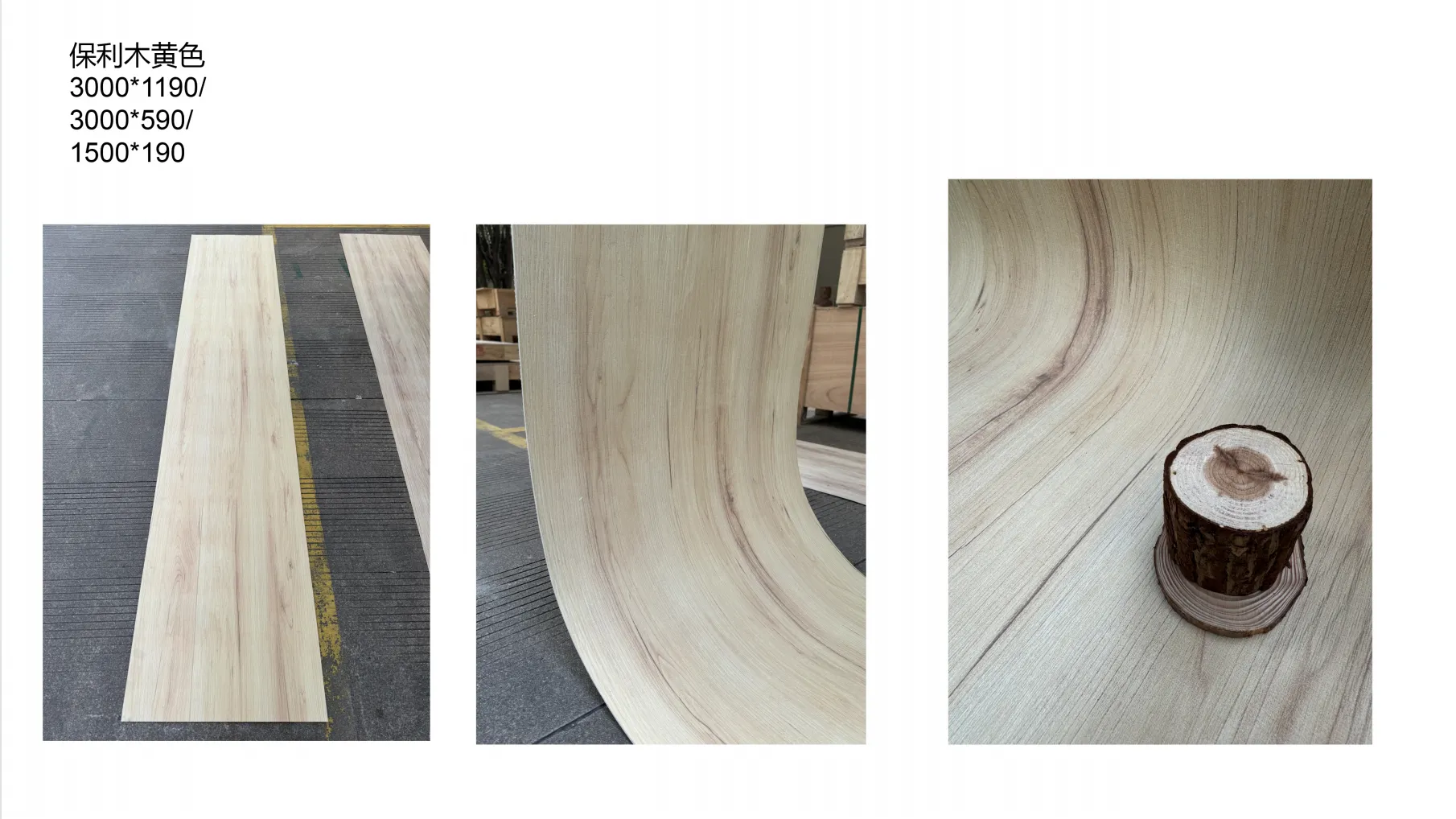
There's something deeply personal about the exterior of a home or building. It's the first impression, the silent storyteller of who lives or works inside. But for too many, that story is one of frustration: peeling paint, rotting wood, or materials that just never quite matched the vision. Enter poly wood board—a material that's not just changing exteriors, but changing how we feel about the spaces we inhabit. Paired with complementary options like wood grain board and charcoal burnt wood board, it's turning "what if" into "wow." Let's dive into three real-life transformations where poly wood board didn't just fix problems—it created joy.
Sarah and Tom had lived in their 1980s suburban home for 12 years. When they first bought it, the wooden siding was charming—warm, with a honeyed glow that matched the maple trees in the yard. But by 2023, "charming" had turned to "chaotic." The south-facing walls were peeling, the paint faded to a sallow beige, and the bottom edges of the siding had started to rot from years of rain and snow. "Every spring, we'd spend weekends scraping and repainting," Sarah recalls. "Last year, Tom found termite damage behind the garage. That's when we knew: wood wasn't working anymore."
Their budget was tight, and they'd considered vinyl siding—"but it looked so plastic, like a toy house," Sarah says—or fiber cement, which felt heavy and cold. Then their neighbor mentioned poly wood board. "I was skeptical at first," Tom admits. "'Poly wood' sounded like a contradiction. But when we visited the showroom and ran our hands over the samples—there was that grain, the subtle texture, even the way it caught the light—it felt like wood, but better."
They chose a cedar-finish poly wood board for the main siding, drawn to its warm, reddish-brown tones that echoed the original wood but with zero rot risk. For the gable accents and window trim, they added wood grain board in a lighter, natural oak shade—"to break up the color and add depth," their designer, Mia, explained. The installation crew worked quickly, removing the old, rotting planks and securing the poly wood panels with hidden fasteners. "It was wild to watch," Sarah says. "No more measuring for warped boards or filling cracks—these panels clicked into place like a puzzle."
One surprise? How lightweight the material was. "We were worried about the structural load, but the crew said poly wood board is half the weight of traditional wood," Tom notes. "That meant we could add those gable accents without reinforcing the roof—saved us a ton of money."
Three months later, Sarah still catches herself staring at the house when she pulls into the driveway. "The cedar poly wood glows at sunset, like it's lit from within. The wood grain trim pops against it, making the windows look bigger, brighter. And the best part? No more weekend painting marathons. Last month, we had a rainstorm that would've left the old wood soaked—this stuff just beads up and dries in an hour."
Neighbors have stopped by to ask about the siding; one even joked, "You guys set the bar for the street." But for Sarah and Tom, the real win is emotional. "Our home finally feels like an extension of us—not a project we're always fixing," Sarah says. "Last week, our daughter brought friends over, and one of them said, 'Your house looks like it's from a magazine!' That's a feeling money can't buy."
| Aspect | Before | After |
|---|---|---|
| Maintenance | Annual scraping, painting, and repairs ($500+/year) | Hose down monthly; no painting or sealing (under $50/year) |
| Appearance | Faded, patchy, rotting sections; mismatched trim | Uniform cedar finish with crisp wood grain accents; warm, cohesive look |
| Durability | Prone to rot, termites, and warping; 5-7 year lifespan for siding | Resistant to moisture, pests, and UV rays; 25+ year warranty |
| Homeowner Mood | Stress, embarrassment, "another thing to fix" | Pride, joy, "I love coming home" |
For Mike and Lena, their coastal cottage in Maine was supposed to be a haven—a place to escape the city, listen to the waves, and host summer barbecues. But the wooden deck, once the heart of their outdoor space, had become a source of anxiety. "It was installed in the '90s, and after 30 years of salt air and harsh winters, it was falling apart," Mike says. "Splinters everywhere, boards warped so bad you'd trip if you weren't careful. Lena refused to let the grandkids run around on it—too dangerous."
They considered replacing it with pressure-treated wood, but the upkeep scared them. "Our last deck needed sanding and staining every year, and even then, the saltwater would eat through the finish," Lena adds. "We wanted something that felt like wood—warm, inviting—but could handle the elements."
Their contractor suggested poly wood board in a teak finish—"it has that rich, golden-brown look of tropical hardwood, but it's made from recycled plastic and wood fibers, so it won't splinter or rot," he explained. For the pergola overhead, he recommended charcoal burnt wood board—a material with a deep, smoky hue that would contrast beautifully with the teak and stand up to rain and wind.
The installation was a revelation. "The poly wood boards clicked together with these hidden clips—no screws sticking up to catch your foot," Mike says. "And the charcoal burnt wood board? It's got this rough, textured surface that looks hand-charred, like something out of a cabin in the woods. But it's actually super durable—water just runs right off it."
They added built-in benches along the deck's edge, made from the same poly wood board, and strung fairy lights from the pergola. "The contractor said the poly wood can handle the weight of the benches and the pergola without warping—even in freeze-thaw cycles," Lena notes. "We were skeptical until this past winter: 18 inches of snow, and the deck didn't budge. No sagging, no cracks."
This summer, Mike and Lena's patio isn't just a deck—it's their second living room. "We eat out there every night," Lena laughs. "The grandkids run around barefoot now—no more 'watch out for splinters!' The teak poly wood stays cool even in the sun, so you can walk on it without burning your feet. And the charcoal burnt wood pergola? It casts these amazing shadows in the afternoon, like a natural sunshade."
One evening, as they sat watching the sunset, Lena turned to Mike and said, "Remember when we thought we'd have to sell the cottage because the deck was too far gone?" Now, they're planning to add a hot tub—"the poly wood can handle the moisture, so why not?" Mike says. "This patio isn't just fixed—it's better than we ever imagined. It's where memories happen now."
Lisa's café, "Bean There, Brew That," had great coffee—but its exterior was doing it no favors. "The building was a 1970s concrete box with a faded awning and a sign that looked like it belonged to a gas station," Lisa groans. "People would walk right past, even though we had five-star reviews online. I'd hear them say, 'Is this place open?' from the street—embarrassing."
She wanted a facade that felt warm and welcoming, something that screamed "cozy neighborhood spot" without feeling cliché. "I loved the idea of wood, but concrete walls are heavy, and real wood would've been too expensive and hard to maintain," she says. Her designer, Raj, suggested poly wood board panels for the main walls, wood grain board for the awning, and charcoal burnt wood board for the entrance feature wall. "He said it would give the rustic vibe I wanted, but with zero upkeep," Lisa recalls. "I was sold—anything to make the place feel like 'mine.'"
The transformation happened in two weeks. First, the crew installed poly wood board panels in a light oak finish over the concrete walls—"they're lightweight, so we didn't need to reinforce the structure," Raj explains. Then came the wood grain board awning, curved to soften the building's sharp lines, and the charcoal burnt wood board feature wall at the entrance, with the café's logo laser-etched into it. "That feature wall was Raj's idea—he said it would draw the eye," Lisa says. "And he was right: passersby would stop and run their hands over it, like they couldn't believe it was 'fake' wood."
The poly wood panels have a subtle texture that catches the morning light, making the café glow from dawn till dusk. "I'd stand inside and watch people slow down when they walked by," Lisa says. "They'd do a double-take, then check the hours, then come in. It was like flipping a switch."
Six months later, "Bean There, Brew That" has a line out the door on weekends. "People come for the coffee now, but they stay because the space feels good," Lisa says. "Customers tell me, 'I love how your café looks—it feels like home.' The poly wood walls keep the noise down, too—no more echo from the concrete. And the wood grain awning? It keeps the rain off, but it also makes the patio feel private, like a little oasis."
One regular, Mark, puts it best: "Before, this place was invisible. Now, it's the first thing I notice when I walk down the block. The charcoal burnt wood entrance? It's like a beacon. You just want to go in." For Lisa, the best part is the pride she feels when she unlocks the door each morning. "The exterior isn't just a wall anymore—it's part of the café's story. And that story? It's finally one I'm proud to tell."
Poly wood board, wood grain board, and charcoal burnt wood board aren't just building materials. They're tools for transformation—turning frustration into pride, invisibility into (presence), and houses into homes. Whether it's a suburban siding, a coastal patio, or a café facade, these materials do something rare: they combine durability with soul. They feel like wood, act like a superhero, and let us design spaces that reflect who we are.
At the end of the day, exterior renovation isn't just about fixing what's broken. It's about creating something that makes you smile when you pull into the driveway, or pause to take a photo, or say, "This is mine." And with poly wood board, that something isn't just built to last—it's built to be loved.
Recommend Products












