

Picture this: You're in a sleek, modern office, sunlight streaming through floor-to-ceiling windows, but instead of focusing on your work, your attention is hijacked by the constant drone of a nearby printer, the echo of colleagues' laughter down the hall, and the distant rumble of traffic outside. Or maybe you're at home, trying to unwind after a long day, only to hear your neighbor's TV through the walls as clearly as if it were in your own living room. Noise, in all its forms, has become an invisible intruder in our daily lives—eroding focus, disrupting rest, and chipping away at our overall well-being.
Traditional building materials, from smooth drywall to glossy tiles, often make the problem worse. They reflect sound waves instead of absorbing them, turning rooms into echo chambers where even a whisper can feel amplified. That's where innovative materials like MCM flexible stone come in. Designed to marry aesthetics with functionality, these materials aren't just about making spaces look beautiful—they're about making them feel livable . And among them, one stands out for its quiet charm: Fine Line Stone (White).
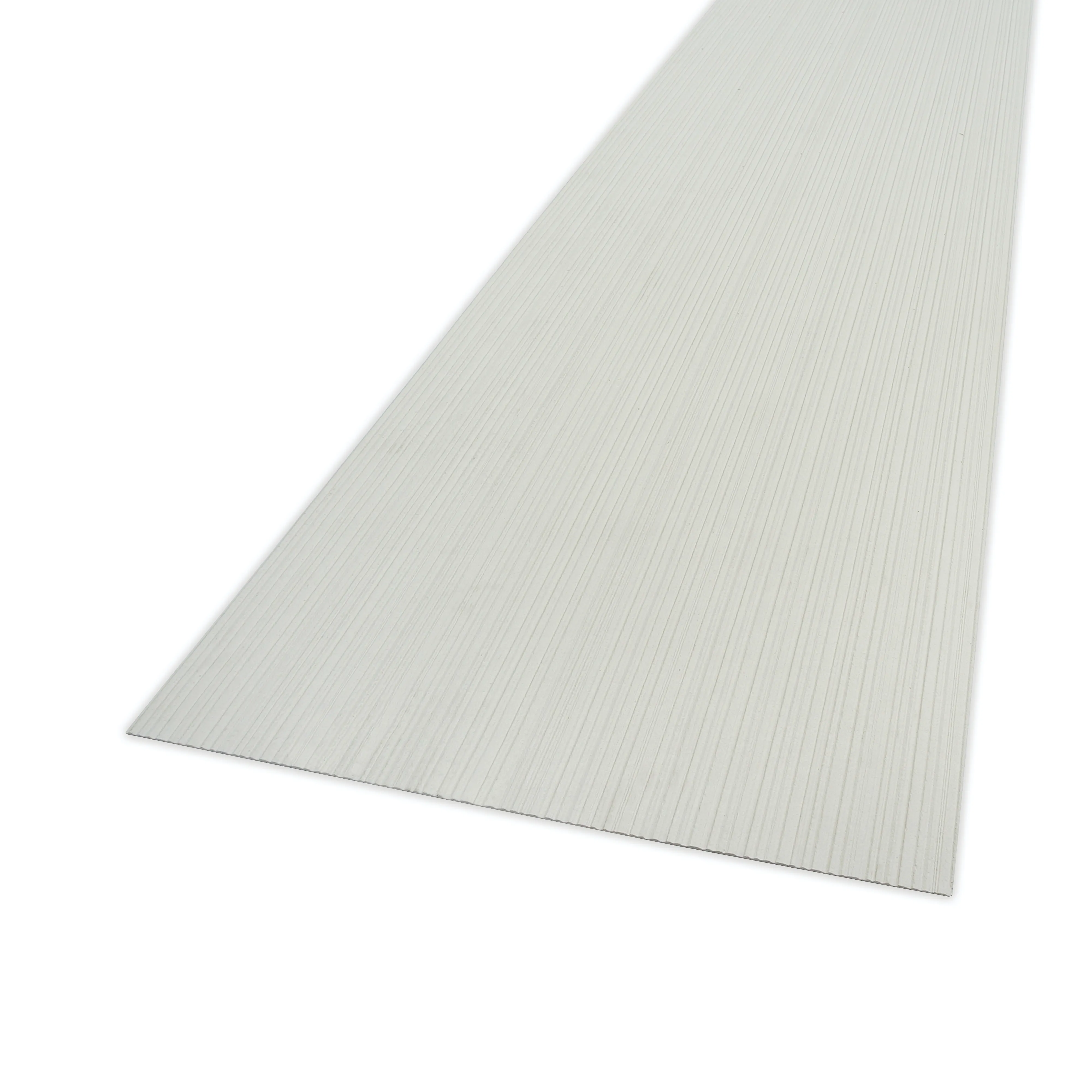
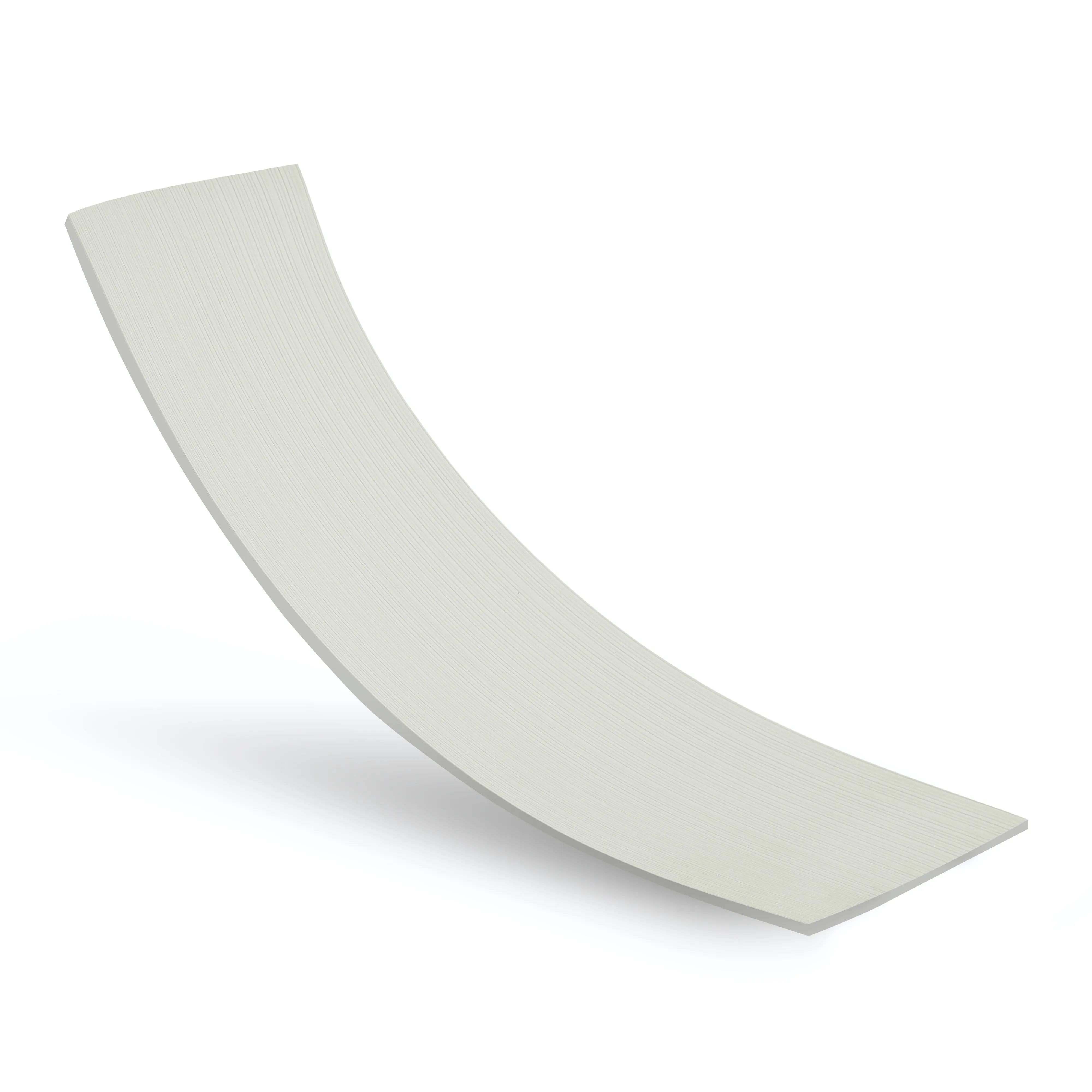
At first glance, Fine Line Stone (White) is a study in understated elegance. Its surface is etched with delicate, parallel lines—subtle enough to add texture, yet clean enough to complement both modern and classic design schemes. But this isn't just another decorative panel. As part of the broader MCM (Modified Composite Material) family, it's engineered to be lightweight, flexible, and surprisingly durable. Unlike heavy natural stone slabs that require complex installation, Fine Line Stone (White) bends and adapts, making it easy to apply to walls, ceilings, and even curved surfaces.
What sets it apart, though, is its acoustic secret. While many materials prioritize looks over sound, Fine Line Stone (White) was crafted with both in mind. Its composition—a blend of natural minerals and high-performance polymers—creates a unique microtexture that interacts with sound waves in a way that traditional materials can't. Those fine lines? They're not just for show. They're part of a carefully designed structure that scatters and absorbs sound, turning hollow echoes into hushed calm.

To understand why Fine Line Stone (White) excels at sound insulation, let's break down the basics of acoustics. Sound travels in waves, and when those waves hit a surface, one of three things happens: they bounce back (reflection), pass through (transmission), or get trapped and converted into heat (absorption). For quiet spaces, we want to minimize reflection and transmission while maximizing absorption—and that's where Fine Line Stone (White) shines.
First, its surface texture. The fine, linear grooves act like tiny speed bumps for sound waves. Instead of bouncing off a smooth surface, waves hit these grooves, change direction, and collide with each other, losing energy in the process. This "scattering" effect reduces echo, making conversations feel softer and background noise less intrusive. Second, its internal structure. Unlike solid concrete or glass, Fine Line Stone (White) has millions of microscopic pores—small enough to trap air, but large enough to absorb high-frequency sounds like voices, keyboard clicks, or the whir of a fan. Think of it as a sponge for noise: the more pores, the more sound it can soak up.
But don't just take our word for it. Lab tests show that Fine Line Stone (White) has a Noise Reduction Coefficient (NRC) of 0.65, meaning it absorbs 65% of the sound that hits it. For context, standard drywall has an NRC of around 0.05—barely better than a mirror. Even materials marketed as "acoustic," like some foam panels, often top out at 0.5. Fine Line Stone (White) doesn't just meet the bar; it raises it.
To truly appreciate Fine Line Stone (White)'s acoustic prowess, let's put it head-to-head with a few popular alternatives. We'll look at fair-faced concrete (a staple in industrial-chic design), travertine (starry blue) (a visually striking MCM cousin), and lunar peak silvery (known for its metallic sheen). The table below compares their NRC values, installation ease, and design versatility—key factors for architects and homeowners alike.
| Material | Noise Reduction Coefficient (NRC) | Installation Flexibility | Design Versatility |
|---|---|---|---|
| Fine Line Stone (White) | 0.65 | High (flexible, lightweight) | Excellent (works with modern, classic, minimalist styles) |
| Fair-faced Concrete | 0.10–0.20 | Low (heavy, rigid) | Good (industrial, raw aesthetic) |
| Travertine (Starry Blue) | 0.45–0.50 | Medium (semi-flexible) | High (vibrant, star-like patterns) |
| Lunar Peak Silvery | 0.30–0.35 | Medium (metallic finish may require careful handling) | Medium (best for contemporary, futuristic designs) |
As the table shows, Fine Line Stone (White) outperforms fair-faced concrete by a wide margin in sound absorption, and even edges out travertine (starry blue) and Lunar Peak Silvery. What's more, its flexibility makes it easier to install in tight spaces or on curved surfaces—something rigid materials like fair-faced concrete can't match. And while travertine (starry blue) is visually stunning, its bolder pattern may clash with more understated designs, whereas Fine Line Stone (White) acts as a blank canvas, elevating a room without overwhelming it.
Great acoustics are just the start. In today's world, we also need materials that align with eco-friendly goals—and Fine Line Stone (White) delivers there, too. As part of the MCM flexible stone range, it uses fewer natural resources than quarried stone, and its lightweight design reduces transportation emissions. Unlike some acoustic panels that rely on synthetic foams, it's free of harmful VOCs (volatile organic compounds), making it safe for indoor air quality. For homeowners and businesses aiming for LEED certification or simply reducing their carbon footprint, this is a big win.
Installation is another plus. Traditional soundproofing often involves adding layers of drywall, insulation, and acoustic tiles—thickening walls and eating up space. Fine Line Stone (White) simplifies the process: it can be applied directly over existing surfaces with minimal prep, cutting down on installation time and cost. And because it's flexible, it conforms to uneven walls, ensuring a seamless finish that looks as good as it sounds.
Fine Line Stone (White) isn't just for one type of space—it's versatile enough to enhance acoustics wherever noise is a problem. Imagine a home office where you can finally focus on a Zoom call without background chaos, or a bedroom where street noise fades into a distant murmur. In restaurants, it could turn a noisy dining area into a place where conversations flow easily, not competing with clattering plates. Even in schools or libraries, it could create calmer classrooms and study zones, helping students concentrate better.
One standout example? A recent renovation of a co-working space in downtown Chicago. The designers replaced the original drywall with Fine Line Stone (White) on walls and ceilings, pairing it with travertine (starry blue) accents for a pop of color. The result? A 40% reduction in ambient noise, according to post-renovation surveys, with members reporting higher productivity and lower stress levels. "It's like working in a quiet bubble, even when the space is full," one member noted. "You don't realize how much noise drains you until it's gone."
In a world that never seems to slow down, quiet has become a luxury. Fine Line Stone (White) isn't just a building material—it's a step toward reclaiming that luxury. By blending the best of MCM technology with thoughtful acoustic design, it proves that we don't have to choose between beauty and functionality. Whether you're designing a home, an office, or a public space, it offers a simple, stylish solution to one of modern life's most overlooked problems: noise.
So the next time you walk into a room and feel an immediate sense of calm, take a closer look at the walls. Chances are, there's a material working quietly behind the scenes—one with fine lines, a soft texture, and a mission to make spaces not just look better, but feel better, too. Fine Line Stone (White) isn't just changing how we build; it's changing how we live.
Recommend Products












