

Picture this: You've spent weeks poring over samples, fallen in love with the soft, airy vibe of a white stone for your kitchen backsplash, and eagerly ordered enough to cover the space. But when the slabs arrive, half are a warm ivory, a few have subtle gray streaks, and one even leans slightly blue. Your vision—clean, cohesive, and calming—suddenly feels fractured. Sound familiar? For designers, homeowners, and architects alike, the beauty of natural stone has long come with a frustrating caveat: color inconsistency. But what if there was a way to have the timeless elegance of stone without the guesswork? Enter Fine Line Stone (White) from the MCM lineup—a game-changer that marries the organic allure of stone with the reliability of engineered precision.
Natural stone, from marble to travertine, is a product of millions of years of geological activity. Each slab is a unique snapshot of the Earth's history, shaped by minerals, pressure, temperature, and even the presence of water or gases during formation. That uniqueness is part of its charm, but it's also why consistency is nearly impossible to guarantee. A quarry in one valley might yield travertine with warm golden veins, while a quarry just a mile away produces the same stone with cool gray undertones. Even slabs from the same quarry can vary: one extracted from the top layer might have more iron deposits, turning it rusty red, while another from deeper down could be paler, with fewer impurities.
Take travertine (starry green) , for example—a stunning natural stone known for its swirled patterns and hints of emerald. While its uniqueness makes it a favorite for statement walls, designers often have to order extra slabs to account for color mismatches, driving up costs and creating waste. And if a project requires months later? Chances are, the new batch won't match the original, leaving gaps in the design that feel jarring.
It's not just about aesthetics, either. In commercial projects—like hotel lobbies or retail spaces—where uniformity across large areas is key, natural stone's variability can undermine brand identity or a designer's careful color story. A restaurant aiming for a sleek, minimalist look with white stone might end up with a patchwork of shades, distracting from the overall ambiance.
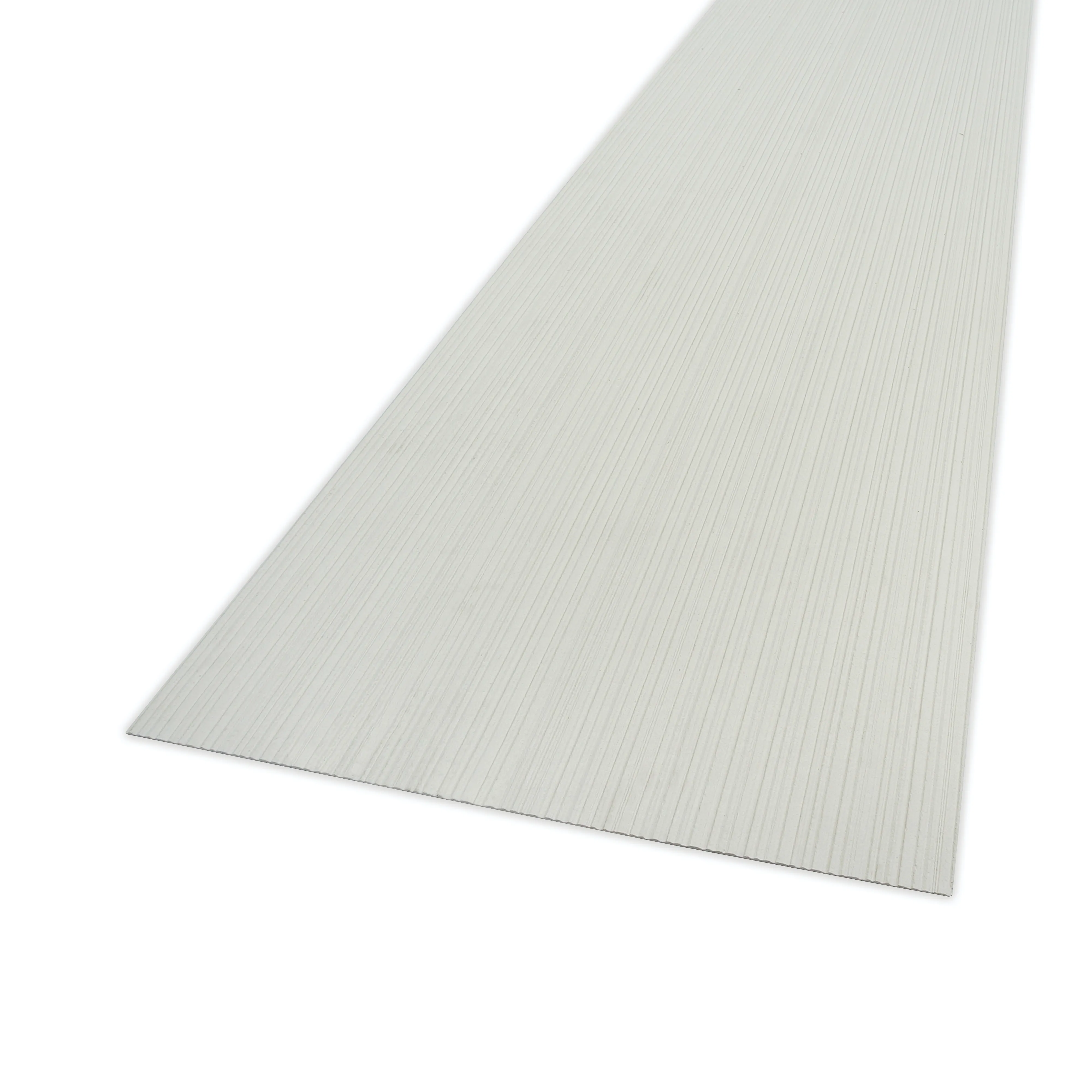
MCM, or Modified Composite Material, was born from a simple question: What if we could replicate the look and texture of natural stone while eliminating its biggest flaws? Developed by combining natural minerals with advanced polymers, MCM is engineered in controlled factory settings, where every variable—from color pigments to texture depth—is meticulously managed. The result? A material that captures the essence of stone, concrete, or even wood, but with unprecedented consistency.
MCM flexible stone is the crown jewel of this innovation. Unlike rigid natural stone slabs, MCM is lightweight and bendable, making installation a breeze, but its most impressive feat is color control. By using precise color-matching technology and uniform raw materials, MCM manufacturers can ensure that every sheet of a particular style—whether it's the crisp Fine Line Stone (White) or the earthy fair-faced concrete —looks identical to the sample. No surprises, no extra slabs needed, no design compromises.

At the heart of MCM's lineup is Fine Line Stone (White) —a product designed for those who crave the purity of white stone without the hassle of variation. Imagine a stone that looks like it was chiseled from a single, unbroken block of marble, with soft, linear veining that adds depth without overwhelming. Its white base is neither stark nor creamy, but a perfect "warm neutral" that complements everything from bold accent walls to minimalist furniture.
What sets Fine Line Stone (White) apart is its attention to detail. Under the microscope, natural stone has irregular pores and mineral deposits that cause color shifts; MCM, by contrast, uses a proprietary blending process to ensure pigments are evenly distributed. Whether you order 10 sheets or 1000, each one will have the same subtle veining, the same undertone, and the same matte finish. It's like having a designer's paint swatch come to life as a building material—consistent, reliable, and utterly beautiful.
Applications for Fine Line Stone (White) are endless. In residential spaces, it shines as a kitchen backsplash, bathroom wall, or fireplace surround, where its uniformity creates a sense of calm. In commercial settings, it's ideal for hotel lobbies, office reception areas, or retail storefronts, where maintaining a brand's visual identity is crucial. Even exteriors benefit: its fade-resistant formula ensures that years of sun, rain, or snow won't dull its color or create patchy discoloration—something natural stone often struggles with.
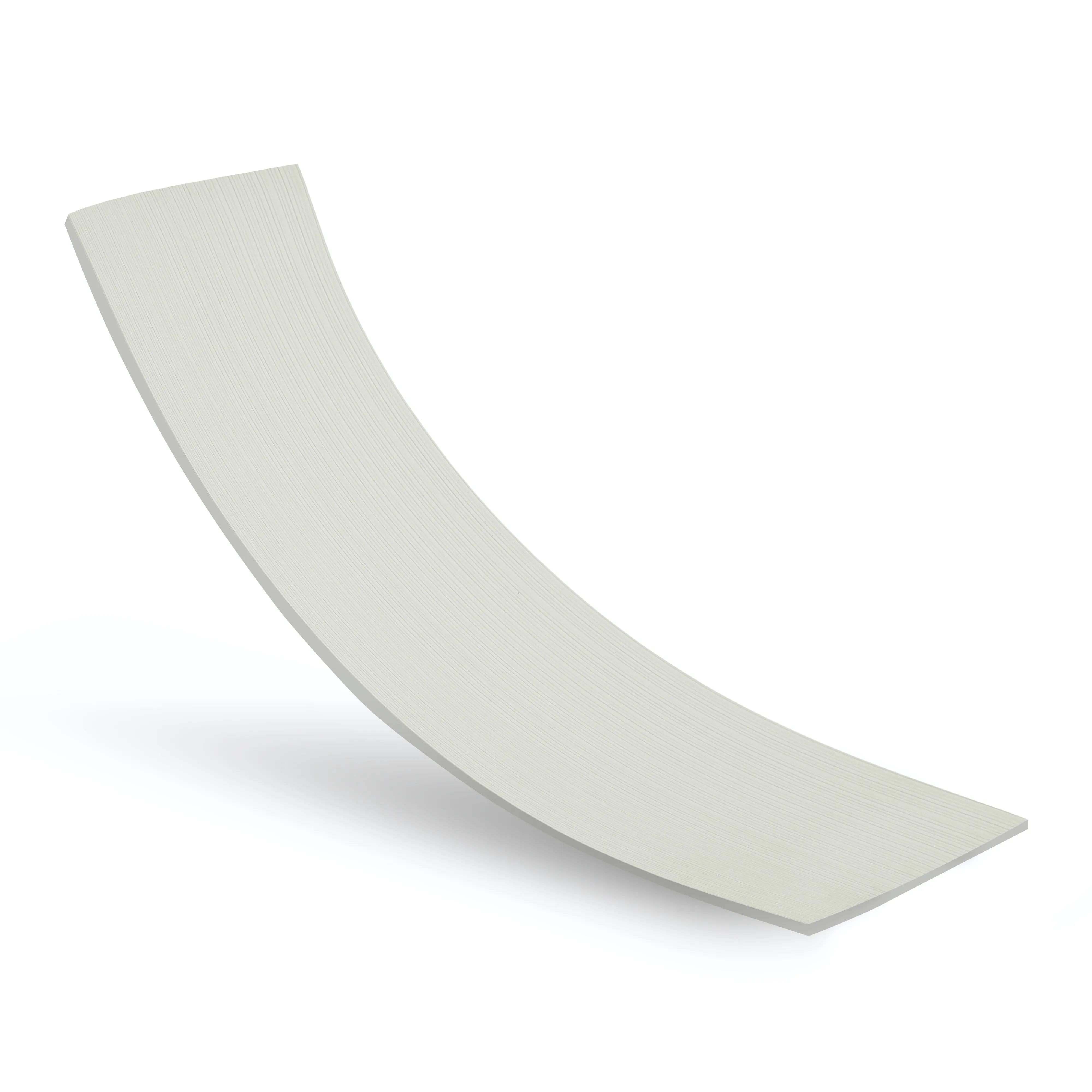
Consistency is just the start. Fine Line Stone (White) checks boxes across the board when it comes to performance:
| Feature | Natural White Stone (e.g., Marble) | MCM Fine Line Stone (White) |
|---|---|---|
| Color Consistency | Highly variable; slabs may differ in shade, veining, or undertones | 100% consistent across all sheets; color matches sample exactly |
| Weight | Heavy (80-120 lbs/sq ft); requires structural support | Lightweight (3-5 lbs/sq ft); easy to install on any surface |
| Durability | Prone to scratches, stains, and fading; needs regular sealing | Scratch/stain-resistant; fade-proof; no sealing required |
| Installation | Time-consuming; requires specialized labor | Quick and easy; can be cut, drilled, or bent on-site |
| Sustainability | High environmental impact (quarrying, transportation) | Low carbon footprint; uses recycled materials |
Sarah Lin, a residential designer in Chicago, remembers her first experience with natural stone inconsistency vividly. "I was working on a penthouse project where the client wanted a all-white kitchen with marble countertops and backsplash," she says. "We ordered 20 slabs, and when they arrived, half were bright white, and half had a yellowish tint. The client was devastated—she'd saved for years for this space, and it looked like a patchwork quilt."
A year later, Sarah tried Fine Line Stone (White) for a similar project. "The difference was night and day," she recalls. "We ordered 50 sheets for the kitchen and bathrooms, and every single one matched the sample. The client teared up when she saw it—she said it felt 'serene, like a spa.' And when we needed to add a small section six months later for a renovation, the new sheets blended in seamlessly. I'll never go back to natural stone for white or light-colored projects."
While Fine Line Stone (White) is a standout, the MCM lineup offers a wealth of options for designers seeking consistency and creativity. The MCM big slab board series , for example, caters to projects needing large, uninterrupted surfaces—think hotel facades or airport terminals—with slabs up to 12 feet long, all in matching colors. And for those who love the drama of natural stone but want reliability, there's travertine (starry green) in the MCM range: it mimics the swirled patterns of natural travertine but with none of the color variation, making it perfect for accent walls or statement pieces.
Even materials like fair-faced concrete , which is prized for its industrial-chic look, get the MCM treatment. Traditional fair-faced concrete can develop hairline cracks or discoloration over time, but MCM's version is engineered to stay smooth and uniform, whether it's used for a restaurant floor or a home's exterior siding.
At the end of the day, design is about storytelling—and inconsistent materials can derail even the most compelling narrative. Fine Line Stone (White) isn't just a building material; it's a tool that empowers designers, homeowners, and architects to bring their visions to life without compromise. It's the assurance that the white kitchen, the minimalist lobby, or the serene bathroom you imagined is exactly what you'll get—no surprises, no workarounds, no regrets.
In a world where so much feels unpredictable, there's something deeply satisfying about a material that does exactly what it promises. Fine Line Stone (White) from MCM isn't just avoiding natural stone variations—it's redefining what's possible in design. And that, perhaps, is its greatest beauty of all.
Recommend Products












