
In the world of construction, few elements carry as much weight as safety. Every beam, every panel, and every finish contributes to the structural integrity and security of a building—but none more critically than its resistance to fire. For builders, architects, and developers, the challenge often lies in balancing this non-negotiable safety with the aesthetic demands of modern design. Clients want spaces that feel luxurious, unique, and visually striking, but these desires can't come at the cost of compromising on protection. This is where innovative materials like the MCM Marble Series step in, offering a solution that marries beauty with resilience. In this article, we'll explore why fire resistance matters, how the MCM Marble Series stands out in this regard, and why it's becoming a go-to choice for forward-thinking builders.
Before diving into fire resistance, let's clarify what the MCM Marble Series actually is. MCM, or Modified Composite Material, is a cutting-edge building material designed to replicate the look and feel of natural stone—think marble, travertine, or granite—while addressing many of the limitations of traditional materials. At its core, MCM is a blend of mineral aggregates, high-performance polymers, and reinforced fibers, engineered to be lightweight, flexible, and incredibly durable. Unlike natural stone, which is heavy, porous, and prone to cracking, MCM offers a level of versatility that's hard to match.
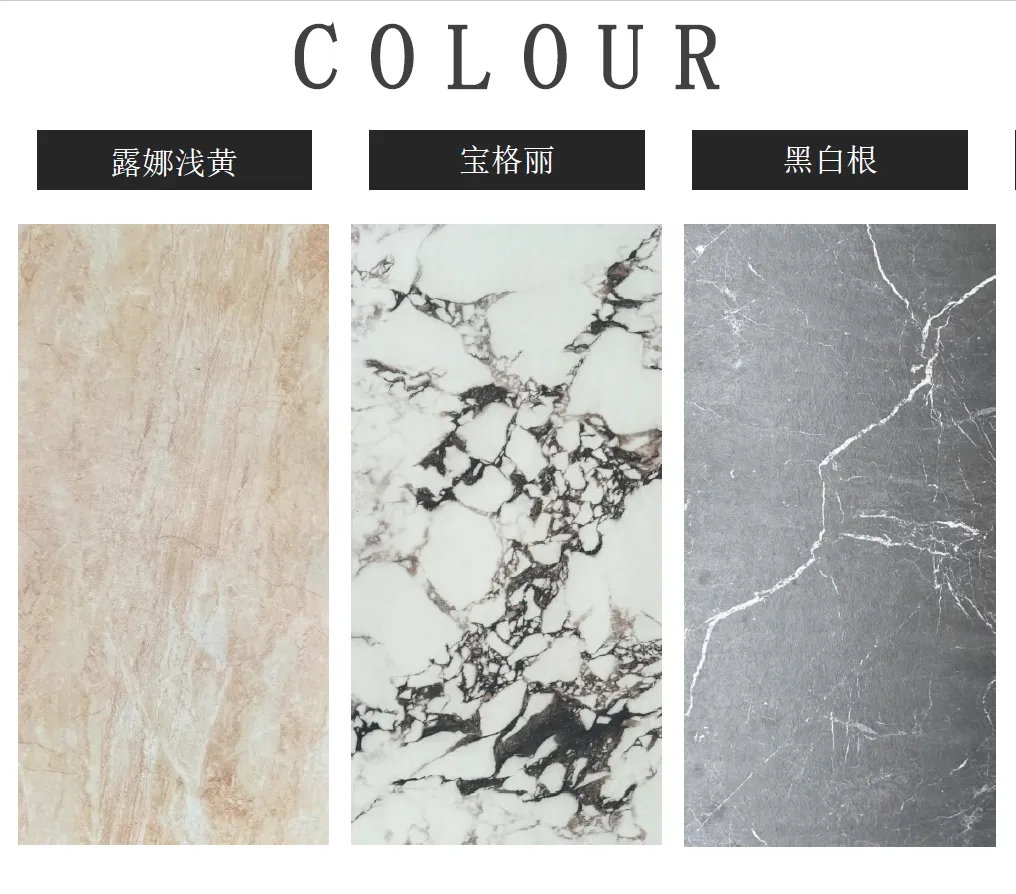
Within the MCM family, two standout lines are particularly relevant here: the mcm flexible stone and mcm big slab board series . The former lives up to its name, offering a pliable surface that can bend around curves or irregular surfaces without breaking—a game-changer for complex architectural designs. The latter, as the name suggests, provides large-format slabs (often up to 1200x600mm or more) that minimize grout lines and create a seamless, high-end finish. Together, these series form the backbone of the MCM Marble Series, which includes stunning aesthetic options like travertine (starry green) —with its celestial, star-like veining—and the sleek, metallic sheen of lunar peak silvery . But beyond their good looks, these materials are quietly revolutionizing safety standards, particularly when it comes to fire resistance.
Fire resistance isn't just a box to check for compliance—it's a critical factor that directly impacts lives, property, and long-term building performance. Let's break down why it's non-negotiable:
For builders, choosing fire-resistant materials isn't just about safety—it's about protecting their reputation, their clients, and the long-term success of their projects. And when those materials also happen to offer the aesthetic appeal of marble or travertine? That's a win-win.
To understand why the MCM Marble Series excels in fire resistance, we need to look at its composition. Traditional natural marble, while beautiful, is inherently porous and can weaken at high temperatures. When exposed to fire, natural stone may crack, spall (chip away), or even shatter as trapped moisture turns to steam. MCM, by contrast, is engineered to avoid these pitfalls.
The key components of MCM include:
This combination creates a material that's not only lightweight (typically 3-5 kg/m², compared to 20-30 kg/m² for natural marble) but also inherently resistant to heat. When exposed to fire, MCM chars slowly, maintains structural integrity, and releases minimal toxic smoke—unlike some synthetic materials that can melt and spread flames.
To validate fire resistance, materials undergo rigorous testing according to international standards. The MCM Marble Series, including variants like lunar peak silvery and travertine (starry green) , has been put through these tests—and the results are impressive.
Common standards include ASTM E119 (Standard Test Methods for Fire Tests of Building Construction and Materials) and ISO 834 (Fire resistance tests—Elements of building construction). These tests expose materials to controlled fire conditions, measuring factors like temperature rise on the unexposed side, structural integrity, and duration of resistance. Here's how MCM stacks up:
| Material | Fire Resistance Rating (hours) | Max Temperature Tolerance (°C) | Weight (kg/m²) | Flexibility |
|---|---|---|---|---|
| MCM Travertine (Starry Green) | 1-2 hours | 800-1000°C | 3.5-4.5 | High (bends up to 30° without cracking) |
| MCM Lunar Peak Silvery | 1-2 hours | 800-1000°C | 3.5-4.5 | High (bends up to 30° without cracking) |
| Natural Marble | 0.5-1 hour | 600-700°C (may spall) | 25-30 | Low (prone to cracking under stress) |
| Fair-Faced Concrete | 2-4 hours | 600-900°C | 22-25 | Low (brittle, cracks under thermal shock) |
As the table shows, MCM holds its own against traditional materials like concrete while offering far more flexibility and a fraction of the weight. Even compared to natural marble, it provides longer fire resistance and better thermal stability—all without sacrificing aesthetics. For builders, this means peace of mind: using mcm big slab board series or mcm flexible stone doesn't just look good; it meets or exceeds safety standards.
Numbers on a page are one thing, but real-world performance tells the true story. Let's look at a few case studies where the MCM Marble Series has proven its mettle:
A large shopping mall in Dubai needed to update its exterior cladding to meet new fire safety regulations while maintaining a luxurious aesthetic. The design team chose the mcm big slab board series in travertine (starry green) for its seamless, high-end look and fire resistance. During testing, the cladding achieved a 1-hour fire resistance rating, exceeding the local code requirement of 45 minutes. Post-installation, the mall's insurance premiums dropped by 15% due to the use of fire-resistant materials, and the client praised the "stunning, starry finish" that became a signature feature of the building.
A 30-story residential tower in Singapore prioritized both safety and design for its balcony and facade cladding. The builder selected lunar peak silvery from the MCM Marble Series for its sleek, metallic appearance and lightweight properties. During a routine fire safety inspection, the cladding was subjected to a simulated fire test, where it maintained structural integrity for over 90 minutes, preventing heat transfer to the interior. Residents noted that the material also resisted discoloration from Singapore's humid climate—a bonus for long-term aesthetics.
Fire resistance is just one of the many reasons builders are choosing the MCM Marble Series. Let's recap the key advantages:
While MCM offers numerous benefits, there are a few considerations to keep in mind:
As building codes become stricter and clients demand safer, more sustainable spaces, materials like the MCM Marble Series are poised to lead the way. Innovations in MCM technology are already pushing the boundaries—new formulations with even higher fire resistance ratings (up to 2 hours) and enhanced sustainability (using 100% recycled aggregates) are in the pipeline. For builders, this means access to materials that don't just meet today's standards but anticipate tomorrow's needs.
Moreover, as the construction industry shifts toward green building materials , MCM's eco-friendly credentials (low carbon footprint, recyclable) make it a natural fit for projects aiming for LEED, BREEAM, or WELL certification. It's a material that proves safety, sustainability, and beauty can coexist.
Fire resistance is no longer an afterthought in construction—it's a cornerstone of responsible building. The MCM Marble Series, with its blend of fire-resistant engineering, stunning aesthetics, and practical benefits, offers builders a solution that checks all the boxes. Whether you're designing a commercial complex, a residential tower, or a cultural landmark, materials like mcm flexible stone , mcm big slab board series , travertine (starry green) , and lunar peak silvery prove that safety doesn't have to compromise style.
As a builder, your choice of materials shapes the safety and success of every project. By prioritizing fire resistance with the MCM Marble Series, you're not just building structures—you're building trust, resilience, and a legacy of excellence. In a world where safety and beauty are equally important, MCM isn't just a material; it's a promise.
Recommend Products












