
Walk into any modern boutique hotel, art gallery, or high-end residential space today, and you'll likely notice a design trend that's quietly reshaping architecture: curved surfaces. These gentle arcs, sweeping curves, and soft domes aren't just aesthetic flourishes—they're intentional choices to create spaces that feel welcoming, dynamic, and alive. Designers and architects chase this fluidity to break free from the rigidity of straight lines, crafting environments that evoke movement and organic harmony. But here's the catch: not all building materials are cut out for the curve. Take Rock Cut Dolomitic Stone, for example—a material beloved for its raw, earthy texture and timeless appeal. While it shines on flat facades and sharp-edged interiors, its relationship with curved surfaces is far more complicated. Let's unpack why.
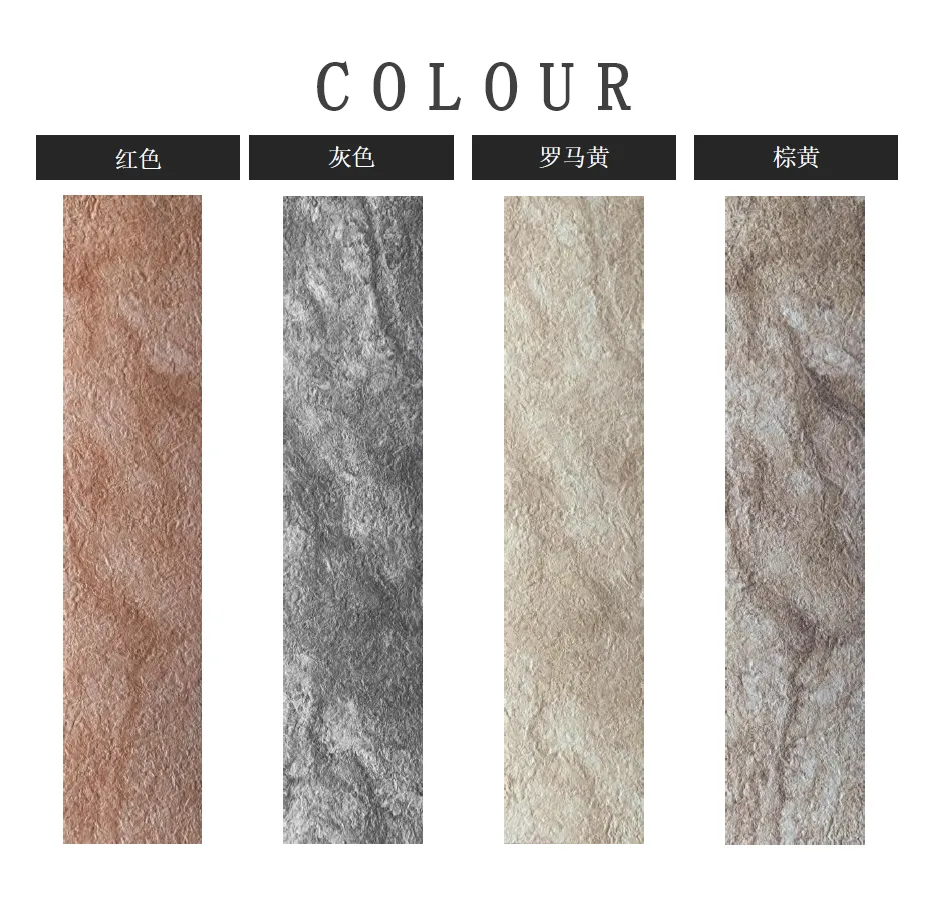
First, let's get to know the star of the show. Rock Cut Dolomitic Stone is a natural stone variant quarried from dolomite-rich deposits, known for its distinctive layered appearance and muted color palette—think deep greys, warm claybanks, and subtle veining that mimics the slow, geological dance of time. Unlike polished marble or sleek granite, it wears its "roughness" proudly: each slab bears the marks of the earth's pressure, with chiseled edges and uneven surfaces that add tactile depth to any space. It's no wonder designers gravitate toward it for projects aiming to balance modern minimalism with a touch of rustic charm.
But what makes it so popular beyond aesthetics? Durability is a big factor. Dolomitic stone is naturally resistant to weathering, moisture, and thermal expansion, making it a workhorse for exterior facades in harsh climates. Its density also means it stands up to heavy foot traffic, making it a staple for flooring and accent walls in high-traffic commercial spaces. For decades, it's been the go-to for projects that demand both beauty and brawn—until curves enter the equation.
Curved surfaces aren't just a passing trend—they're a response to how humans experience space. Studies show that rounded edges and flowing lines trigger feelings of calm and comfort, contrasting with the stress-inducing sharpness of angular designs. In healthcare settings, curved walls can reduce anxiety; in retail, they guide customers through a space more intuitively; in homes, they soften living areas, making them feel cozier and more connected. From Zaha Hadid's gravity-defying curves to the soft archways of Scandinavian interiors, the design world has embraced the curve as a language of empathy.
But here's the challenge: to achieve these curves, materials need to bend—literally. They must conform to radii, wrap around corners, and adapt to the organic shapes designers dream up. And this is where Rock Cut Dolomitic Stone starts to show its limitations.
Natural stone, by its very nature, is rigid. Unlike wood, which can be steamed and bent, or metal, which can be forged into curves, Rock Cut Dolomitic Stone is a product of millions of years of geological compression—hard, dense, and unyielding. Its lack of elasticity is its greatest strength on flat surfaces but a critical weakness when curves are involved.
Imagine trying to bend a thick, dry branch: it snaps. Rock Cut Dolomitic Stone behaves similarly when forced to conform to a curve. Even with careful cutting, the stone's internal structure—layered and crystalline—resists flexing. Tight radii (curves with small diameters, like a half-circle wall niche) are especially problematic. When a slab is cut to fit a curve, the tension at the inner edge can cause hairline fractures, which may not show up during installation but worsen over time with temperature changes or structural movement. In worst-case scenarios, the stone can chip or crack entirely, leaving unsightly gaps or compromising the surface's integrity.
Let's talk logistics. Rock Cut Dolomitic Stone isn't lightweight. A standard 2cm-thick slab can weigh upwards of 45 kg per square meter—far heavier than flexible alternatives. When installing on a curved surface, this weight becomes a liability. Curved frameworks (like steel or wooden supports) must be reinforced to bear the load, adding cost and complexity to the project. Worse, each slab must be custom-cut to match the curve's exact radius, a process that demands precision cutting tools and skilled labor. Even a 1mm miscalculation can result in gaps between slabs, breaking the curve's seamless flow and requiring tedious adjustments (or expensive replacements).
So, what do designers turn to when they crave the look of natural stone but need the flexibility for curves? Enter engineered solutions like MCM Flexible Stone—a material that's redefining the rules of stone applications. MCM, short for Modified Composite Material, combines thin slices of natural stone (often just 1-3mm thick) with a lightweight, flexible backing made of fiberglass or polymer. The result? A material that looks and feels like stone but can bend to radii as tight as 30cm—all while weighing a fraction of the real thing (around 8-12 kg per square meter).
| Material | Flexibility (Minimum Radius) | Weight (kg/m²) | Installation Complexity | Best For |
|---|---|---|---|---|
| Rock Cut Dolomitic Stone | Limited (≥ 3m radius) | 45-60 | High (custom cutting, reinforced supports) | Flat facades, sharp-edged interiors, outdoor pathways |
| MCM Flexible Stone | High (≤ 30cm radius) | 8-12 | Low (on-site trimming, lightweight installation) | Curved walls, rounded columns, accent niches |
| Foamed Aluminium Alloy Board (Vintage Silver) | Very High (≤ 20cm radius) | 5-7 | Very Low (malleable, clip-on systems) | Modern, metallic curved facades |
Take Foamed Aluminium Alloy Board, for example—a lightweight, metal-based alternative with a vintage silver or gold finish. It's not stone, but its malleability makes it a favorite for designers aiming for sleek, curved metallic accents. Unlike Rock Cut Dolomitic Stone, it can be bent on-site with simple tools and attached to curved frameworks without reinforcing steel. For projects where the stone look isn't non-negotiable, it's a pragmatic choice.
Does this mean Rock Cut Dolomitic Stone has no place in curved design? Not necessarily—but it requires compromise. For gentle curves (think radii larger than 3 meters, like a wide, sweeping exterior wall), it's possible to use thinner slabs (1-1.5cm thick) and reinforce the back with resin to reduce brittleness. Some designers also opt for "segmented" curves, where small, wedge-shaped stone pieces are arranged to approximate a curve, leaving tiny grout lines that mimic the stone's natural texture. It's not seamless, but when done well, it can create a striking, mosaic-like effect that leans into the stone's ruggedness.
That said, these workarounds have limits. Tight curves (like a circular fireplace surround or a curved accent wall in a small room) still pose too high a risk of cracking. In those cases, the trade-off between aesthetics and functionality often leads designers to choose flexibility over strict authenticity.
Rock Cut Dolomitic Stone's struggle with curved surfaces isn't a failure—it's a reminder that great design often involves working with (not against) a material's inherent nature. Its rigidity is part of what makes it beautiful: the way it stands firm against the elements, the way its rough texture invites touch, the way it ages gracefully, developing a patina that tells a story. For flat surfaces and bold angles, it's irreplaceable.
But as design evolves, so too do our materials. MCM Flexible Stone and lightweight alternatives don't replace natural stone—they expand what's possible, letting us marry the warmth of stone with the fluidity of curves. At the end of the day, the best projects are those that honor each material's strengths: Rock Cut Dolomitic Stone for its timeless ruggedness, flexible composites for their adaptability, and a little creativity to bridge the gap.
So, the next time you admire a curved stone wall, take a closer look. Is it the real deal, or a clever composite? Either way, it's a testament to design's greatest lesson: sometimes, the most beautiful solutions come from knowing when to bend—and when to stand firm.
Recommend Products












