
There's a quiet revolution happening in architecture and interior design—one that bends, curves, and flows where once only straight lines dared to go. For decades, designers and builders have stared at blueprints featuring sweeping curved walls or vaulted ceilings, then sighed at the reality of traditional materials: marble slabs that crack under the stress of a bend, solid wood panels that warp when curved, concrete blocks that weigh down structures with their heft. But what if the walls and ceilings of our spaces could move like water, (embrace) the softness of nature while standing firm against time? Enter MCM flexible stone—a material that's rewriting the rules of what's possible in curved design.
Walk into any modern art gallery, boutique hotel, or cutting-edge office, and you'll notice a shift. Sharp angles are making way for organic curves, sharp edges softening into gentle arcs. Why? Curves feel human. They mimic the natural world—the curve of a hill, the arc of a wave, the bend of a tree branch—and in doing so, they make spaces feel welcoming, not imposing. But for architects like Elena Marquez, who spent two years designing a community library in Barcelona with a domed ceiling meant to "hug readers like a book," the dream nearly hit a wall—literally.
"We wanted the ceiling to slope gently, like a cloud," Elena recalls. "But traditional materials? Marble was too heavy, drywall too flimsy, wood too rigid. We even considered plaster, but it would've cracked within a year. It felt like we were trying to build with stone and string—beautiful in theory, impossible in practice."
Elena's frustration is familiar to anyone who's tried to marry aesthetics with functionality in curved spaces. Traditional building materials are designed for straight lines: they're rigid, dense, and unforgiving. A curved wall might look stunning on paper, but in reality, it often means extra labor, higher costs, and compromises on durability. Until now.
MCM—short for Modified Composite Material—isn't just a new material; it's a new way of thinking about building. At its core, MCM flexible stone is a blend of natural minerals, recycled polymers, and advanced binders, engineered to be lightweight, durable, and yes—flexible. Imagine holding a sheet of material that looks and feels like rough-hewn stone or polished marble, but bends in your hands like a thick piece of cardboard. That's MCM in action.
"It's like nature's best kept secret, finally bottled," says Marco Rossi, a materials scientist who's worked on MCM development for over a decade. "We took what makes stone beautiful—its texture, its depth, its character—and stripped away what makes it stubborn: its weight and rigidity. The result? A material that can follow the most whimsical curve without losing an ounce of strength."
But MCM flexible stone isn't just about solving technical problems—it's about unlocking creativity. Designers no longer have to choose between "stunning" and "practical." They can have both. And nowhere is that more evident than in the MCM project board series, a lineup of panels designed specifically for ambitious, curved projects.
What makes MCM flexible stone so special? Let's break it down. First, weight: traditional marble weighs in at around 20-25 kg per square meter; MCM flexible stone? A mere 3-5 kg. That lightness means it can be installed on curved ceilings without requiring extra structural support—no need for steel beams or reinforced frameworks. Second, flexibility: MCM panels can bend to a radius as tight as 30 cm, making them perfect for everything from gentle archways to dramatic, sweeping domes. Third, durability: despite its lightness, MCM is scratch-resistant, water-resistant, and fire-retardant, standing up to the wear and tear of high-traffic spaces like airports or shopping malls.
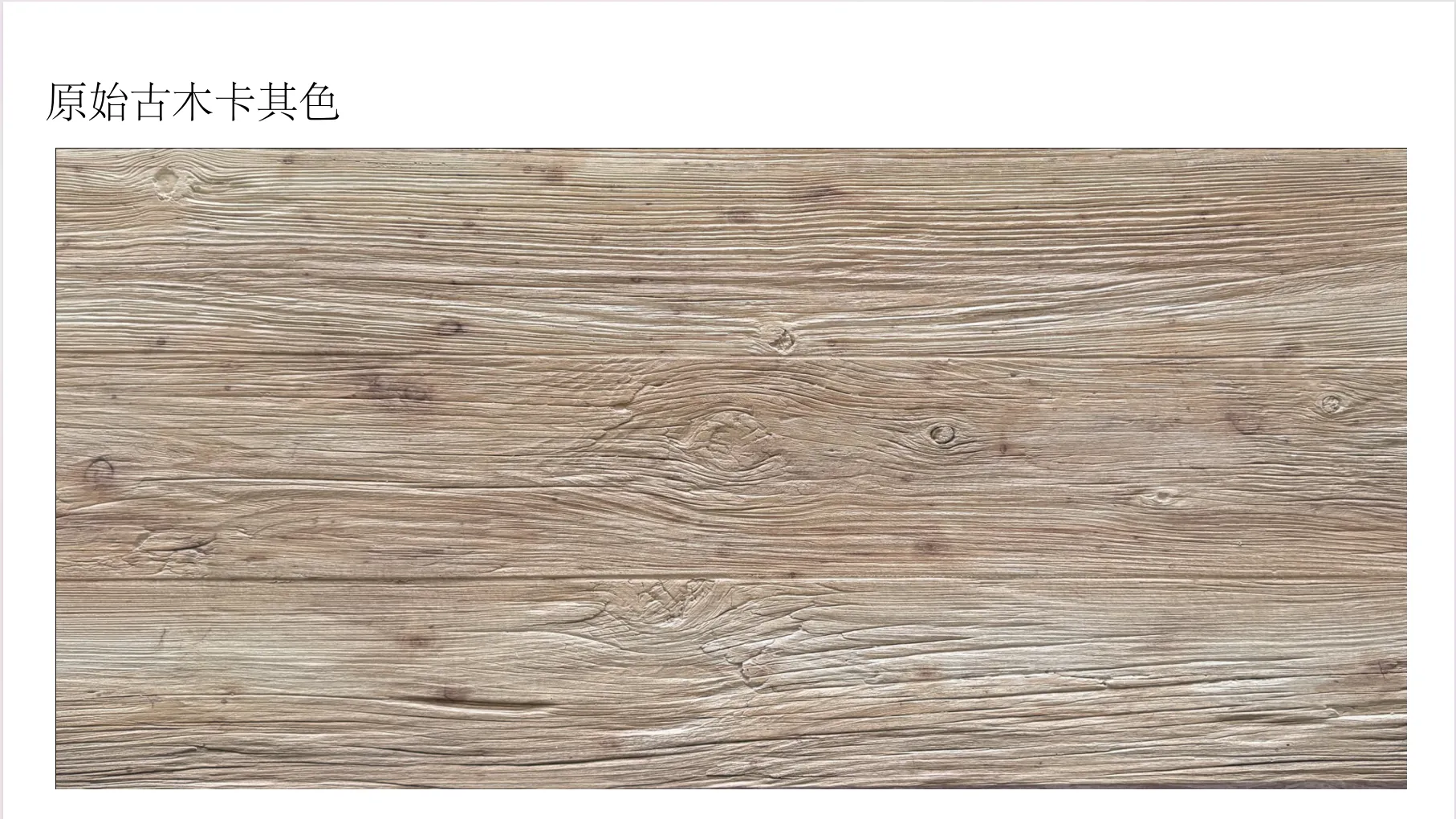
But perhaps the most compelling thing about MCM flexible stone is its aesthetics. Unlike synthetic materials that feel "fake," MCM captures the nuance of natural stone, wood, and concrete with uncanny accuracy. Take the wood grain board series, for example. Run your hand over it, and you'll feel the faint ridges of tree rings, the subtle knots that make real wood so charming. But unlike real wood, it won't warp in humidity or split in dry air. It's the warmth of wood, minus the worry.
Or consider travertine (starry green) —a finish that mimics the porous, earthy texture of natural travertine, but with a twist: tiny, iridescent flecks that catch the light, like stars scattered across a forest floor. It's the kind of detail that turns a curved wall in a café from "nice" to "unforgettable." "We used it in a yoga studio last year," says interior designer Priya Patel. "The curved walls wrap around the space, and the starry green travertine shimmers when the morning light hits. Clients say it feels like practicing in a grove at dawn. That's the power of texture and flexibility combined."
Let's step into the shoes of Raj, a hotelier in Bali who wanted to build a lobby that felt like a "tropical cave"—curved walls, a sloped ceiling, and a vibe that screamed "luxury, but make it natural." His first plan? Carve the walls from local stone. But the cost? Prohibitive. The weight? His foundation couldn't handle it. Then he discovered MCM flexible stone.
"We went with lunar peak silvery for the ceiling," Raj says. "It's this soft, metallic-gray finish that shimmers like moonlight. And the walls? Fair-faced concrete MCM panels. They look just like raw concrete, but they're light enough to curve without cracking. Now, when guests walk in, they stop and stare. The ceiling slopes down like a wave, and the walls feel alive—like the cave was shaped by wind, not workers."
Raj's story isn't unique. From boutique hotels in Tokyo to community centers in Copenhagen, MCM flexible stone is turning bold ideas into reality. Take the "Cloud Library" in Seoul, where architect Min-Jun Park used MCM wood grain board to line a 20-meter curved bookshelf. "Wood was the obvious choice for warmth, but real wood would've bowed under the weight of books," Min-Jun explains. "MCM wood grain board? It's been up for three years, no warping, no cracks. And it still smells like fresh-cut lumber. The kids love it—they say it feels like reading inside a tree."
Curious how MCM flexible stone stacks up against traditional materials? Let's take a look:
| Material | Weight (per sqm) | Flexibility (min. bend radius) | Installation Time (100 sqm) | Durability (avg. lifespan) |
|---|---|---|---|---|
| Natural Marble | 20-25 kg | Not flexible (will crack) | 3-4 days | 20-30 years (with maintenance) |
| Solid Wood | 15-18 kg | 60 cm (limited; prone to warping) | 2-3 days | 15-20 years (susceptible to moisture) |
| Traditional Concrete | 22-28 kg | Not flexible | 5-7 days (requires formwork) | 50+ years (but heavy, hard to repair) |
| MCM Flexible Stone | 3-5 kg | 30 cm (can bend repeatedly without damage) | 1 day (peel-and-stick or dry-fit) | 30-40 years (resistant to moisture, fire, and scratches) |
One of the best things about MCM flexible stone? It doesn't just solve problems—it inspires. With over 50 finishes and textures, it's a playground for designers. Want to evoke the desert? Try gobi panel , with its sandy, wind-worn texture. Dreaming of a beach vibe? bali stone mimics the smooth, weathered look of coastal rock. For something bold, there's travertine (starry red) , with its deep crimson hue and sparkly flecks, perfect for a statement wall in a restaurant.
"We recently used dolomitic travertine (dark grey) for a curved bar in a jazz club," says designer Lila Chen. "It's this moody, almost black stone with subtle white veins, like storm clouds. When the lights hit it, the curve comes alive—it feels like the bar is breathing. Musicians say it sets the mood better than any paint color ever could."
And it's not just about looks. MCM flexible stone is built to last. It's resistant to mold, mildew, and UV rays, making it ideal for outdoor curved structures too. Think: a curved garden wall in travertine (starry blue) , catching the afternoon sun, or a poolside cabana ceiling lined with foamed aluminium alloy board (vintage gold) , shimmering like sunlight on water.
As designers push the boundaries of what's possible, MCM flexible stone is right there with them. "We're seeing more and more projects that blur the line between indoors and outdoors," says Marco Rossi. "Curved glass walls? Pair them with MCM flexible stone columns, and suddenly you've got a space that feels like it's part of the landscape. It's not just building—it's storytelling."
Elena Marquez, the architect behind the Barcelona library, agrees. "Curves aren't just about beauty—they're about emotion. A curved wall feels protective, a curved ceiling feels expansive. MCM flexible stone lets us design spaces that make people feel something. That's the future: buildings that don't just stand—they connect."
At the end of the day, MCM flexible stone isn't just a material. It's a tool for connection. It lets us build spaces that feel human—curved, warm, and alive. Whether it's a child running their hand along a curved bookshelf, a traveler pausing to admire a starry green wall, or a couple sharing a meal under a lunar peak silvery ceiling, MCM flexible stone turns buildings into stories.
So the next time you see a curved wall or a sloped ceiling that takes your breath away, take a closer look. Chances are, it's not stone at all—it's MCM. And it's not just bending—it's changing the way we think about design, one curve at a time.
Recommend Products












