

In the world of architecture, there's a quiet revolution happening—one that's not about towering skyscrapers or flashy glass facades, but about the materials that clothe our buildings. Designers today aren't just chasing function; they're craving flexibility, the kind that lets a wall curve like a wave, a facade undulate like a hillside, or a niche cradle light in a way rigid stone never could. Enter Flexible Bali Stone, a material that's redefining what's possible when nature's beauty meets human ingenuity.
Think about the last time you walked through an old building—maybe a historic church or a centuries-old castle. The stone walls are imposing, solid, and full of character, but they're also unyielding. Traditional masonry stone, for all its grandeur, comes with a trade-off: weight, brittleness, and a stubborn resistance to curves. Architects have long dreamed of softer, more organic forms, but until recently, the materials to make those dreams real simply didn't exist.
Take, for example, a designer wanting to create a lobby with a wave panel feature wall—a sweeping, undulating surface that greets visitors like a gentle tide. With traditional stone, that vision would likely get scaled back to a flat, rectangular slab. The stone would be too heavy to bend without cracking, too thick to contour, and too labor-intensive to install in anything but straight lines. Rigidity, in short, was the enemy of creativity.
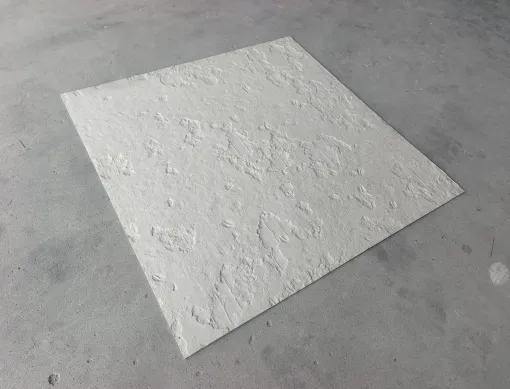
Flexible Bali Stone isn't just another building material—it's a reimagining of what stone can be. Part of the broader mcm flexible stone family (Modified Composite Material), it marries the timeless appeal of natural stone with the adaptability of modern engineering. Here's what makes it special:
At its core, Flexible Bali Stone is a blend of high-quality natural stone aggregates (think crushed Bali stone, known for its warm, earthy tones), reinforced polymers, and glass fibers. The result? A material that's paper-thin (as little as 3-5mm thick), lightweight (just 4-6 kg per square meter), and surprisingly bendable. It can wrap around a 30cm radius curve without so much as a hairline crack—a feat that would shatter traditional masonry stone into pieces.
But don't let its flexibility fool you. This is no flimsy imitation. Flexible Bali Stone is tough: resistant to UV rays, moisture, and temperature swings, it holds up in harsh climates from desert heat to coastal humidity. And because it's made with natural stone aggregates, it retains that authentic, tactile quality—run your hand over it, and you'll feel the same granular texture as quarried stone, minus the weight.
So, what does this mean for architects and designers? Let's paint a picture. Imagine a boutique hotel in Bali (fitting, given the stone's namesake) with a circular courtyard. Instead of lining the walls with heavy masonry stone that would require massive structural support, the designers opt for Flexible Bali Stone. They curve the panels to follow the courtyard's circumference, creating a space that feels intimate and embracing, like a hug from the building itself. Sunlight filters through, casting dappled shadows that dance across the gently bent surfaces, and guests remark on how the lobby "feels alive" compared to the rigid hotels they've stayed in before.
Or consider a residential project: a homeowner wants a fireplace with a rounded, organic shape, something that feels less like a blocky eyesore and more like a sculptural centerpiece. With Flexible Bali Stone, the contractor can bend the panels to match the curve of the hearth, cladding it in warm, golden-brown tones that complement the wood-burning fire. The result is a focal point that's both functional and artistic—no more square, utilitarian fireplaces here.
Even commercial spaces are getting in on the action. A tech company in San Francisco, known for its innovative culture, recently clad its office breakout area in Flexible Bali Stone, shaping the panels into a series of interconnected, curved niches where employees can work or relax. The material's light weight meant no need for extra structural reinforcement, and its ability to curve allowed the designers to create a space that feels more like a garden grotto than a corporate office.
Curious how Flexible Bali Stone compares to the masonry stone we've relied on for centuries? Let's break it down:
| Feature | Flexible Bali Stone | Traditional Masonry Stone |
|---|---|---|
| Thickness | 3-5mm (paper-thin) | 20-50mm (bulky) |
| Weight | 4-6 kg/m² (light enough for ceilings/walls) | 20-30 kg/m² (requires heavy structural support) |
| Flexibility | Bends around 30cm radius curves | Brittle; cracks under minimal bending |
| Installation | Lightweight, easy to cut/shape on-site; adhesive-backed for quick application | Requires mortar, heavy machinery, and skilled labor |
| Aesthetics | Authentic stone texture; available in Bali-inspired tones (warm beiges, soft browns) | Classic look but limited to natural quarry colors |
The difference is clear: Flexible Bali Stone isn't just a lighter alternative—it's a more creative one. It turns "impossible" curves into "let's do it," and heavy, laborious installations into streamlined, efficient projects.
Flexible Bali Stone is just one star in the MCM universe. The mcm project board series includes a range of materials that cater to every design vision, from the cosmic allure of travertine (starry green) (with its speckled, galaxy-like pattern) to the industrial chic of foamed aluminium alloy boards. What ties them all together? That same commitment to flexibility, lightness, and durability.
Take travertine (starry green) , for instance. Like Flexible Bali Stone, it's a thin, bendable panel, but with a twist: its surface is dotted with iridescent green flecks that catch the light like distant stars. Imagine pairing it with Flexible Bali Stone in a restaurant interior—Bali Stone for the warm, earthy walls, and starry green travertine for a curved bar front that shimmers like a night sky. The contrast of textures and colors would transform the space into something unforgettable.
In an era where sustainability is non-negotiable, Flexible Bali Stone shines here, too. Traditional stone quarrying is resource-intensive, often leaving large scars on the landscape. Flexible Bali Stone, by contrast, uses recycled stone aggregates and requires less energy to produce. Its lightweight nature also reduces transportation emissions—trucks can carry far more panels per trip than heavy stone slabs. And because it's so easy to install, it cuts down on construction waste, too (no more chipping away at oversized blocks to get the right fit).
One architect I spoke with put it this way: "We're not just building for today; we're building for the next generation. Flexible Bali Stone lets us create beautiful, curved spaces without compromising on our commitment to the planet. It's a win-win."
As more designers discover the possibilities of Flexible Bali Stone, we're seeing a shift in architectural language. Curves are no longer reserved for expensive, custom-built projects—they're becoming accessible. A small café can now have a curved Bali Stone countertop; a home renovation can include a wavy accent wall; a museum can wrap its facade in undulating panels that change with the light.
And it's not just about aesthetics. Flexible materials like this are making buildings more functional, too. Think of a hospital with curved walls that reduce echo and create calmer patient rooms, or a school with rounded corners that feel safer for kids. Flexibility, in this sense, is about more than beauty—it's about creating spaces that work better for the people who use them.
So, the next time you walk past a building with a curved facade, a wave-like wall, or a niche that seems to cradle the light, take a closer look. Chances are, you're not just seeing stone—you're seeing the future of architecture. A future where materials bend, adapt, and inspire, all while honoring the timeless beauty of the natural world. And at the heart of that future? Flexible Bali Stone, proving that sometimes, the best way to honor tradition is to reimagine it.
Recommend Products












