

In the world of modern architecture, where straight lines are giving way to flowing curves and organic shapes, the demand for cladding materials that can keep up with bold designs has never been higher. Enter Bali Stone, a standout product in the mcm flexible stone series by COLORIA GROUP—a material that doesn't just cover walls, but bends, adapts, and breathes life into the most ambitious architectural visions.
Bali Stone isn't your average wall cladding. Born from decades of innovation in modified cementitious materials (MCM), it's a testament to how technology can reimagine traditional building materials. Unlike rigid natural stones that crack under pressure or synthetic panels that lack character, Bali Stone strikes a rare balance: the tactile warmth of natural stone, paired with the flexibility to hug curves and contours that once seemed impossible to clad.
At its core, Bali Stone is engineered with a proprietary blend of cement, minerals, and reinforcing fibers—all bonded through COLORIA's modified cementitious process. This isn't just about making a material "bendable"; it's about creating a cladding solution that feels alive, adapting to the unique personality of each project. Whether you're designing a museum with sweeping walls or a boutique hotel with undulating facades, Bali Stone moves with your vision, not against it.
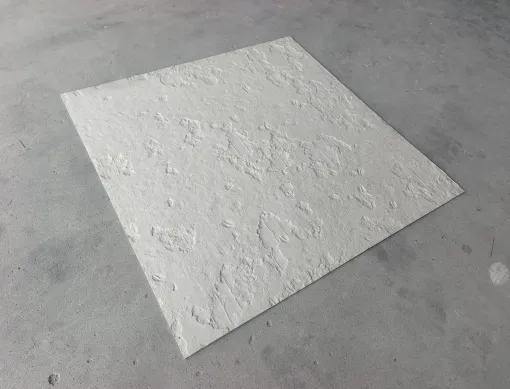
Imagine a material that can wrap around a 50mm radius curve without cracking, or drape over a double-curved surface like fabric. Bali Stone's flexibility isn't just a technical spec—it's a design freedom tool. Traditional natural stones, with their rigid structure, force architects to compromise; Bali Stone turns "what if" into "let's do it." This is especially game-changing for projects using wave panel designs, where fluidity is the star of the show.
Every building has a narrative, and Bali Stone helps tell it through texture and color. Want the look of travertine (starry green) , with its celestial speckles, but on a curved wall? Bali Stone delivers. Prefer the earthy warmth of rusted metal or the smoothness of polished marble? The MCM flexible stone series offers over 50 textures and finishes, all customizable to match your project's mood. It's not just cladding—it's a canvas.
In an era where green building isn't optional, Bali Stone leads by example. Weighing just 8-12 kg/m² (compared to 25-30 kg/m² for natural stone), it reduces structural load and transportation emissions. Its low-VOC formula and 100% recyclable composition align with LEED and BREEAM standards, making it a favorite for eco-conscious developers. This isn't just sustainable cladding; it's a commitment to buildings that care for the planet as much as they inspire people.
| (Metric) | (Traditional Natural Stone) | Bali Stone (MCM Flexible Stone) |
|---|---|---|
| (Weight per m²) | 25-30 kg | 8-12 kg |
| (Minimum Bend Radius) | (No flexibility) | 50mm ( for special projects) |
| (Installation Speed) | 2-3 m²// (2-3 m² per worker per day) | 8-10 m²// (8-10 m² per worker per day) |
| (Weather Resistance) | (Prone to acid rain damage) | UV,,-40℃+80℃ (UV-resistant, salt-tolerant, stable from -40℃ to +80℃) |
| (Eco-Certifications) | (High carbon footprint) | EU EPD, LEED v4.1 MR Credit (Meets EU EPD, LEED v4.1 MR Credit) |
Bali Stone isn't just a material for "experimental" projects—it's a workhorse that excels in diverse settings. Here are three scenarios where it's making a tangible difference:
A recent art museum in Riyadh, Saudi Arabia, wanted its exterior to reflect the "flow of creativity" with a series of interconnected curved walls. The design team initially struggled with traditional travertine, which cracked during mock-ups. Enter Bali Stone in travertine (starry green) finish—its subtle star-like speckles and ability to conform to the museum's 3D-printed formwork turned the facade into a masterpiece. Today, visitors often pause to run their hands over the walls, surprised that something so beautiful is also so technically advanced.
A boutique hotel in Bali (fittingly) chose Bali Stone for its lobby, where a double-curved feature wall serves as the focal point. The design called for a wave panel pattern, mimicking the island's ocean waves. Traditional tiles would have created harsh seams; Bali Stone's large-format sheets (up to 1200x2400mm) and flexibility allowed the waves to flow seamlessly, creating a space that feels both grand and intimate. Guests describe the lobby as "wrapping them in comfort"—exactly the emotion the architects wanted to evoke.
Coastal homes face unique challenges: saltwater, high winds, and the need for low-maintenance exteriors. A villa in Jeddah, Saudi Arabia, used Bali Stone for its entire facade, choosing a weathered rusty red finish that complements the desert landscape. Unlike natural sandstone, which fades and erodes in coastal climates, Bali Stone's color is integral to its matrix—no paint, no sealants, just long-lasting beauty. After three years of harsh, the villa's walls still look as vibrant as the day they were installed.
Bali Stone isn't alone in COLORIA's MCM lineup—it's part of a family of materials designed to work together, creating cohesive, high-performance projects. For example, if your design combines curved walls (Bali Stone) with large flat surfaces, you can pair it with mcm big slab board series for seamless transitions. Need custom 3D-printed accents to complement the curves? mcm 3d printing series integrates perfectly, using the same modified cementitious base for consistent quality.
This synergy is what makes COLORIA a "one-stop solution provider." Architects don't have to juggle multiple suppliers or worry about material incompatibility—Bali Stone and its MCM siblings speak the same design language. Whether you're specifying cladding for a skyscraper, a retail mall, or a private residence, the MCM series ensures that every element, from the smallest curve to the largest slab, works in harmony.
Sustainability in architecture isn't just about "being green"—it's about creating buildings that contribute positively to their environment. Bali Stone checks every box: its lightweight nature reduces the need for heavy structural support (cutting down on steel and concrete use), its low embodied carbon footprint aligns with global net-zero goals, and its durability means less frequent replacement (reducing waste over time).
COLORIA GROUP takes this a step further by ensuring the entire MCM production process is eco-conscious. From sourcing local minerals to using solar-powered factories, the company's commitment to sustainability is as strong as its commitment to innovation. For developers and architects aiming for green building certifications, Bali Stone isn't just a choice—it's a strategic advantage.
When you run your hand over a Bali Stone wall, you're not just touching a cladding material—you're touching the future of design. This is a material that understands the's desire to create spaces with soul, the developer's need for efficiency, and the planet's call for responsibility. It's flexible, but never flimsy; beautiful, but never impractical; innovative, but deeply rooted in the timeless appeal of natural stone.
In a world where architecture is increasingly about connection—between people, spaces, and nature—Bali Stone is the bridge that makes those connections possible. It turns curves into conversations, facades into stories, and buildings into experiences. So the next time you sketch a curve on paper, remember: with Bali Stone, that curve isn't just a line anymore. It's a promise.
Recommend Products












