
Curved architecture has always held a special place in the hearts of designers and dreamers. There's something inherently captivating about a wall that bends like a ribbon, a column that swells gently like a tree trunk, or a facade that flows like water. These forms feel alive—they invite touch, guide the eye, and turn ordinary spaces into experiences. But for decades, bringing these curves to life has been a battle against materials. Traditional stone is rigid, concrete is unforgiving, and marble? Beautiful, but brittle enough to crack at the first hint of a bend. Enter MCM flexible stone —a material that doesn't just work with curves; it dances with them.
Let's start with the obvious: curves are hard. Not artistically—architects have been sketching them since the Roman Empire—but practically. Take natural marble, for example. It's dense, heavy, and about as flexible as a brick. To curve it, you'd need to carve individual slabs into wedge shapes, then piece them together like a puzzle. The result? Seams that break the flow, uneven surfaces, and a budget that balloons faster than a over-inflated balloon. And if the curve is tight—say, a radius under three feet? Forget it. The marble would likely crack during installation, leaving you with wasted stone and a frustrated client.
Concrete, the workhorse of modern construction, isn't much better. While it can be poured into curved molds, the process is messy, time-consuming, and unforgiving. Air bubbles, uneven curing, and shrinkage often leave surfaces that require extensive (sanding) to look smooth. And once it's set? That curve is permanent. Change your mind halfway through? You'll be jackhammering it out and starting over. Not exactly ideal for a designer with a vision that evolves.
Even lightweight options like wood or vinyl siding lack the durability and elegance needed for high-end projects. Wood warps in humidity, vinyl fades in sunlight, and neither can mimic the depth of texture found in natural stone. So, for years, the choice was clear: either compromise on your curve or compromise on quality. Until now.
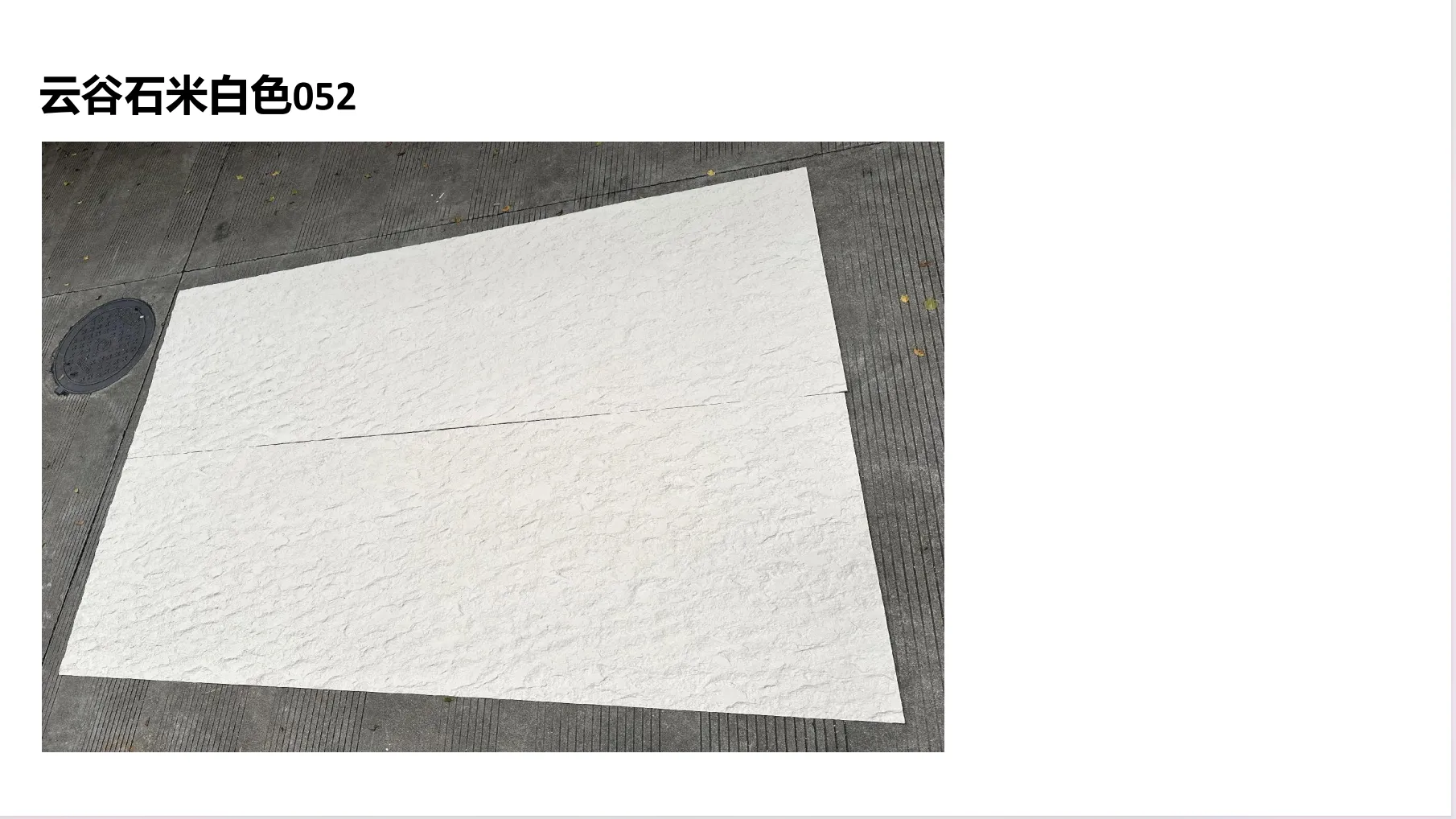
MCM—short for Modified Composite Material—isn't just a new product; it's a reimagining of what a building material can be. Think of it as the love child of natural stone and a yoga instructor: strong, flexible, and surprisingly lightweight. At its core, MCM flexible stone is made by blending natural minerals (like stone dust or clay) with a polymer binder, creating a thin, sheet-like material that can bend, twist, and conform to almost any shape. It's thin—usually 3-5mm thick—yet tough enough to withstand scratches, moisture, and the harsh UV rays of the sun. And here's the kicker: it looks exactly like the real thing. Whether you want the rough-hewn charm of a mountain boulder or the sleek sheen of polished marble, MCM can mimic it down to the smallest detail.
But what truly sets MCM flexible stone apart is its relationship with curves. Unlike traditional materials that fight against bending, MCM embraces it. It can wrap around a column with a radius as tight as 10cm (that's less than a foot!) without cracking, peeling, or losing its shape. It's lightweight, too—about 6-8kg per square meter, compared to 20-30kg for natural stone—so it doesn't require extra structural support. Imagine hanging a 20-foot curved wall panel by hand, without cranes or forklifts. With MCM, that's not a fantasy; it's a Tuesday afternoon.
Let's break down the benefits, because "it bends" is just the tip of the iceberg. MCM flexible stone checks boxes traditional materials don't even see.
MCM's flexibility isn't a party trick—it's engineered. The polymer binder acts like a microscopic shock absorber, allowing the material to stretch slightly as it bends, then snap back to its original form. This means you can create sweeping, continuous curves without a single seam. No more patchwork slabs, no more visible grout lines—just a smooth, unbroken surface that looks like it was sculpted from a single block of stone. And because it's thin, it can hug even the most complex shapes: think spiral columns, undulating feature walls, or even curved ceilings (yes, ceilings!).
Traditional stone's weight is its Achilles' heel, especially for curved applications. A curved marble wall might require steel reinforcements, extra framing, or even a custom foundation—all adding time and cost. MCM, at 6-8kg per square meter, is so light it can be installed on drywall, plywood, or even existing tile without worrying about structural overload. And don't mistake lightness for weakness: MCM is resistant to impact, moisture, and fire. It won't fade in sunlight, crack in frost, or warp in humidity. In fact, most MCM products come with a 15-20 year warranty—longer than many traditional stone installations last.
MCM flexible stone isn't just about function; it's about fantasy. Want the look of travertine (starry green) , with tiny flecks of mica that sparkle like a forest at dusk? Done. Craving the industrial edge of foamed aluminium alloy board (vintage silver) , with a weathered metallic finish that feels both modern and timeless? Consider it yours. Or maybe you're drawn to the organic rhythm of a wave panel , where undulating lines mimic the ocean's surface. MCM does all this—and more.
The texture options are endless, too. You can get rough, chiseled surfaces that feel like they were pulled from a mountain, or smooth, polished finishes that reflect light like a mirror. And because MCM is manufactured, you can customize colors to match any palette. Want a lunar peak silvery column to complement a starry night-themed lobby? No problem. Need 500 square meters of wave panel in a custom ocean blue? MCM suppliers can deliver it—consistently, without the variations that plague natural stone.
Installing traditional curved stone is a job for experts. It requires heavy machinery, specialized tools, and masons with years of experience. MCM flexible stone? It's so user-friendly, even a DIY enthusiast could tackle a small project. The sheets come in manageable sizes (usually 1200x600mm or 1000x500mm), and they cut like butter with a utility knife or jigsaw. No diamond blades, no dust clouds, no sore forearms. Once cut, they're adhered to the substrate with a high-strength adhesive—no mortar, no grout, no mess. A team of two can install 50 square meters of curved wall in a day. Compare that to traditional stone, which might take a week for the same area, and the savings in labor alone are enough to make any contractor smile.
| Feature | MCM Flexible Stone | Traditional Marble | Fair-Faced Concrete |
|---|---|---|---|
| Flexibility | Bends to radii as small as 10cm; seamless curves | Brittle; requires piecing together wedge-shaped slabs (seams visible) | Can be poured into curves but prone to cracks; no re-shaping after curing |
| Weight (per sqm) | 6-8kg | 20-30kg | 25-35kg |
| Installation Time | 1-2 days for 50 sqm (2 people) | 5-7 days for 50 sqm (4+ people) | 3-4 days for 50 sqm (3+ people, plus curing time) |
| Durability | Resistant to moisture, UV, scratches; 15-20 year warranty | Porous; stains easily; prone to chipping | Durable but prone to cracking; stains if not sealed |
| Aesthetic Options | Endless textures/colors (e.g., travertine (starry green), wave panel, lunar peak silvery) | Limited by natural variation; hard to match batches | Plain; requires staining/coating for color |
A contemporary art museum in Chicago wanted its main gallery to feel like a "river of light"—a space where walls curved gently to guide visitors through exhibits. The original plan called for white marble, but the budget couldn't handle the cost of custom-carved slabs. Enter MCM flexible stone. The design team chose a wave panel texture in a soft, off-white hue, which undulates subtly as you walk by. The panels were installed in three days, wrapping around the gallery's 20-meter curved wall without a single seam. Today, visitors often pause to run their hands along the walls, marveling at how "real" the texture feels. "It's like walking through a cloud," one visitor wrote in the guestbook. Mission accomplished.
A boutique hotel in Bali dreamed of a lobby that felt both luxurious and rooted in nature. The centerpiece? Four spiral columns that rose from the floor to the ceiling, evoking the island's famous bamboo forests. But bamboo is too soft for high-traffic areas, and stone columns would have been too heavy for the building's structure. The solution? MCM flexible stone in lunar peak silvery —a finish that shimmers like moonlight on water. The panels were wrapped around lightweight steel frames, creating columns that weigh a fraction of traditional stone but look just as elegant. Guests now pose for photos next to them, and the hotel's Instagram following has grown by 30% since opening. "They're not just columns," the hotel manager says. "They're conversation starters."
Sarah, a homeowner in Portland, wanted to transform her awkwardly shaped living room into a cozy reading nook. The space had a small, curved alcove that felt wasted—until she discovered MCM flexible stone. She chose travertine (starry green) for its earthy tone and subtle sparkle, installing the panels herself over a weekend. "I'm not a DIY pro," she laughs, "but the sheets cut so easily, and the adhesive went on like wallpaper paste. Now, that alcove is my favorite spot in the house. I curl up with a book, and the green stone makes me feel like I'm in a forest cabin—even in the middle of the city."
In a world where "green" isn't just a trend but a responsibility, MCM flexible stone shines. Unlike natural stone, which requires mining (a process that scars landscapes and uses massive amounts of water), MCM is often made from recycled materials—think crushed stone waste, reclaimed polymers, or even industrial byproducts. Its lightweight nature also reduces transportation emissions: a single truck can carry 10 times more MCM panels than natural stone slabs, cutting fuel use and carbon footprints.
Installation is eco-friendly, too. No mortar means no cement production (a major source of CO2 emissions), and no grout means less waste. And because MCM lasts decades without fading or deteriorating, it reduces the need for replacement—unlike vinyl or wood, which might need to be swapped out every 5-10 years. For architects and homeowners who want to build beautifully without costing the Earth, MCM is a no-brainer.
As more designers discover MCM flexible stone, we're seeing a wave of curved innovation. Imagine airports with ceilings that flow like clouds, retail stores with facades that undulate like fabric, or homes with interior walls that curve to create intimate nooks. MCM isn't just enabling these designs—it's inspiring them. Architects are no longer limited by "what's possible"; they're free to dream of "what if."
And it's not just about curves. MCM flexible stone is finding its way into floors, furniture, and even furniture. A recent project in Tokyo used wave panel MCM to create a coffee table that looks like a frozen wave. Another in New York turned MCM sheets into custom kitchen backsplashes that mimic the look of foamed aluminium alloy board (vintage silver) —industrial chic with zero maintenance.
Curved walls and columns aren't just design choices—they're statements. They say, "This space is thoughtful. It's intentional. It's alive." For too long, these statements were muted by materials that couldn't keep up. But with MCM flexible stone, the volume is turned up. It's a material that bends so your vision can stretch, that's light so your dreams can rise, and that's beautiful so your spaces can inspire.
So, the next time you find yourself sketching a curve—whether it's on a napkin, a CAD screen, or in your mind—remember: you don't have to compromise. MCM flexible stone is here, and it's ready to make your curve a reality. After all, the best designs aren't straight. They bend, they flow, they move . And now, your materials can too.
Recommend Products












