
Walk into a modern art museum, and you might find yourself pausing before a wall that doesn't just stand there—it flows . Gentle curves sweep from floor to ceiling, softening the edges of the space, guiding your gaze like a silent hand. In a boutique hotel lobby, a curved reception desk wraps around the room, creating an instant sense of warmth, as if the space itself is embracing you. These moments of architectural magic—curved surfaces that feel both organic and intentional—are more than just design flourishes. They're the result of solving a decades-old problem: how to marry the beauty of natural materials with the flexibility required to shape them into curves.
For too long, architects and designers have faced a trade-off. Want a curved wall with the elegance of marble or the texture of stone? You'd either have to settle for heavy, brittle slabs that cracked under the stress of bending, or opt for synthetic alternatives that lacked the depth and authenticity of natural materials. That is, until MCM flexible stone arrived on the scene. And at the heart of this revolution? The Flexible Marble Concrete Board—a material that doesn't just bend; it reimagines what's possible for curved architectural surfaces.
Let's start with the basics. MCM stands for Modified Composite Material, a term that might sound technical, but the idea is simple: take the best of natural materials—think the texture of travertine, the sheen of marble, the earthiness of rammed earth—and blend them with advanced polymers to create something entirely new. The result? A material that's thin (often just 3-5mm thick), lightweight (around 6-8 kg/m²), and incredibly flexible. Unlike traditional stone slabs, which are rigid and prone to breaking when bent, MCM flexible stone can curve, twist, and wrap around surfaces without losing its integrity. It's like taking the soul of natural stone and giving it the adaptability of fabric.
But MCM flexible stone isn't just about flexibility. It's about durability, too. These panels resist moisture, UV rays, and scratches—so that curved wall in a sunlit atrium or a high-traffic restaurant won't fade or wear thin over time. And because they're lightweight, they're easier to transport, install, and even repair than traditional stone. No heavy machinery required, no risk of damaging the building's structure with excess weight. It's a material designed for the way we build now: efficiently, sustainably, and with beauty front and center.
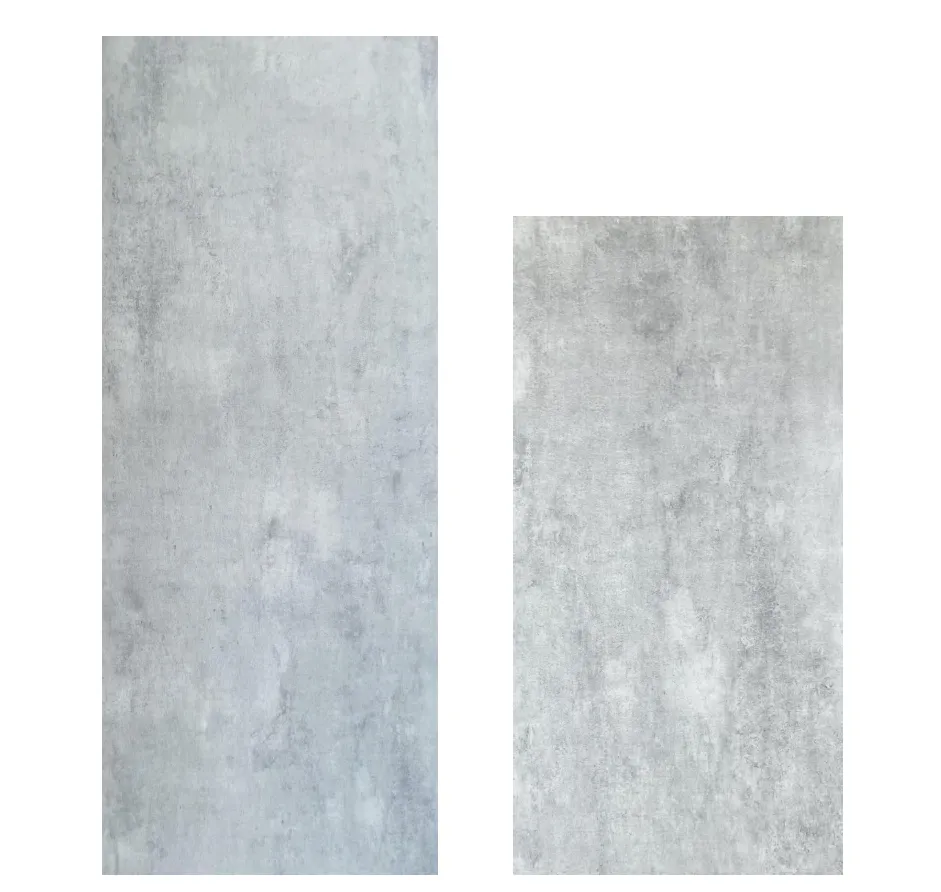
Within the MCM flexible stone family, the Flexible Marble Concrete Board is the star player for curved surfaces. Why? Because it marries two timeless aesthetics—marble's luxury and concrete's industrial chic—into a single, bendable panel. Imagine the veining of Carrara marble, soft and swirled, but on a panel that can curve around a circular staircase. Or the raw, tactile finish of fair-faced concrete, but shaped into a gentle archway that feels both modern and grounded. That's the power of this material: it doesn't force you to choose between style and structure.
What makes it work? The secret is in the composition. The board starts with a base of high-strength cement and natural aggregates (think crushed stone or sand), mixed with reinforcing fibers and polymers that add flexibility without sacrificing strength. Then, a thin layer of marble or concrete-inspired texture is applied to the surface, either through 3D printing (hello, MCM 3D printing series!) or advanced molding techniques, capturing every nuance of the original material—from the cool smoothness of polished marble to the rough, hand-hewn feel of aged concrete.
The result? A panel that can bend to radii as tight as 30cm (that's just over a foot) without cracking. To put that in perspective: a traditional marble slab would shatter if you tried to bend it even half that much. This means designers can finally create sweeping curves, circular facades, and organic shapes that were once limited to renderings. It's not just a material upgrade—it's a creativity upgrade.
Before we dive into the specifics of design lines and applications, let's talk about why curved surfaces are worth obsessing over. Architecture isn't just about shelter; it's about emotion. Sharp, angular walls can feel cold, even intimidating. They divide space, create barriers. Curves, though? They invite. They flow. They make a room feel larger, softer, more human. Think of a cave—our earliest shelters—or the domes of ancient cathedrals: curves have always felt like home.
But here's the thing: until recently, creating those curves with natural materials was a nightmare. Traditional stone slabs are heavy and rigid; installing them on a curved surface meant cutting them into tiny, wedge-shaped pieces, which ruined the material's natural pattern and added weeks to construction time. Synthetic alternatives, like plastic or fiberglass, often looked cheap, lacking the depth and warmth of real stone. MCM Flexible Marble Concrete Board changes that. It lets designers keep the soul of natural materials while embracing the fluidity of curves. The result? Spaces that don't just look good—they feel good.
Let's break down what makes this material a game-changer. It's not just "flexible stone"—it's a material built for the demands of modern architecture.
One of the best things about MCM flexible stone is the sheer range of design options. Whether you're going for a futuristic vibe, a rustic retreat, or something in between, there's a line that fits. Let's shine a light on a few that are particularly stunning for curved surfaces:
Travertine is a classic for a reason—it's warm, porous, and full of character. But "travertine (starry green)" takes that classic and turns it up to 11. Imagine a curved accent wall in a home theater, paneled in this stone. The base is a deep, earthy green, like moss after rain, and embedded in the surface are tiny, reflective particles that glint when the lights dim. It's not just a wall—it's a night sky you can touch. The flexibility of the panel means the stars flow seamlessly around the curve, no breaks, no interruptions. It's the kind of detail that makes a space feel magical, like you've stepped into a secret garden.
And it's not just for residential spaces. A boutique hotel in Bali used "travertine (starry green)" on the curved ceiling of their spa lobby, pairing it with soft, warm lighting. The result? Guests say it feels like being wrapped in a forest at dusk—calm, luxurious, and utterly unforgettable.
If "starry green" is earthy and warm, "lunar peak silvery" is all about celestial cool. This line mimics the surface of the moon—pitted, textured, and with a soft, silvery sheen that shifts with the light. It's modern, it's sleek, and it's perfect for curved surfaces that need to make a subtle statement.
Picture a corporate office with a curved reception desk clad in "lunar peak silvery." The desk wraps around the front lobby, its surface catching the light from the floor-to-ceiling windows. It feels professional, but not sterile—like bringing a piece of the moon into the workplace. Or a restaurant with a curved bar in this material: the silvery texture contrasts beautifully with warm wood stools and amber lighting, creating a space that's both contemporary and inviting.
What's most impressive? Even with its metallic finish, "lunar peak silvery" is still lightweight and flexible. A designer in Tokyo used it to create a curved facade for a small art gallery, and the panels wrapped around the building's rounded corners like a second skin. From the street, it looks like the gallery is glowing softly—subtle, but impossible to ignore.
Rammed earth has been used for centuries—it's the stuff of adobe homes and ancient fortresses, and it's beloved for its earthy, textured look. But traditional rammed earth is heavy, thick, and rigid. Enter "rammed earth board (gradient)"—a line that captures that same earthy texture but in a flexible, gradient-colored panel. Think of it as rammed earth, but with a painter's touch.
These panels blend hues seamlessly—say, from soft terracotta at the bottom to pale sand at the top—creating a gradient that looks like a sunset frozen in stone. And because the panels are flexible, that gradient can flow around a curve without a single break. A yoga studio in Santa Fe used "rammed earth board (gradient)" on their curved meditation room walls, and practitioners swear it feels like practicing in a canyon at dawn. The colors shift as the sun moves through the windows, and the curve of the wall wraps around the space, making it feel intimate and safe.
It's not just about looks, either. Rammed earth is naturally insulating, and the MCM version retains that quality. So that curved wall isn't just beautiful—it's helping keep the space warm in winter and cool in summer. Function meets form, in the best way.
While we're on the topic of metallic finishes, let's talk about "foamed aluminium alloy board (vintage silver)." This isn't a stone or concrete line, but it's a favorite companion to Flexible Marble Concrete Board for curved surfaces. Foamed aluminium is lightweight, durable, and has a unique, porous texture that adds depth to any design. The "vintage silver" finish is warm—not too shiny, with a slight patina that feels lived-in and timeless.
Imagine a curved accent wall in a home's living room, combining "flexible marble concrete board" (in a soft beige, to mimic limestone) with strips of "foamed aluminium alloy board (vintage silver)." The stone provides warmth and texture, while the aluminium adds a touch of industrial chic. The curve of the wall means the two materials flow into each other, no harsh edges. It's a mix of old and new, soft and hard—and it works because both materials are flexible enough to bend in harmony.
Enough hypotheticals—let's talk about how Flexible Marble Concrete Board is being used in the real world. These aren't just concepts; they're spaces people live, work, and play in every day.
In a modern home in Los Angeles, an architect used "travertine (starry orange)" (a cousin to "starry green," with warm, sunset hues) to create a curved fireplace wall. The wall wraps around the living room, starting at the floor and arching up to the ceiling, and the "starry" particles catch the firelight, making the whole room feel cozy and alive. "Traditional stone would have been too heavy for the curve," the architect said. "With MCM, we could keep the fireplace thin and elegant, and the color shifts with the flames. It's the heart of the house now."
Another homeowner in Portland used "rammed earth board (gradient)" for a curved shower wall. The gradient—from deep terracotta to pale sand—makes the small bathroom feel larger, and the material's moisture resistance means no worries about mold or mildew. "It's like showering in a desert canyon," they. "But with better water pressure."
In Dubai, a new boutique mall features a curved atrium wall clad in "travertine (vintage gold)" (a warm, gilded take on classic travertine). The wall rises three stories, its surface catching the sunlight and casting golden reflections across the space. "We wanted something that felt luxurious but approachable," the mall's designer explained. "The curve invites people in, and the gold travertine makes it feel special. Plus, with MCM, we could install it in weeks, not months—critical for a mall opening."
And in Paris, a café called "La Courbe" (French for "The Curve") built its entire interior around Flexible Marble Concrete Board. The counter curves, the backsplash curves, even the accent walls curve—all in "linear travertine (claybank)," a warm, earthy tone that feels like a hug. "People come here just to sit by the curved wall," the owner says. "They say it feels like being in a cocoon. And since the material is scratch-resistant, we don't panic when someone sets down a coffee cup too hard."
Cultural spaces—museums, galleries, theaters—often rely on architecture to tell stories. And curves, with their flow and movement, are perfect for that. A museum in Seoul, dedicated to space exploration, used "lunar peak black" (a dark, moon-like texture) on the curved walls of their "Black Hole" exhibit. The panels wrap around visitors, creating the sensation of being pulled into a gravity well. "We wanted to make space feel tangible," the curator said. "The flexibility of the MCM panels let us create a continuous, immersive environment. Visitors say it's like walking inside a planetarium."
Closer to home, a community center in Arizona used "gobi panel" (a line inspired by the desert's rugged beauty) and "rammed earth board (gradient)" to create a curved outdoor amphitheater. The panels curve up from the ground, mimicking the desert's natural dunes, and the gradient colors—sandy beige to rusty red—blend into the landscape. "It's not just a stage," the center's director says. "It's a piece of art. And because the material is weather-resistant, we don't have to worry about monsoons or harsh sun."
| Feature | Traditional Stone Slabs | MCM Flexible Marble Concrete Board |
|---|---|---|
| Flexibility | Rigid; cracks when bent (radius > 1m) | Highly flexible; bends to radii as tight as 30cm |
| Weight | Heavy (20-30 kg/m²) | Lightweight (6-8 kg/m²) |
| Installation Time | Weeks (requires heavy machinery, cutting, sealing) | Days (lightweight, easy to cut, no special tools) |
| Durability | Prone to chipping, staining, and UV damage | Resistant to moisture, UV rays, scratches, and impacts |
| Aesthetic Range | Limited by natural stone availability | Endless (starry textures, gradients, metallic finishes, etc.) |
| Eco-Friendliness | High carbon footprint (mining, transportation) | Low carbon footprint (recycled materials, lightweight transport) |
At the end of the day, MCM Flexible Marble Concrete Board isn't just about building better curved surfaces. It's about building better spaces—spaces that feel human. In a world of sharp edges and cold, industrial design, curves remind us of the natural world: the bend of a river, the curve of a hill, the arch of a tree branch. They're comforting. They're organic. They make us feel at home.
And for architects and designers, this material is a gift. It's permission to stop compromising. To stop saying, "We can't do that curve because the stone is too heavy." To stop choosing between beauty and durability. With MCM flexible stone, you can have both. You can design a wall that curves like a wave and lasts like concrete. A ceiling that shimmers like the moon and resists the rain. A space that doesn't just function—it feels .
So the next time you walk into a room with a curved wall that takes your breath away, take a closer look. Chances are, it's not traditional stone. It's MCM flexible stone. And it's not just changing the way we build—it's changing the way we experience space.
Curved surfaces have been around since the Roman arches and the domes of the Renaissance. But for centuries, they've been limited by the materials available. Heavy stone, rigid concrete, fragile glass—all have their place, but none offer the freedom of MCM flexible stone. Now, with the Flexible Marble Concrete Board leading the way, the only limit is imagination.
Will we see more curved skyscrapers? Probably. More homes with curved walls that flow from room to room? Absolutely. More cultural spaces that use curves to tell stories, more commercial spaces that use them to draw crowds, more outdoor spaces that blend into the landscape? Without a doubt.
Because in the end, architecture is about people. And people, it turns out, love curves. They love spaces that feel alive, that flow, that wrap around them like a hug. MCM flexible stone doesn't just build those spaces—it enables them. And that, more than any technical spec or design trend, is why it's here to stay.
So here's to the curves. To the architects who dream them, the designers who refine them, and the materials—like Flexible Marble Concrete Board—that finally make them possible. The future of architecture isn't just straight lines. It's curves. And it's beautiful.
Recommend Products












