
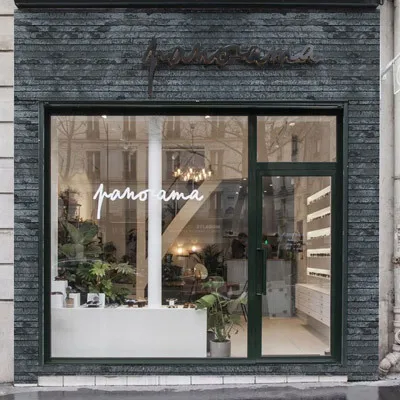
Walk into any historic district, and you'll notice it immediately—the weight of tradition in every brick, every slab of stone. For centuries, cladding has been the silent storyteller of architecture, but it's also been bound by rules: rigidity, heaviness, limits on where and how it can be used. Architects have sighed over curved walls that masonry stone simply can't follow. Homeowners have winced at cracks spiderwebbing across rigid facades after a single freeze-thaw cycle. Designers have stared at mood boards full of bold textures, only to realize traditional materials can't mimic that soft, flowing movement they're craving. But what if cladding could unlearn those old rules? What if it could bend, adapt, and dance with the lines of modern design without losing an ounce of strength? Enter Flexible Muretto Stone—a material that's not just redefining cladding, but rewriting the playbook entirely.
Let's start with the basics: Muretto Stone itself is no stranger to the design world. With its earthy textures and subtle color variations—think warm beiges, soft greys, and hints of terracotta—it's long been a favorite for adding rustic charm to exteriors. But "flexible" Muretto? That's where the magic happens. Imagine taking that classic Muretto character—the weathered look, the organic feel—and infusing it with a suppleness that lets it wrap around columns, curve over archways, or even cascade down a feature wall like a stone waterfall. It's not a flimsy imitation; it's the best of both worlds: the durability of natural stone and the versatility of a material that plays by your rules.
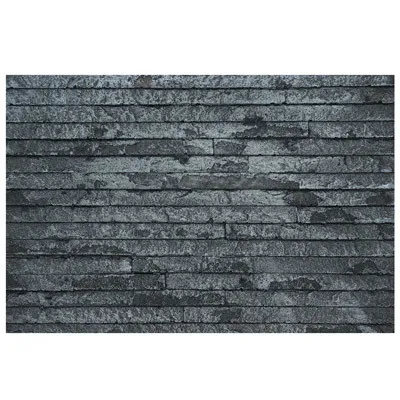
At its core, Flexible Muretto Stone is a triumph of modern engineering. It starts with a base of high-grade modified composite materials, reinforced with fibers that give it tensile strength without the brittleness of traditional stone. Then, it's layered with a thin veneer of real Muretto aggregate—those tiny, tactile particles that give it that authentic, hand-hewn look. The result? A panel that's lightweight (we're talking a fraction of the weight of masonry stone), flexible enough to bend up to 30 degrees without cracking, and tough enough to stand up to rain, wind, and even the occasional stray soccer ball from the neighbor's kids.
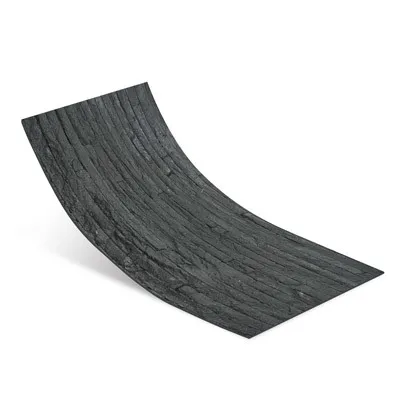
Creating Flexible Muretto Stone isn't just about mixing chemicals in a lab—it's about honoring the past while leapfrogging into the future. The process starts with studying natural Muretto formations. Geologists and material scientists trek through Italian quarries, documenting how the stone weathers, the way its layers shift, the unique pits and pores that make each slab one-of-a-kind. That data becomes the blueprint for the composite mix, ensuring the final product doesn't just look natural, but feels like it was plucked from the earth.
Next comes the "flexibility" secret: a proprietary blend of polymers and fibers that act like the stone's "muscles." Unlike traditional masonry stone, which is cut from solid blocks and left to its rigid devices, Flexible Muretto is cast in thin, malleable sheets. Think of it like making a very sturdy pancake—pour the mix, let it set just enough to hold shape, then gently flex it while it's still curing to lock in that bendable quality. The result? A panel that can be rolled, curved, or even folded (within reason!) during installation, turning once-impossible design ideas into "why didn't we think of this sooner?" realities.
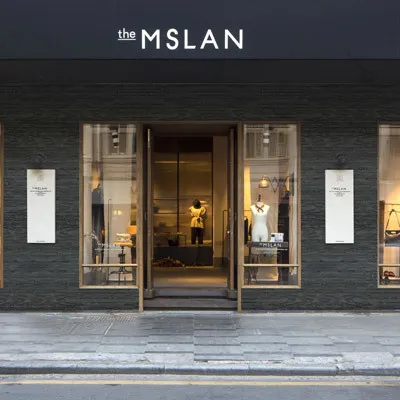
Sure, the ability to wrap around a circular tower or follow the sweep of a parabolic roof is cool—but Flexible Muretto's benefits run deeper than aesthetics. Let's talk about weight. Traditional masonry stone can weigh upwards of 50 pounds per square foot; that means reinforcing walls, beefing up foundations, and saying goodbye to upper-floor cladding dreams in older buildings. Flexible Muretto? It clocks in at under 8 pounds per square foot. Suddenly, that penthouse terrace you wanted to clad in stone? Doable. That lightweight steel-framed extension? No problem. It's like swapping a lead jacket for a linen blazer—same style, zero strain.
Then there's durability. Rigid cladding cracks. It's a fact of life. Temperature swings make it expand and contract; moisture seeps in, freezes, and fractures; even minor structural shifts can leave unsightly gaps. Flexible Muretto, though? It moves with the building. Think of it as the yoga instructor of cladding—bending, stretching, and adapting without breaking. Homeowners in freeze-thaw zones are already raving: "Our old masonry stone cracked after the first winter," one Colorado homeowner noted. "Two years with Flexible Muretto, and not a single imperfection. It's like it breathes with the house."
And let's not forget design freedom. Ever wanted a feature wall that looks like a stone river, winding up a staircase? Or a bathroom backsplash that curves around the vanity, no sharp edges in sight? With Flexible Muretto, those ideas aren't just possible—they're easy. Designers are pairing it with bold textures, like the industrial sheen of foamed aluminium alloy board (vintage silver), for a mix of soft stone and sleek metal that feels both timeless and futuristic. "It's opened up a whole new language," says Miami-based architect Lila Torres. "I recently used it on a boutique hotel with a wave-inspired facade. Before, we would've had to use heavy, expensive custom molds. Now? We bent the panels on-site. The contractors couldn't believe how fast it went up."
| Feature | Traditional Masonry Stone | Flexible Muretto Stone |
|---|---|---|
| Weight (per sq. ft.) | 30–50 lbs | 6–8 lbs |
| Flexibility | Rigid; cracks under stress | Bends up to 30° without damage |
| Installation Time | 2–3 days for 100 sq. ft. (requires heavy lifting) | Same area installed in 4–6 hours (lightweight, easy to handle) |
| Design Versatility | Limited to flat or slightly sloped surfaces | Curves, arches, columns, and complex geometries |
| Durability in Extreme Weather | Prone to cracking in freeze-thaw cycles | Resistant to temperature/moisture damage; flexes with movement |
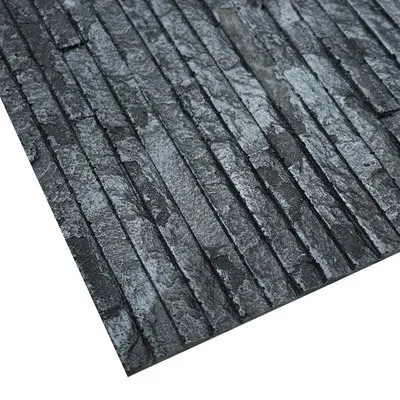
Flexible Muretto isn't picky about where it shines. Exteriors? Check. Imagine a suburban home with a stone facade that follows the gentle slope of the roof, no harsh angles in sight. Or a restaurant with a curved outdoor patio wall that feels like a natural extension of the landscape. Interior designers are equally smitten. Bathrooms love it—moisture-resistant, easy to clean, and perfect for wrapping around soaking tubs or shower niches. Living rooms? A statement wall clad in Flexible Muretto adds warmth without overwhelming the space, especially when paired with soft textiles and warm lighting.
Commercial projects are catching on too. Retail stores are using it to create "cave-like" changing rooms, where the curved stone walls make customers feel cozy and pampered. Office lobbies? Swap cold marble for Flexible Muretto's organic texture, and suddenly the space feels less corporate, more welcoming. Even heritage buildings are getting in on the action—conservationists in Europe are using it to restore damaged facades, matching the original Muretto look while adding modern durability. "We had a 19th-century villa with a crumbling stone exterior," says restoration expert Marco Rossi. "Using traditional masonry stone would've required dismantling half the wall. Flexible Muretto let us overlay the damaged areas, preserving the history while future-proofing it."
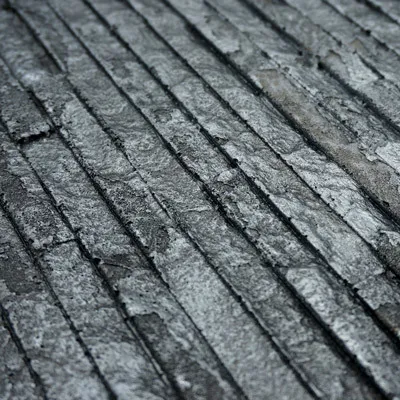
Flexible Muretto plays well with others—and that's part of its charm. Pair it with the iridescent glow of travertine (starry green), and you get a wall that shimmers like a forest at dusk, with Muretto's earthiness grounding the vibrant green veins. Or team it with foamed aluminium alloy board (vintage silver) for a contrast of textures: the stone's rough-hewn surface against the metal's smooth, reflective finish. It's industrial meets organic, and it works.
For a more monochromatic look, try combining it with lighter Muretto variants or even concrete board. The key is balance—let Flexible Muretto be the star, then let its partners enhance its texture. One designer in Portland recently used it with linear travertine (claybank) in a kitchen backsplash: the Muretto curved around the range hood, while the travertine ran in straight, horizontal lines below. "It's like a dance between chaos and order," they said. "The flexibility of the Muretto makes the whole space feel alive."
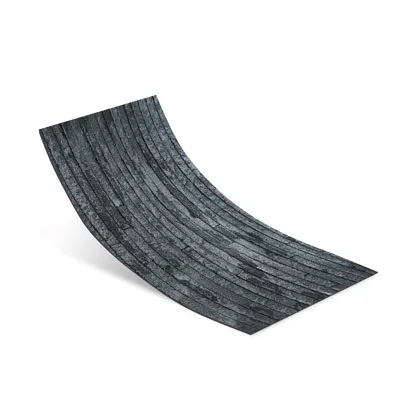
Traditional cladding will always have its place—there's a reason we still admire the stone walls of medieval castles. But for a world that craves both heritage and innovation, rigidity just won't cut it. Flexible Muretto Stone isn't here to replace the past; it's here to free it from its constraints. It's for the architect who doodles curved skyscrapers in their notebook. For the homeowner who wants a stone facade that won't crack when the ground shifts. For the designer who's tired of "no, that's not possible" and ready for "let's make it happen."
So the next time you look at a building, notice the cladding. Is it standing stiff, stuck in old rules? Or is it bending, flowing, and telling a new story? With Flexible Muretto Stone, the future of architecture isn't just built—it's shaped by possibility. And that, more than any trend, is what makes it revolutionary.
Recommend Products












