
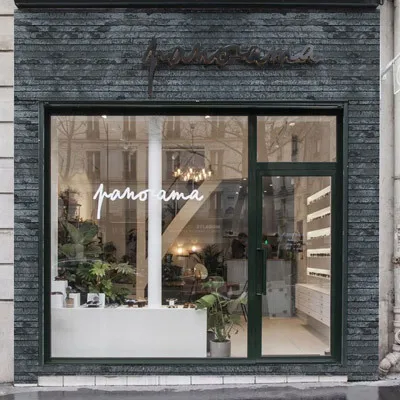
Curves in architecture are more than just design flourishes—they're stories told in motion. Think of the sweeping arc of a museum's facade, the gentle bend of a boutique's interior wall, or the organic curve of a hotel lobby ceiling that feels less like a structure and more like a hug. These shapes soften the rigidity of modern spaces, inviting us to move, linger, and connect with our surroundings. But for decades, architects and designers have faced a quiet battle: how to dress these curves in materials that match their beauty without sacrificing durability or practicality. Enter mcm flexible stone —a material that doesn't just work with curves, but celebrates them. Today, we're diving into how this innovation, paired with treasures like Muretto stone and the mcm big slab board series , is redefining what's possible when architecture bends, flows, and breathes.
Walk through any historic district, and you'll notice most buildings wear straight lines like a uniform—brick walls stack squarely, marble facades meet at sharp angles, concrete slabs stretch rigidly from corner to corner. Traditional building materials evolved for stability, not flexibility. Stone, for all its timeless allure, is heavy and brittle; a single curve can require custom-cutting dozens of small pieces, leaving seams that disrupt the flow. Ceramic tiles crack under the stress of bending. Even concrete, hailed as a modern marvel, often needs steel frameworks to achieve curves, adding weight and complexity. "Curves used to be a luxury," says Elena Marquez, a Madrid-based architect who specializes in organic design. "We'd spend weeks calculating load-bearing capacities, only to have the material limit the vision. A 30cm radius? Impossible with natural travertine. A sweeping 5m arch? You'd need to compromise on texture or structural integrity."
The problem isn't just technical—it's emotional. A curved wall clad in mismatched stone tiles feels like a poem with missing lines; the eye craves continuity, the hand seeks smooth transitions. When materials fight the curve, the architecture loses its voice. That's where mcm flexible stone steps in. Born from a blend of natural minerals, reinforced fibers, and advanced polymers, it's a material with the soul of stone but the adaptability of fabric. At just 2-4mm thick and weighing 3-5kg per square meter (compared to 20-30kg for natural stone), it bends without breaking, wraps without cracking, and installs without the need for heavy machinery or custom fabrication. Suddenly, that 30cm radius Elena despaired over? It's now a canvas.
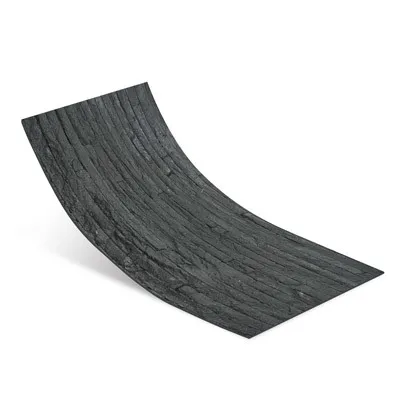
Let's start with the basics: What makes mcm flexible stone different? Imagine holding a sheet of material that looks and feels like quarried stone—complete with the subtle pits, veins, and textures that make natural stone so captivating—but when you gently bend it, it yields, like a thick piece of leather. That's the magic of MCM (Modified Composite Material) technology. The secret lies in its layered construction: a base of high-strength fiberglass mesh, a core of mineral-rich resin that mimics stone's density, and a top layer of natural stone particles or pigments that replicate the look of everything from rustic travertine to sleek marble. This composition gives it three superpowers: flexibility (it can bend to radii as tight as 20cm), lightness (so it won't strain curved substrates), and durability (resistant to moisture, UV rays, and impact—even in harsh climates).
But MCM isn't just a one-trick pony. It's a family of materials, each designed to solve specific design puzzles. For curved surfaces, two stars stand out: Muretto stone and the mcm big slab board series . Let's zoom in on Muretto first—a material that feels like it was plucked from a sunlit Italian village, with the texture of hand-laid plaster and the warmth of aged stone. Muretto stone comes in soft, earthy tones—think warm beiges, gentle grays, and muted terracottas—and its slightly irregular surface adds depth to curves. Unlike smooth stone, which can feel cold on a rounded wall, Muretto's texture plays with light, creating shadows that shift as you move around the curve, making the architecture feel alive.
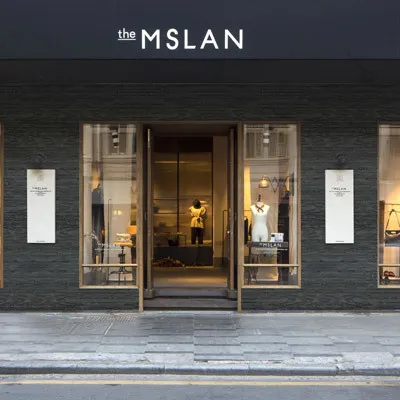
Maria Santos, an interior designer in Lisbon, recently used Muretto stone on a circular boutique wall that wraps around a central display. "The client wanted something that felt 'handmade,' not machine-perfect," she recalls. "Traditional plaster would have cracked within months on that curve, and natural stone tiles would have required grout lines that broke the circle. Muretto stone? We cut one continuous sheet, applied it with a flexible adhesive, and it hugged the curve like it was always meant to be there. Now, when customers walk in, they don't just see a wall—they feel the craftsmanship. The texture catches the light from the skylights, and the curve guides them naturally through the space."
What makes Muretto stone ideal for curves is its balance of rigidity and give. It's firm enough to hold its shape but pliable enough to adjust to minor irregularities in the substrate (because let's face it—no curved wall is perfectly smooth). Installation is surprisingly straightforward: unlike natural stone, which requires backer boards and heavy-duty mortar, Muretto stone bonds to properly prepared surfaces (like plywood, drywall, or even metal) with a polymer-based adhesive. "We spent less than half the time we would have with traditional stone," Maria adds. "And when we finished, there were no gaps, no uneven edges—just a seamless curve that looks like it was carved from a single block, but with the softness of something crafted by hand."
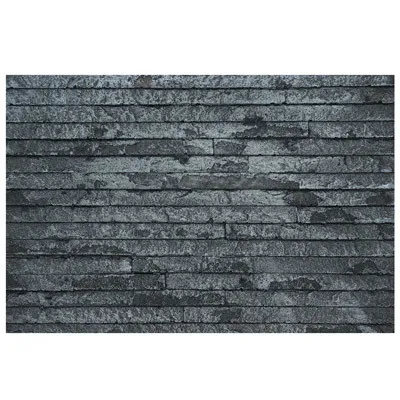
For larger curves—think a 10m-wide facade arch or a curved ceiling spanning a hotel atrium—smaller tiles or sheets can still create seams, even with flexible materials. That's where the mcm big slab board series shines. These slabs come in generous sizes (up to 1200x2400mm), meaning fewer cuts, fewer seams, and a more dramatic, uninterrupted flow. Imagine a concert hall with a curved wall that rises 8m from floor to ceiling: using big slabs, you might need only 10 sheets instead of 50 small tiles. The result? A surface that reads as one cohesive piece, enhancing the curve's drama.
Take the example of the Riverbank Arts Center in Dublin, which features a curved exterior wall inspired by the nearby Liffey River's flow. The architects chose the mcm big slab board series in a finish called Lunar peak silvery —a cool, metallic-tinged stone that shimmers like moonlight on water. "We wanted the wall to feel like it was moving, even when you stood still," explains lead architect Liam O'Connor. "With traditional stone slabs, each joint would have broken that illusion. The big MCM slabs? They bent along the curve without a single visible seam. And that Lunar peak silvery finish? It changes with the light—pale silver at noon, warm gray at dusk—so the curve feels dynamic, like the river itself."
What's remarkable about the big slab series is that despite their size, they're still lightweight enough for curved installations. A 1200x2400mm slab weighs just 15kg, making it easy for two installers to maneuver into place. "We didn't need cranes or scaffolding beyond the standard setup," Liam notes. "The slabs flexed gently as we applied them to the curved substrate, and the adhesive set quickly enough that we could move to the next piece without worrying about slippage. It was like applying giant wallpaper, but with the durability of stone."
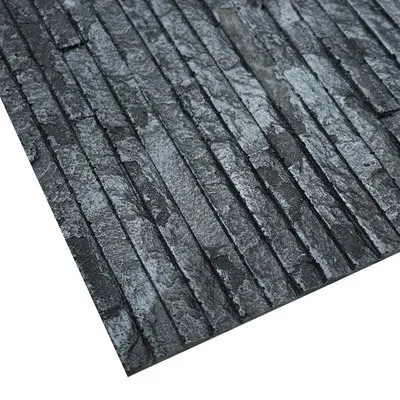
Beauty is fleeting if it can't stand the test of time. Curved surfaces, by their nature, can be more vulnerable to wear—think of a high-traffic lobby wall that gets brushed by hundreds of shoulders daily, or an exterior curve exposed to rain, wind, and UV rays. Here's where mcm flexible stone truly proves its mettle. Unlike natural stone, which can etch, stain, or fade, MCM stone is engineered to resist the elements. Its polymer core repels moisture, so rain and humidity won't seep in and cause warping. The surface is treated to withstand UV rays, ensuring that Lunar peak silvery or Muretto stone retains its color for decades. And because it's flexible, it can absorb minor impacts—say, a stray suitcase bump or a gust of wind—without cracking.
"We installed Muretto stone in a coastal restaurant with a curved outdoor bar," says Carlos Mendez, a contractor in Barcelona. "The bar juts out over the Mediterranean, so it's hit by salt spray, strong sun, and the occasional rogue seagull. After three years, it still looks brand-new. No stains, no peeling, no fading. A natural limestone bar would have needed sealing every six months and would probably have developed hairline cracks by now. MCM? We clean it with mild soap and water, and that's it."
| Material | Flexibility (Minimum Radius) | Weight (kg/m²) | Seamless Installation on Curves? | Weather Resistance |
|---|---|---|---|---|
| Natural Travertine | Not flexible (requires custom cuts) | 25-30 | No (many seams) | Low (prone to staining/etching) |
| Ceramic Tiles | Limited (≥100cm radius) | 15-20 | No (grout lines) | Medium (fades in UV light) |
| MCM Flexible Stone (Muretto) | High (≥20cm radius) | 3-5 | Yes (continuous sheets) | High (moisture/UV resistant) |
| MCM Big Slab Board Series | High (≥30cm radius for large slabs) | 4-6 | Yes (minimal seams) | High (same as MCM flexible stone) |
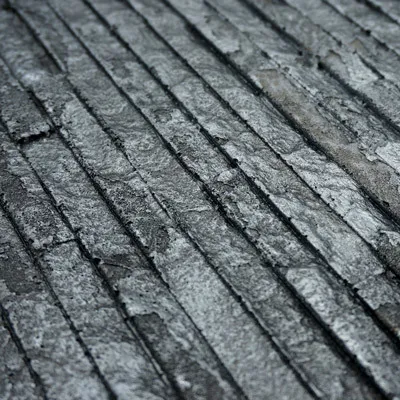
As architects push the boundaries of form—designing buildings that mimic natural landscapes, flow with human movement, and blur the line between indoors and out—materials like mcm flexible stone are becoming essential tools, not just optional luxuries. Muretto stone brings the warmth of old-world craftsmanship to modern curves; the mcm big slab board series turns grand arcs into seamless works of art; and finishes like Lunar peak silvery add layers of visual interest that change with the light, time, and perspective.
But perhaps the most exciting part? This isn't just for high-end projects. MCM flexible stone is accessible enough for boutique cafes, residential interiors, and community centers—spaces where a single curved wall can transform the feel of a room from ordinary to extraordinary. "I recently used Muretto stone on a small yoga studio's curved back wall," says interior designer Priya Patel. "The budget was tight, but the material was affordable, and the installation was quick. Now, when clients walk in, they immediately comment on how 'calming' the space feels. That's the power of a curve done right—paired with a material that doesn't just fit the shape, but elevates it."
In the end, architecture is about more than walls and roofs—it's about how spaces make us feel. A curved wall clad in mcm flexible stone doesn't just look beautiful; it tells us that the world isn't all straight lines and sharp edges. It whispers that beauty and practicality can coexist, that innovation can honor tradition, and that sometimes, the most memorable spaces are the ones that bend toward us. So the next time you find yourself drawn to a curved facade or a flowing interior wall, take a closer look—chances are, you're admiring the work of mcm flexible stone , Muretto stone , and the visionaries who dared to imagine a world where architecture moves as freely as we do.
Recommend Products












