
Walk into any modern architectural showcase, and you'll notice a trend that's hard to miss: curves. Not the sharp, angular edges of yesteryear, but soft, flowing lines that mimic nature—think rolling hills, meandering rivers, or the gentle arc of a bird's wing. These designs aren't just pretty; they're a response to our collective craving for spaces that feel organic, welcoming, and alive. But here's the catch architects and builders have grumbled about for years: traditional building materials? They're stubbornly straight. Brick, solid wood, even concrete—they're great for rigid structures, but ask them to bend, and they'll either crack, warp, or flat-out refuse. It's the curved conundrum: how do you marry the beauty of fluid design with the reliability of a material that won't let you down?
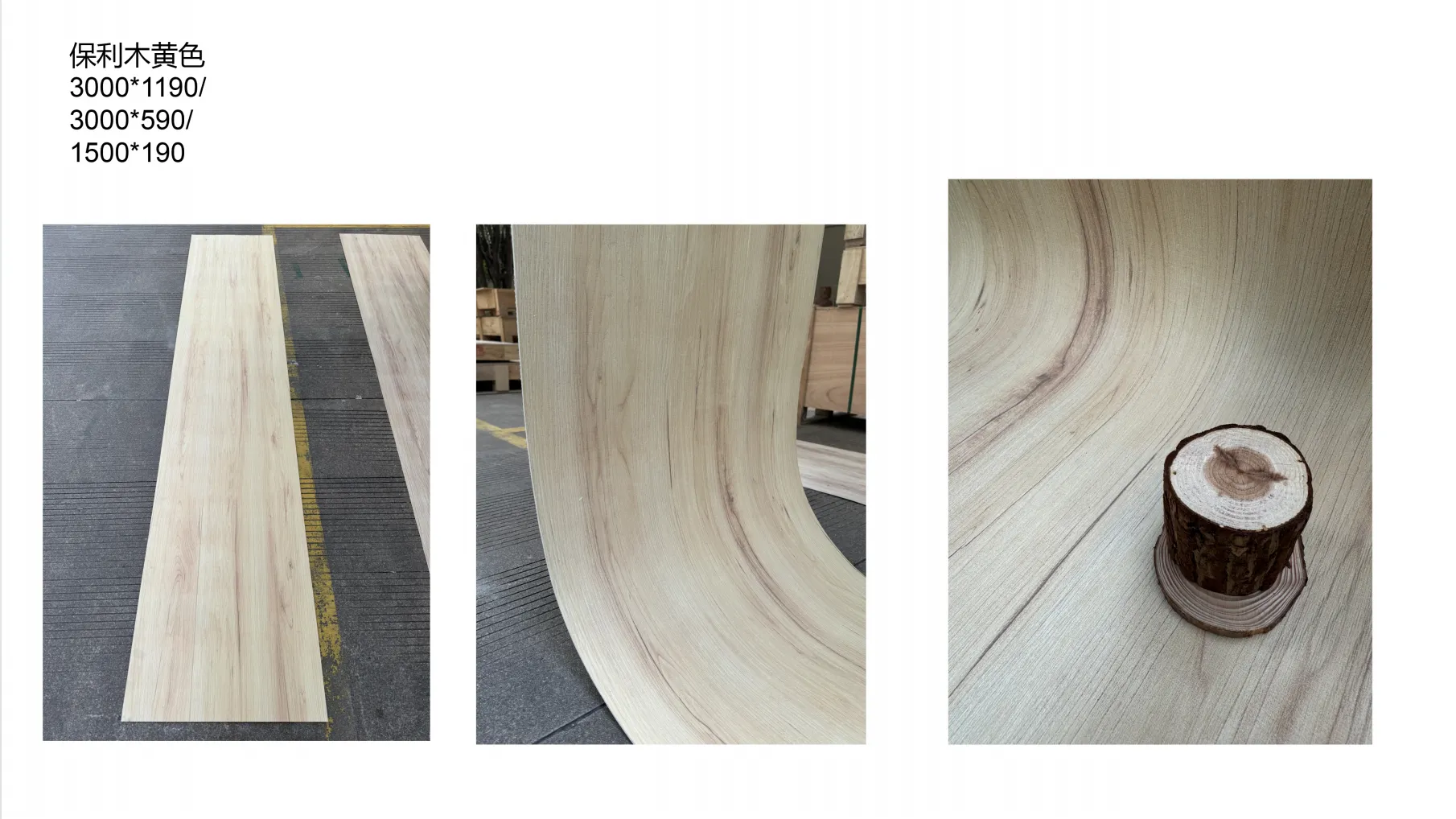
If you've ever watched a carpenter wrestle with a solid oak plank, trying to force it into a gentle curve only to have it splinter, you know the frustration. That's why when flexible poly wood board first hit the market, it was like a sigh of relief for the industry. This isn't your grandpa's wood paneling. Imagine a material that feels like real wood—warm, textured, with that familiar grain pattern—but with the flexibility of a yoga instructor. It bends, it twists, it conforms to the most ambitious curved designs, and yet it's tough enough to stand up to rain, sun, and the chaos of daily life. So what is it, exactly? At its core, flexible poly wood board is a composite material, blending recycled wood fibers with a polymer binder that gives it that all-important bend. It's not just "flexible for wood"—it's flexible, period. And that's a big deal.
Let's cut to the chase: why should you care about this material? Let's start with the obvious: flexibility without compromise . Unlike solid wood, which has a breaking point when bent, poly wood board can curve to radii as tight as 30cm (that's a little over a foot!) without losing structural integrity. No cracks, no warping, just a smooth, consistent bend that holds its shape. That's a game-changer for anyone trying to build a curved wall or a rounded ceiling.
Then there's durability . We've all seen wood panels swell in humidity or rot after a rainy season. Poly wood board? It laughs at moisture. The polymer binder repels water, so it won't warp, mold, or degrade—even in bathrooms, kitchens, or outdoor spaces. And forget about termites or wood-boring bugs; they can't digest the polymer, so your curved masterpiece stays pest-free. It's also resistant to scratches and dents, which is a huge win for high-traffic areas like retail stores or schools.
Sustainability is another feather in its cap. Many brands use recycled wood fibers from sawmill scraps or post-consumer wood waste, which means less deforestation and less landfill clutter. Plus, the polymer binders are often low in VOCs (volatile organic compounds), so you're not off-gassing harmful chemicals into the air. For architects and homeowners alike, that's a big plus—building beautifully shouldn't mean harming the planet.
And let's not overlook aesthetic versatility . Flexible poly wood board isn't a one-trick pony. It comes in a range of finishes: from light, beachy blondes that scream "coastal cottage" to deep, rich browns that evoke a mountain cabin. You can stain it, paint it, or leave it raw to let the natural grain shine. It's like having a blank canvas that already looks good—no need to hide it under layers of cover-ups.
Finally, there's ease of installation . If you've ever tried to install traditional stone cladding (looking at you, mcm flexible stone—we'll get to that later), you know it can be a heavy, time-consuming affair. Poly wood board? It's lightweight, so even a single installer can handle it. It cuts cleanly with standard tools (no special saws required), and it fastens easily with screws or adhesives. No more straining your back or spending hours adjusting heavy panels. It's building made (almost) easy.
Okay, so poly wood board sounds great—but how does it hold up against other flexible or wood-like materials? Let's break it down. We've pitted it against four popular options: mcm flexible stone (a go-to for stone-look flexibility), wood grain board (the "traditional" wood alternative), bamboo mat board (eco-friendly and bendable), and fair-faced concrete (the tough, industrial favorite). Here's how they measure up:
| Material | Flexibility (1-5) | Durability (Weather/Scratches) | Cost (Low/Med/High) | Sustainability | Best For |
|---|---|---|---|---|---|
| Flexible Poly Wood Board | 5 (Bends to 30cm radii) | High (Water-resistant, scratch-proof) | Med | High (Recycled wood fibers, low VOCs) | Curved walls, ceilings, furniture, exterior cladding |
| MCM Flexible Stone | 4 (Good for gentle curves, less tight radii) | Very High (Stone is tough, but heavy) | High | Med (Depends on stone sourcing) | Stone-look facades, accent walls |
| Wood Grain Board | 2 (Limited flexibility, prone to warping) | Low (Susceptible to moisture, scratches) | Low-Med | Med (Solid wood = more deforestation) | Straight accent walls, budget projects |
| Bamboo Mat Board | 3 (Bends, but less durable than poly wood) | Med (Moisture-resistant, but can fray) | Med | High (Bamboo is fast-growing) | Tropical-themed interiors, lightweight screens |
| Fair-Faced Concrete | 1 (Rigid, requires pre-cast molds for curves) | Very High (Weatherproof, fire-resistant) | High | Low (High carbon footprint) | Industrial-style exteriors, load-bearing structures |
See the pattern? Poly wood board isn't just flexible—it's the most well-rounded option. MCM flexible stone is durable but heavy and pricey; wood grain board is cheap but won't bend; bamboo mat board is eco-friendly but not as tough; fair-faced concrete is industrial but rigid. Poly wood board hits that sweet spot: flexible, durable, sustainable, and affordable enough for both big projects and DIY builds.
Let's get concrete (pun intended) about where this material really shines. It's not just for "curved walls 101"—it's showing up in some of the most creative spaces around. Take interior design , for example. Imagine walking into a boutique hotel lobby where the reception desk isn't a boring rectangle but a sweeping curve, clad in warm poly wood board that wraps around the space like a hug. Or a restaurant with a ceiling that dips and rises, mimicking the contour of a wave, all done in light blonde poly wood that makes the room feel spacious and bright. Even residential spaces are getting in on the action: homeowners are using it for curved headboards, built-in bookshelves that follow the angle of a sloped ceiling, or shower walls that curve for a spa-like vibe.
Exterior cladding is another area where poly wood board is turning heads. Traditional wood siding looks great but rots in the rain; vinyl feels cheap; stone is heavy. Poly wood board? It's weather-resistant, so it can handle rain, snow, and UV rays without fading or warping. Architects are using it on everything from small beach houses (paired with bamboo mat board for a tropical twist) to large museums, where a curved facade made of poly wood gives the building a soft, approachable look—even on a grand scale.
And let's not forget furniture . Ever wanted a dining chair with a curved back that actually feels comfortable? Or a coffee table with rounded edges that won't bruise knees? Poly wood board is perfect for that. It's lightweight enough to use for chairs and tables, but strong enough to support weight. Plus, since it bends, you can create furniture with organic shapes that look like they were carved from a single piece of wood—no unsightly seams.
Retail spaces, too, are loving it. Think of a clothing store where the walls curve gently to guide customers through the space, or a jewelry shop with display cases that wrap around corners, showcasing products from every angle. Poly wood board adds warmth to these spaces, making them feel less like "stores" and more like inviting rooms where you want to linger.
Okay, so you're sold—now how do you actually install the stuff? The good news is, you don't need to be a master craftsman. But you do need a little patience and the right tools. Let's walk through the basics:
First, make sure your surface is clean, dry, and flat. Even though poly wood board is flexible, it adheres best to a smooth substrate—plywood, drywall, or even metal. If you're installing outdoors, check for moisture barriers (you don't want water getting trapped behind the panels). And measure twice, cut once—curved designs leave no room for "oops, I cut it too short."
Poly wood board cuts like a dream with a standard circular saw or jigsaw—just use a fine-tooth blade to avoid splintering the wood fibers. If you're cutting curves (which you probably are), a jigsaw with a variable speed setting works best. Go slow around tight bends, and let the blade do the work—no need to force it.
Here's the fun part: bending! Unlike solid wood, you don't need to steam or soak poly wood board. Just gently flex it by hand to the desired curve. For tighter bends, you can use clamps to hold it in place overnight—this "trains" the material to remember its new shape. Pro tip: Start with a larger radius than you need, then gradually tighten it up. Rushing the bend can lead to creases (not cute).
You have two options here: screws or adhesive. For interior walls, adhesive alone might work (use a construction-grade, moisture-resistant glue). For exteriors or high-traffic areas, add screws—just countersink them slightly and fill with wood putty for a seamless look. If you're going for a "floating" curved wall, use hidden fasteners (like clips) to keep the edges clean.
Once the panels are up, seal the edges with a clear polyurethane to protect against moisture and stains. If you're staining or painting, do a test patch first—poly wood board absorbs color a bit differently than solid wood. And step back, admire your work—you just built something curved that doesn't look like a DIY disaster. Pat yourself on the back.
"We wanted the pavilion to feel like it was part of the river," says Maria Gonzalez, the lead architect behind the Riverside Art Pavilion in Portland, Oregon. "Not just next to it— in it. So we designed a building with a facade that curves like the river's current, and an interior ceiling that dips and rises like the water itself."
But Maria's team hit a wall (literally) when they tried to build it. First, they experimented with solid cedar planks. "We steamed them, clamped them, did everything the old-fashioned way," she recalls. "But when we tried to install them, they cracked under the stress. We lost two weeks and thousands of dollars." Then a supplier mentioned flexible poly wood board. "We were skeptical—how could something that bends like that be strong enough for an exterior?" But they gave it a shot.
The result? A building that looks like it's "hugging the river," as Maria puts it. The exterior, clad in deep brown poly wood board, curves gently toward the water, while the interior ceiling—painted a soft white—mimics the river's waves. "It was so easy to install, even our interns could handle it," she laughs. "And a year later, after rain, snow, and 100-degree days? It still looks brand new. No cracks, no fading, just that warm wood look we wanted."
Flexible poly wood board isn't just a trend—it's a sign of where the industry is heading. As we continue to prioritize sustainability, aesthetics, and adaptability, materials that can do more with less are going to dominate. So what's next? Brands are already experimenting with adding even more recycled materials—think coffee grounds or plastic waste—to the polymer binder, making poly wood board even greener. There's also talk of integrating 3D printing (hello, mcm 3d printing series!) to create custom curved panels on-site, reducing waste and shipping costs.
And let's not forget smart materials. Imagine poly wood board that changes color with temperature, or that releases air-purifying particles. It sounds like sci-fi, but with advances in material science, it's closer than you think. The future isn't just flexible—it's intelligent .
At the end of the day, flexible poly wood board is more than just a building material. It's a reminder that great design shouldn't be limited by what's "possible." For too long, we've let rigid materials dictate our spaces—now, we're letting our creativity dictate the materials. Whether you're an architect designing a museum, a homeowner sprucing up your living room, or a builder tired of wrestling with uncooperative planks, this material gives you permission to dream in curves.
So here's to the bends, the curves, and the "what ifs." The built world doesn't have to be straight—and thanks to flexible poly wood board, it finally doesn't have to be.
Recommend Products












