
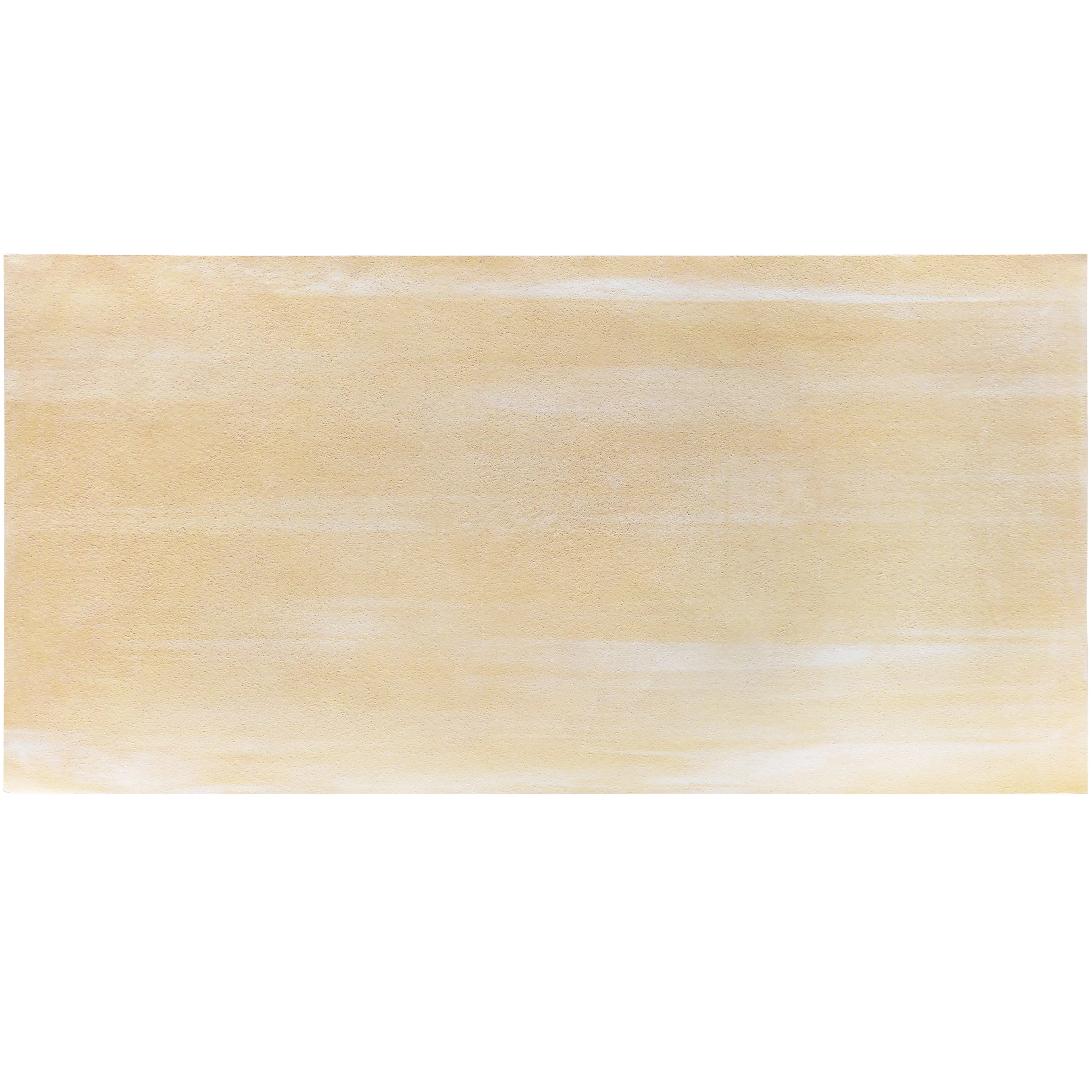
It's a crisp autumn morning in Berlin, and Lina, a lead architect at a boutique design firm, stands in front of a half-built cultural center. Her team's vision? A building that feels less like a structure and more like a living, breathing entity—walls that curve gently upward, mimicking the flow of a river, and a facade that shimmers with texture as sunlight shifts throughout the day. But for months, that vision has hit a stubborn roadblock: traditional building materials. Stone slabs cracked when bent, metal panels felt cold and industrial, and lightweight alternatives lacked the depth she craved. "We need something that bends without breaking, that carries the soul of natural stone but moves like fabric," she'd told her team during their weekly huddle. "Something that doesn't just cover the curve, but celebrates it."
If you've ever doodled a curved building on a napkin or marveled at the sweeping lines of a modern art museum, you know the struggle Lina faced. Curved architecture isn't just about aesthetics—it's about creating spaces that feel human, organic, and alive. But for decades, the materials to bring those curves to life have been frustratingly limited. Heavy stone slabs crack under pressure, thin veneers peel away over time, and synthetic options often sacrifice beauty for flexibility. That is, until COLORIA stepped into the ring with their MCM series—a lineup of materials that doesn't just solve problems, but turns architectural dreams into tangible, touchable reality. Let's dive into how COLORIA's innovations, from MCM flexible stone to 3D art concrete board reall photo, are redefining what curved surfaces can be.
To understand why COLORIA's MCM series is a game-changer, let's first talk about the elephant in the room: curved surfaces are hard. Imagine trying to wrap a rigid piece of cardboard around a basketball—it folds, creases, and refuses to conform. Now scale that up to a 50-foot wall. Traditional materials like natural stone or solid concrete are like that cardboard: strong, but unyielding. They work for straight lines and sharp angles, but when you ask them to bend, they push back. Architects often resort to complicated workarounds—cutting stone into tiny, wedge-shaped pieces to approximate a curve, or using layers of thin, fragile cladding that require constant maintenance. The result? A surface that looks "almost" right, but lacks the seamless flow the design demanded. And let's not forget weight: a single slab of natural stone can weigh hundreds of pounds, making installation on curved structures a logistical nightmare, not to mention a safety risk.
Then there's the issue of character. Many flexible materials on the market feel… well, fake. They mimic the look of stone or wood but lack the depth, the subtle variations in texture, the "lived-in" quality that makes natural materials so appealing. A curved wall in a hotel lobby, for example, should feel welcoming, like a warm embrace. If the material looks plastic or flat, it misses the mark entirely. "I once worked on a project where we used a lightweight synthetic cladding for a curved facade," recalls Marco, a construction manager with 15 years of experience. "From a distance, it looked okay. But up close? You could see the repeating pattern, the lack of variation. It felt like the building was wearing a cheap costume. The client hated it, and we ended up replacing it six months later. That's when I started searching for something better—and that's when I found COLORIA's MCM flexible stone."
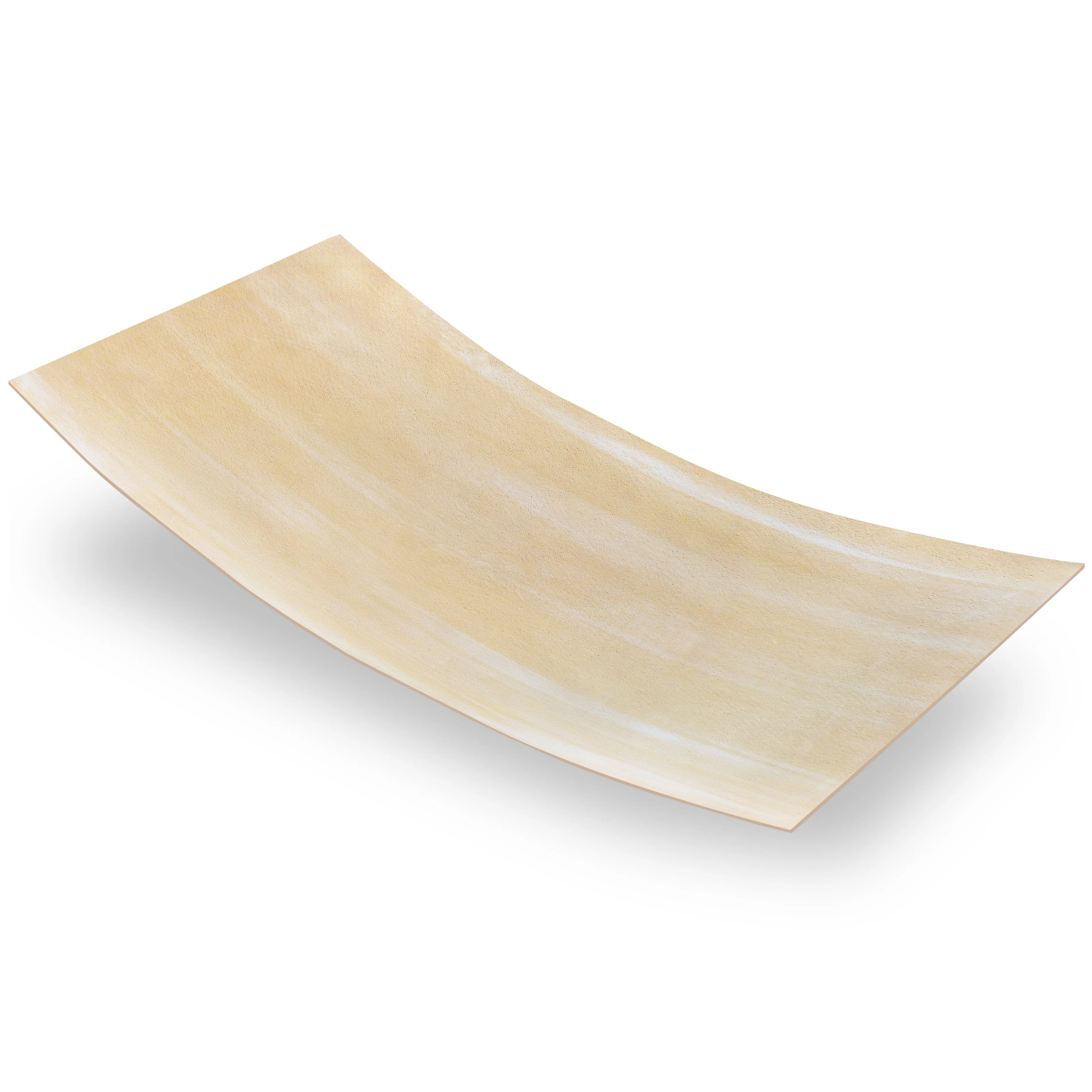
At the heart of COLORIA's curved surface revolution is MCM flexible stone—and it's exactly what it sounds like: stone that bends. But not just a little bend—we're talking about the kind of flexibility that lets it wrap around columns, arch over doorways, and flow along sweeping walls without a single crack or crease. How is this possible? MCM, or Modified Composite Material, is a blend of natural minerals, polymers, and reinforcing fibers that marries the durability of stone with the pliability of a more forgiving material. Think of it as stone with a yoga practice: strong, grounded, but infinitely adaptable.
What makes MCM flexible stone truly special, though, is that it doesn't just "perform"—it feels real. Run your hand along a wall clad in MCM flexible stone, and you'll feel the same granular texture, the same subtle color variations, as you would with natural travertine or limestone. That's because COLORIA starts with real stone aggregates, grinding them down to capture their essence before combining them with their proprietary binding agents. The result is a material that tricks the eye (and the touch) into thinking it's the real deal—until you watch it curve around a 90-degree bend with ease.
Take the example of the Serenity Yoga Studio in Portland, Oregon. The owner, Maya, wanted the main studio to feel like a cave—protective, calming, and entirely free of sharp edges. Traditional stone was out of the question; the weight alone would have required reinforcing the floor, and cutting it to curve would have been cost-prohibitive. Then her architect suggested MCM flexible stone in "Lime Stone (beige)"—a soft, warm hue that evokes sunlit sand. "When the installers first unrolled the panels, I was skeptical," Maya admits. "They looked so thin, so… flexible. But as they started applying them to the curved walls, I gasped. It was like the stone was growing there, like it had always been part of the space. Now, when clients walk in, they immediately relax. They run their hands along the walls and say, 'Is this real stone?' When I tell them it's MCM, they're blown away. It's not just a wall anymore—it's part of the yoga experience."
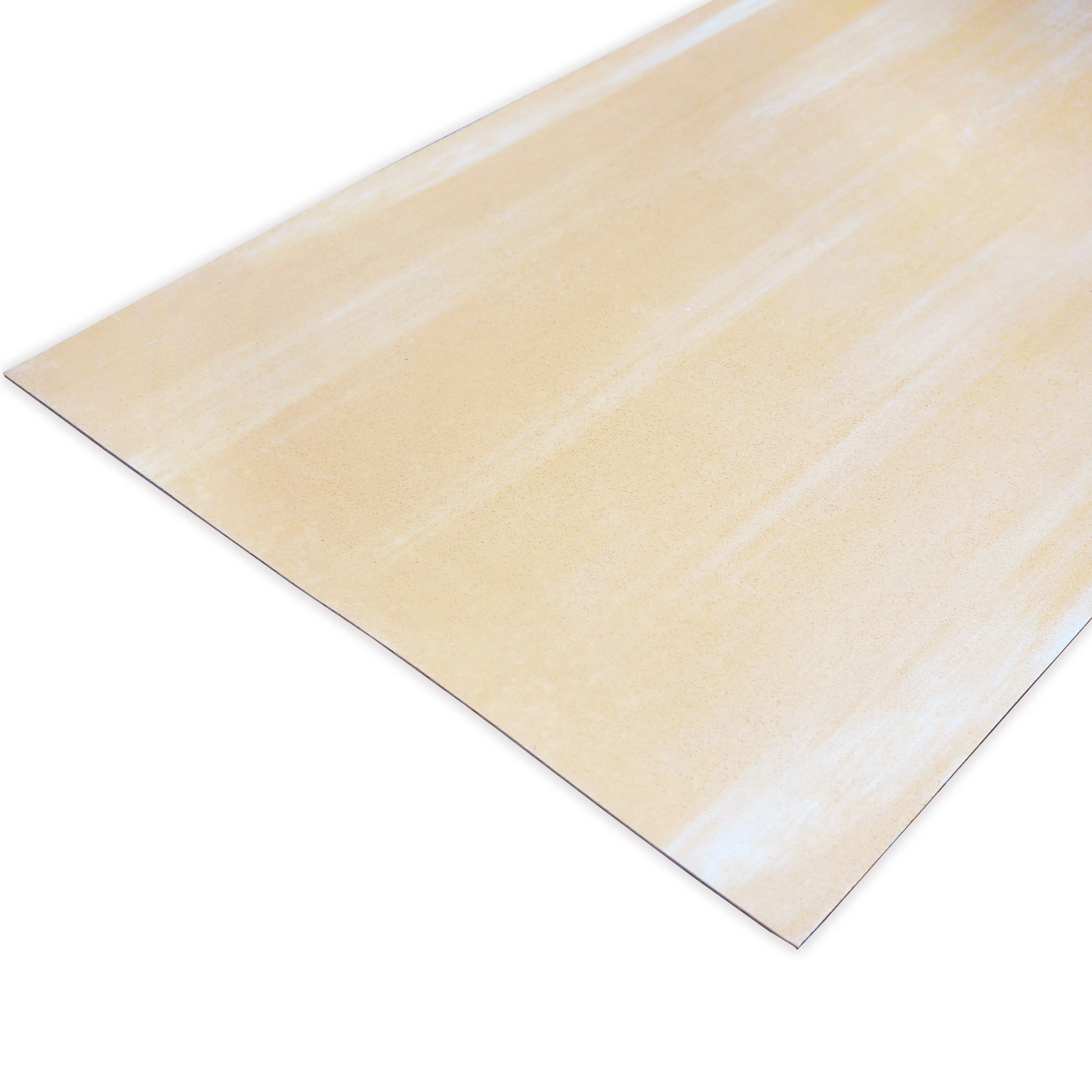
For projects that demand more than just flexibility—projects that need scale —there's COLORIA's MCM big slab board series. Picture this: a convention center with a facade that stretches 200 feet, curving gently to welcome visitors from the street. Using small tiles or panels would result in a patchwork quilt of seams, breaking the flow and diminishing the impact of the curve. MCM big slab board series solves this with slabs that measure up to 12 feet long and 4 feet wide—large enough to cover expansive surfaces with minimal joints, creating a sense of continuity that's nothing short of breathtaking.
But size isn't the only advantage. These big slabs retain the same flexibility as their smaller counterparts, meaning they can curve over grand archways or wrap around massive columns without losing their structural integrity. And because they're lightweight (about 70% lighter than natural stone slabs), installation is faster, safer, and more cost-effective. No need for heavy machinery or reinforced support structures—just a team of installers and a vision.
The Skyline Convention Center in Chicago is a case in point. The design called for a curved facade that would reflect the city's skyline, with a smooth, unbroken surface that shimmered in the sun. The architects initially considered natural granite, but the cost and weight were prohibitive. Enter COLORIA's MCM big slab board series in "Lunar Peak Silvery"—a sleek, metallic finish that catches the light like a skyscraper's glass exterior. "The first time we saw the slabs go up, it was like watching a puzzle come together," says James, the project's lead architect. "No seams, no gaps—just this continuous wave of silver that curved around the building. At sunset, it turns gold; at night, it glows under the lights. It's exactly what we dreamed of, but better. And because the slabs are so large, we finished the facade three weeks ahead of schedule. MCM big slab board series didn't just meet our needs—it exceeded them."
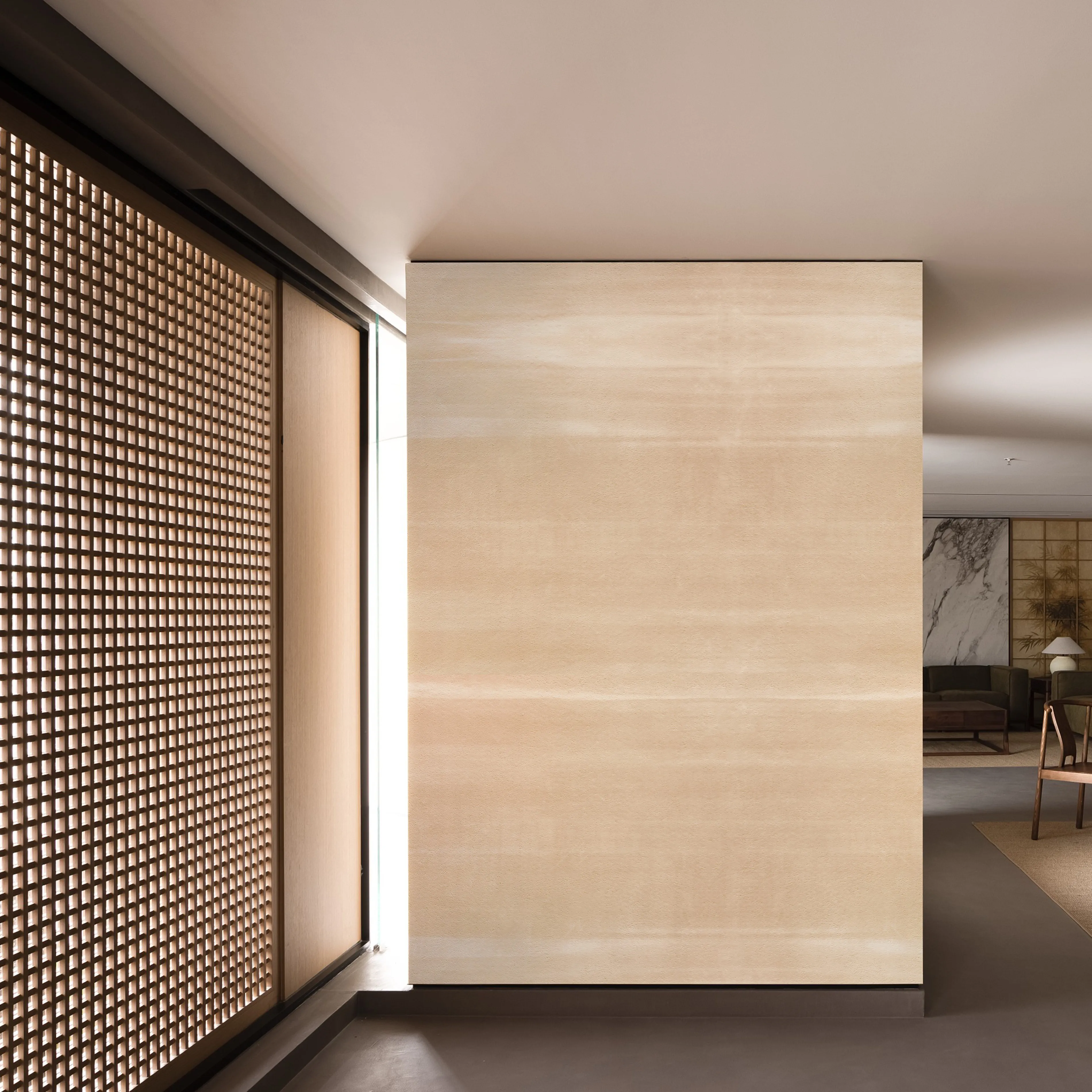
Curved surfaces aren't just about shape—they're about texture . A smooth, featureless curve can feel cold and clinical, while one with depth and dimension invites touch, sparks curiosity, and creates visual interest. That's where COLORIA's 3D art concrete board reall photo comes in. This isn't your average concrete panel; it's concrete reimagined as art. Each board is cast with intricate 3D patterns—think flowing rivers, wind-swept sand dunes, or even abstract geometric designs—that play with light and shadow as the sun moves across the sky.
The "reall photo" part is key here. Before committing to a design, architects and designers can browse COLORIA's library of high-resolution images showcasing exactly how each 3D pattern will look on a curved surface. No more guessing, no more unpleasant surprises—just a clear, vivid preview of the final result. It's like test-driving a material before you buy it, ensuring it aligns with the project's aesthetic vision.
Consider the Riverbank Restaurant in Seattle, which overlooks the Puget Sound. The owner wanted the interior walls to echo the movement of the water outside—gentle, undulating, and full of life. The solution? 3D art concrete board reall photo in "Stream Limestone (dark grey)," a pattern that mimics the ripples and currents of a shallow stream. "We chose the pattern based on the real photos COLORIA provided," says the restaurant's designer, Sofia. "They showed how the 3D texture would catch the light from the windows, creating these shifting shadows that look like water moving. Now, when diners sit by the wall, they feel like they're dining by a river. It's subtle, but it makes the whole space feel alive. And because the boards are flexible, we could curve them to follow the contour of the room, blending the interior with the view outside. It's magic, honestly."
For projects that demand a dash of whimsy, a spark of the unexpected, COLORIA offers their "Travertine (Starry Blue)" line—a variant of MCM flexible stone that takes the classic travertine look and elevates it to something otherworldly. Imagine a curved wall in a boutique hotel lobby, where the warm, earthy base of travertine is dotted with tiny, iridescent flecks that catch the light like stars in a midnight sky. That's "Starry Blue"—a material that blends the groundedness of natural stone with the wonder of a night spent stargazing.
The "starry" effect is achieved by embedding synthetic crystals into the MCM matrix during production, ensuring they're evenly distributed and won't fade or chip over time. The result is a surface that changes throughout the day: bright and subtle in sunlight, glowing and dramatic under artificial light. It's the kind of material that becomes a conversation starter, a focal point that draws people in and makes them pause.
The Luna Boutique Hotel in Miami used "Travertine (Starry Blue)" for their circular elevator lobby—a space that needed to feel both intimate and grand. "We wanted guests to feel like they were stepping into a planetarium when they entered the lobby," says the hotel's interior designer, Carlos. "The curved walls wrapped around them, and the starry blue travertine made it feel like they were surrounded by the night sky. It's a small space, but it leaves a big impression. Guests take photos there all the time—they call it the 'star room.' That's the power of COLORIA's materials: they don't just fill a space; they create memories."
| Material Series | Key Features | Ideal Applications | Designer's Insight |
|---|---|---|---|
| MCM Flexible Stone |
- Bends up to 120° without cracking
- Real stone texture and color - Lightweight (8-10kg/m²) |
Yoga studios, residential curved walls, column cladding | "Feels like natural stone, installs like wallpaper. Game-changer for tight curves." — Maya, Serenity Yoga Studio |
| MCM Big Slab Board Series |
- Slabs up to 12ft x 4ft
- Minimal seams, seamless look - Compatible with large curved facades |
Convention centers, airport terminals, grand lobbies | "Cut installation time by 40%. The scale makes curved facades feel monumental." — James, Skyline Convention Center |
| 3D Art Concrete Board Reall Photo |
- Intricate 3D textures (rivers, dunes, abstract)
- High-res preview photos available - Lightweight and flexible |
Restaurants, boutique hotels, art galleries | "Texture adds movement to curves. The real photos let us visualize exactly how it would play with light." — Sofia, Riverbank Restaurant |
| Travertine (Starry Blue) |
- Iridescent star-like flecks
- Warm travertine base with blue hue - Shifts appearance with lighting |
Hotel lobbies, elevator shafts, feature walls | "Turns a simple curve into a storytelling element. Guests can't stop taking photos." — Carlos, Luna Boutique Hotel |
At the end of the day, COLORIA's MCM series is about more than just solving technical problems—it's about empowering creators to push boundaries, to dream bigger, and to build spaces that matter. Whether it's MCM flexible stone making yoga studios feel like sanctuaries, MCM big slab boards turning convention centers into landmarks, or 3D art concrete boards adding texture to restaurant walls, these materials bridge the gap between function and artistry. They remind us that architecture isn't just about shelter; it's about how we experience the world around us.
Lina, the architect we met at the beginning of this story, eventually used a combination of MCM flexible stone and 3D art concrete board reall photo for her community center. The result? A building with walls that flow like water, texture that invites touch, and a facade that changes with the light. "It's exactly what I imagined," she says, standing in the center's main hall, sunlight streaming through curved windows onto the 3D concrete walls. "But better. Because COLORIA's materials didn't just help me build a curve—they helped me build a feeling."
In a world where so much of our built environment feels cold and uniform, COLORIA is proving that buildings can be flexible, expressive, and deeply human. And that's the real innovation: not just materials that bend, but materials that connect—with our senses, our emotions, and the stories we want to tell through the spaces we create.
So the next time you find yourself staring at a curved blueprint, or marveling at a building that seems to defy gravity, remember: behind that beauty is often a material that refused to be limited. And chances are, it's COLORIA's MCM series—turning curves into masterpieces, one flexible stone at a time.
Recommend Products












