
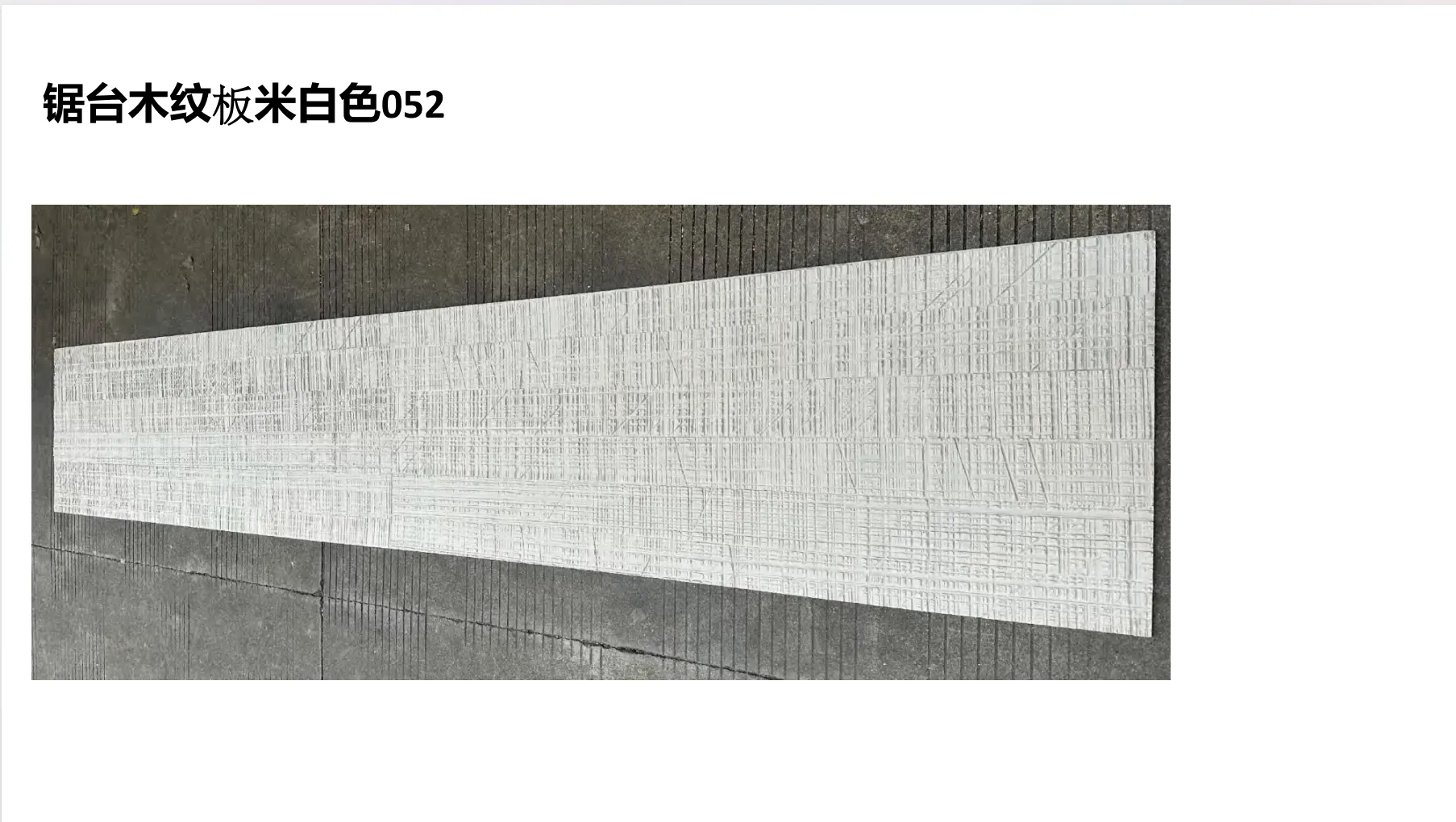
In the world of design, there's a quiet rebellion happening—against straight lines, sharp corners, and the rigid "this is how it's always been done" mindset. Today, we're diving into two materials that embody this rebellion: mcm flexible stone and sawing wood board . Both promise to bend, curve, and flow, but they do it in wildly different ways. Let's explore which one might be the hero of your next project.
Think about the last time you walked into a space that made you pause. Chances are, it wasn't just the colors or furniture—it was the shape of the room. Maybe a curved wall that guided your eye, or a rounded countertop that felt inviting instead of imposing. Rigid materials like traditional stone slabs or thick wood planks? They lock designers into boxes (literally). But flexible materials? They unlock possibilities. A restaurant with a sweeping, wave-like facade. A home office desk that curves to fit your body. A retail display that wraps around a corner like a hug. Flexibility isn't just about aesthetics—it's about creating spaces that feel human.
First up: mcm flexible stone . Let's start with the basics. MCM stands for Modified Composite Material, but don't let the technical name fool you—this stuff is basically stone with a superpower. Imagine taking the elegance of natural travertine or marble, grinding it into a fine powder, mixing it with polymers and a dash of fiberglass, and pressing it into ultra-thin sheets. The result? A material that looks and feels like stone but bends like a yoga instructor.
The magic lies in its composition. Unlike solid stone, which cracks under pressure, MCM's composite structure distributes stress evenly. Most MCM flexible stone panels are just 3-5mm thick—thinner than a credit card—so they can curve without breaking. We're talking minimum bending radii as tight as 30cm (that's a circle with a 30cm radius, for the non-math folks). Some manufacturers even push it to 20cm for specialty projects.
And the looks? Oh, they're stunning. Want the celestial vibe of travertine (starry blue) ? MCM can mimic that, with tiny, glittering flecks that catch the light like a night sky. Prefer the warmth of limestone or the drama of black marble? It does that too. The best part? It's lightweight—about 6-8kg per square meter—so you can install it on walls, ceilings, even furniture without worrying about structural support. Bathrooms? Kitchens? Exteriors in rainy climates? MCM laughs at moisture, mold, and UV rays. It's stone, but better.
Now, let's talk about sawing wood board . This one's a classic—no fancy polymers, no lab mixing, just good old-fashioned wood. Sawing wood boards are made by slicing logs into thin planks, preserving the natural grain, knots, and all. Think of it as nature's own building block, with a texture that feels like a handshake from a friend.
But can it bend? Sort of. Wood has natural flexibility—after all, trees sway in the wind—but it's limited. A thin sawing wood board (say, 6mm thick) might curve gently, but push it too far, and you'll hear that dreaded crack . It depends on the wood species: pine is more flexible than oak, bamboo (hello, bamboo mat board !) is surprisingly bendy thanks to its fibrous structure. But even the bendiest wood has limits. Most sawing wood boards top out at a bending radius of 50-80cm, and that's with careful steaming or laminating to soften the fibers. Skip that step, and you're asking for splits.
What it lacks in extreme flexibility, though, it makes up for in soul. There's a reason designers keep coming back to wood: that wood grain board pattern—swirling, unique, full of stories—adds warmth that no synthetic material can. A sawing wood board wall in a living room feels cozy; a desk made from it feels like a piece of nature brought indoors. It's also easy to work with—cut it, sand it, stain it—though you'll need to seal it if it's near moisture (sorry, bathrooms, wood's not your BFF).
| Feature | MCM Flexible Stone | Sawing Wood Board |
|---|---|---|
| Minimum Bending Radius | 20-30cm (super tight curves) | 50-80cm (gentle bends only) |
| Durability | Waterproof, UV-resistant, scratch-proof | Prone to warping, rot, and pest damage (needs sealing) |
| Aesthetics | Mimics stone (travertine, marble, travertine (starry blue) ) | Natural wood grain, warm tones ( wood grain board , bamboo mat board ) |
| Weight | Light (6-8kg/m²) | Heavier (10-15kg/m² for solid wood) |
| Best For | Curved exteriors, wet areas, large-scale projects | Cozy interiors, accent walls, low-moisture furniture |
So, which one should you pick? Let's break it down with real scenarios:
Pick MCM Flexible Stone if… You're designing a coastal café with a curved facade that needs to withstand salt spray. Or a bathroom with a statement wall that wraps around the shower. Or a retail store where you want the look of travertine (starry blue) but need it to curve around a display. MCM is your go-to for high-durability, high-flexibility projects where stone's elegance is non-negotiable.
Pick Sawing Wood Board if… You're creating a home library with built-in bookshelves that have gentle, organic curves. Or a restaurant booth that feels like a wooden hug. Wood brings warmth that stone can't match, so use it in spaces where you want people to relax and linger. Just remember: keep it away from water, and don't ask it to bend like a pretzel.
Project 1: The Starry Blue Café A small coffee shop in Portland wanted to stand out on a busy street. Their solution? A curved exterior wall clad in travertine (starry blue) MCM panels. The panels bent in a gentle S-shape, and when the sun hit, the "starry" flecks sparkled like a galaxy. Inside, they used the same panels on the counter backdrop, creating a cohesive, otherworldly vibe. Customers now call it "the space café"—and lines wrap around the block.
Project 2: The Bamboo Mat Home Office A freelance designer in Tokyo wanted a desk that fit her tiny apartment's odd corner. She opted for bamboo mat board (a type of sawing wood board with a woven texture) and had a local carpenter steam-bend it into a C-shape. The result? A desk that hugs the corner, provides extra surface area, and adds a tropical, zen feel to her workspace. "It's like the desk was made just for me," she says.
At the end of the day, mcm flexible stone and sawing wood board aren't rivals—they're teammates. One brings stone's durability and extreme flexibility; the other brings wood's warmth and gentle curves. The key is to match the material to the mood of the space. Want to make a bold, weatherproof statement? Go MCM. Want to create a cozy nook that feels like a cabin in the woods? Wood's your friend.
And hey—who says you can't mix them? Imagine a kitchen with MCM flexible stone countertops (waterproof, easy to clean) and a sawing wood board backsplash (warm, textured). The contrast would be stunning. Design is about balance, after all—and both materials know how to bend without losing their essence. So go ahead: break the straight lines. Your next project (and everyone who experiences it) will thank you.
Recommend Products












