
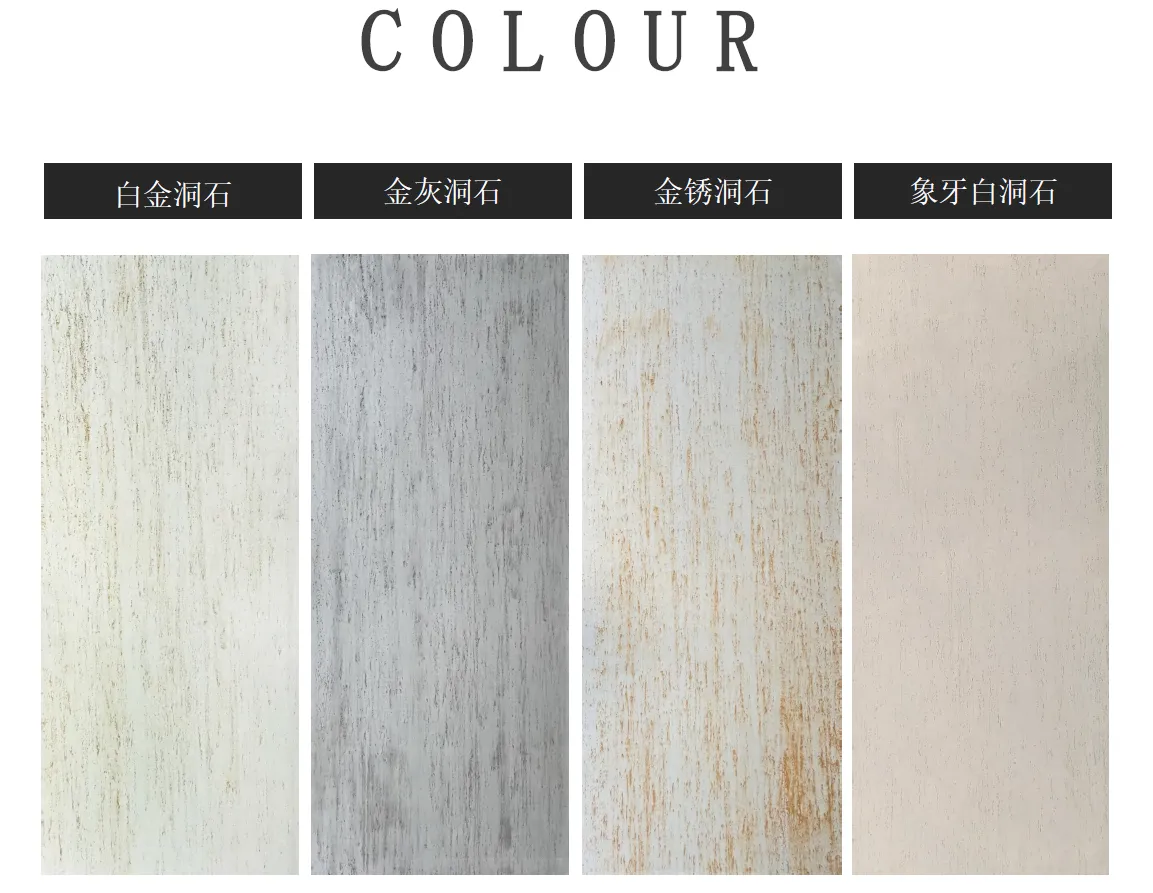
Architecture is a dance between the past and the future—a balance of honoring time-tested traditions while pushing the boundaries of what's possible. For centuries, natural stone has been the backbone of this dance,(Roman huge travertine),.,,,.MCM(MCM flexible stone)——,.
Walk through the streets of Rome, and you'll feel it—the weight of history in every slab of travertine. From the Colosseum's weathered arches to the Trevi Fountain's cascading tiers, this stone has been shaping grandeur for millennia. Its unique porous texture, formed by mineral-rich hot springs, gives it a warm, lived-in character; sunlight filters through its surface, creating dappled patterns that feel almost alive. It's no wonder architects and designers still crave that "Roman soul" in their projects today.
But here's the catch: natural Roman travertine is, by nature, unyielding. A single slab can weigh upwards of 150 kg per square meter, requiring massive structural support. Installing it on high-rises or curved surfaces? Often a logistical nightmare. Cracks from thermal expansion, water absorption leading to mold, and the sheer cost of quarrying and transporting these behemoths—these are the realities that modern builders face when chasing that timeless look.
"We once tried to clad a circular lobby with Roman travertine," recalls Marco, an architect with a Milan-based firm. "The waste was astronomical—so many slabs broke during cutting, and the weight nearly exceeded the building's load capacity. We ended up with a flat wall instead of the curve we'd dreamed of. It felt like compromising on the design's heart."
MCM (Modified Composite Material) flexible stone isn't just another building material—it's a revolution wrapped in stone-like beauty. At its core, it's a blend of natural stone aggregates, high-performance polymers, and fiberglass reinforcement, engineered to mimic the look and texture of natural stone while shedding the weight and rigidity. Imagine holding a material that looks like travertine but bends like a sheet of thick paper—that's the magic of MCM.
"The first time I touched an MCM panel, I couldn't believe it," says Lena, a designer specializing in sustainable facades. "It had the cool, tactile feel of stone, but when I flexed it, it gave—no cracking, no strain. Suddenly, all those curved designs I'd sketched and shelved? They felt possible again."
This flexibility isn't just about aesthetics. It's about practicality: panels weigh as little as 6-8 kg per square meter, making installation a breeze (no cranes required for every slab). They're resistant to moisture, fire, and UV rays, and their lightweight nature reduces structural stress on buildings—critical for high-rises and retrofits where every kilogram counts.
MCM doesn't just offer flexibility—it offers personality. The MCM big slab board series (MCM big slab board series) alone is a gallery of textures and tones, each designed to tell a different story. Let's meet a few standouts:
If Roman travertine is the earthy poet, travertine (starry green) is its cosmic cousin. This variant captures the stone's classic porosity but adds a twist: subtle flecks of emerald green that glint like distant stars in the night sky. It's nature meets fantasy, perfect for spaces that crave a touch of whimsy without losing sophistication. Imagine a boutique hotel lobby where the walls seem to hold a piece of the galaxy—all while bending gently to follow the room's organic curves.
For projects that lean into modern minimalism, lunar peak silvery is a showstopper. Its surface shimmers with a soft, metallic sheen, like moonlight reflecting off a mountain peak. Unlike polished marble, which can feel cold, this MCM variant has a subtle warmth—thanks to its composite core—that makes it inviting. It's been a favorite for corporate headquarters, where sleek aesthetics meet the need for durable, low-maintenance exteriors.
Not all MCM stars are stone-inspired. The foamed aluminium alloy board (vintage silver) marries industrial edge with retro charm. Its matte silver finish has a weathered, almost nostalgic quality—like a mid-century machine part polished to perfection. Designers love it for accent walls in restaurants and co-working spaces, where it adds texture without overwhelming the room. And yes, it bends too—ideal for creating dynamic, multi-dimensional feature walls.
To truly grasp the shift, let's put Roman huge travertine and MCM flexible stone side by side. This isn't a battle of "better" or "worse"—it's about which tool fits the job.
| Characteristic | Natural Roman Huge Travertine | MCM Flexible Stone |
|---|---|---|
| Weight (per sqm) | 120-150 kg | 6-8 kg |
| Design Flexibility | Limited to flat or slightly sloped surfaces; prone to cracking on curves | Bends up to 30° without damage; ideal for curves, arches, and complex geometries |
| Installation Time | Labor-intensive; requires specialized crews and heavy machinery | Quick and easy; can be installed by small teams with basic tools |
| Sustainability | High carbon footprint from quarrying and transport; significant waste during cutting | Low carbon footprint; recycled materials in composition; minimal waste during installation |
| Aesthetic Range | Natural variations (charm but inconsistency); limited color options | Consistent texture; wide range (starry greens, lunar silvers, vintage metals, and more) |
The numbers tell a clear story: MCM flexible stone isn't just a "lightweight alternative"—it's a reimagining of what stone can be. It keeps the soul of natural materials while ditching the limitations that held design back.
Take the "Green Wave" project in Barcelona—a residential tower where the architects wanted the exterior to mimic the ocean's curves. Traditional stone was out of the question; the building's slender frame couldn't support the weight. Enter MCM's travertine (starry green) panels. Installers curved the panels to follow the tower's undulating facade, creating a surface that shimmers green in the sunlight and appears to flow like water. "It's like the building is breathing," says lead architect Elena. "With Roman travertine, we would've had to go flat and boxy. MCM let us be poets."
Then there's the renovation of a 1920s theater in Berlin. The original facade featured intricate stone carvings, but decades of weathering had left it fragile. The team chose MCM's lunar peak silvery panels to replicate the theater's grandeur while adding durability. The panels were cut to match the original carvings' dimensions and bent to fit the building's curved proscenium arch. "We didn't just restore history—we future-proofed it," notes project manager Klaus. "The new panels look timeless, but they'll stand up to another century of Berlin winters."
Modern architecture isn't just about getting from point A to point B—it's about emotion, connection, and sustainability. Buildings today need to tell stories, adapt to their environments, and minimize their carbon footprint. Rigid materials like natural Roman travertine, while beautiful, often can't keep up with these demands.
MCM flexible stone represents a shift: it's not about sacrificing beauty for function, but about merging them. It lets designers honor tradition (through textures that echo natural stone) while embracing innovation (through curves, lightness, and resilience). It's a material that grows with the industry—whether we're building zero-carbon skyscrapers or restoring heritage sites with a modern twist.
Natural Roman huge travertine will always hold a special place in architecture—it's a symbol of endurance, of human ingenuity etched in stone. But as we design for a world that demands more from its buildings, materials like MCM flexible stone remind us that innovation doesn't have to erase the past. Instead, it can lift the past up, letting it bend, flow, and shine in ways we never thought possible.
So the next time you walk past a building with a curved stone facade that seems to defy gravity, or a wall that shimmers with starry green light, take a closer look. It might just be MCM—proving that sometimes, the most timeless designs are the ones that know how to bend.
Recommend Products












