
In the world of architecture and design, the choice of facade material is one of the most critical decisions you'll make. It defines a building's character, dictates its interaction with the environment, and has long-term implications for maintenance and performance. For decades, the go-to choice for a premium, durable finish has been rigid slabs—think natural stone, heavy porcelain, or precast concrete. They project an image of strength and permanence. But what if there was another way? A modern alternative that offers a new kind of freedom without sacrificing beauty?
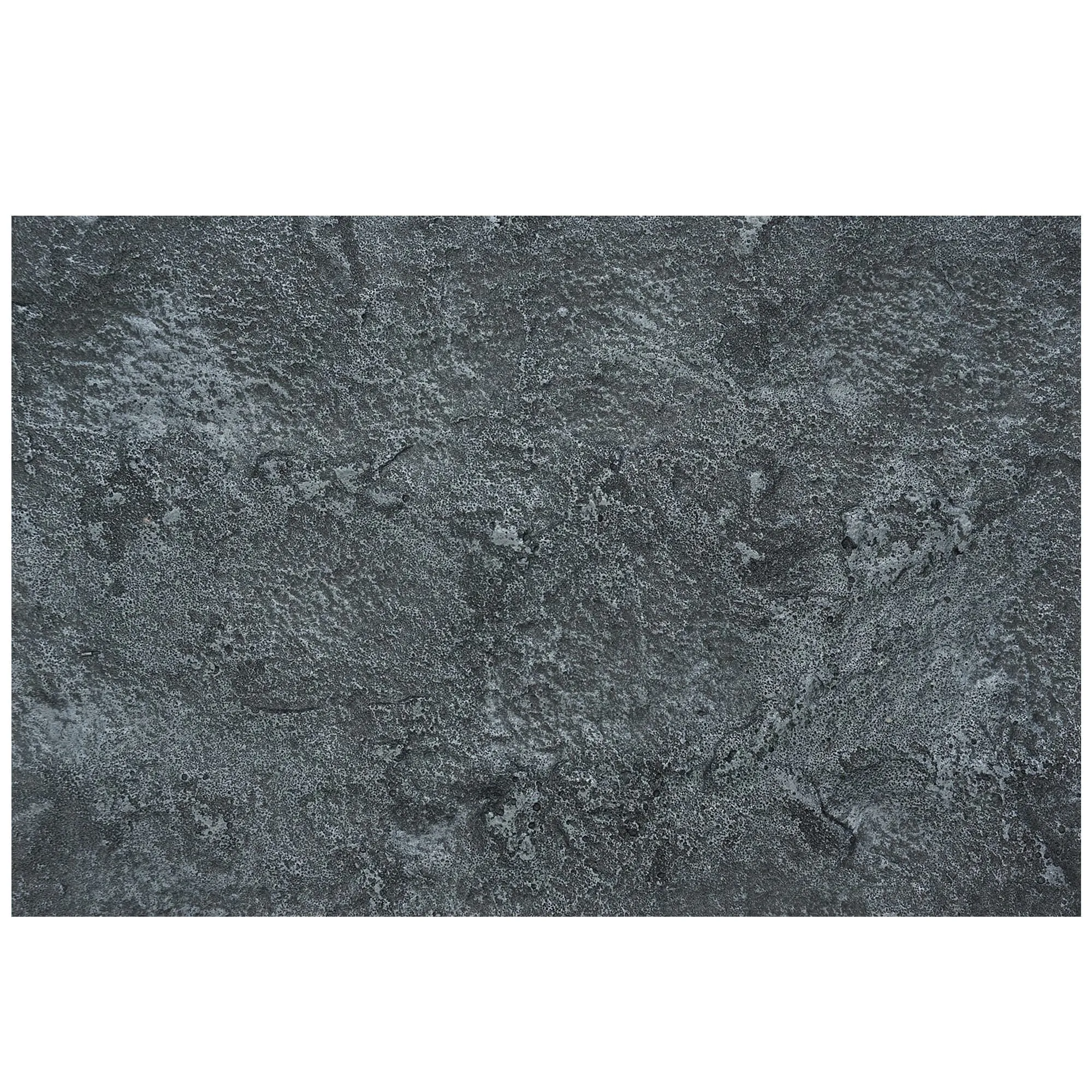
This is where the conversation gets interesting. Today, we're pitting the classic rigid slab against its innovative counterpart: flexible stone. And to make the comparison truly meaningful, we're not just talking in abstracts. We're looking specifically at how a single, stunning aesthetic—let's call it "Lunar Peak Silvery"—can be achieved using two very different product families from COLORIA GROUP: the robust MCM Big Slab Board Series and the revolutionary MCM Flexible Stone Series . As a one-stop solutions provider with decades of experience, COLORIA GROUP understands that the best material isn't a one-size-fits-all answer. It's about finding the perfect fit for your unique vision. Let's dive in.
Before we can compare them, it's essential to understand what these two material types are at their core. They may both deliver the beautiful Lunar Peak Silvery finish, but they get there in fundamentally different ways.
When we talk about rigid slabs, we're referring to large-format panels that are solid, unbending, and substantial. Historically, this meant quarrying massive blocks of granite or marble. Today, engineered materials have expanded the category.
COLORIA GROUP's MCM Big Slab Board Series represents the next evolution in this category. While it delivers the monolithic, high-impact look of traditional stone, it's engineered for better performance. It's a type of Modified Cementitious Material (MCM) , but formulated for rigidity and large-scale dimensions. Think of it as the strong, silent type: it provides a powerful visual statement with clean lines and an undeniable sense of quality. It's the material you choose when you want to convey permanence and luxury on a grand scale.
Now, let's talk about the game-changer. What if you could have the look and texture of stone, but in a material that's lightweight, thin, and can wrap around curves? That's the magic of flexible stone.
COLORIA GROUP's MCM Flexible Stone is the star of this show. It's also derived from the versatile MCM technology, but the formulation is entirely different. It's created from a base of natural materials like modified clay and stone powder, which are transformed through a low-energy curing process into a pliable sheet. It's not a fake-looking print; the texture is inherent to the material itself. It's incredibly thin (often just 2-4mm) and lightweight, feeling more like a heavy-duty leather than a piece of rock. This opens up a universe of design possibilities that were once impossibly complex or expensive.
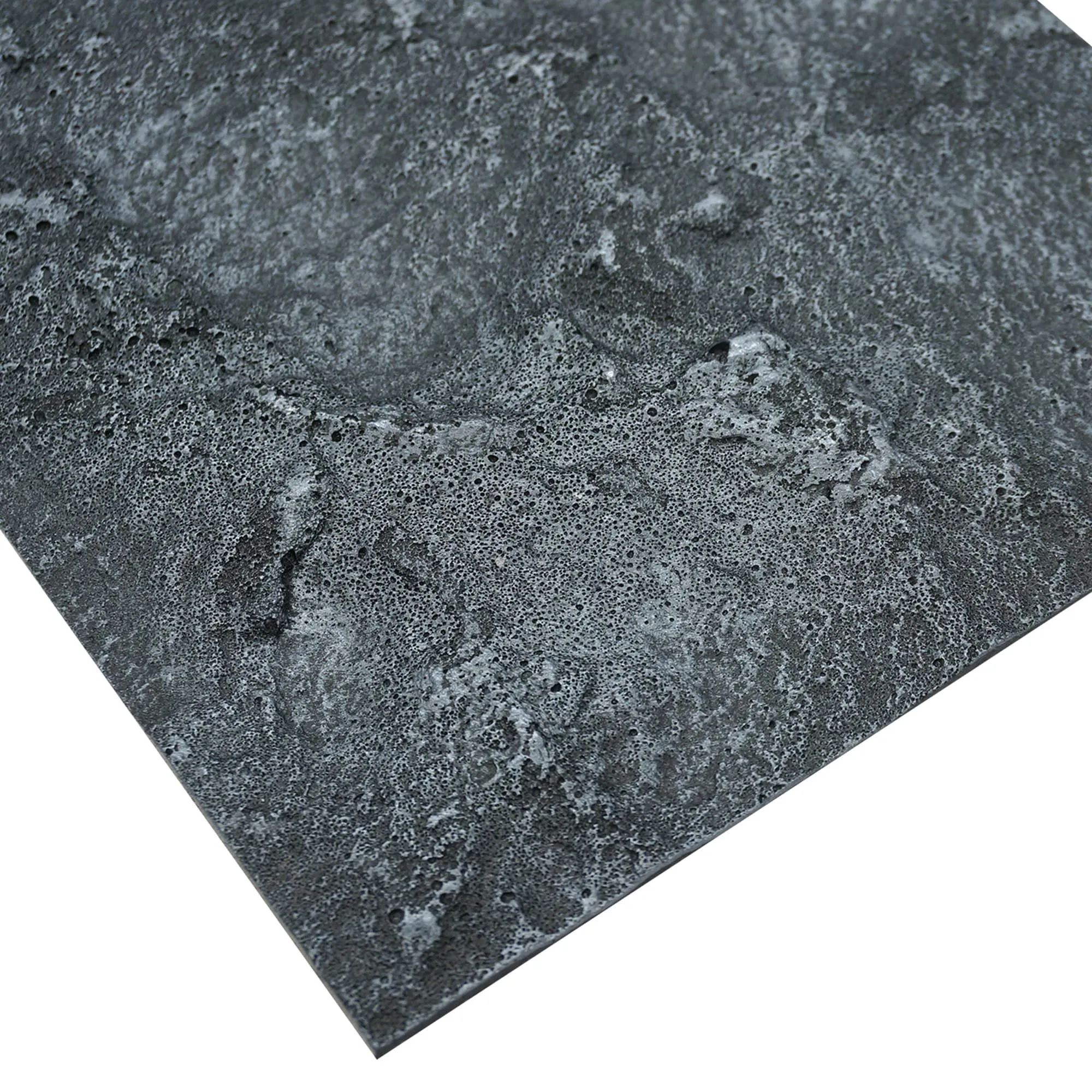
Okay, we know what they are. Now, let's put the Lunar Peak Silvery finish, in both its rigid and flexible forms, to the test across the factors that matter most to architects, builders, and clients.
Rigid Slabs (MCM Big Slab Board): The strength of the big slab is its grand, uninterrupted presence. For a minimalist skyscraper, a sleek corporate headquarters, or a modern museum facade, large-format rigid slabs are unparalleled. They create a powerful, geometric aesthetic. The "Lunar Peak Silvery" finish on a big slab would look sharp, precise, and monumental. However, this rigidity is also its main limitation. Curves are off the table. Complex angles require difficult, wasteful cuts. The design language is one of planes and straight lines.
Flexible Stone (MCM Flexible Stone): This is where flexible stone completely re-writes the rules. Want to clad a sweeping curved entryway, a series of rounded columns, or an undulating interior feature wall? No problem. The Lunar Peak Silvery flexible stone can be effortlessly wrapped around a radius, creating a seamless, organic look that would be a nightmare to achieve with rigid panels. It follows the building's form, rather than forcing the building to conform to its limitations. This makes it a dream for expressive, biophilic, or avant-garde architecture. Furthermore, the possibilities extend into a new dimension with offerings like the MCM 3D Printing Series , which leverages this base technology to create bespoke, textured surfaces that are truly unique.
This is arguably the most dramatic point of difference, with huge implications for project timelines and budgets.
Rigid Slabs (MCM Big Slab Board): Even an advanced material like the MCM Big Slab Board is still, by definition, heavy. Installation is a serious logistical operation. It requires:
Flexible Stone (MCM Flexible Stone): The experience of installing flexible stone is revolutionary. It weighs a fraction of its rigid counterpart (as little as 4-6 kg/m²). This translates to massive savings in time, labor, and structural requirements.
For any project, but especially for renovations or high-rise buildings where weight is a critical factor, the choice of flexible stone can fundamentally alter the project's feasibility and budget for the better. This is a crucial element for exterior wall decoration projects where efficiency is key.
A common misconception is that "flexible" means "flimsy." Let's debunk that right now.
Rigid Slabs (MCM Big Slab Board): These panels have excellent surface hardness and can feel incredibly robust. However, their rigidity makes them brittle. A sharp, focused impact can cause a chip or a crack. More significantly, they are susceptible to stress from building settlement or extreme thermal expansion/contraction. If not installed with adequate expansion joints, a rigid slab can crack under the pressure.
Flexible Stone (MCM Flexible Stone): This material's strength lies in its ability to yield. When faced with an impact, it flexes and absorbs the energy rather than shattering. Think of it like the difference between a glass plate and a polycarbonate one. This makes it exceptionally durable in high-traffic areas. Because it has inherent flex, it can accommodate minor building movements and thermal stresses without cracking, leading to a more resilient facade over time. It also boasts a Class A fire rating, is waterproof, and resistant to freeze-thaw cycles, making it a high-performance choice for virtually any climate, from the heat of Saudi Arabia to colder regions.
In today's world, sustainable design is no longer a "nice-to-have"; it's a core responsibility. This is where COLORIA GROUP's MCM technology truly shines.
Rigid Slabs (Traditional): Quarrying natural stone is an energy-intensive process that scars the landscape. The immense weight of these materials also means a massive carbon footprint from transportation. Even engineered concrete slabs require high-energy curing processes.
Flexible Stone (and MCM as a whole): The entire MCM product line is designed with sustainability at its heart.
Choosing MCM Flexible Stone is a clear statement of commitment to green building principles.
| Feature | COLORIA MCM Big Slab Board (Lunar Peak Silvery) | COLORIA MCM Flexible Stone (Lunar Peak Silvery) |
|---|---|---|
| Best For | Grand, minimalist facades; large flat surfaces; conveying strength and permanence. | Curved walls, columns, renovations, complex architectural forms, lightweight structures. |
| Flexibility | None. It is rigid by design. | High. Can be bent to wrap around tight radii without cracking. |
| Weight | Moderate to Heavy. Requires structural consideration and mechanical fixing. | Extremely light (approx. 4-6 kg/m²). Reduces structural load significantly. |
| Installation | Labor-intensive. Requires heavy machinery, specialized crew, and mechanical anchors. Longer install time. | Fast and simple. Applied with adhesive. Can be cut with a knife. Less labor and equipment needed. |
| Impact Resistance | Good surface hardness, but can be brittle and prone to chipping or cracking under focused impact. | Excellent. Absorbs impact by flexing, making it highly resistant to cracking and shattering. |
| Sustainability | Better than traditional stone, but still heavier and more energy-intensive than flexible options. | Highly sustainable. Made from natural materials, low-energy production, lightweight transport, minimal waste. |
| Core Technology | Engineered from Modified Cementitious Material for rigidity and scale. | Engineered from Modified Cementitious Material for flexibility and light weight. |
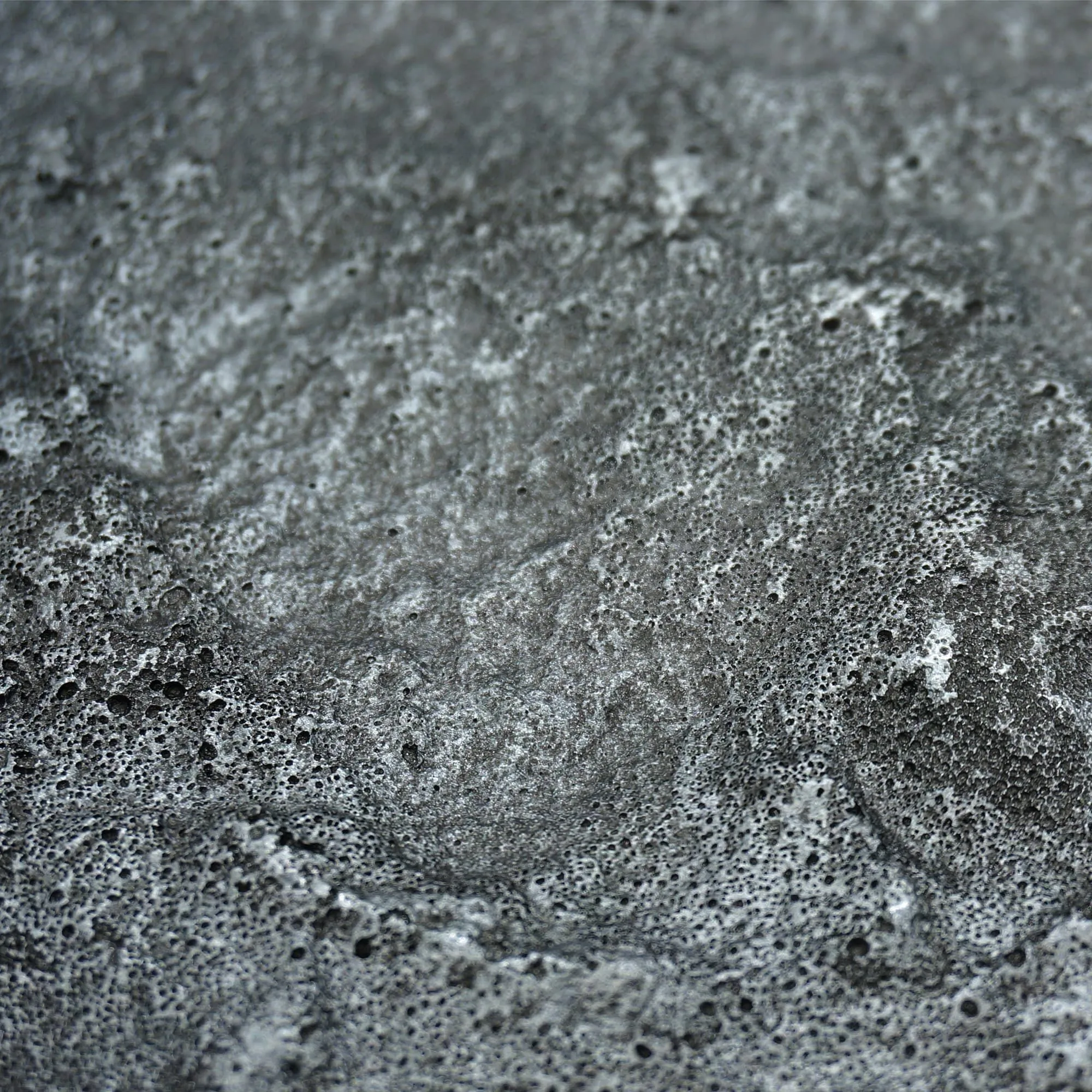
So, after all that, which version of "Lunar Peak Silvery" should you choose? The answer isn't "one is better." The answer, as a true solutions provider would tell you, is "it depends on your project's goals."
The most sophisticated design isn't about using the most expensive material; it's about using the right material in the right place for the right reason.
Here's the real secret from a company like COLORIA GROUP that offers the full spectrum: you don't always have to choose. The most brilliant solutions often come from using both.
Imagine a new commercial tower. You could use the MCM Big Slab Board in the Lunar Peak Silvery finish for the vast, flat expanses of the main tower, creating that impressive sense of scale. Then, for the grand, curved canopy over the entrance and the rounded feature walls in the lobby, you switch to the MCM Flexible Stone in the very same Lunar Peak Silvery finish.
The result? A perfectly cohesive aesthetic. You get the power of rigid slabs where they work best and the creative freedom of flexible stone where it's needed most. You've optimized for cost, installation time, and design intent—all while maintaining a single, beautiful material language. This is the essence of being a true one-stop solution provider: it's not just about selling products, but about providing the components for intelligent, integrated design.
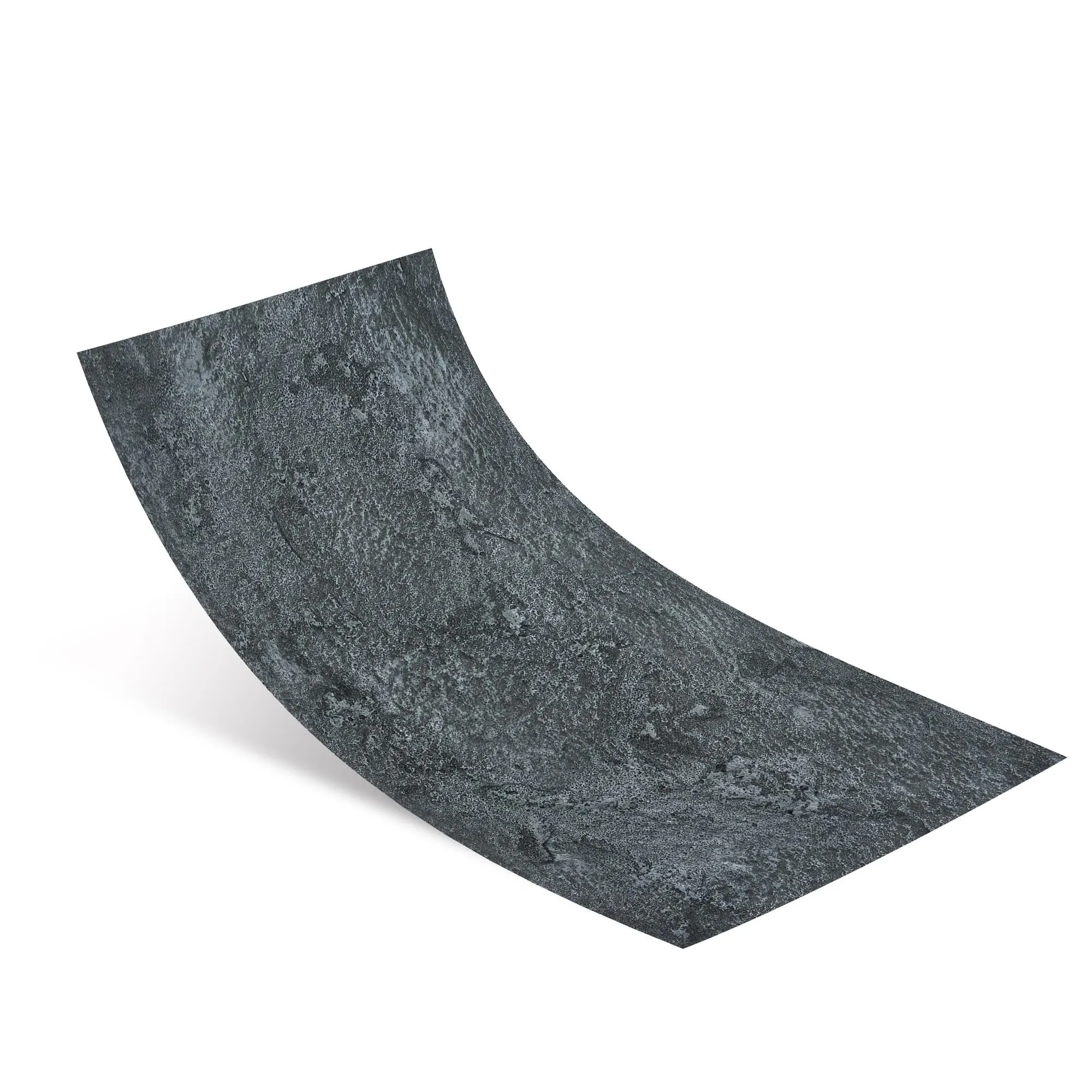
The debate between flexible stone and rigid slabs isn't a battle for supremacy. It's an expansion of the architect's toolkit. The arrival of high-performance, beautiful materials like COLORIA GROUP's MCM Flexible Stone doesn't make rigid slabs obsolete; it simply provides a powerful new answer to questions that were previously difficult to solve.
Whether your vision calls for the unyielding strength of a large slab or the organic grace of a material that can bend to your will, the solution exists. By understanding the unique strengths of each, you can push the boundaries of what's possible in building design, creating spaces that are not only more beautiful and expressive but also smarter, more efficient, and more sustainable. The future of building isn't rigid; it's flexible, intelligent, and tailored to the task at hand.
Recommend Products












