
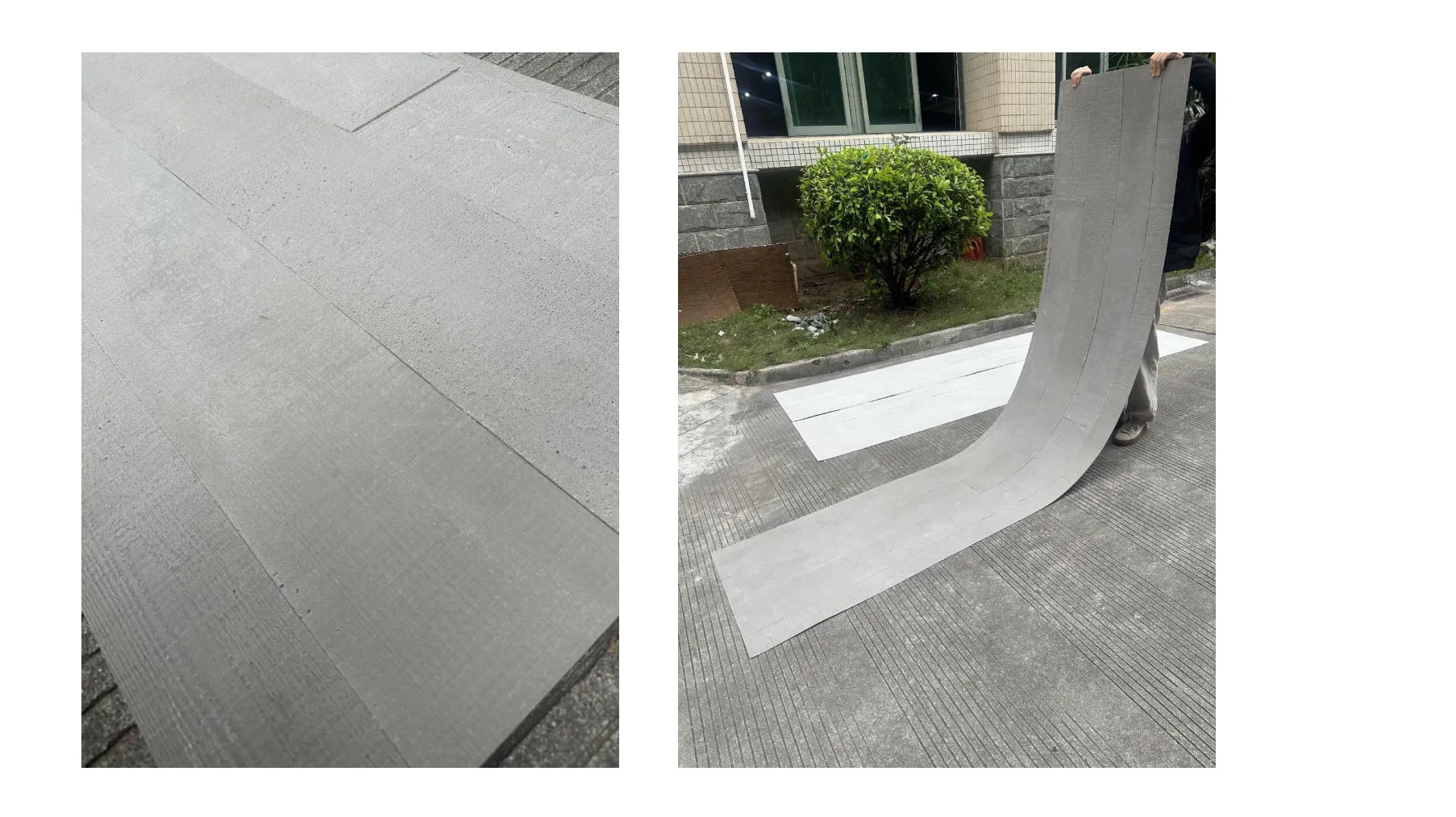
There's something magical about a poolside deck—it's where morning coffee meets the sound of splashing water, where evening gatherings stretch into night under string lights, and where the line between indoor comfort and outdoor adventure blurs. But anyone who's designed or built one knows the truth: poolside spaces are tough. They're half wet, half dry, exposed to sun, chlorine, and foot traffic, and they need to look good while standing up to all of it. That's where the right materials make all the difference. Today, we're diving into real-world installation examples of two game-changers: flexible stone and wood-cement board. These aren't your average decking materials—they're lightweight, durable, and designed to turn poolside headaches into design highlights. Let's walk through three projects that show just how transformative they can be.
When a young family in Austin, Texas, wanted to revamp their backyard pool, they had one non-negotiable: "We don't want to spend weekends sanding or sealing wood." They loved the look of industrial-chic design—think clean lines, neutral tones, and a mix of textures—but needed something that could handle their two kids, a golden retriever, and the occasional summer BBQ overflow. Enter the design team at GreenSpaces Studio, who proposed a combo of fair-faced concrete and wood concrete board .
"Fair-faced concrete was a no-brainer for the main deck area," says lead designer Mia Carter. "It's got that raw, honest look they wanted, and it's practically bulletproof against water, stains, and scratches. But we didn't want it to feel cold—hence the wood concrete board accents." The wood concrete board, with its warm, grained finish, would run along the edges of the deck, wrap around the pool's raised planters, and cover the built-in bench seats, softening the concrete's industrial edge.
The first step? Prepping the subfloor. Since the original deck had been rotting in spots (thanks to old pressure-treated lumber), the team stripped it down to the joists, treated the wood with a moisture barrier, and added a layer of rigid foam insulation to prevent heat transfer (no more burning feet on hot concrete!).
Next came the fair-faced concrete panels. Unlike traditional poured concrete, these MCM panels are lightweight—about 1/5 the weight of standard concrete—so two people could carry and install them without heavy machinery. "We used a tongue-and-groove system," Mia explains. "Each panel locks into the next, so there's no need for messy mortar or grout. We just screwed them into the subfloor with corrosion-resistant fasteners, leaving a 1/4-inch gap for drainage—critical for poolside areas."
The wood concrete board went up next. Cut to size with a standard circular saw (no special tools needed), the boards were fastened to the bench frames and planter edges with hidden clips, creating a seamless look. "The best part?" Mia laughs. "We installed the entire deck in three days. With traditional materials, this would've taken a week minimum."
Six months later, the family is thrilled. "The concrete stays cool even in Texas summers, the wood concrete board still looks brand-new—no fading, no splinters—and we haven't lifted a finger to maintain it," says homeowner Jake. The deck now features a built-in fire pit (surrounded by, you guessed it, fair-faced concrete), string lights hung above the wood-accented bench, and a small herb garden in the concrete planters. "It's exactly what we wanted: a space that works as hard as we do."
Sarah and Raj, empty nesters in Miami, had a dream: turn their small, rectangular pool into a mini Bali retreat. They wanted lush greenery, natural textures, and a deck that felt like a sandy beach (minus the sand tracking into the house). But Miami's humidity and salt air? Not exactly kind to traditional tropical materials like teak or bamboo. "We tried teak once," Sarah groans. "It warped within a year, and the maintenance was brutal."
Their contractor, Carlos Mendez, suggested bamboo mat board and mcm flexible stone in "travertine (starry blue)" for the deck. "Bamboo mat board gives that woven, beachy texture they love, but it's made from modified composite materials—waterproof, mold-resistant, and zero upkeep," Carlos explains. "And the flexible stone? It looks like natural travertine, with these subtle blue 'starry' flecks that catch the light, but it's thin enough to bend around curves—perfect for their pool's rounded edges."
The existing deck was a small, square concrete slab—functional, but boring. Carlos's team first built a curved border around the pool using pressure-treated lumber, then covered it with a layer of waterproof membrane. "Flexible stone needs a smooth, clean surface to adhere to," Carlos notes. "We used a trowel-applied adhesive, then rolled the stone sheets into place. Since they're flexible, we could follow the curve of the pool without cutting tiny, messy pieces. It saved us hours."
The bamboo mat board went down next, covering the main deck area. "It comes in large panels—4x8 feet—so we could lay most of it in one piece, minimizing seams," Carlos says. "We added a few drainage holes along the edges, just to be safe, but honestly, the board itself is so porous that water beads right off." To finish the look, they added a thatched umbrella, rattan furniture, and potted palms. "Now, when you step out back, you forget you're in Miami," Sarah says. "It feels like we're on vacation—every single day."
A year later, the bamboo mat board still has that fresh, woven look, and the starry blue travertine flexible stone hasn't faded—even with Miami's harsh sun. "We hose it off once a week, and that's it," Raj says. "No staining, no sealing, no worrying about mold. It's the tropical vibe we wanted, minus the hassle."
Nestled in the mountains outside Denver, Colorado, a couple named Mark and Lisa wanted their pool deck to feel like an extension of their log cabin home. "We love the rustic look—think weathered wood, stone fireplaces, that 'lived-in' charm—but we needed something that could handle snow, ice, and the occasional elk wandering through," Mark jokes. Traditional stone was too heavy for their sloped yard, and real wood would've rotted in the snowy winters. Enter lunar peak silvery and wood grain board .
"Lunar peak silvery has this cool, metallic sheen that looks like moonlight on stone—perfect for their mountain setting," says designer Ethan Lowe. "And the wood grain board? It mimics the look of reclaimed barn wood, but it's made from a mix of wood fibers and cement, so it won't split or warp when the temperature drops to -20°F."
The biggest challenge? The deck's slope. "The yard drops about 3 feet from the house to the pool, so we needed materials that were lightweight enough to install safely on the uneven ground," Ethan explains. "Lunar peak silvery panels weigh less than 5 pounds per square foot—we could carry them up the slope by hand. And the wood grain board is just as light, so we didn't need to reinforce the joists like we would with real stone or thick lumber."
The team started by installing the wood grain board as the main deck surface, staggering the boards to mimic a real wood floor. "We used hidden fasteners to keep the surface smooth—no nails sticking up to catch snow boots," Ethan says. Then, they added the lunar peak silvery panels as an accent strip along the pool's edge and around the stone fire pit (built with the same silvery panels, of course). "We also added a non-slip coating to both materials, just to be safe for winter ice. It's invisible, but it gives you traction even when the deck is wet."
This past winter, Mark and Lisa hosted their first "snow pool party"—guests sat on the wood grain board benches, roasted marshmallows over the lunar peak silvery fire pit, and even took a (very quick) dip in the heated pool. "The deck didn't crack, the wood grain didn't swell, and the silvery panels looked amazing with snow dusted on them," Lisa says. "It's exactly what we wanted: a deck that feels like part of the mountains, but works harder than we ever could."
| Material | Key Features | Aesthetic | Best For | Maintenance |
|---|---|---|---|---|
| Fair-Faced Concrete | Lightweight (1/5 the weight of standard concrete), water/stain-resistant, heat-resistant | Raw, industrial, minimalist | Modern homes, high-traffic areas | Hose off occasionally; no sealing needed |
| Wood Concrete Board | Warm wood grain finish, scratch-resistant, mold-resistant | Organic, cozy, rustic-modern | Benches, planters, accent walls | Wipe clean with mild soap; no sanding or staining |
| Bamboo Mat Board | Woven texture, waterproof, UV-resistant | Tropical, beachy, relaxed | Tropical-themed decks, pool edges | Hose off weekly; no weaving repair needed |
| MCM Flexible Stone (Travertine Starry Blue) | Bendable (up to 90° curves), thin (1/4 inch thick), fade-resistant | Natural stone look with iridescent flecks | Curved pool edges, accent strips | Wipe with damp cloth; no sealing |
| Lunar Peak Silvery | Metallic sheen, frost-resistant, lightweight | Mountain-inspired, cool, nocturnal | Mountain homes, fire pits, accent walls | Hose off in spring; no polishing needed |
After walking through these examples, it's clear: flexible stone, wood concrete board, and their MCM cousins aren't just "alternatives" to traditional decking materials—they're upgrades. Here's why they stand out:
Poolside decking shouldn't be a compromise between beauty and durability. As these real-world examples show, with materials like flexible stone, wood concrete board, fair-faced concrete, and lunar peak silvery, you can have both—and more. Whether you're dreaming of a modern minimalist oasis, a tropical getaway, or a rustic mountain retreat, there's an MCM material that fits. So why settle for decking that fades, warps, or requires constant upkeep? Invest in materials that work as hard as you do, and turn your poolside into a space that's not just functional, but unforgettable. After all, the best memories are made where comfort meets durability—and where the only thing you're worrying about is whether to have another slice of pizza or take another dip.
Recommend Products












