
Walk into any building—whether it's a centuries-old castle, a sleek modern office, or a cozy café—and chances are, the first thing that catches your eye (after the people, of course) is the walls. They're not just barriers; they're storytellers. The texture of a rough-hewn stone might whisper tales of ancient craftsmanship, while a smooth, curved facade could shout innovation and forward-thinking design. But behind every great wall is a choice: rigid or flexible? Natural or engineered? Today, we're diving into two heavyweights in the world of building materials: Rock Cut Dolomitic Stone, a stalwart of traditional construction, and MCM Flexible Stone, a rising star in modern architecture. By the end, you'll see why this choice isn't just about aesthetics—it's about functionality, sustainability, and the future of how we build.
Let's start by setting the stage. Imagine standing in a bustling city square. To your left, a historic bank with walls of deep gray stone, each block chiseled by hand decades ago—solid, unyielding, a testament to permanence. To your right, a contemporary art gallery with a facade that seems to flow, its panels curving gently like waves, catching the sunlight in ways that make the building feel alive. The first is likely Rock Cut Dolomitic Stone; the second, MCM Flexible Stone. Both are stunning, but their stories—and their uses—couldn't be more different. Let's unpack them.
First, let's talk about the old guard: Rock Cut Dolomitic Stone. If building materials had a resume, this one would list "survived wars, weathered storms, and outlasted empires" under "key achievements." Dolomitic stone itself is a natural rock, formed over millions of years from mineral-rich sediments. When we say "rock cut," we mean exactly that—blocks of this stone are quarried from the earth and then cut, shaped, and polished (or left rough) to fit specific building needs. It's the material of cathedrals, castles, and iconic monuments because, quite simply, it's tough as nails.
What makes Rock Cut Dolomitic Stone so revered? For starters, its rigidity. This stuff doesn't bend. It doesn't flex. It stands firm, which is why it's been the go-to for structures that need to last. Think about the Great Wall of China—while it uses a mix of materials, sections of dolomitic stone have stood for centuries, resisting erosion and the test of time. Its density also means it's incredibly durable; scratch it, and it might not even notice. And let's not forget the aesthetics: natural dolomitic stone has a depth that engineered materials often struggle to replicate. The variations in color, the tiny fossils trapped in its layers, the way it absorbs and reflects light—these are all gifts from Mother Nature, and they add a warmth that feels inherently "real."
But rigidity has its trade-offs. Rock Cut Dolomitic Stone is heavy—really heavy. A single slab can weigh hundreds of pounds, which means installing it requires cranes, specialized labor, and a lot of planning. Ever tried moving a grand piano? Multiply that by ten, and you get the idea. This weight also puts stress on a building's foundation; not every structure can support the load of solid stone walls. Then there's flexibility—or lack thereof. If you're building a curved wall or a structure with unconventional angles, forget it. Dolomitic stone is cut into flat slabs or blocks, and that's it. Want a rounded arch? You'll need to chisel each stone to fit, a process that's time-consuming and expensive. And let's talk about waste: quarrying natural stone generates a lot of byproducts, and if a slab cracks during installation, it's often irreparable—money and material down the drain.
So, when is Rock Cut Dolomitic Stone the right choice? If you're restoring a historic building and need to match the original materials, or if you're building something meant to stand for centuries (like a government building or a monument), it's hard to beat. Its natural beauty and durability are unmatched in those contexts. But for modern projects that demand flexibility, speed, and sustainability? There's a new player in town.
Enter MCM Flexible Stone—short for Modified Composite Material—and if Rock Cut Dolomitic Stone is the wise elder, MCM is the innovative young prodigy. Imagine taking the best parts of natural stone—its texture, its color, its organic feel—and blending them with the best of modern engineering: flexibility, lightness, and customization. That's MCM in a nutshell. It's not a replacement for natural stone; it's a reimagining of it.
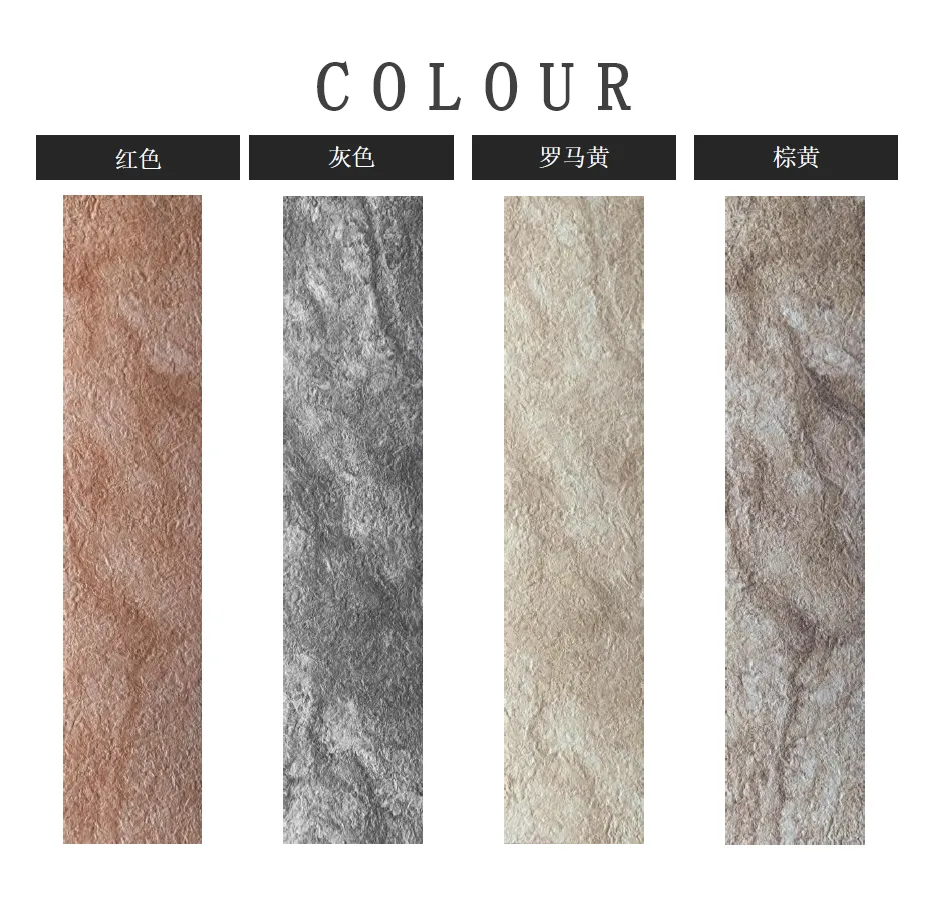
So, what exactly is MCM Flexible Stone? At its core, it's a composite material made by mixing natural stone particles (think crushed marble, granite, or travertine) with high-performance polymer binders. The result? A thin, lightweight panel that's flexible enough to bend around curves but strong enough to stand up to the elements. Unlike Rock Cut Dolomitic Stone, which is a single, solid block, MCM panels are typically 3-5mm thick—thinner than a smartphone—and weigh a fraction of the natural stuff. A 1m² slab of MCM might weigh 6-8kg, compared to 50-60kg for the same size of dolomitic stone. That's a game-changer for installers, who can carry panels by hand instead of relying on heavy machinery.
One of the most exciting things about MCM is its versatility, especially when it comes to size. The MCM big slab board series, for example, offers panels up to 3 meters long and 1.5 meters wide—huge sheets that mean fewer seams and a more seamless look on large facades. Imagine covering an entire office building's exterior with just a few panels; it's faster, cleaner, and more visually striking than piecing together small stone blocks. And because MCM is engineered, you can customize it in ways natural stone can't match. Want a panel that looks like travertine but with a hint of blue sparkle? Enter travertine (starry blue)—a MCM variant that mimics the look of natural travertine but adds a dash of whimsy with embedded "starry" particles. It's the best of both worlds: natural beauty with a modern twist.
But MCM's real superpower is flexibility—literally. These panels can bend up to 90 degrees without cracking, making them perfect for curved walls, domes, or any structure that isn't a straight line. Architects are loving this; suddenly, buildings don't have to be boxy. Think of a museum with a facade that curves like a wave, or a restaurant with a circular interior wall that feels intimate and flowing—MCM makes that possible. And installation? It's a breeze compared to natural stone. Most MCM panels use a simple adhesive or mechanical fixing system, which means crews can cover more area in less time, cutting down on labor costs and project timelines.
Of course, no material is perfect. MCM Flexible Stone, being a composite, might not have the same heat resistance as solid dolomitic stone in extreme conditions (though high-quality MCMs are tested to withstand temperatures up to 120°C). And while it's durable, it might not last quite as long as natural stone—though "not as long" is relative; top-tier MCM panels are rated to last 30+ years, which is more than enough for most commercial projects. Plus, because it's made with natural stone particles, it still has that authentic texture and feel—you'd be hard-pressed to tell the difference between MCM travertine and the real thing just by touch.
To really understand how Rock Cut Dolomitic Stone and MCM Flexible Stone stack up, let's put them side by side. Below is a breakdown of their key properties, from weight to design options, so you can see why one might be better suited for your project than the other.
| Property | Rock Cut Dolomitic Stone | MCM Flexible Stone (MCM big slab board series) |
|---|---|---|
| Weight | Heavy (50-60kg/m²) | Lightweight (6-8kg/m²) |
| Flexibility | Rigid; cannot bend without cracking | Flexible; can bend up to 90° |
| Installation | Requires cranes, specialized labor, and structural support | Can be installed by hand with adhesives or mechanical fixings |
| Cost | Higher upfront cost (quarrying, cutting, transportation) | Lower upfront cost; savings on labor and installation |
| Durability | Extremely high (100+ years with proper maintenance) | High (30+ years with proper maintenance) |
| Design Options | Limited by natural variations; standard sizes | Highly customizable (colors, textures, sizes); e.g., travertine (starry blue) |
| Sustainability | Quarrying can disrupt ecosystems; high transportation emissions | Uses recycled stone particles; lightweight = lower transportation emissions |
At a glance, it's clear: Rock Cut Dolomitic Stone is the choice for projects where tradition, permanence, and uncompromising durability are non-negotiable. MCM Flexible Stone, on the other hand, shines in modern, innovative designs where flexibility, speed, and customization matter most. But here's the thing—they don't have to compete. Many projects use both: Rock Cut Dolomitic Stone for a historic accent wall, and MCM big slab board series for the rest of the facade to keep costs and weight down. It's all about balance.
Let's get practical. When should you reach for Rock Cut Dolomitic Stone, and when is MCM Flexible Stone the better bet? Let's break it down by project type.
If you're restoring a 19th-century town hall or building a new monument meant to stand for centuries, Rock Cut Dolomitic Stone is the way to go. Its natural, time-worn look fits seamlessly with historic aesthetics, and its durability ensures it will age gracefully. For example, the recent restoration of the Old State Capitol in a midwestern U.S. city used Rock Cut Dolomitic Stone to replace damaged blocks, matching the original 1850s masonry so closely that visitors can't tell the new from the old. It's not just about looks—historic preservation boards often require materials that match the original construction, and natural stone is the only way to meet those standards.
For skyscrapers, shopping malls, or tech company headquarters, MCM Flexible Stone is a dream. Take the new Azure Tower in downtown Chicago, which features the MCM big slab board series in a sleek gray finish. The building's curved corners and expansive glass windows are complemented by MCM panels that wrap around the structure, creating a unified look without the weight of natural stone. Installers reported cutting construction time by 30% compared to using traditional stone, and the building's foundation required less reinforcement—saving millions in structural costs. Plus, the client added travertine (starry blue) accents around the entrance, a custom MCM design that adds a pop of color and makes the lobby feel welcoming and unique.
Here's where MCM really pulls ahead. Think of a concert hall with a domed ceiling or a boutique hotel with a spiral staircase wall—rigid stone just can't handle those curves. The Harmony Concert Hall in Seattle, for instance, used MCM Flexible Stone to line its main auditorium walls. The panels curve gently from floor to ceiling, improving acoustics (the material's density helps absorb sound) and creating a sense of intimacy. "We wanted the walls to feel like they're embracing the audience," said lead architect Maria Gonzalez. "With MCM, we could achieve that curvature without sacrificing durability or aesthetics."
Sometimes, the best results come from mixing materials. Foamed aluminium alloy board (vintage silver), for example, pairs beautifully with MCM Flexible Stone. The lightweight, metallic finish of the aluminium contrasts with the earthy texture of MCM, creating a modern, industrial-chic look. A recent coworking space in Austin used this combo: MCM big slab boards in a warm beige for the main walls, accented with foamed aluminium alloy board (vintage silver) for the reception desk and conference room dividers. The result? A space that feels both cozy and cutting-edge, perfect for inspiring creativity.
The problem: The 1892 Hamilton County Courthouse in Ohio had suffered decades of weather damage, with chunks of its original dolomitic stone facade falling off. The county wanted to restore the building to its former glory but needed a material that would match the historic stone while being more durable and easier to install.
The solution: Rock Cut Dolomitic Stone—specifically, blocks quarried from the same Indiana mine that supplied the original stone in 1892. The new blocks were cut using modern machinery to precise measurements, ensuring a perfect fit with the existing structure. While installation was labor-intensive (crane rentals and specialized masons added to costs), the result is a courthouse that looks exactly as it did over a century ago, with the added benefit of modern sealing techniques to prevent future weathering. "We could have used MCM, but the historical society was clear: it had to be natural stone," said project manager James Wilson. "Sometimes, tradition is worth the extra effort."
The problem: A tech startup wanted its new headquarters to stand out in a crowded city skyline—something bold, modern, and eco-friendly. The building would feature a mix of curved and straight facades, with large windows and a rooftop garden. Weight was a concern; the site had soil issues that limited foundation load.
The solution: MCM Flexible Stone, specifically the MCM big slab board series in a custom "ocean gray" finish, paired with travertine (starry blue) accents and foamed aluminium alloy board (vintage silver) for the rooftop railing. The MCM panels weighed 70% less than natural stone, allowing the foundation to support the rooftop garden without extra reinforcement. Installation took just 8 weeks, compared to the 16 weeks estimated for natural stone. "We wanted the building to feel like it's floating," said architect Raj Patel. "MCM's lightness and flexibility made that possible. And the starry blue accents? They're a hit with employees—everyone says it feels like working under the night sky."
So, what's next for these two materials? Rock Cut Dolomitic Stone isn't going anywhere. There will always be a demand for natural, durable stone in historic preservation and high-end construction. But innovations in quarrying—like more eco-friendly mining practices and 3D scanning to reduce waste—are making it more sustainable. Some quarries now use water recycling systems and solar power to cut down on emissions, addressing one of the material's biggest drawbacks.
For MCM Flexible Stone, the future is all about customization and sustainability. Manufacturers are experimenting with recycled materials in the polymer binders, making MCM even more eco-friendly. The MCM 3D printing series, still in development, could allow architects to print custom-shaped panels on-site, reducing transportation costs and waste. Imagine a building where every panel is unique, printed to fit exactly where it's needed—no more cutting or trimming. And as demand grows, costs are coming down, making MCM accessible to smaller projects, like boutique hotels or even residential homes.
Perhaps the most exciting trend is the blending of rigid and flexible. We're seeing more projects that use Rock Cut Dolomitic Stone for the base of a building (for that classic, grounded look) and MCM Flexible Stone for the upper floors (to reduce weight and add modern flair). It's a marriage of old and new, tradition and innovation—and it works. As architect Frank Gehry once said, "Architecture should speak of its time and place, but yearn for timelessness." With Rock Cut Dolomitic Stone and MCM Flexible Stone, we're getting just that: buildings that honor the past while reaching for the future.
At the end of the day, the choice between Rock Cut Dolomitic Stone and MCM Flexible Stone isn't about which is "better"—it's about which tells your project's story. Do you want to evoke tradition, permanence, and the weight of history? Go with Rock Cut Dolomitic Stone. Are you building something that's innovative, flexible, and ready for the future? MCM Flexible Stone is your answer. And if you're like most architects and builders these days, you might just use both—because the best stories aren't one-note; they're a blend of old and new, rigid and flexible, strength and adaptability.
So, the next time you walk past a building, take a closer look at its walls. Is it whispering tales of the past, or shouting ideas about tomorrow? Chances are, it's doing both—and that's the magic of building materials. They don't just hold up walls; they hold up stories. And with Rock Cut Dolomitic Stone and MCM Flexible Stone, those stories are only getting more interesting.
Recommend Products












