


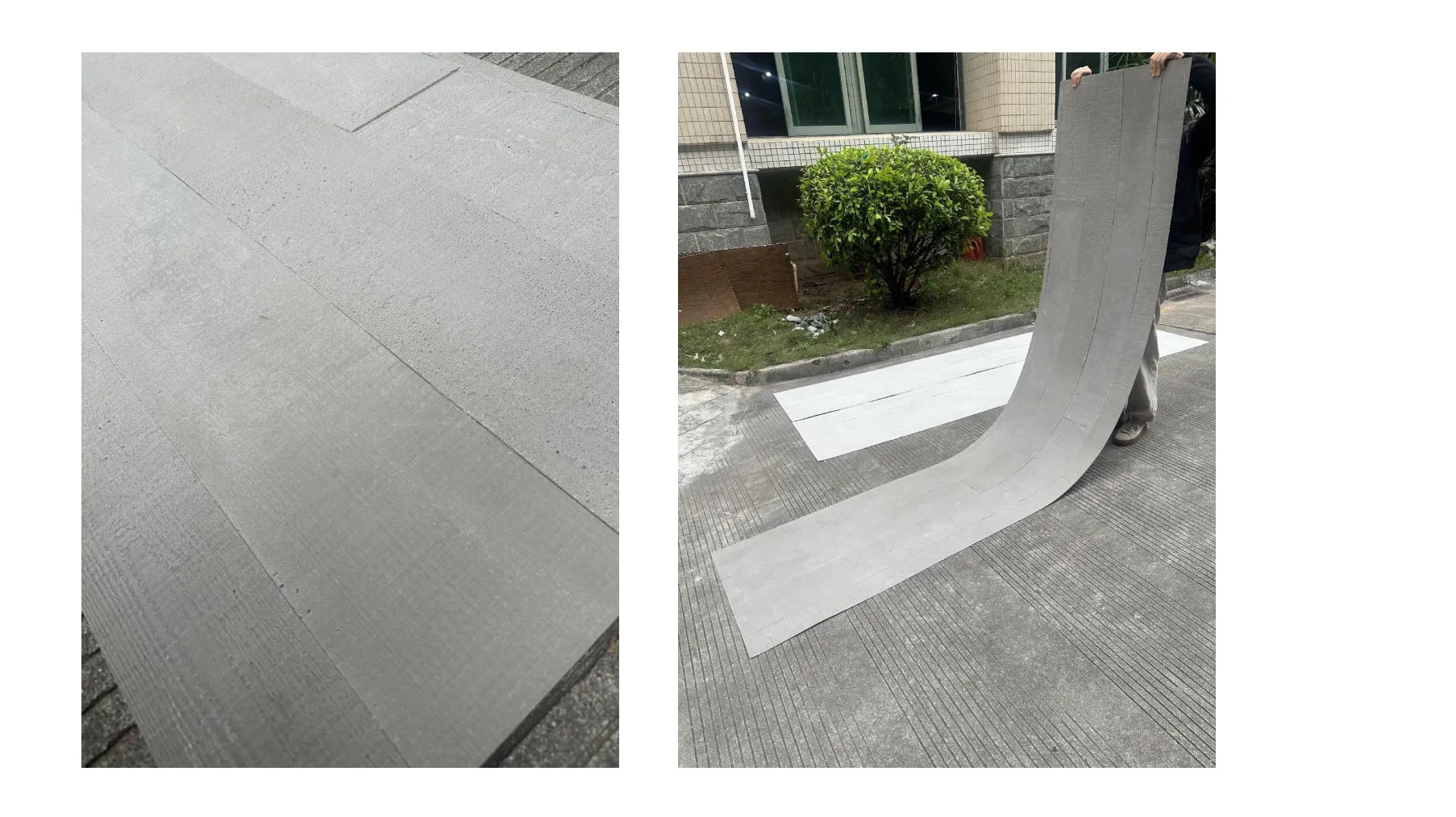
Architecture has always been a dialogue between human ambition and the materials at our disposal. For decades, we built with the grain of rigidity: straight lines, sharp angles, boxes that stood firm against the elements but often felt cold, disconnected from the organic world we inhabit. But something shifted in recent years. We began to crave spaces that breathe, that move like the wind, that wrap around us like a gentle embrace. Curved designs—once the stuff of dreams, limited by brittle stone and unforgiving concrete—started to emerge, and at the heart of this shift lies a quiet innovator: flexible wood-cement board.
Imagine walking into a community center where the walls don't end abruptly but flow into the ceiling, guiding your gaze upward like a leaf floating on a stream. Or a home where the facade curves to welcome sunlight in the morning and shelter from the afternoon rain, its texture warm and tactile, like weathered wood but strong enough to stand for decades. These aren't just aesthetic choices; they're emotional ones. Curves soften spaces, making them feel more human, more alive. And until recently, bringing that vision to life meant compromising—either on design or durability. Enter flexible wood-cement board, a material that doesn't just bend; it bends the rules of what architecture can be.










