
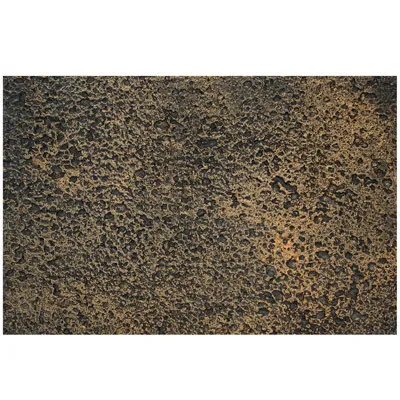
In the world of modern architecture, materials do more than just build; they tell a story. The warm, luxurious glow of a vintage gold finish is a narrative of elegance and timeless appeal. When this classic aesthetic meets the high-tech performance of foamed aluminium alloy board, the result is a material that captivates and endures. But once you've settled on this stunning finish, a critical question arises: which thickness is right for your project? The choice between 3mm, 5mm, and 8mm isn't just a minor detail—it's a fundamental decision that impacts aesthetics, performance, budget, and installation. Let's dive in and demystify this choice.
Before we talk thickness, let's get acquainted with the material itself. What exactly is a foamed aluminium alloy board? Imagine a sandwich. You have two thin, strong sheets of high-grade aluminium alloy on the outside. The "filling" in the middle isn't what you'd find in your lunchbox, but a lightweight, foamed or mineral-filled core. This composite structure is the secret to its success. It delivers incredible rigidity and flatness without the immense weight of solid metal.
The "Vintage Gold" aspect is the surface finish. This isn't just a layer of paint. It's a sophisticated coating system designed to be incredibly durable, resisting UV radiation, weather, and corrosion. It provides the deep, burnished look of aged gold, bringing a touch of opulence and character to any building façade or interior space. It's a finish that feels both contemporary and classic at the same time.
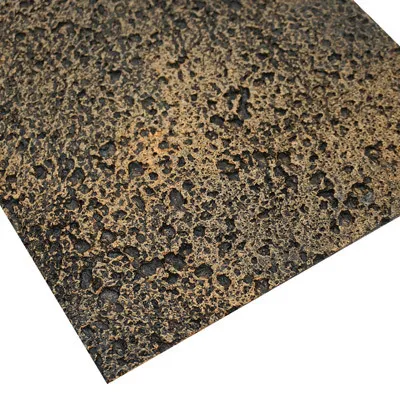
Now, let's get to the heart of the matter. You're standing in front of three samples of Vintage Gold foamed aluminium board. They look identical in finish, but their thickness and heft are noticeably different. So, which one do you choose? The answer depends entirely on the application. Let's break down each option.
Think of the 3mm board as the agile and economical member of the family. Its slender profile makes it the lightest and most flexible of the three. This flexibility can be a huge advantage for certain applications, but it's also its main limitation.
Key Characteristics: At this thickness, the board offers good basic rigidity but is more susceptible to deflection or damage from direct, heavy impact compared to its thicker siblings. It is the most cost-effective option, making it an attractive choice for projects with tight budget constraints or those covering vast interior surfaces where high impact resistance is not a primary concern. Its light weight means it can often be installed on less robust framing systems, and it's easier to handle when creating intricate cuts or shapes.
Where It Shines (Best Applications):
Considerations and Limitations: While excellent indoors, 3mm is generally not recommended for exterior façade applications, especially on multi-story buildings. It lacks the rigidity to withstand significant wind loads and thermal expansion/contraction cycles without potentially showing waviness over time. It's also more prone to dents and damage in high-traffic areas like school corridors or public transit stations.
If there's a "just right" option for the widest range of applications, it's the 5mm board. It represents the perfect equilibrium between performance, weight, and cost, making it the go-to choice for a vast number of commercial and residential projects.
Key Characteristics: The jump from 3mm to 5mm provides a significant boost in rigidity and impact resistance. The panel feels much more substantial. This added stiffness makes it far better at spanning larger distances between supports and maintaining its flatness. While heavier and slightly more expensive than the 3mm option, the performance gains often justify the marginal increase.
Where It Shines (Best Applications):
Considerations and Limitations: While highly versatile, for very high-rise buildings or areas with extreme wind conditions (like coastal or cyclone-prone regions), an even thicker panel might be required by engineering specifications. It's also less flexible than the 3mm board, so achieving very tight curves may be more challenging.
When performance is paramount and compromise is not an option, the 8mm board steps in. This is the heavyweight of the group, engineered for the most demanding applications where ultimate strength, rigidity, and perfect flatness are non-negotiable.
Key Characteristics: The 8mm board is all about structural integrity. Its thickness provides exceptional resistance to impact, deflection, and wind load. It allows architects to design with very large panel modules, creating a monolithic, seamless look that is visually stunning. The surface flatness is unparalleled, even under harsh lighting conditions that would expose the slightest imperfection in a thinner material. This premium performance comes with a higher price tag and increased weight, which must be factored into the structural design and installation logistics.
Where It Shines (Best Applications):
Considerations and Limitations: The main drawbacks are cost and weight. The heavier panels require a more robust and potentially more expensive substructure or mounting system. The logistics of lifting and fitting these heavier panels on-site also need careful planning. Furthermore, its rigidity means it is not suitable for applications requiring any significant degree of curving or bending.
| Feature | 3mm Board | 5mm Board | 8mm Board |
|---|---|---|---|
| Relative Cost | Lowest ($) | Medium ($$) | Highest ($$$) |
| Relative Weight | Lightest | Moderate | Heaviest |
| Rigidity & Impact Resistance | Standard | High | Very High |
| Flexibility (for curves) | Good | Limited | Very Low |
| Ideal Use Case | Interior Decorative, Ceilings, Signage | Exterior Façades (Low/Mid-Rise), High-Traffic Interiors | High-Rise Façades, Large Panels, High-Impact Zones |
| Primary Advantage | Cost-Effective & Flexible | Versatile All-Rounder | Maximum Strength & Flatness |
Choosing the right thickness is crucial, but it's part of a larger puzzle. To make a truly informed decision, you must also consider:

Choosing the right thickness for a foamed aluminium board is a great example of how nuanced material selection can be. And while it's an outstanding material for countless projects, at COLORIA GROUP, we believe true architectural excellence comes from having a complete palette of options. As a dedicated **one-stop solution provider** with decades of experience in global markets, from the demanding climates of Saudi Arabia to the bustling metropolises of Asia, our role is to expand your horizons. We don't just sell a product; we partner with you to find the perfect solution for your specific vision, budget, and performance needs.
This is where our expertise in advanced materials comes into play, particularly with our flagship MCM (Modified Cementitious Material) product family. When a project's needs push beyond the capabilities of metal panels, MCM opens up a new world of design.
What if your design calls for the majestic look of natural slate or travertine, but you need to wrap it around a sweeping curved wall or a series of columns? That's a challenge for a rigid board. Our **MCM Flexible Stone** is the answer. This innovative material is incredibly thin, lightweight, and pliable, yet it captures the authentic texture and visual depth of real stone. It offers a stunningly realistic alternative that drastically reduces structural load, simplifies installation, and is far more sustainable than quarrying heavy stone blocks. It's the perfect complement for when rigidity is a limitation, not a benefit.
The appeal of large, seamless panels is undeniable. It's why the 8mm aluminium board is so sought after for premium projects. Our **MCM Big Slab Board Series** pushes this concept even further. These large-format boards are not limited to a metallic finish. We can create surfaces that emulate raw concrete, refined wood grains, woven textiles, or custom patterns, all in a lightweight, fire-retardant, and environmentally friendly material. It provides the scale and grandeur of large panels but with an infinitely broader textural and aesthetic library.
For the ultimate in bespoke design, where off-the-shelf solutions simply won't suffice, we introduce the future of façade technology. The **MCM 3D Printing Series** allows architects to break free from the flat plane. We can print custom, three-dimensional textures, intricate patterns, company logos, and unique artistic reliefs directly onto the panel surface. Imagine a façade with a subtle, flowing bas-relief pattern that changes with the light, or one that tells a story through custom iconography. This is not just cladding; it's architectural sculpture, and it's a testament to our commitment to pushing the boundaries of what's possible.
So, back to our Vintage Gold foamed aluminium board. Your choice between 3mm, 5mm, and 8mm is a balance of application, performance, and budget.
Choose 3mm for protected, decorative interior applications where cost and light weight are primary drivers.
Choose 5mm as your robust, versatile workhorse for the majority of exterior façades and high-traffic interior spaces.
Choose 8mm when your project demands the absolute best in flatness, impact resistance, and structural performance for high-rise or landmark buildings.
Ultimately, the best material isn't just a product on a spec sheet; it's a solution that elevates your design. Whether that solution is the sleek precision of a foamed aluminium panel or the boundless creativity offered by advanced materials like MCM, understanding the options is the first step toward flawless execution. The world of architectural materials is rich with possibility, and partnering with an expert who understands the full spectrum is the key to unlocking your project's true potential.
Recommend Products












