
A journey through time, where a single stone bridges the grandeur of antiquity and the innovation of today
Stand in the shadow of the Colosseum, and you'll feel it—the quiet hum of 2,000 years of stories embedded in every inch of its stone walls. That stone? Travertine. Not just any rock, but a material so deeply woven into the fabric of human civilization that it's as much a character in history as the emperors and architects who chose it. From the sweeping arches of the Pantheon to the intricate facades of Renaissance palaces, travertine has been the silent partner in some of humanity's most ambitious building dreams. But here's the thing about travertine: it never stopped evolving. Today, in the hands of innovators at MCM, it's stepping into a new era—one where ancient beauty meets cutting-edge technology, and where the past doesn't just inspire the future, but becomes part of it.
Let's rewind. In ancient Rome, travertine wasn't just a choice; it was a revolution. Quarried from the Tivoli region, just outside the city, this creamy, porous limestone (formed by mineral-rich hot springs) offered something no other stone could: strength without brittleness, beauty without fragility. Imagine the laborers hauling massive blocks—some weighing over 10 tons—up to the Colosseum's upper tiers. They didn't do it for aesthetics alone (though the stone's warm, honeyed tones certainly helped). Travertine's secret was in its structure: tiny air bubbles trapped during formation made it lighter than marble, yet its crystalline matrix gave it the durability to withstand Rome's harsh winters and scorching summers. It was, quite literally, the perfect building block for an empire that aimed to last forever.
After Rome fell, travertine didn't vanish. It simply adapted. During the Renaissance, architects like Brunelleschi reached for it again, drawn to its classical roots and timeless elegance. The Duomo of Florence, with its iconic red-tiled dome, rests on travertine foundations—a nod to the past that felt fresh in a world rediscovering ancient wisdom. Even during the Industrial Revolution, when concrete and steel began to dominate, travertine held its ground. Wealthy patrons commissioned it for mansions and public buildings, a symbol of taste and permanence in a rapidly changing world. By the 20th century, modernist architects like Le Corbusier and Frank Lloyd Wright embraced it, too, pairing its organic texture with clean lines to create spaces that felt both grounded and forward-thinking.
But as the 21st century dawned, travertine faced new challenges. Traditional blocks, while beautiful, were heavy—so heavy that installing them in skyscrapers or modern homes often required reinforced structures and specialized labor. Sustainability, too, became a concern: quarrying large travertine slabs left significant environmental footprints, and transporting them across the globe added to carbon emissions. Designers craved the look of travertine but needed something more adaptable, more eco-friendly, and easier to work with. Enter MCM—a brand that saw not a problem, but an opportunity to reimagine travertine for the modern world.
If ancient Romans were innovators, then MCM is their modern heir. The brand's mission? To preserve travertine's soul while solving its practical challenges. The result? MCM flexible stone —a game-changer that marries the natural beauty of travertine with the flexibility of modern materials. Here's how it works: instead of cutting massive blocks from quarries, MCM uses a proprietary process to layer thin slices of real travertine onto a lightweight, flexible backing. The result? A material that weighs up to 80% less than traditional travertine, bends without breaking, and installs in a fraction of the time. Suddenly, travertine isn't just for grand public buildings—it's for your kitchen backsplash, your bathroom walls, even the exterior of a high-rise apartment where weight and installation speed matter most.
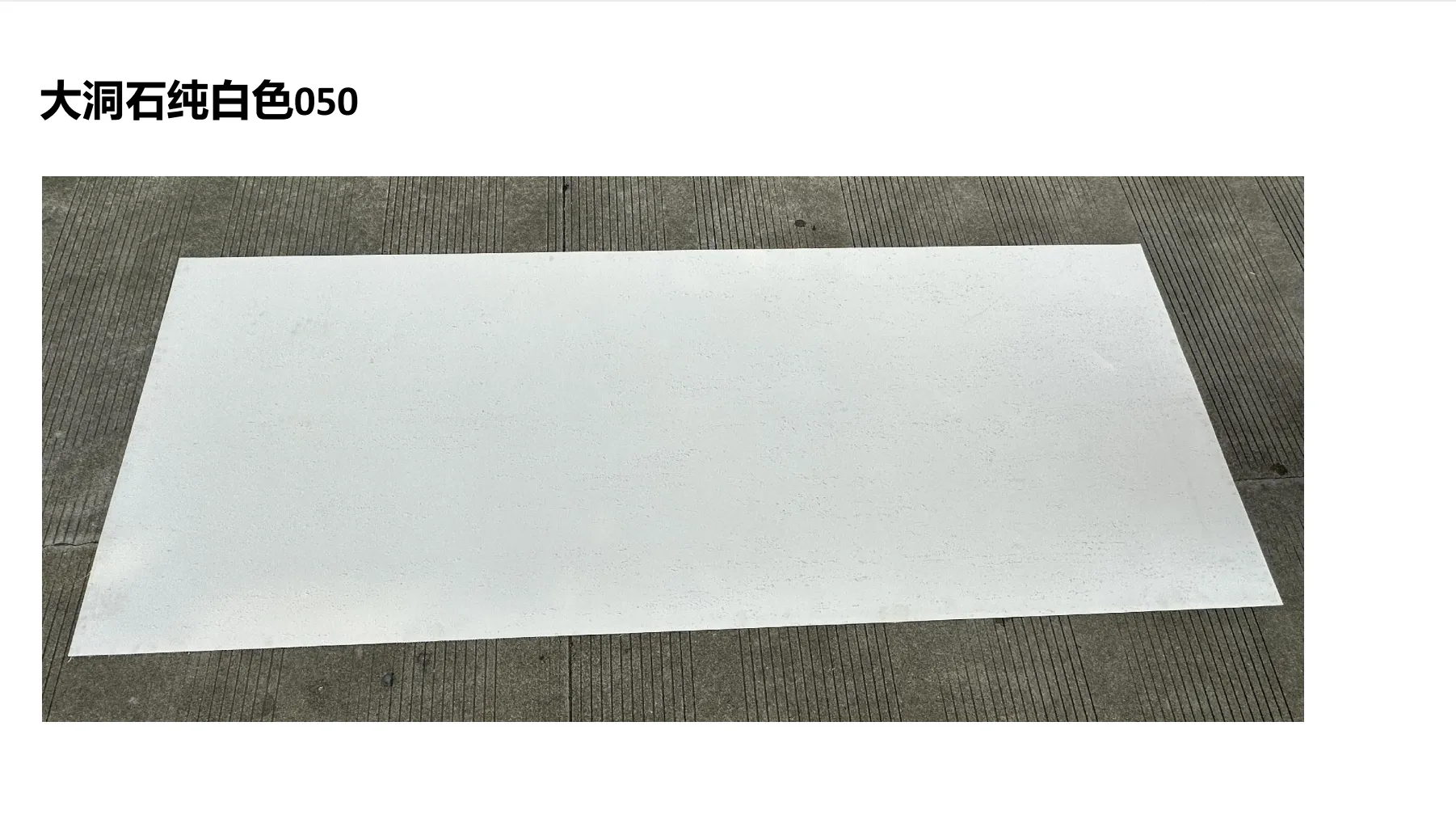
But MCM didn't stop there. For projects that demand the grandeur of large-format travertine without the hassle, there's the MCM big slab board series . These slabs, which can span up to 3 meters in length, capture the drama of traditional travertine blocks but with all the benefits of MCM's technology. Imagine a hotel lobby with walls clad in seamless travertine slabs, their natural veining flowing like a river across the space—no visible seams, no heavy lifting, just pure, uninterrupted beauty. Or a residential exterior where the warm tones of travertine blend with modern glass and steel, proving that old and new can coexist harmoniously. It's travertine, but reimagined for a world that wants both tradition and convenience.
| Feature | Traditional Travertine | MCM Big Slab Board Series |
|---|---|---|
| Weight | Heavy (up to 200kg/m²) | Lightweight (20-30kg/m²) |
| Installation | Requires heavy machinery and specialized labor | Can be installed with basic tools; flexible for curved surfaces |
| Durability | High, but prone to cracking under stress | High, with added flexibility to resist cracking |
| Sustainability | Quarrying can disrupt ecosystems; high transport emissions | Uses minimal raw materials; reduces waste and transport costs |
| Design Options | Limited by block size and weight | Large-format slabs, custom colors, and finishes |
Travertine has always played well with others, and MCM's lineup of complementary materials takes that versatility to new heights. Take lunar peak silvery , for example. With its sleek, metallic finish and subtle texture, it's the perfect counterpoint to travertine's organic warmth. Imagine a restaurant interior where walls of MCM big slab travertine (in a soft beige) are paired with accents of lunar peak silvery—suddenly, the space feels both grounded and futuristic, like a conversation between ancient and modern. Or consider foamed aluminium alloy board (vintage silver) , another MCM innovation. Its lightweight, industrial-chic look adds an edgy contrast to travertine's softness, making it ideal for commercial spaces like cafes or co-working offices where design needs to make a statement.
What's exciting about these pairings is how they honor travertine's heritage while pushing its boundaries. Lunar peak silvery, with its silvery sheen and matte finish, doesn't compete with travertine—it elevates it, turning a traditional material into something fresh and unexpected. Similarly, foamed aluminium alloy board brings a touch of industrial history (aluminium's rise in 20th-century architecture) to travertine's ancient story, creating a narrative that spans millennia. It's design as storytelling, and MCM's materials are the perfect storytellers.
As we look to the future, travertine's role in architecture is more vital than ever—but its success depends on sustainability. MCM gets this. By reducing material waste, lowering transport emissions, and creating products that last, the brand is ensuring that travertine remains a responsible choice for generations to come. Think about it: a traditional travertine quarry might extract 10 tons of stone to get 1 ton of usable slab. MCM's process, by contrast, uses thin slices of travertine, turning what was once waste into beautiful, functional material. It's a small change with a big impact—one that aligns with the growing demand for eco-conscious design.
But sustainability isn't the only driver. Design freedom is, too. With MCM's flexible stone and big slab series, architects and designers are no longer limited by the constraints of traditional materials. Want a travertine-clad curved wall? Possible. A lightweight travertine facade on a skyscraper? Easy. Even custom colors—like the starry red or starry blue travertine in MCM's lineup—let designers put their unique stamp on a material that's been around for millennia. Travertine, in short, is no longer just a stone; it's a canvas.
From the Colosseum's ancient walls to the sleek interiors of today's trendiest buildings, travertine has always been more than a building material. It's a witness to human ingenuity, a symbol of our desire to create something lasting. And now, with MCM's innovations—flexible stone, big slab boards, and complementary materials like lunar peak silvery and foamed aluminium alloy—it's ready to write new chapters. Whether you're walking through a historic Roman ruin or a modern home clad in MCM travertine, take a moment to feel the connection: the same stone that inspired emperors and architects for centuries is still inspiring us today. And that, perhaps, is travertine's greatest magic—it doesn't just build structures; it builds bridges between past, present, and future.
Recommend Products












