
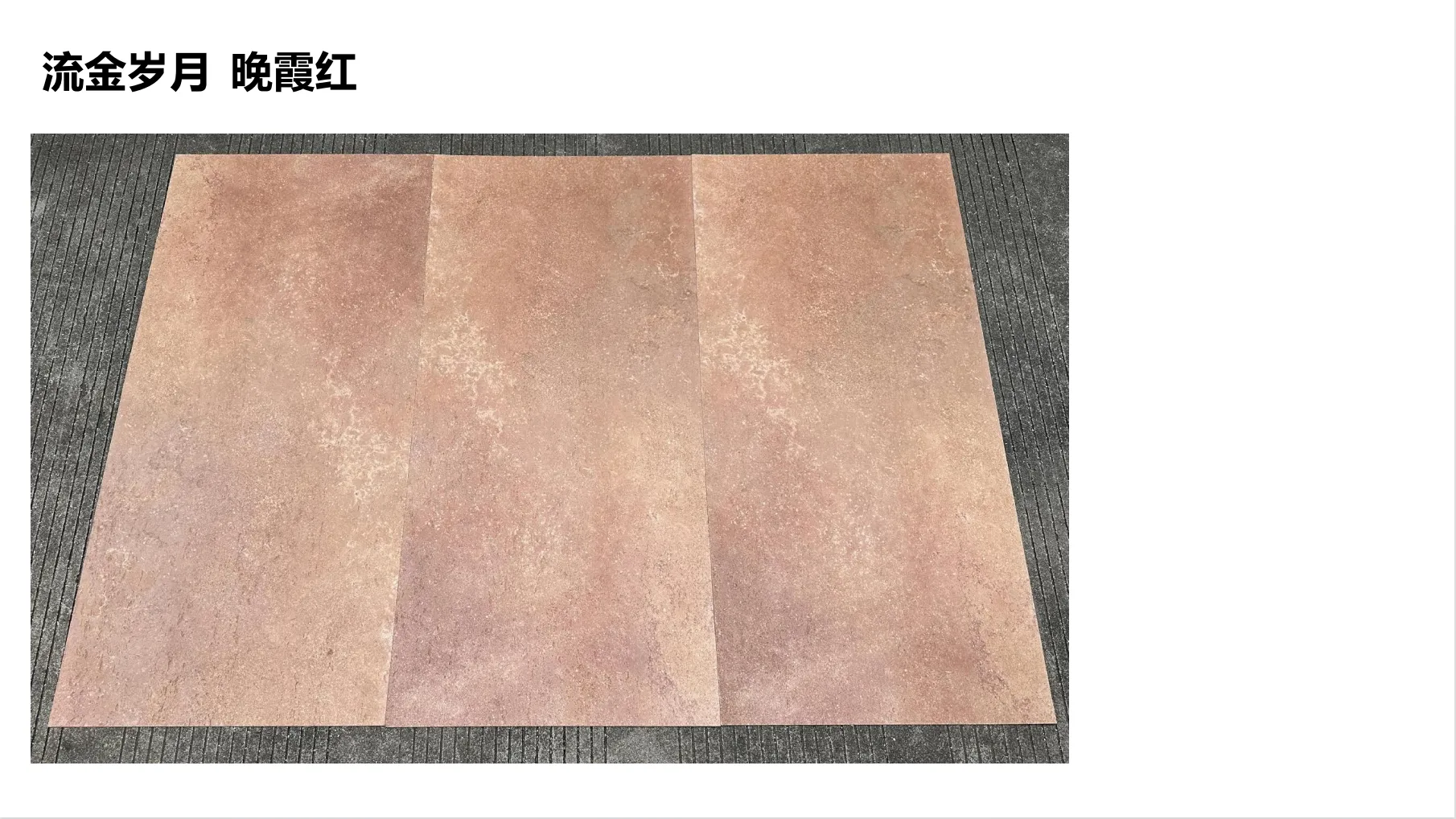
Walk down any city street, and you'll notice something subtle but profound: buildings are no longer just boxes of concrete and steel. They're stories. Stories of sustainability, of creativity, of how we're reimagining the spaces we live, work, and gather in. At the heart of this transformation? Materials that don't just build—they inspire. And leading the charge is a name that's becoming synonymous with construction's next chapter: MCM. Today, we're diving into the MCM 3D printing series , a collection of innovations that's turning "impossible" designs into everyday reality. From walls that bend without breaking to facades that shimmer like stardust, this isn't just about building better—it's about building differently . And to truly grasp the magic, we'll lean on something equally powerful: the Golden Faith real photos that capture these materials in action, proving that the future of construction isn't a distant dream—it's already being built.
Let's start with the obvious: construction has always been a balancing act. For decades, architects and builders have juggled three priorities: strength, cost, and aesthetics. Want a building that lasts 100 years? You'd likely end up with heavy, rigid materials like solid concrete or natural stone—beautiful, but unforgiving. Need something lightweight? Maybe metal panels, but they'd dent, fade, or lack the warmth of natural textures. And sustainability? Traditional materials often came with a heavy carbon footprint, from quarrying stone to transporting massive slabs across the globe.
Take marble, for example. A classic choice for luxury, but it's porous, prone to staining, and requires constant maintenance. Or brick: durable, but limited in design—you're stuck with rectangles, unless you're willing to pay a fortune for custom cuts. Even modern materials like standard aluminum panels? They're lightweight, sure, but they feel… cold. Like the building's wearing armor instead of a personality.
And then there's the issue of waste. Traditional construction generates tons of it—literally. Cutting stone to size leaves heaps of scraps. Transporting heavy materials burns fossil fuels. Installing rigid panels often means over-ordering, just to avoid delays if a piece cracks. It's a system that works, but "works" shouldn't be the finish line. We needed materials that could do more: bend, adapt, reduce waste, and still make our jaws drop. Enter MCM.
MCM stands for Modified Composite Material, but let's skip the jargon. Think of it as nature's best qualities, supercharged by science. The MCM 3D printing series takes this idea and runs with it, using 3D printing technology to craft materials that are lighter, stronger, and infinitely more flexible than anything before. But what makes this series a game-changer? It's not just the 3D printing—it's how MCM has reimagined what a "construction material" can be.
Here's the secret sauce: MCM starts with natural minerals (think limestone, marble dust) and blends them with high-tech polymers. The result? A material that's 70% lighter than traditional stone, but just as strong. And because it's 3D printed, it can be shaped into almost any form—curves, waves, intricate patterns—without the usual waste. Imagine a wall panel that's printed on-site, perfectly tailored to the building's dimensions, with zero scraps. That's the MCM promise.
But let's get specific. Within the 3D printing series, there are stars that are already turning heads in the industry. Let's shine a light on a few that are redefining what's possible.
If you've ever tried to hang a picture on a stone wall, you know the drill: drill carefully, use a heavy-duty anchor, pray it doesn't crack. Stone is strong, but it's brittle—until now. Flexible stone is MCM's answer to that age-old problem. Picture this: a thin, lightweight panel that looks and feels like natural travertine, but you can literally roll it up like a rug. That's right—roll it up. No more heavy lifting, no more fear of (transport damage). Installers can carry multiple panels at once, cutting installation time by half. And the applications? Staggering.
Take the lobby of the new Riverbank Community Center in Portland. The architect wanted a wall that flowed from the floor to the ceiling, curving gently around the reception desk. Traditional stone would have required dozens of small, pieced-together slabs, creating a choppy, artificial look. With flexible stone, they printed a single 20-foot panel that curved seamlessly, mimicking the flow of the nearby river. The result? A space that feels organic, alive. And the Golden Faith real photos of that lobby? They've gone viral in architecture circles, with one commenter calling it "stone that dances."
But it's not just about looks. Flexible stone is also a sustainability win. Because it's made with recycled stone dust and requires less energy to produce than quarried stone, it cuts carbon emissions by up to 40%. For builders aiming for LEED certification, that's a game-changer. And with a range of finishes—from matte to high-gloss, in hues like "Starry Green" and "Vintage Gold"—it's proof that eco-friendly can also be eye-catching.
Ever stood in front of a skyscraper and marveled at its sleek, unbroken facade? That " seamless" look often comes with a hidden cost: hundreds of small panels, each requiring grout lines that collect dirt and fade over time. Enter the MCM big slab board series —the solution for architects who hate "patchwork" facades. These aren't your average panels: we're talking slabs up to 10 feet tall and 5 feet wide, printed in one piece. No grout, no gaps, just a smooth, uninterrupted surface that makes buildings look like they were carved from a single block of stone.
The benefits go beyond aesthetics. Larger slabs mean fewer seams, which means less water infiltration (goodbye, moldy walls!), less maintenance, and a longer lifespan for the building. Take the Horizon Tower in Dubai, which used the big slab board series for its exterior. The developer wanted a modern, minimalist look that would stand out in the city's skyline. Traditional panels would have required over 5,000 pieces; with MCM's big slabs, they used just 800. The installation crew finished two weeks ahead of schedule, and the facade has stayed spotless through Dubai's harsh sandstorms. The Golden Faith real photos of Horizon Tower at sunset? They show the slabs glowing like amber, the light reflecting evenly across the surface—no grout lines to break the spell.
And here's the kicker: these slabs aren't just for skyscrapers. Small businesses are getting in on the action too. A boutique hotel in Bali recently used the big slab series for its poolside cabanas, printing slabs in a warm, earthy "Bali Stone" finish. Guests often mistake them for natural stone, running their hands over the surface and asking, "How did you get it to look so real?" The answer? MCM's 3D printing technology, which replicates the texture of natural stone down to the tiniest grain.
Let's shift gears to something a little more modern: metal. Aluminium has long been a favorite for facades thanks to its lightweight nature, but traditional aluminum panels can feel… flat. Enter foamed aluminium alloy board (vintage gold) —MCM's take on metal that's equal parts flash and function. Foamed aluminium is exactly what it sounds like: aluminium that's been "foamed" with tiny air bubbles, making it even lighter (up to 70% lighter than solid aluminium) and surprisingly strong. And the "vintage gold" finish? It's not just a color—it's a vibe.
Imagine a restaurant in downtown Tokyo, where the exterior is clad in these vintage gold panels. At noon, they glow like honey in the sun; at night, they reflect the city lights, turning the building into a beacon. But it's not just about looks. Foamed aluminium is also a champion of sustainability: it's 100% recyclable, and the foaming process uses 50% less energy than traditional aluminium production. For businesses looking to make a statement while staying green, it's a no-brainer.
The Golden Faith real photos of a recent project in Barcelona capture this perfectly. The building, a co-working space for artists, used vintage gold foamed aluminium for its facade, paired with flexible stone in "Starry Blue" for the accents. The contrast is striking—warm gold against cool blue, modern metal against organic stone. It's a reminder that materials don't have to compete; they can dance together.
We've talked a lot about the "what" of MCM's 3D printing series, but let's not overlook the "how" we're falling in love with it: through Golden Faith real photos . In a world of renderings and CGI, there's something powerful about a real photograph—no filters, no tricks, just the material in its raw, installed glory. Golden Faith, a collective of architectural photographers, has made it their mission to document MCM's projects, and the result is a portfolio that feels more like a coffee table book than a product catalog.
Take their photo of the "Lunar Peak Silvery" flexible stone wall at a mountain lodge in Colorado. The photo is taken at dawn, with the first light hitting the wall, turning the silvery texture into something that looks like moonlight frozen in stone. You can see the subtle variations in the print—the way the 3D technology mimics the randomness of natural rock, but with a precision that feels intentional. A traditional stone wall would look similar, but the photo captures something else: the lightness. The wall is thin, almost delicate, yet you can tell it's strong enough to withstand Colorado's snowstorms.
Another standout? The photo of a retail store in Paris that used the foamed aluminium alloy board (vintage gold) for its storefront. The photo is taken from the street, with pedestrians pausing to touch the panels, their faces lit up by the gold shimmer. It's a small moment, but it speaks volumes: these materials don't just exist —they interact with people. They spark curiosity. They make us stop and appreciate the built environment.
Golden Faith's photos also highlight the versatility of MCM's 3D printing series. One album might feature a rustic cabin in Vermont clad in "Rustic Oak" flexible stone, the next a futuristic office in Singapore with "Ethereal Shadow Travertine" walls. It's a visual proof that MCM isn't a one-trick pony—it's a toolkit for any style, any vision.
| Material | Weight (per sq. ft) | Flexibility | Sustainability | Aesthetic Range |
|---|---|---|---|---|
| Traditional Stone | 25-30 lbs | Brittle (no bending) | High carbon footprint (quarrying, transport) | Limited (natural colors only) |
| MCM Flexible Stone | 8-10 lbs | Can bend up to 30 degrees | 40% lower emissions (recycled materials) | Wide (Starry Green, Vintage Gold, etc.) |
| Traditional Aluminium Panels | 12-15 lbs | Rigid (minor flex) | Moderate (high energy to produce) | Basic (matte, gloss, limited colors) |
| MCM Foamed Aluminium (Vintage Gold) | 4-5 lbs | Moderate flex (resists dents) | 100% recyclable, 50% less energy | Rich (vintage gold, silver, custom hues) |
| Standard Drywall | 5-7 lbs | Brittle (easily damaged) | Low (gypsum mining, paper waste) | Plain (painted, limited texture) |
| MCM Big Slab Board | 9-11 lbs | Can curve up to 90 degrees | Zero waste (3D printed to size) | Endless (custom patterns, textures) |
So, what's next for the MCM 3D printing series ? If the past few years are any indication, the sky's the limit. Engineers are already experimenting with "smart" MCM materials—panels embedded with sensors that can detect cracks or temperature changes, alerting maintenance crews before problems arise. Imagine a hospital where the walls not only look beautiful but also monitor air quality, ensuring a healthier environment for patients.
There's also talk of "biodegradable MCM" for temporary structures—think disaster relief shelters that, after use, break down into nutrient-rich soil. For areas hit by hurricanes or wildfires, this could be a game-changer, reducing waste and helping communities rebuild sustainably.
And let's not forget the design frontier. With 3D printing, the only limit is imagination. We're already seeing prototypes for "interactive" facades—panels that change color based on sunlight, or that can be reconfigured to display art. A museum in Berlin is experimenting with MCM panels that 3D print murals directly onto the exterior, updating the artwork seasonally. It's construction meets performance art.
But perhaps the most exciting part? These innovations aren't locked in a lab. They're being tested in real-world projects, and the Golden Faith real photos are there to capture every step. From the first prototype to the finished building, we're all along for the ride.
At the end of the day, construction isn't just about bricks and mortar. It's about the spaces that shape our lives—the schools where our kids learn, the offices where we chase our dreams, the parks where we connect with neighbors. The MCM 3D printing series isn't just changing how we build those spaces; it's changing how we feel in them. Flexible stone that feels like a hug, big slabs that make us feel small in the best way, foamed aluminium that shimmers like hope—these materials are more than just tools. They're storytellers.
And the Golden Faith real photos ? They're the bridge between "this is possible" and "this is real." They remind us that innovation isn't about fancy specs on a page; it's about the way a material catches the light, the way it makes a space feel like home. So the next time you walk past a building that makes you pause, take a closer look. Chances are, it's not just a building. It's MCM, writing the next chapter of construction—one 3D-printed panel at a time.
Here's to the future: lighter, brighter, and infinitely more flexible. And here's to the photographers, architects, builders, and dreamers who are bringing it to life. The best part? We're just getting started.
Recommend Products












