
Facades are no longer just barriers between inside and out—they're storytellers, mood setters, and silent collaborators in how we experience space. As 2026 unfolds, a new wave of materials is redefining what's possible, blending innovation with soul to create surfaces that don't just look good, but feel alive. At the heart of this movement? Ripple Board, a material that dances with light, bends to imagination, and turns buildings into experiences. Let's dive into the trends, the materials, and the magic shaping tomorrow's facades.
Walk through any modern city, and you'll notice a quiet revolution. Facades are shedding their flat, lifeless skins and embracing texture, movement, and emotion. Gone are the days when a building's exterior was an afterthought—today, it's the first chapter of its story. Designers and architects are asking: How can a wall make you pause? How can a surface make you feel welcome, curious, or inspired? The answer lies in materials that don't just exist, but interact—with light, with weather, with the people who pass by.
In 2026, three themes dominate this shift: biophilic connection (bringing nature's rhythms indoors), adaptive versatility (materials that bend, curve, and transform), and sustainable luxury (elegance without environmental compromise). And leading the charge is a material that embodies all three: Ripple Board. But it's not alone. From the cosmic allure of Travertine (starry blue) to the sleek resilience of Lunar Peak Silvery, and the vintage opulence of Foamed Aluminium Alloy Board (Vintage Gold), this year's lineup is about materials with personality.
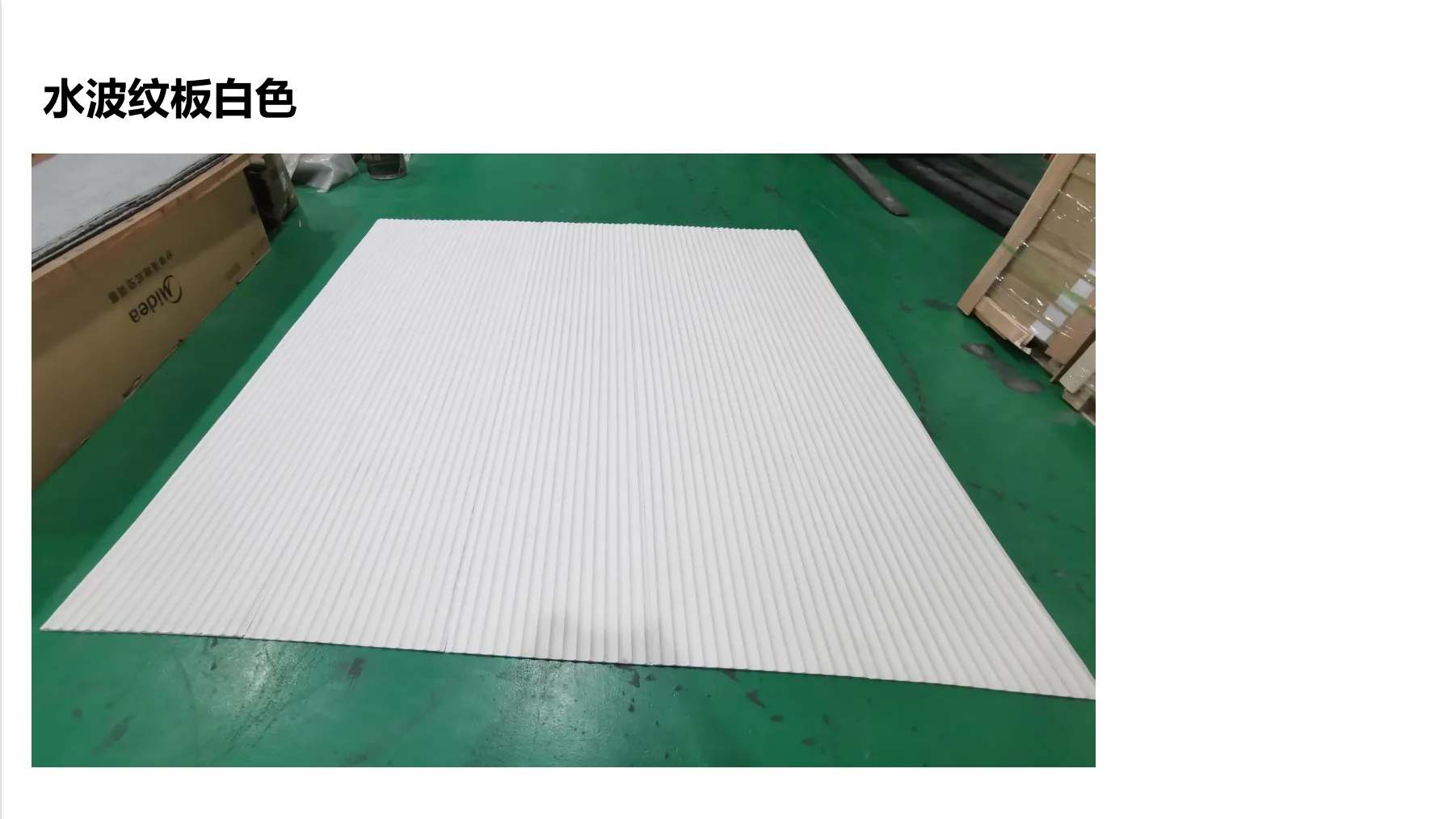
Imagine running your hand over a surface that feels both smooth and subtly undulating, like the skin of a river stone polished by time. That's Ripple Board—a flexible, lightweight material that mimics the gentle movement of water, whether it's a calm lake or a babbling brook. What makes it revolutionary isn't just its look, but how it plays with light. Morning sun turns it into a canvas of shifting patterns; twilight softens it into a warm glow; night, when paired with LEDs, transforms it into a living light installation.
"Ripple Board isn't just a cladding—it's a performance," says Elena Marquez, lead architect at Studio Lumina, who recently used it for a boutique hotel in Barcelona. "We wanted the lobby to feel like stepping into a forest at dawn, where light filters through leaves in dappled patterns. Ripple Board did that without a single plant. The panels catch the sun at different angles, and by afternoon, the whole space feels like it's breathing."
Part of its appeal is versatility. Unlike rigid stone or concrete, Ripple Board bends. It wraps around curved walls, climbs staircases, and even forms ceiling canopies. For a tech startup's office in Tokyo, designers used it to create a "wave wall" behind the reception desk—when employees walk by, motion sensors trigger subtle backlighting, making the ripples "move" as if touched by a breeze. It's interactive, intuitive, and unapologetically human.
But Ripple Board isn't just about aesthetics. It's built for the real world. Made from a composite of recycled polymers and natural minerals, it's 70% lighter than traditional stone, cutting down on construction time and structural load. It's weather-resistant, too—rainwater beads off its surface, and UV rays won't fade its color. For coastal buildings, that's a game-changer; for city centers, it means less maintenance and more longevity. "We tested it in our lab for two years," says Marco Chen, product developer at MCM Materials, the brand behind Ripple Board. "Salt spray, extreme heat, freezing cold—nothing fazed it. And because it's made with recycled materials, it's carbon-neutral. Luxury doesn't have to cost the planet."
If Ripple Board is the artist, MCM Flexible Stone is the chameleon. Short for "Modified Composite Material," this innovative cladding redefines what stone can be. Traditional stone is heavy, brittle, and hard to shape—MCM Flexible Stone is none of those things. It's thin (as little as 4mm), lightweight (5kg per square meter), and flexible enough to roll up like a carpet during installation. Yet it looks and feels exactly like natural stone, from the rough texture of granite to the smooth veining of marble.
"Clients used to think: 'If I want stone, I have to sacrifice design freedom,'" says Lisa Wong, a designer specializing in commercial spaces. "MCM Flexible Stone changed that. Last year, we clad a entire retail store in a custom 'driftwood' finish—curved walls, sloped ceilings, even the checkout counter. It felt like walking into a beach house, but it was in the middle of downtown Chicago. And because it's so light, we didn't need to reinforce the building's structure. The contractor kept saying, 'This can't be stone!'"
What sets MCM Flexible Stone apart is its range. Want the look of weathered sandstone for a rustic café? Done. Need sleek, polished marble for a high-end boutique? No problem. It comes in over 50 finishes, including some that mimic rare stones like Travertine (starry blue)—a variant with tiny, iridescent flecks that catch the light like stars in a night sky. "Starry blue is our bestseller," Chen notes. "Designers love it for accent walls or feature facades. It's bold but not overwhelming—like adding a constellation to a building."
Sustainability is another win. MCM Flexible Stone uses 90% recycled stone dust and resin, diverting waste from landfills. It's also energy-efficient: its thin profile acts as insulation, reducing heating and cooling costs by up to 20%. For a school in Portland, that meant lower utility bills—and more money for classroom supplies. "We chose MCM because it checked every box: durable, eco-friendly, and the kids love touching it," says Principal James Rivera. "They call the starry blue wall 'the night sky wall'—during recess, they'll sit in front of it and point out 'constellations.' That's the power of a material that sparks joy."
| Material | Aesthetic Vibe | Best For | Sustainability Highlight |
|---|---|---|---|
| Ripple Board | Flowing, organic, light-reactive; mimics water or wind patterns | Lobbies, hotels, cultural centers (spaces where ambiance matters) | 70% recycled content; carbon-neutral production |
| MCM Flexible Stone (Starry Blue Travertine) | Cosmic, textured; iridescent flecks in deep blue base | Accent walls, retail facades, residential exteriors | 90% recycled stone dust; reduces structural load by 50% |
| Lunar Peak Silvery | Sleek, futuristic; matte silver with subtle metallic sheen | Corporate offices, tech hubs, modern homes | 100% recyclable; heat-reflective (cuts AC use) |
| Foamed Aluminium Alloy Board (Vintage Gold) | Luxurious, retro; warm gold with brushed texture | Hotels, restaurants, high-end retail | Foam core reduces material use by 60%; 100% recyclable |
For buildings that want to whisper "innovation," Lunar Peak Silvery is the answer. Imagine a surface that looks like moonlight on steel—cool, calm, and quietly futuristic. Lunar Peak Silvery is a metal composite that combines the strength of aluminum with the elegance of polished silver, but with a twist: it's matte, not shiny. That means no harsh glares, just a soft, diffused finish that shifts from silvery-gray in sunlight to almost blue in shadow.
"We used it for a tech campus in Seattle, and the feedback was immediate," says Raj Patel, project manager at BuildTech. "The buildings used to feel cold, like giant metal boxes. Lunar Peak Silvery softened them. Now, when the rain hits, the surface takes on a misty, lunar glow—employees say it feels like working on a space station, but cozy. And since it's heat-reflective, the interiors stay cooler in summer, which was a big plus for energy bills."
What makes Lunar Peak Silvery stand out is its durability. Unlike painted metal, it won't chip or fade. For a hospital in Toronto, designers chose it for the exterior cladding because it's easy to clean (germs don't stick to its smooth surface) and resistant to scratches. "Hospitals need materials that can handle daily wear and tear," Patel explains. "Lunar Peak Silvery has been up for a year, and it still looks brand new. No rust, no discoloration—just that same silvery sheen."
Not all innovation is about the future—sometimes, it's about reimagining the past. Foamed Aluminium Alloy Board (Vintage Gold) takes the warmth of vintage brass and gives it a modern backbone. The "foam" in its name refers to its core: a lightweight, honeycomb structure that makes it 60% lighter than solid aluminum, but just as strong. The outer layer is treated with a special patina process that mimics the look of aged gold—think the brass fixtures in a 1920s Parisian café, but without the tarnish.
"We wanted a material that felt timeless but wasn't fragile," says Sophia Lee, owner of a boutique hotel chain in New York. "Our latest property, The Marlow, is designed to feel like a grand old mansion, but with all the modern amenities. Foamed Aluminium Alloy Board (Vintage Gold) was perfect for the exterior columns and window frames. It has that old-world glamour, but we don't have to polish it every week. Rainwater actually enhances the patina—it looks better with age."
Beyond aesthetics, it's a workhorse. For a restaurant in Miami, which sees its fair share of humidity and salt air, the vintage gold panels have held up flawlessly. "We were worried about corrosion," says the restaurant's manager, Carlos Mendez. "But after hurricane season last year, the panels looked the same as the day they were installed. No green spots, no peeling—just that rich, golden color. Our guests love it; they say it makes the place feel special, like stepping into a movie set."
In the heart of Portland, Oregon, the Riverbank Community Center was designed to be more than a gym or a meeting hall—it was meant to be a gathering place, a bridge between the city and the nearby Willamette River. For lead architect Mia Johnson, the facade was key: "We wanted it to reflect the river, but not in a cliché way. No blue paint, no fish motifs. We wanted something that felt connected to water's movement."
Her solution? Ripple Board for the main facade, paired with MCM Flexible Stone (Travertine, Starry Blue) for the accent walls. "The Ripple Board panels face east, so they catch the morning sun and cast these wavy shadows across the parking lot—kids love chasing them. The Starry Blue panels are on the west side, and at dusk, when the sun sets, the iridescent flecks light up like fireflies. It's become a local landmark; people take photos there every evening."
Inside, Lunar Peak Silvery lines the lobby, where floor-to-ceiling windows overlook the river. "The silvery finish mirrors the water," Johnson says. "On cloudy days, it's calm and serene; on sunny days, it sparkles. And because it's heat-reflective, we've cut our AC costs by 25%. The community loves it—they say it feels like the building is part of the river, not just next to it."
2026 isn't just about looking good—it's about doing good. Today's clients don't just ask, "What does it cost?" They ask, "What's its carbon footprint?" "Is it recyclable?" "Can it be repaired, not replaced?" The materials leading the trend are answering those questions with a resounding "yes."
Ripple Board, MCM Flexible Stone, Lunar Peak Silvery, and Foamed Aluminium Alloy Board (Vintage Gold) all share a commitment to sustainability. Ripple Board uses recycled plastics and minerals; MCM Flexible Stone diverts stone dust from landfills; Lunar Peak Silvery is 100% recyclable; Foamed Aluminium Alloy Board cuts down on raw material use with its foam core. Together, they're part of a shift toward "circular design"—materials that can be reused or recycled at the end of their life.
"Sustainability used to be a 'nice-to-have,'" says Chen from MCM Materials. "Now it's a 'must-have.' We're seeing clients reject traditional materials outright if they don't meet eco-standards. And it's not just corporations—homeowners, too. A family in Colorado recently chose Ripple Board for their home exterior because they wanted to reduce their carbon footprint. They told us, 'We want our kids to grow up in a house that didn't hurt the planet.' That's powerful."
As 2026 unfolds, the line between "facade" and "experience" will blur even more. We'll see materials that change color with temperature (imagine a building that shifts from soft pink in winter to cool blue in summer), or panels that harvest solar energy while still looking beautiful. Ripple Board is already testing a "smart" version with embedded sensors that can display art or messages—think a community center that shares event announcements via its facade, or a store that showcases new products through light patterns.
But at the core of it all will be that human touch. "Materials don't just build buildings—they build memories," Marquez says. "A couple might meet under a Ripple Board canopy; a kid might grow up inspired by the Starry Blue walls of their school; a retiree might sit on a bench outside a Lunar Peak Silvery library and feel at peace. That's the future of facade design: not just surfaces, but stories."
So the next time you walk down the street, take a closer look. The buildings around you aren't just structures—they're made of materials with heart, designed to connect, inspire, and endure. And leading the way? Ripple Board, MCM Flexible Stone, Lunar Peak Silvery, and Foamed Aluminium Alloy Board (Vintage Gold)—proof that innovation and humanity can go hand in hand.
Recommend Products












