
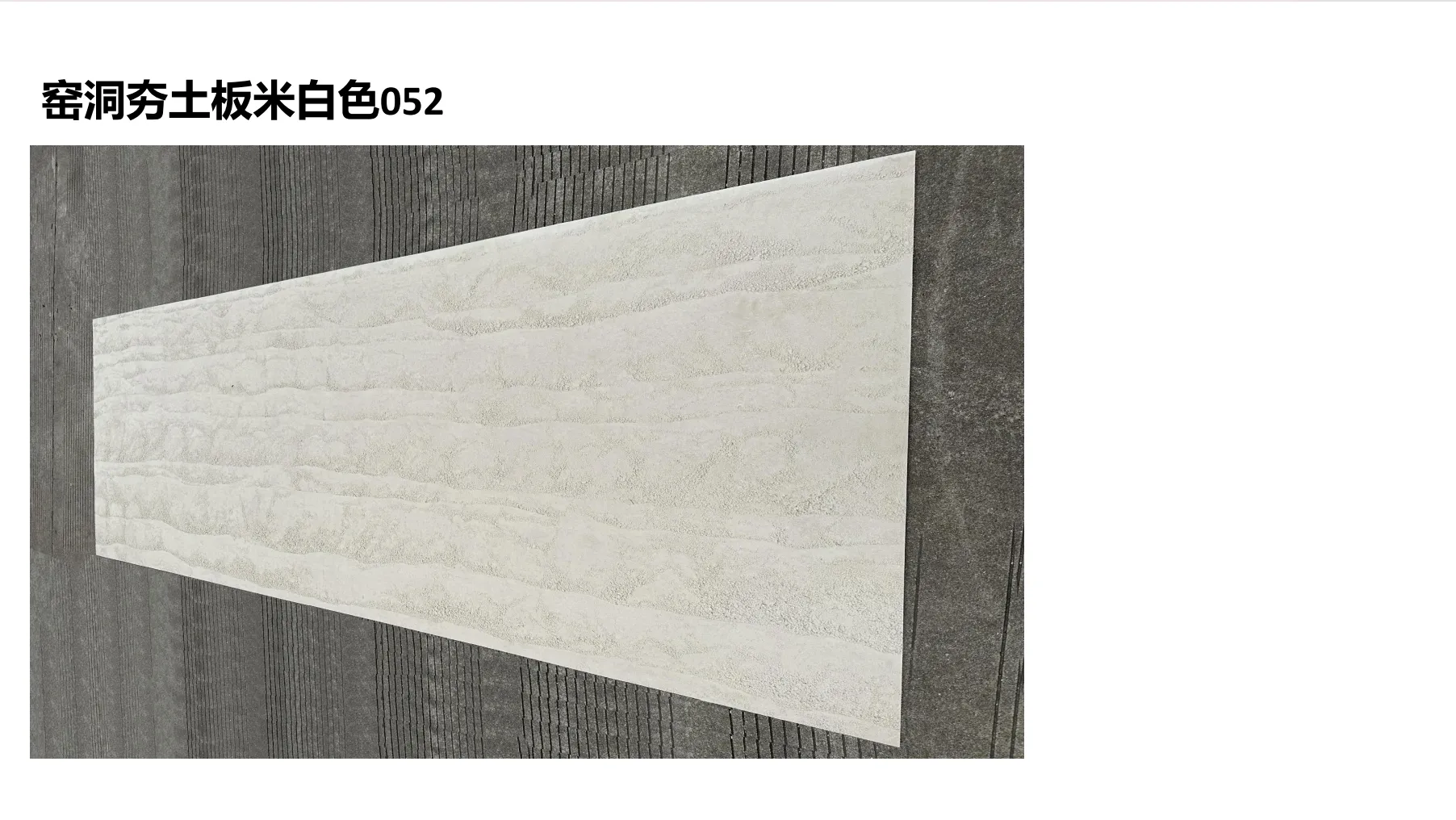
Walk into any contemporary design studio today, and you'll notice a quiet rebellion unfolding—one that trades cold steel and glossy surfaces for something warmer, more rooted. Architects and designers are reaching back to nature, not just as a source of inspiration, but as a raw material. Among the stars of this movement? Gradient color rammed earth boards. These aren't your grandmother's adobe walls; they're a fusion of ancient craftsmanship and cutting-edge technology, redefining what "natural" can look like in the built environment.
For decades, the world leaned into minimalism and industrial aesthetics, favoring materials that prioritized function over feeling. But as we crave spaces that nurture connection—both to each other and to the planet—there's a growing hunger for textures and tones that tell a story. Gradient color rammed earth boards answer that call. Swirling from soft terracotta to deep umber, or shifting from pale sand to mossy green, they mimic the way light plays over desert dunes at sunset or the layered hues of a canyon wall. They don't just cover a wall; they create an experience.
At the heart of this innovation is MCM—Modified Composite Material—a technology that's quietly revolutionizing how we think about natural building products. Unlike traditional rammed earth, which is heavy, brittle, and limited in color range, MCM-infused rammed earth boards are lightweight, flexible, and customizable to a degree that once seemed impossible. They're part of a broader family of MCM products, including MCM flexible stone and the MCM big slab board series, which are reimagining construction materials as tools for emotional design.
To understand the leap gradient color rammed earth boards represent, let's start with the basics. Traditional rammed earth is made by compressing layers of soil, sand, and gravel into forms, creating thick, sturdy walls. But its color is dictated by the local soil—rich reds in Arizona, muted browns in France—and adding pigments often led to uneven fading or blotchy patterns. MCM changed the game by introducing a blend of natural aggregates and polymer binders that not only durability but also allow for precise color control.
The magic of the gradient lies in a proprietary layering process. Instead of mixing pigments uniformly, manufacturers now use digital design tools to map out color transitions—think of it as painting with soil. Thin layers of pigment-infused aggregates are laid down, each with a slightly adjusted hue, then compressed under controlled pressure. The result? A seamless flow from one shade to another, with depth that flat paints or tiles can never replicate. It's like capturing a sunset in a wall panel.
Take, for example, a recent project in Kyoto that paired gradient rammed earth (shifting from "rammed earth board (matcha green)" to "rammed earth board (khaki)") with Travertine (starry green) accents. The Travertine's subtle sparkle—tiny flecks of mineral that catch the light—complemented the earthy gradient, creating a space that felt both grounded and ethereal. "It's about balance," says the project's lead architect. "The gradient rammed earth brings warmth, while the Travertine adds a touch of whimsy. Together, they make the room feel alive."
But color isn't the only upgrade. MCM flexible stone technology ensures these boards can bend slightly without cracking, making them ideal for curved walls or complex installations—something traditional rammed earth could never handle. Imagine a boutique hotel lobby with a sweeping, gradient-colored curved wall that greets guests like a gentle embrace. That's the flexibility MCM enables.
Beauty without substance is just a trend, but gradient color rammed earth boards are built to last. Thanks to MCM's polymer binders, they're resistant to moisture, fire, and UV fading—common pitfalls of natural materials. A study by the International Green Building Institute found that MCM rammed earth boards retained 95% of their color intensity after 10 years of outdoor exposure, compared to 60% for traditional rammed earth and 75% for fair-faced concrete. That's a big deal for architects designing for longevity.
They're also surprisingly low-maintenance. Unlike marble or granite, which require regular sealing, gradient rammed earth boards can be cleaned with a damp cloth. Their textured surface hides minor scratches, and if a panel does get damaged, it can be replaced individually—no need to redo an entire wall. For commercial spaces like restaurants or hotels, where wear and tear are inevitable, this translates to lower long-term costs.
Sustainability is another key selling point. Most MCM rammed earth boards use recycled aggregates (like crushed stone from demolition sites) and low-VOC binders, aligning with the global push for eco-friendly construction. They're also lightweight, reducing transportation emissions, and their thermal mass helps regulate indoor temperatures, cutting down on heating and cooling costs. It's a material that's good for the planet and the bottom line.
To truly appreciate gradient color rammed earth boards, it helps to see how they compare to traditional materials. Below is a breakdown of key factors, from aesthetics to practicality:
| Feature | Gradient Color Rammed Earth (MCM) | Traditional Rammed Earth | Fair-Faced Concrete |
|---|---|---|---|
| Color Range | Unlimited gradients; custom hues available | Limited to natural soil colors | Neutral tones (gray, beige); limited customization |
| Flexibility | Bendable (up to 5° curvature) without cracking | Brittle; no flexibility | Rigid; prone to cracking under stress |
| Installation | Lightweight (15-20kg/m²); easy to handle | Heavy (80-100kg/m²); requires specialized labor | Heavy (2400kg/m³); requires formwork |
| Sustainability | Recycled aggregates; low-VOC binders | Natural materials but high transportation emissions | High carbon footprint (cement production) |
| Emotional Impact | Warm, organic, story-driven | Rustic, but limited in visual interest | Industrial, minimalist, often cold |
From cozy homes to grand public spaces, gradient color rammed earth boards are finding their place in diverse projects. Let's explore a few standout uses:
Residential Interiors: Imagine waking up to a bedroom with a gradient rammed earth accent wall, shifting from soft "rammed earth board (light yellow)" at dawn to warm "rammed earth board (gradient b)" at dusk. It's a gentle reminder of the natural world, even in urban apartments. Homeowners are using these boards for fireplaces, headboards, or even kitchen backsplashes, adding texture without overwhelming the space.
Commercial Spaces: Boutique hotels and restaurants are leaning into gradient rammed earth to create memorable atmospheres. A beachfront resort in Bali, for instance, used "rammed earth board (gradient c)" (blending sand, coral, and sky blue) in its lobby, evoking the colors of the ocean meeting the shore. Paired with bamboo mat board ceilings, the space feels like an extension of the landscape—no "welcome desk" sign needed.
Cultural Institutions: Museums and heritage centers are using gradient rammed earth to tell stories. A new archaeological museum in Greece features a wall made with "historical pathfinders stone" gradient panels, where the color transitions mirror the layers of soil in an excavation site. "It's a way to make history tangible," says the curator. "Visitors don't just read about the past—they see it in the walls."
As technology advances, the possibilities for gradient color rammed earth boards are expanding. One exciting development is AI-driven color customization. Soon, designers will be able to upload a photo—a sunset, a forest, a client's childhood home—and AI will generate a gradient recipe to match. Want a wall that looks like the Australian outback at dawn? Done. A panel that mimics the colors of your grandmother's quilt? Possible.
Integration with smart home systems is another frontier. Imagine a gradient rammed earth wall that adjusts its color subtly based on the time of day or the room's temperature—warmer hues in winter, cooler tones in summer. While still in the prototype stage, companies are experimenting with thermochromic pigments that respond to heat, adding a dynamic layer to the material's already rich character.
And let's not forget the MCM big slab board series. These larger-than-life panels (some up to 3 meters tall) allow for seamless installations, reducing the number of seams and creating a more immersive experience. Pair a big slab gradient wall with "foamed aluminium alloy board (vintage gold)" accents, and you've got a space that balances industrial edge with earthy warmth—a trend we're seeing in luxury retail and tech offices alike.
At the end of the day, gradient color rammed earth boards are more than just building materials—they're storytellers. They carry the history of rammed earth, a technique used for millennia, into the future. They connect us to the planet by using its own elements to create beauty. And they remind us that architecture isn't just about function; it's about how spaces make us feel.
Whether you're walking into a café with a "rammed earth board (gradient a)" counter or a community center with a sweeping gradient wall, these panels invite you to slow down, to notice the details, to feel something. In a world that's always rushing, that's a powerful gift.
So, what's the future of gradient color rammed earth boards? It's bright—and colorful. As MCM technology continues to evolve, and as designers push the boundaries of what's possible, we'll see these materials transform not just buildings, but the way we experience the world around us. After all, the best architecture doesn't just shelter us—it inspires us. And in that mission, gradient rammed earth is leading the way.
Recommend Products












