
Stand in the shadow of the Colosseum, and your fingers might trace the rough-hewn edges of travertine, a stone that has borne witness to millennia. Walk through a sleek, glass-walled office in Tokyo, and you might brush a wall that feels like stone but bends ever so slightly—a modern twist on an ancient material. Stone, in all its forms, has always been more than just a building block; it's a storyteller, carrying the weight of history while shaping the future of architecture. Among these narrative stones, rock cut dolomitic stone holds a unique place. Blending the durability of dolomite with the rugged beauty of traditional rock-cut techniques, it's a material that's been used for centuries—think of the grand palaces of India or the ancient temples of Greece. But today, it's not just about preserving the past. Innovations in extraction, materials science, and sustainable design are catapulting rock cut dolomitic stone into a new era, where it coexists with cutting-edge technologies like 3D printing and flexible composites. Let's dive into how this timeless stone is being reimagined, and why it might just be the unsung hero of tomorrow's buildings.
Traditional quarrying for dolomitic stone was a Herculean task. Picture 19th-century workers with chisels and mallets, laboring for days to extract a single slab, often leaving behind mountains of waste rock. The process was not only labor-intensive but imprecise—slabs would crack, veins would be misaligned, and the environmental toll was heavy, with quarries scarring landscapes and consuming vast amounts of energy. Fast forward to 2025, and the scene is unrecognizable. Today's quarries are more like high-tech labs, where lasers, AI, and precision machinery are transforming how we harvest stone.
One of the most game-changing innovations in dolomitic stone extraction is the use of laser-guided cutting systems . Unlike traditional methods, which relied on brute force, lasers can map the internal structure of a dolomite block with microscopic accuracy, identifying weak points, mineral veins, and optimal cutting paths. This means quarries can extract slabs with minimal breakage—reducing waste by up to 40% compared to a decade ago, according to the International Stone Industry Association. Take the case of a quarry in northern Italy, where a laser system recently carved a 12-foot-tall dolomitic slab with such precision that it retained 95% of its original surface area, avoiding the need for additional polishing. "We used to think of waste as inevitable," says Marco Rossi, a quarry manager with 30 years of experience. "Now, we think of it as a design flaw. Lasers let us work with the stone, not against it."
Complementing lasers are CNC (Computer Numerical Control) machines equipped with diamond-tipped blades that can make cuts as thin as 2mm. This level of precision is a boon for architects craving custom shapes—curved walls, angular facades, or even stone panels with intricate patterns. In Dubai, a luxury hotel under construction is using CNC-cut rock cut dolomitic stone to create a facade that mimics the ripples of sand dunes; each slab is unique, yet fits together like a puzzle, thanks to digital modeling that ensures zero gaps.
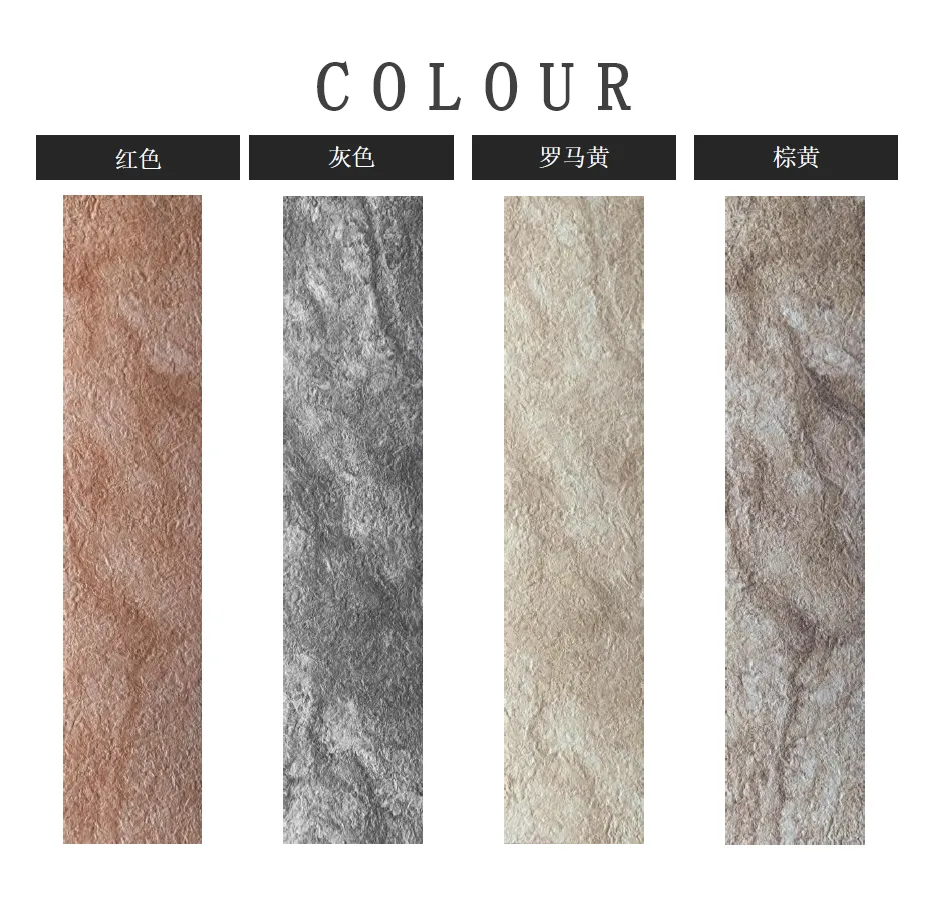
But perhaps the biggest disruption in stone extraction isn't about how we cut stone—it's about redefining what "stone" even is. Enter MCM Flexible Stone , a composite material that's taking the architectural world by storm. MCM (Modified Composite Material) blends crushed dolomitic stone particles with a polymer resin, creating a sheet that's just 3-5mm thick, flexible enough to wrap around columns or curve over ceilings, and up to 80% lighter than traditional stone slabs. "It's like stone with a yoga mat's flexibility," jokes Elena Kim, an architect at a leading global firm. "We used to avoid stone for high-rise facades because the weight added structural stress. Now, with MCM Flexible Stone, we can clad a 50-story building in dolomitic stone aesthetics without compromising safety."
The beauty of MCM Flexible Stone lies in its sustainability, too. Because it uses recycled stone dust from traditional quarries—material that would once have been dumped in landfills—it reduces the need for new extraction. A single MCM panel contains up to 70% recycled dolomitic stone, making it a poster child for green building materials . And since it's lightweight, transportation emissions plummet; a truck that could carry 10 traditional stone slabs can now haul 50 MCM panels. For developers, this translates to lower costs and faster installation—no more cranes struggling with heavy loads or workers spending days aligning slabs.
| Traditional Extraction | Modern Extraction (2025) |
|---|---|
| Chisels, mallets, and explosives | Laser mapping + CNC diamond cutting |
| Waste: 30-50% of extracted stone | Waste: <10% (laser precision + recycling) |
| Slabs limited to 6-8 feet (due to weight) | Slabs up to 12 feet (MCM) or 16 feet (laser-cut dolomite) |
| High carbon footprint (heavy machinery, transport) | 40% lower emissions (lightweight MCM, efficient cutting) |
| Rigid, limited design flexibility | Flexible (MCM), custom shapes (CNC), 3D textures |
Rock cut dolomitic stone has always been a favorite for exteriors—its durability makes it ideal for withstanding rain, wind, and time. But today, architects are pushing its limits, using it in ways that blur the line between function and art. From interior accent walls to furniture, from public plazas to private homes, dolomitic stone is no longer confined to "serious" architecture. It's becoming a medium for creativity, thanks to innovations like architectural big slab solutions and 3D-printed hybrids.
In the past, stone slabs were limited by size—anything over 8 feet was too heavy to transport or install. But with modern extraction techniques and materials like MCM, architectural big slab solutions are now possible, allowing for seamless, monolithic surfaces that make buildings feel larger than life. Take the new headquarters of a tech giant in Seattle, where the lobby features a single 20-foot-tall, 15-foot-wide rock cut dolomitic stone slab. "We wanted the space to feel like walking into a canyon—grand, immersive, and grounded," says lead architect James Chen. "Traditional slabs would have required seams, breaking the illusion. But with laser-cutting and a reinforced transport system, we could install this one slab in just 12 hours, and it's become the building's signature."
Big slabs aren't just about drama, though. They're practical, too. Fewer seams mean fewer places for water to seep in, reducing maintenance costs. And in commercial spaces like malls or airports, large dolomitic stone slabs create a sense of continuity, guiding visitors' eyes and making navigation intuitive. It's no wonder that 65% of new commercial projects in Europe now specify big slab dolomitic stone, up from 30% in 2015, per a recent survey by the European Architecture Federation.
If MCM Flexible Stone is stone's "flexible" evolution, 3D art concrete board is its "creative" revolution. These boards combine dolomitic stone aggregates with concrete and are 3D-printed in intricate patterns—think swirling textures that mimic flowing water, geometric grids that play with light, or even custom designs inspired by local art. The result? Surfaces that are part stone, part sculpture. "We recently completed a community center in Barcelona where the exterior is clad in 3D art concrete boards with a dolomitic stone finish," says Maria Garcia, a designer specializing in public spaces. "The patterns are based on traditional Catalan tilework, but rendered in stone. It's a love letter to the past, written with future tech."
3D printing allows for unprecedented customization. Architects can upload a design to a printer, and within hours, a concrete board embedded with dolomitic stone particles is ready—no molds, no manual carving. This is a game-changer for small-scale projects, too. A boutique hotel in Bali recently used 3D art concrete boards to create headboards for guest rooms, each featuring a unique stone texture that reflects the island's beaches. "It's democratized stone design," Garcia adds. "You don't need a million-dollar budget to have a one-of-a-kind stone feature anymore."
Located in Seoul, South Korea, the Lunar Peak Cultural Center is a testament to how rock cut dolomitic stone is blending tradition and innovation. The building's facade combines two materials: laser-cut rock cut dolomitic stone slabs (for the lower levels, evoking Korea's historic stone pagodas) and MCM Flexible Stone in "Lunar Peak Silvery" (for the upper levels, mimicking moonlight on stone). The result is a structure that seems to shift from ancient to modern as you move up its height.
Inside, the lobby features a 3D art concrete board installation—a 30-foot mural of dolomitic stone aggregates arranged to look like a mountain range, with embedded LED lights that glow at night, turning the space into a celestial landscape. "We wanted to show that stone isn't static," says the center's architect, Min-Jun Park. "It can tell stories, change moods, and adapt to the needs of a 21st-century cultural space." Since opening in 2024, the center has become a landmark, drawing visitors not just for its exhibits, but for the stone itself.
In an era where "sustainability" is more than a buzzword—it's a mandate—rock cut dolomitic stone is proving that ancient materials can lead the charge. From reduced waste in extraction to energy-efficient applications, the stone is aligning with the global push for green building materials , and in some cases, even exceeding expectations.
One of dolomitic stone's greatest sustainability credentials is its longevity. A well-maintained dolomitic stone building can last for centuries, outliving materials like vinyl siding (20-30 years) or even brick (100-150 years). This "longevity dividend" means fewer replacements, less demolition waste, and lower embodied carbon over time. A study by the Green Building Council found that a dolomitic stone-clad building has a 35% lower lifecycle carbon footprint than a comparable glass-and-steel structure, simply because it doesn't need to be rebuilt every few decades.
Innovations like MCM Flexible Stone take this further. By using recycled stone dust, MCM reduces the need for new quarrying, which is energy-intensive. And since it's lightweight, it cuts down on transportation emissions—a critical factor, as stone transport accounts for 15-20% of its total carbon footprint, according to the Stone Sustainability Council. "We're not just making stone flexible; we're making it responsible," says Raj Patel, CEO of a leading MCM manufacturer. "Our latest production line runs on 100% solar energy, and we're working to make MCM panels 100% recyclable by 2027."
Dolomitic stone's natural properties are also being harnessed to fight climate change. Its high thermal mass means it absorbs heat during the day and releases it slowly at night, reducing the need for air conditioning in buildings. In hot climates like Dubai or Arizona, this can cut energy use by 20-30%, studies show. And when paired with 3D art concrete boards designed with texture patterns that reflect sunlight (a technique called "passive cooling"), dolomitic stone facades can lower a building's surface temperature by up to 15°F, reducing the urban heat island effect.
Even the quarrying process is getting greener. Many modern quarries now use electric machinery instead of diesel, and some are restoring old quarry sites into nature reserves. In Portugal, a dolomite quarry that closed in 2010 was transformed into a wetlands park, where the stone cliffs now serve as nesting sites for birds, and the quarry lake is a habitat for fish. "We used to see quarries as scars," says environmental scientist Dr. Ana Mendes. "Now, we see them as opportunities to heal landscapes—extract stone responsibly, then give the land back to nature."
So, what does the future hold for this ancient-yet-innovative stone? If current trends are any indication, we're on the cusp of a dolomitic stone renaissance—one where technology, art, and sustainability converge to create buildings that are not just structures, but living, breathing parts of our environment.
Imagine a dolomitic stone facade that can "feel" when it's cracking, or adjust its texture to reflect more sunlight on hot days. That's the promise of "smart stone," a concept being explored by researchers at MIT and the University of Tokyo. By embedding tiny sensors into MCM Flexible Stone panels, architects could monitor structural health in real time, predicting maintenance needs before issues arise. Even more futuristic: nanotechnology that allows stone surfaces to change color or texture based on temperature, turning facades into dynamic, energy-efficient skins.
As AI and digital design tools become more accessible, customization will go mainstream. Architects will no longer be limited to standard stone patterns; they'll be able to upload a photo of a mountain range, a seashell, or even a painting, and have it translated into a custom rock cut dolomitic stone texture—all in a matter of days. 3D art concrete boards will play a key role here, with printers that can replicate even the most intricate designs, making every building's stone facade a unique work of art.
Perhaps the most exciting trend is the blending of traditional and modern. Architects are increasingly using rock cut dolomitic stone to connect new buildings to their cultural heritage. In Mexico City, a new museum uses laser-cut dolomitic stone panels etched with Aztec symbols, while in India, a luxury resort incorporates MCM Flexible Stone designed to look like the weathered sandstone of Rajasthan's forts. "Stone is a bridge between past and future," says cultural architect Priya Sharma. "It allows us to honor where we've been while building where we're going."
As we stand at this crossroads—where chisels meet lasers, and tradition meets technology—rock cut dolomitic stone reminds us that some materials are timeless not because they stay the same, but because they evolve. From the Colosseum to the Lunar Peak Cultural Center, from chisels to 3D printers, it's a material that tells our story: one of innovation, resilience, and a deep respect for the earth that shapes us. And in that story, the future looks more solid—and more beautiful—than ever.
Recommend Products












