
Beneath our feet, the Earth holds stories written in stone—tales of ancient seas, shifting continents, and the slow, relentless power of time. Among these geological narratives, few stones carry the rugged elegance and depth of rock cut dolomitic stone. From the weathered cliffs of mountain ranges to the polished surfaces of modern architecture, this material bridges the gap between nature's raw creativity and human ingenuity. But how does such a stone come to be? To understand its origins, we must journey back millions of years, to a world where shallow seas teemed with life and minerals danced in the chemical soup of primordial waters.
Before diving into the "rock cut" aspect, let's start with the basics: dolomite itself. Dolomite is a carbonate mineral composed of calcium magnesium carbonate, with the chemical formula CaMg(CO₃)₂. It's often confused with limestone, a more familiar carbonate rock primarily made of calcium carbonate (CaCO₃). The key difference? Dolomite's extra magnesium atom, which gives it unique properties—harder than limestone, more resistant to erosion, and with a distinct crystalline structure that catches light in subtle, shimmering ways.
This magnesium twist isn't accidental. Dolomite forms when limestone, originally deposited in marine environments, interacts with magnesium-rich fluids over time. Think of it as a geological upgrade: limestone is the "base model," and dolomite is the reinforced, weather-resistant version. But how does this transformation happen? The process, called dolomitization, is like a slow-motion chemical swap. Groundwater percolating through limestone beds carries dissolved magnesium, which gradually replaces some of the calcium ions in the rock's structure. It's a patient process, taking thousands to millions of years—nature's way of fine-tuning its creations.
Most dolomitic rocks, including rock cut dolomitic stone, trace their roots to ancient marine environments. Picture a shallow, sunlit sea from 200 million years ago: warm waters lap at a coastline dotted with coral reefs, shellfish, and algae. As these organisms live and die, their shells and skeletons—rich in calcium carbonate—sink to the seafloor, piling up in layers. Over time, these sediments compact under their own weight, forming limestone. But for dolomite to form, this limestone needs a magnesium boost.
In some cases, the magnesium comes from the seawater itself. Shallow seas in arid regions, where evaporation is high, can become supersaturated with minerals. As water evaporates, magnesium ions become more concentrated, making it easier for them to bond with calcium carbonate. In other scenarios, magnesium-rich fluids seep up from deeper within the Earth, driven by tectonic activity or volcanic heat. These fluids infiltrate the limestone, kickstarting dolomitization. Either way, the result is a rock that's no longer pure limestone but a hybrid—dolomitic limestone, or, if the transformation is complete, dolostone.
Once the initial sediments are laid down, the real magic happens underground, in a process geologists call diagenesis—the physical and chemical changes that turn loose sediments into solid rock. For dolomitic stone, this stage is critical. As layers of sediment pile higher, the weight above compresses the lower layers, squeezing out water and air. Minerals dissolved in the remaining water act as a natural cement, binding sediment grains together into a cohesive rock.
But dolomitization continues here, too. Buried deeper, the rock is exposed to higher temperatures and pressures, which speed up chemical reactions. Magnesium-rich fluids, now heated and more reactive, flow through tiny pores in the rock, replacing calcium with magnesium atom by atom. The rock's texture changes: limestone's fine, grainy structure gives way to dolomite's coarser, interlocking crystals. These crystals are what give dolomitic stone its characteristic hardness and durability—qualities that make it ideal for everything from building facades to flooring.
Now, let's unpack the "rock cut" part of the name. Unlike stones quarried from uniform beds and cut into blocks, rock cut dolomitic stone bears the marks of nature's own sculpting. It forms when dolomitic rock is exposed at the Earth's surface and shaped by erosion—wind, water, ice, and even plant roots. Imagine a dolomitic cliff face battered by centuries of rain: water seeps into cracks, freezes in winter, expands, and splits the rock. Wind carries sand and grit, sandblasting the surface into smooth, undulating shapes. Over time, these forces carve out jagged edges, concave hollows, and layered striations—the "rock cut" texture that makes each piece unique.
Tectonic activity plays a role, too. When continents collide, dolomitic rock layers can be folded, faulted, or uplifted, pushing them from the depths of ancient seas to the peaks of mountains. As these uplifted rocks are exposed, they become targets for erosion, creating the dramatic, uneven surfaces we associate with rock cut stone. It's a partnership between chaos and order: the slow, steady work of diagenesis builds the rock, while the violent energy of erosion shapes it into something awe-inspiring.
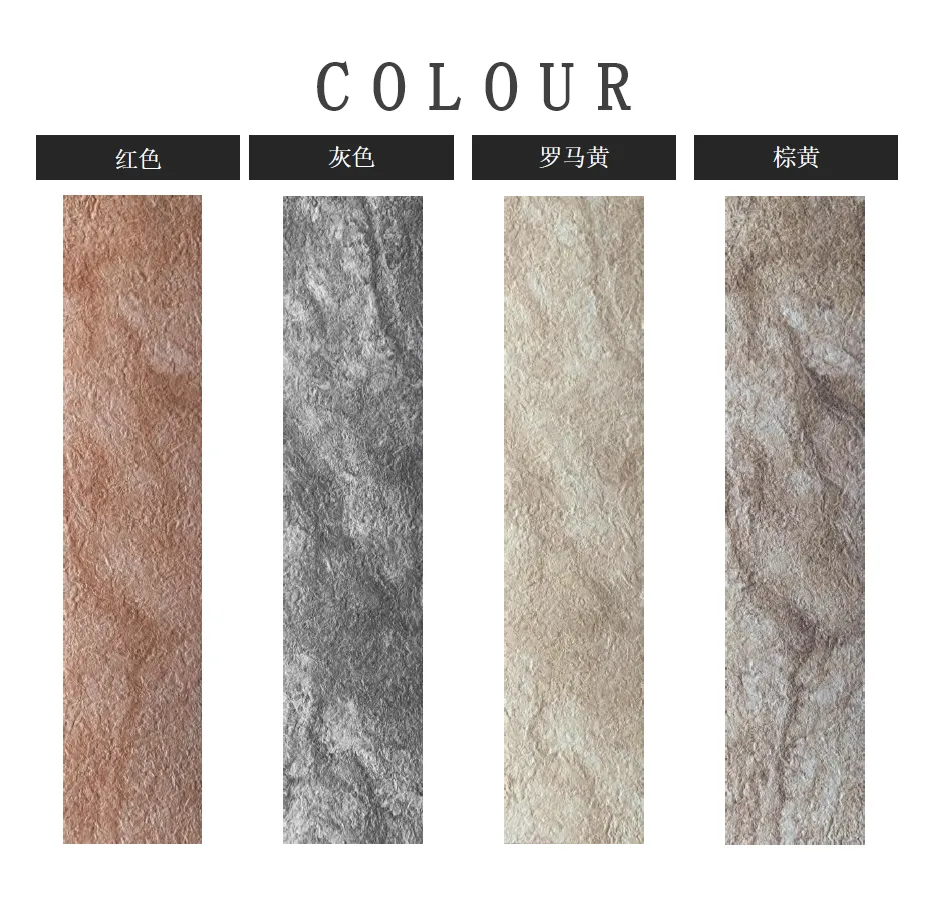
One of the most striking features of rock cut dolomitic stone is its color variation, which reflects its mineral composition and geological history. Two common varieties you might encounter are dolomitic travertine (dark grey) and dolomitic travertine (claybank) —close relatives of rock cut dolomitic stone, sharing the same dolomitic backbone but with subtle differences in hue and texture.
Dark grey dolomitic stone often gets its color from organic matter trapped during formation. Tiny bits of plant or animal material, buried with the sediments, decay and leave behind carbon, which tints the rock a deep, moody grey. Claybank, on the other hand, owes its warm, earthy tone to iron oxides—think rust, but in a softer, more muted shade of brown or tan. These colors aren't just aesthetic; they're clues to the stone's past. A dark grey sample might have formed in a oxygen-poor environment, where organic material didn't fully decompose, while a claybank stone could have been deposited near a river delta, where iron-rich sediments were washed into the sea.
Texture-wise, rock cut dolomitic stone is a study in contrasts. Its surface is often rough, with tool-like marks from erosion—grooves carved by flowing water, pits left by dissolving minerals, or ridges where harder crystal layers resisted wear. Run your hand over it, and you'll feel the irregularity, a reminder that this stone wasn't factory-made but shaped by the elements. In contrast, when polished, its crystalline structure shines through, revealing a smooth, almost metallic luster that highlights the magnesium-rich crystals.
To appreciate rock cut dolomitic stone, it helps to see how it fits alongside other dolomitic rocks. Let's compare it to two close cousins: dolomitic travertine (dark grey) and dolomitic travertine (claybank). While all three share the dolomitic mineral base, their formation environments and textures set them apart.
| Stone Type | Formation Environment | Color | Texture | Common Uses |
|---|---|---|---|---|
| Rock Cut Dolomitic Stone | Uplifted marine sediments, shaped by erosion | Varied (grey, tan, beige); depends on mineral impurities | Rough, irregular; marked by natural erosion (grooves, pits) | Cladding, accent walls, outdoor landscaping |
| Dolomitic Travertine (Dark Grey) | Hot springs or caves (chemical precipitation) | Deep grey, often with white crystalline veins | Porous, with visible voids; smoother than rock cut stone | Flooring, countertops, indoor feature walls |
| Dolomitic Travertine (Claybank) | Shallow, warm seas with high evaporation | Warm tan or clay-colored, with iron oxide hints | Fine-grained, with subtle layering; less porous than dark grey | Heritage buildings, decorative tiling, fireplace surrounds |
Travertine, for example, forms in very different settings than rock cut dolomitic stone. Travertine is a chemical sedimentary rock, created when mineral-rich water (like that from hot springs) cools and releases calcium carbonate, which builds up in layers. It's porous, with tiny holes left by gas bubbles, and often has a more uniform texture than rock cut dolomitic stone. Dolomitic travertine, as the name suggests, has undergone dolomitization, making it harder and less porous than regular travertine—perfect for high-traffic areas.
Then there's travertine (starry blue) , a more distant relative. Unlike dolomitic stones, starry blue travertine gets its color from copper or manganese impurities, creating a striking blue base with flecks that resemble stars. It forms in similar hot spring environments but lacks the magnesium-rich dolomite component, making it softer and more prone to scratching. Still, its unique appearance has made it a favorite for statement pieces in luxury design.
Rock cut dolomitic stone isn't just a pretty face—it's a workhorse. Its dolomitic composition makes it highly resistant to weathering, acid rain, and salt, which is why it's often used in outdoor applications. Think of historic castles in Europe, where dolomitic stone walls have stood for centuries, or modern skyscrapers where it's used as cladding to mimic natural cliff faces. Its rough texture also makes it slip-resistant, ideal for pool decks or outdoor walkways.
Indoors, it adds warmth and character to spaces. A rock cut dolomitic stone accent wall in a living room brings the outdoors in, creating a cozy, earthy vibe. In commercial settings, like restaurants or hotels, it adds a touch of rustic luxury, balancing modern design with natural elements. And because each piece is shaped by nature, no two slabs are identical—every wall or floor made with this stone is one-of-a-kind, a fingerprint of the Earth's history.
Rock cut dolomitic stone is more than a building material; it's a chapter in the Earth's autobiography. From its beginnings in ancient seas, where tiny organisms contributed their shells to form limestone, to its transformation into dolomite through millions of years of chemical reactions, to its sculpting by wind and water into the rugged, textured stone we know today, every layer tells a story. It's a reminder that the most beautiful things in nature aren't just created—they're crafted , by time, by chemistry, and by the unyielding forces that shape our planet.
So the next time you see a wall clad in rock cut dolomitic stone, take a moment to look closer. Those grooves? They're the marks of ancient rivers. That fleck of gold? A trace of iron from a long-vanished delta. That rough texture? A testament to the power of erosion, slowly chiseling away at stone over millennia. In that moment, you're not just looking at a wall—you're looking at a window into the past, a piece of Earth's endless, ever-unfolding story.
Recommend Products












