
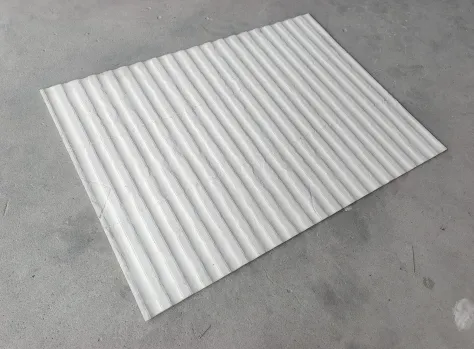
In the grand narrative of architecture, materials are the words, sentences, and paragraphs that tell the story of an era. From the timeless marble of ancient Rome to the steel and glass of the modern metropolis, our buildings are a testament to our ingenuity and our aspirations. Today, we stand at the cusp of a new chapter, one defined by the urgent need for sustainability, boundless creativity, and intelligent construction. It is in this context that a new protagonist emerges: Century Stone, a revolutionary material concept pioneered by COLORIA GROUP, designed to redefine the very skin of our built environment.
This isn't just another building material. It's a response to a global call for change. As architects and designers push the boundaries of what's possible, they require materials that can keep pace—materials that are not just beautiful, but also responsible, adaptable, and resilient. Century Stone is the embodiment of this vision. This exploration will take us on a journey across continents, from the historic and design-forward cities of Europe to the hyper-modern, ambitious landscapes of the Middle East, to witness how this innovative material is shaping the architectural landmarks of tomorrow.
So, what exactly is this "Century Stone" that's causing such a stir in architectural circles? At its heart, Century Stone is the brand name for an advanced family of materials developed by COLORIA GROUP based on MCM technology. MCM stands for Modified Cementitious Material, but that technical description barely scratches the surface of what it represents. Imagine taking natural, inorganic elements—the very essence of earth, sand, and stone—and through a sophisticated, low-energy process, transforming them into a material that possesses the best qualities of its traditional counterparts, while shedding all their limitations.
For centuries, we've relied on quarrying natural stone. It's beautiful, certainly, but it comes at a cost. It's incredibly heavy, putting immense strain on building structures and foundations. It's costly and energy-intensive to extract and transport. And its application is limited by its rigidity; you can't easily make a massive slab of marble wrap around a curved column. Century Stone addresses every one of these challenges head-on. It's a material born from a philosophy of problem-solving, championed by COLORIA GROUP in its role as a premier **one-stop solution provider** for the construction industry. The company doesn't just sell a product; it delivers a comprehensive system that includes design consultation, customization, and technical support, ensuring that the material's full potential is realized on every project.
Century Stone isn't a single product, but a versatile portfolio designed to meet a vast range of architectural needs.
Beyond its physical properties, the environmental narrative of Century Stone is perhaps its most compelling feature. The manufacturing process uses significantly less energy than firing traditional ceramics and avoids the destructive environmental impact of quarrying. It often incorporates recycled materials, contributing to a circular economy. In an age of climate consciousness, choosing Century Stone is not just an aesthetic or practical decision; it's a statement of environmental responsibility.
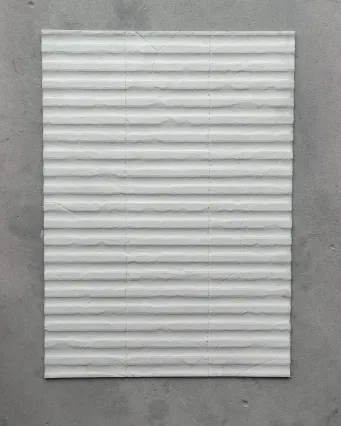
Europe's architectural landscape is a rich tapestry woven from threads of ancient history and cutting-edge contemporary design. In cities like Paris, Milan, and Barcelona, the challenge is often how to build for the future without erasing the past. It's a delicate balancing act that requires materials that are respectful, subtle, and technologically advanced. This is where Century Stone has found a natural home.
Imagine a 19th-century building in a historic Parisian quarter undergoing renovation. The original stone facade is beautiful but deteriorating. The structure itself, built with the materials of its time, cannot support the weight of new, heavy stone cladding. The solution? **MCM Flexible Stone**. Here, restorers can use this lightweight material to either replace damaged sections with a perfectly matched texture and color, or to clad an interior courtyard, adding a modern touch without compromising the building's structural integrity. Its flexibility allows it to conform perfectly to the subtle undulations of old walls, creating an authentic finish that would be impossible with rigid panels. It's a quiet revolution, preserving heritage through innovation.
Now, travel north to the minimalist havens of Scandinavia or Germany. Here, the architectural language speaks of clean lines, natural light, and an honest expression of materials. For a new residential development in a city like Copenhagen, an architect might specify the **MCM Big Slab Board Series** for the exterior. These expansive panels, perhaps in a cool concrete or a warm travertine finish, create a powerful, uninterrupted visual plane. The seamless look reinforces the minimalist aesthetic, while the material's thermal properties contribute to the building's overall energy efficiency—a crucial factor in a region that champions sustainable living. The panels are quick to install, reducing construction time and disruption in a dense urban environment, a practical benefit that is highly valued.
In a vibrant, competitive city like London, a new boutique hotel needs to make a statement. It needs a unique identity that will resonate with discerning travelers. This is a perfect scenario for COLORIA GROUP's MCM 3D Printing Series. The hotel's designers could collaborate with the company to create a custom facade pattern inspired by a local motif or the brand's logo. Inside, the feature wall behind the reception desk could be a stunning 3D-printed relief that plays with light and shadow, creating an unforgettable first impression. This level of personalization allows architecture to become a powerful branding tool, and Century Stone provides the means to achieve it with a material that is both durable and fire-resistant, meeting Europe's stringent safety codes. The role of COLORIA GROUP extends beyond mere supply, acting as a creative partner in bringing such unique visions to life.
Across these diverse European contexts, Century Stone proves its worth not by shouting, but by eloquently solving problems. It meets the demand for aesthetic beauty, sustainable performance, and respect for historical context, making it a favored choice for architects who are shaping the continent's future.
Shift your gaze to the Middle East, and the architectural narrative changes dramatically. Here, in nations like Saudi Arabia and the UAE, the scale is monumental, the ambition is boundless, and the climate is one of the most challenging on Earth. Architecture is a bold declaration of progress and vision. The skyscrapers of Riyadh and the giga-projects rising from the sands demand materials that are not just advanced, but almost futuristic in their capabilities.
COLORIA GROUP, with its established agency and deep understanding of the Saudi Arabian market, is perfectly positioned to serve this incredible wave of development. The challenges here are unique: intense, relentless UV radiation, extreme temperature fluctuations from day to night, abrasive sandstorms, and in coastal areas, high salinity. Materials that perform well in a temperate European climate can fail spectacularly here. Century Stone, however, was engineered for resilience. Its inorganic composition makes it incredibly stable and colorfast under the harshest sun. Its Class A fire rating is non-negotiable for the region's high-rise towers, and its composition is inherently resistant to the corrosive effects of sand and salt.
Consider the construction of a new super-tall tower. The primary concern after structural stability is the weight of the building's "skin," or cladding. Every extra kilogram of facade material is multiplied over hundreds of floors, requiring a stronger, more expensive, and more resource-intensive steel or concrete frame. The lightweight nature of the **MCM Big Slab Board Series** is a game-changer in this context. It drastically reduces the dead load on the structure, leading to significant cost savings and a more efficient, sustainable design. Furthermore, the large panels can be installed more quickly and with smaller crews, a critical advantage in fast-tracking these ambitious projects. The aesthetic is not compromised; these panels can replicate the look of luxurious travertine or granite, giving a 90-story tower the appearance of being carved from a single block of stone.
While the Middle East is known for its futuristic architecture, there is also a deep and abiding respect for tradition, artistry, and Islamic design principles. Here, the synergy between the **MCM Flexible Stone** and the 3D Printing Series comes to the fore. Imagine a new grand mosque or a cultural museum. The architects wish to incorporate intricate geometric patterns and flowing Arabic calligraphy—motifs that are central to the region's artistic heritage. Traditionally, this would require years of work by highly skilled artisans carving stone or laying complex mosaics. Today, these intricate designs can be precisely rendered using the MCM 3D Printing Series, creating flawless, durable panels that honor tradition through the most modern of means. The **MCM Flexible Stone** can then be used to wrap the curved surfaces of domes and minarets, seamlessly cladding complex geometries that would be a nightmare for any rigid material. This fusion of technology and tradition allows for the creation of buildings that are both deeply rooted in their culture and unapologetically forward-looking.
Along the burgeoning Red Sea coast, luxury resorts and residential communities are being developed at a breathtaking pace. These projects demand a high-end aesthetic combined with extreme durability. The MCM Project Board Series, available in a vast array of finishes, provides the perfect solution. It can be used across entire developments to create a cohesive and luxurious look, from villa exteriors to poolside pavilions. Its proven resistance to UV rays, heat, and saline air means the buildings will look pristine for decades to come with minimal maintenance, a crucial factor for a developer's long-term return on investment. COLORIA GROUP's presence on the ground ensures that these massive projects receive the logistical and technical support they need, positioning the company as a key partner in the realization of Saudi Vision 2030. As a **one-stop solution provider**, they streamline the entire process from material selection to final application guidance.
To truly appreciate the paradigm shift that Century Stone represents, it's helpful to see how it stacks up against the materials we've used for generations. The choice of a facade material impacts a project's budget, timeline, design, and long-term performance. Let's break it down in a clear, comparative way.
| Feature | Century Stone (MCM) | Natural Stone (Granite, Marble) | Ceramic / Porcelain Tile | Exterior Paint / Stucco |
|---|---|---|---|---|
| Weight & Structural Load | Extremely lightweight (approx. 4-8 kg/m²). Minimal load on structure. | Very heavy (50-80 kg/m²). Requires significant structural reinforcement. | Moderately heavy (15-25 kg/m²). Heavier than MCM. | Lightest option, but offers no structural benefits. |
| Design Flexibility | Exceptional. Flexible, can wrap curves. 3D printing for custom textures. Huge range of colors and finishes. | Limited by natural properties. Not flexible. Custom shaping is expensive and wasteful. | Rigid and brittle. Limited to flat surfaces. Grout lines are prominent. | Limited to color and basic textures. Flat application only. |
| Installation | Fast and easy. Lightweight panels are easy to handle. Can be cut on-site with simple tools. Less labor required. | Slow, complex, and expensive. Requires heavy lifting equipment and specialized labor. | Time-consuming due to the need for precise placement and grouting of many small units. | Relatively fast initial application, but requires multiple coats and specific weather conditions. |
| Durability & Maintenance | Highly durable, UV resistant, waterproof, fire resistant (Class A). Low maintenance, self-cleaning properties. | Durable but can be porous, leading to staining. Can crack with thermal stress. May require periodic sealing. | Durable surface, but grout is a weak point for staining and cracking. Tiles can chip or break. | Lowest durability. Prone to cracking, fading, and peeling. Requires frequent repainting (every 5-10 years). |
| Environmental Impact | Low. Made from natural materials with low-energy production. Often uses recycled content. No quarrying. | High. Destructive quarrying, high energy consumption for extraction and transport. Significant waste. | High energy consumption (firing in kilns). Involves mining for raw materials. | Varies. Many paints contain VOCs. Production is chemically intensive. |
| Total Cost of Ownership | Moderate initial cost but lower installation and zero long-term maintenance costs lead to excellent overall value. | Very high initial material and installation cost. Potential sealing costs. | Moderate material cost but can have high labor costs. Grout maintenance can add up. | Low initial cost but very high long-term cost due to the need for frequent repainting and repairs. |
As the table clearly illustrates, Century Stone by COLORIA GROUP doesn't just compete with traditional materials—it fundamentally redefines the value equation. It synthesizes the aesthetic beauty of stone, the versatility of a modern composite, and the performance characteristics of an advanced industrial product. It eliminates the compromises that architects and developers have long been forced to make, offering a solution that excels across nearly every metric.
The journey of Century Stone from the design studios of Europe to the soaring skylines of the Middle East is more than just a story of a successful product. It's a reflection of a larger shift in our global approach to construction. We are moving towards a future where buildings will be smarter, greener, and more expressive than ever before. This future requires a new generation of materials that can rise to the challenge.
COLORIA GROUP has not just invented a material; it has created a comprehensive platform for architectural innovation. By offering a diverse portfolio—from the grand **MCM Big Slab Board Series** to the transformative **MCM Flexible Stone**—and backing it up with the expertise of a true **one-stop solution provider**, the company empowers creators to build their most audacious visions. Century Stone is a testament to the power of human ingenuity to solve old problems in new ways, creating a built environment that is more beautiful, more resilient, and more in harmony with our planet. The next time you look at a stunning new building, look closely at its skin. It might just be telling you the story of the future.
Recommend Products












