
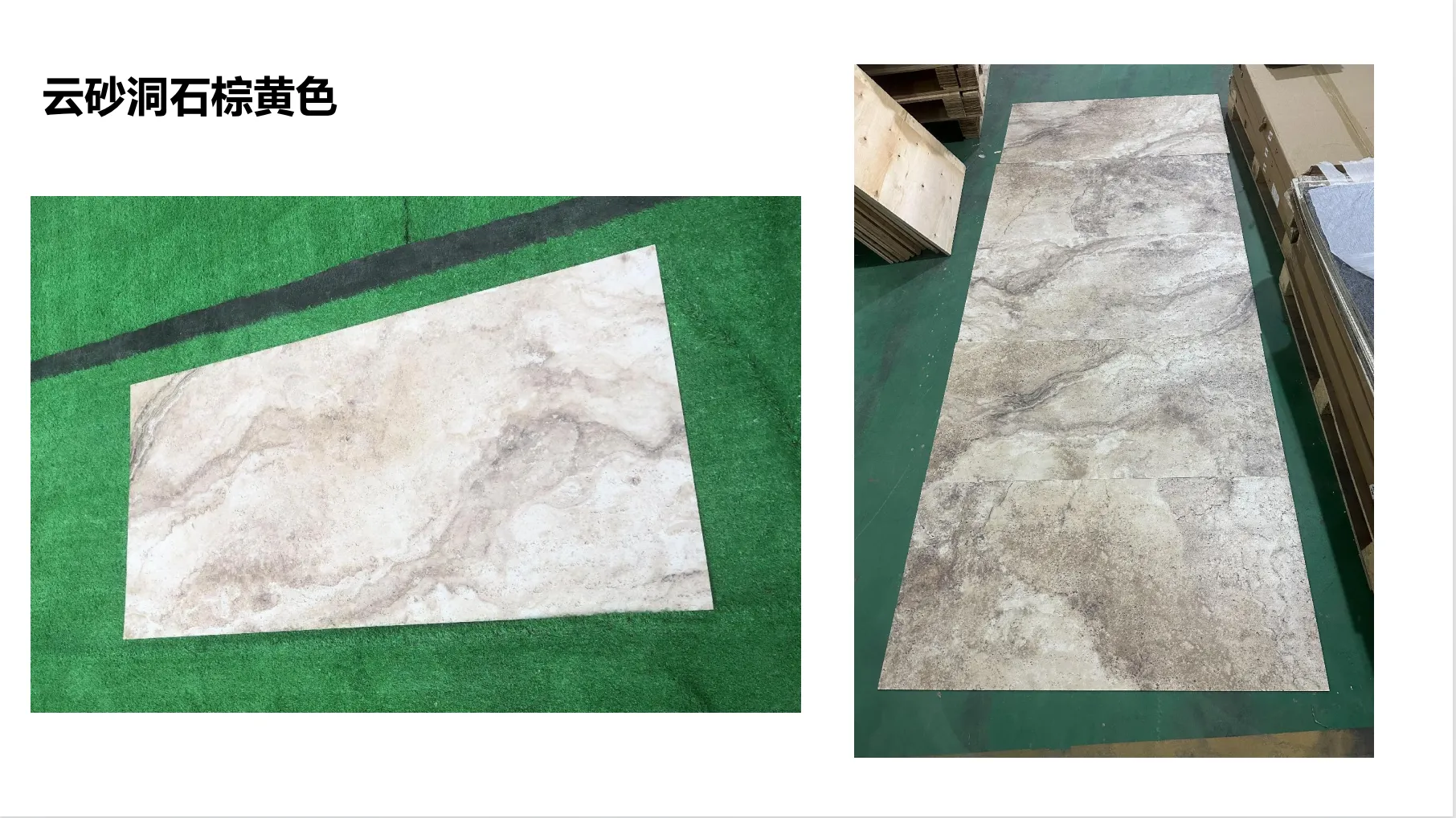
Architecture is more than steel and concrete—it's a language written in materials. Every slab, tile, and panel carries a story, shaping how we experience space, time, and culture. Among these silent storytellers, dark grey dolomitic travertine stands out as a material of remarkable duality: rooted in ancient craftsmanship yet infinitely adaptable to modern design. Its muted, storm-cloud hue, layered with subtle veining and tactile texture, bridges the gap between history and innovation, making it a favorite across continents. From the sunlit piazzas of Italy to the gleaming skylines of Dubai, this stone has quietly redefined what it means to build with purpose.
But what makes dark grey dolomitic travertine so compelling? Unlike its brighter counterparts, its understated elegance doesn't demand attention—it earns it. Run a hand over its surface, and you'll feel the marks of time: tiny pits formed by mineral-rich water, veins that twist like forgotten rivers, a coolness that warms as it absorbs light. It's a material that ages gracefully, growing more characterful with each passing year. In Europe, it whispers of empires and artistry; in the Middle East, it roars with contemporary confidence. Let's journey through its global narrative, exploring how one stone can shape so many worlds.
In Europe, travertine is more than a building material—it's a legacy. The ancient Romans quarried it from Tivoli, using it to construct icons like the Colosseum and the Pantheon, where its honeyed tones became synonymous with grandeur. Fast forward two millennia, and dolomitic travertine (dark grey) has emerged as a modern heir to that legacy, beloved for its ability to honor the past while embracing the future.
Take Milan, a city where Gothic spires punctuate a skyline of glass and steel. Here, the recently renovated Brera Art Gallery extension, designed by architect Mario Cucinella, wraps itself in dark grey dolomitic travertine. The choice was deliberate: Cucinella wanted a material that would dialogue with the gallery's 17th-century palazzo facade, its muted color softening the contrast between old and new. "Stone has memory," he noted in an interview. "This travertine doesn't compete with the past—it holds hands with it." Walk through the gallery's new wing, and you'll notice how the stone absorbs the northern Italian light, casting a warm, diffused glow over the artworks. It's not just a backdrop; it's a collaborator, enhancing the visitor's connection to both the art and the building's history.
In Rome, a city where every corner is a museum, dark grey dolomitic travertine is finding new life in residential spaces. The boutique apartment complex on Via Margutta, a street once frequented by artists like Federico Fellini, uses large-format mcm big slab board series of the stone for its exterior cladding. The slabs, some as wide as three meters, create a seamless, monolithic look that contrasts with the neighborhood's terracotta rooftops. "Clients today want calm, timeless spaces," says local architect Sofia Lorenzi. "This travertine delivers that. It's not flashy, but it feels permanent—like it's always belonged here." Inside, the stone continues into living rooms, paired with wood grain board and slate veil white accents, creating a palette that feels both earthy and refined.
Further north, in Berlin, the material is making waves in sustainable architecture. The Green Quarter, a mixed-use development focused on eco-friendly design, incorporates dark grey dolomitic travertine into its pedestrian plazas. The stone's natural porosity allows rainwater to drain through, reducing runoff and feeding the development's green spaces. "We chose it for its functionality as much as its beauty," explains project engineer Kai Schmidt. "It's durable, requires little maintenance, and ages naturally—no harsh chemicals needed." Paired with fair-faced concrete and native plantings, the travertine paths invite residents to slow down, their rough texture underfoot a sensory reminder of the natural world amidst the urban bustle.
What unites these European projects is a reverence for context. Dark grey dolomitic travertine isn't just plopped into a design; it's woven into the fabric of the place, whether that means complementing centuries-old architecture or enhancing a modern commitment to sustainability. It's a material that understands its role—not as a star, but as a supporting actor that makes the whole production shine.
If Europe uses dark grey dolomitic travertine to honor history, the Middle East uses it to rewrite the rules. In this region of contrasts—where ancient deserts meet futuristic cities—architects are embracing the stone's versatility, pushing its limits in ways that would have surprised even its Roman craftsmen.
Dubai, perhaps the poster child of Middle Eastern innovation, has become a playground for dark grey dolomitic travertine. The Azure Towers, a luxury residential complex overlooking the Palm Jumeirah, features the stone in both exterior cladding and interior finishes. The facade, a striking mix of mcm flexible stone panels and large-format dark grey dolomitic travertine slabs, creates a dynamic interplay of light and shadow as the sun moves across the desert sky. "In Dubai, we're not afraid of boldness," says lead architect Zayed Al-Mansoori. "But boldness without warmth feels cold. This travertine adds that warmth—it's a tactile, human element in a world of glass and steel." Inside, the lobby floors are laid with book-matched travertine, their veins creating a flowing, river-like pattern that guides visitors toward the elevators. Paired with foamed aluminium alloy board (vintage gold) accents and lunar peak golden lighting fixtures, the space feels both opulent and grounded.
Kuwait City, too, is embracing the stone's potential. The new National Museum extension, designed to showcase Kuwaiti heritage, uses dark grey dolomitic travertine in a way that evokes the country's desert landscapes. The exterior walls, carved with geometric patterns inspired by traditional Bedouin weaving, are clad in thread -detailed travertine panels, their rough texture mimicking the wind-eroded rocks of the Kuwaiti desert. "We wanted visitors to feel the desert before they even enter the museum," explains curator Amal Al-Sabah. "This stone has that power—it carries the weight of the land." Inside, the galleries feature stream limestone (dark grey) display cases alongside the travertine walls, creating a cohesive palette that lets the artifacts take center stage. It's a masterclass in restraint, proving that even in a region known for grandeur, subtlety can be the most powerful statement.
In Abu Dhabi, the Masdar City Sustainable Campus is redefining what "green architecture" looks like, and dark grey dolomitic travertine is playing a key role. The campus's central courtyard, a hub for student gatherings, features a large water feature lined with the stone, its porous surface helping to cool the air through evaporation. "In the desert, temperature control is everything," says sustainability consultant Layla Hassan. "This travertine doesn't just look good—it works hard. It reflects sunlight, reducing heat gain, and its natural texture prevents slipping when wet." Surrounding the courtyard, rough granite stone (medium grey) benches and bamboo mat board shade structures complement the travertine, creating a space that feels both modern and rooted in the natural world.
While dark grey dolomitic travertine shines in both Europe and the Middle East, the way it's used reflects each region's unique design philosophy. To better understand this, let's compare key projects from both continents:
| Region | Project | Design Focus | Complementary Materials | Emotional Impact |
|---|---|---|---|---|
| Europe (Italy) | Brera Art Gallery Extension | Historical continuity; softening modernity | Slate veil white, wood grain board | Nostalgic warmth; reverence for heritage |
| Middle East (UAE) | Azure Towers, Dubai | Futuristic luxury; contrast and opulence | Foamed aluminium alloy (vintage gold), lunar peak golden | Grand yet inviting; sense of arrival |
| Europe (Germany) | Berlin Green Quarter Plaza | Sustainability; urban ecology | Fair-faced concrete, native plantings | Calming, grounded; connection to nature |
| Middle East (Kuwait) | National Museum Extension | Cultural storytelling; desert inspiration | Stream limestone (dark grey), thread-detailed panels | Timeless, rooted; pride in heritage |
Table: Dark grey dolomitic travertine applications in Europe and the Middle East, highlighting design priorities and emotional resonance.
What makes dark grey dolomitic travertine truly global is its versatility—it plays well with others, adapting to any design vision. This adaptability is why it pairs seamlessly with materials as diverse as foamed aluminium alloy board (vintage silver) , fair-faced concrete , and even weaving (khaki) textiles, creating spaces that feel curated and cohesive.
Consider the trend of 3D printing series in architecture. In Barcelona, a startup called StoneLab has begun 3D-printing custom travertine elements—think decorative screens, light fixtures, and even furniture—using dark grey dolomitic travertine powder mixed with a biodegradable binder. The result? Intricate, organic shapes that would be impossible to carve by hand. "Travertine has always been a material of craft," says StoneLab founder Elena Ruiz. "3D printing just gives us a new set of tools to honor that craft." A recent installation in a Madrid boutique hotel features a 3D-printed travertine reception desk, its flowing lines complemented by marble interstellar gray countertops and polish concrete floors. It's a marriage of old and new, proving that even ancient stone can dance with cutting-edge technology.
In the realm of exterior cladding, mcm flexible stone has revolutionized how dark grey dolomitic travertine is used. Traditional stone cladding is heavy and rigid, limiting its application on curved or high-rise buildings. MCM (Modified Composite Material) panels, however, are lightweight and flexible, making them ideal for bold, modern facades. In Istanbul, the Zorlu Center, a mixed-use complex with a sweeping, wave-like facade, uses MCM panels of dark grey dolomitic travertine to achieve its dynamic shape. "We wanted the building to look like it's moving," says architect Emre Arolat. "MCM travertine let us do that without sacrificing durability." The panels, which weigh a fraction of solid stone, also reduce the building's carbon footprint by cutting down on transportation and installation costs.
Indoors, the stone's versatility shines in residential design. In Paris, interior designer Camille Dubois recently completed a penthouse renovation where dark grey dolomitic travertine takes center stage—in the kitchen backsplash, bathroom walls, and even the fireplace surround. "My client wanted a space that felt both luxurious and lived-in," she says. "Travertine delivers that. It's elegant, but it doesn't mind a wine glass ring or a child's sticky handprint. It tells the story of the people who live there." To warm up the stone's cool tone, Dubois paired it with wood line cabinetry and travertine (starry orange) accent tiles, creating a palette that feels rich and layered.
No discussion of dark grey dolomitic travertine would be complete without mentioning its modern cousin: the lunar peak series . Available in silvery, golden, and black hues, these engineered stones draw inspiration from travertine's texture but offer enhanced durability and color consistency—making them a popular choice for high-traffic areas. In Doha, the new Hamad International Airport expansion uses lunar peak silvery alongside dark grey dolomitic travertine in its duty-free shopping zones. The combination creates a sleek, futuristic vibe, with the travertine adding warmth and the lunar peak adding shine. "Travelers need spaces that feel both exciting and calming," says airport designer Nasser Al-Thani. "These materials balance each other perfectly."
In London, the Tate Modern's new viewing deck features lunar peak black flooring paired with dark grey dolomitic travertine walls, creating a dramatic backdrop for the city skyline. "We wanted the deck to feel like a bridge between earth and sky," explains project architect David Chipperfield. "The travertine grounds you, while the lunar peak black makes you feel like you're walking on stardust." Visitors often comment on how the combination makes the view more immersive, as if the stone itself is framing the city as a work of art.
As architecture continues to evolve—pushing boundaries of height, sustainability, and technology—dark grey dolomitic travertine remains a constant. Its ability to adapt, to honor the past while embracing the future, is what makes it more than a material; it's a partner in design. Whether it's cladding a historic museum in Rome, cooling a desert courtyard in Abu Dhabi, or 3D-printed into a futuristic sculpture in Barcelona, this stone has a way of making spaces feel meaningful.
Perhaps that's the real magic of dark grey dolomitic travertine: it doesn't just build buildings—it builds connections. Connections between old and new, between people and place, between functionality and beauty. In a world that's always rushing toward the next big thing, it's a reminder that some materials are timeless not because they never change, but because they change with us—growing, adapting, and telling our stories for generations to come.
So the next time you walk through a building, take a moment to feel the walls. If you encounter a surface that's cool yet warm, rough yet refined, dark yet full of light, chances are it's dark grey dolomitic travertine—quietly, beautifully, shaping the world around you.
Recommend Products












