
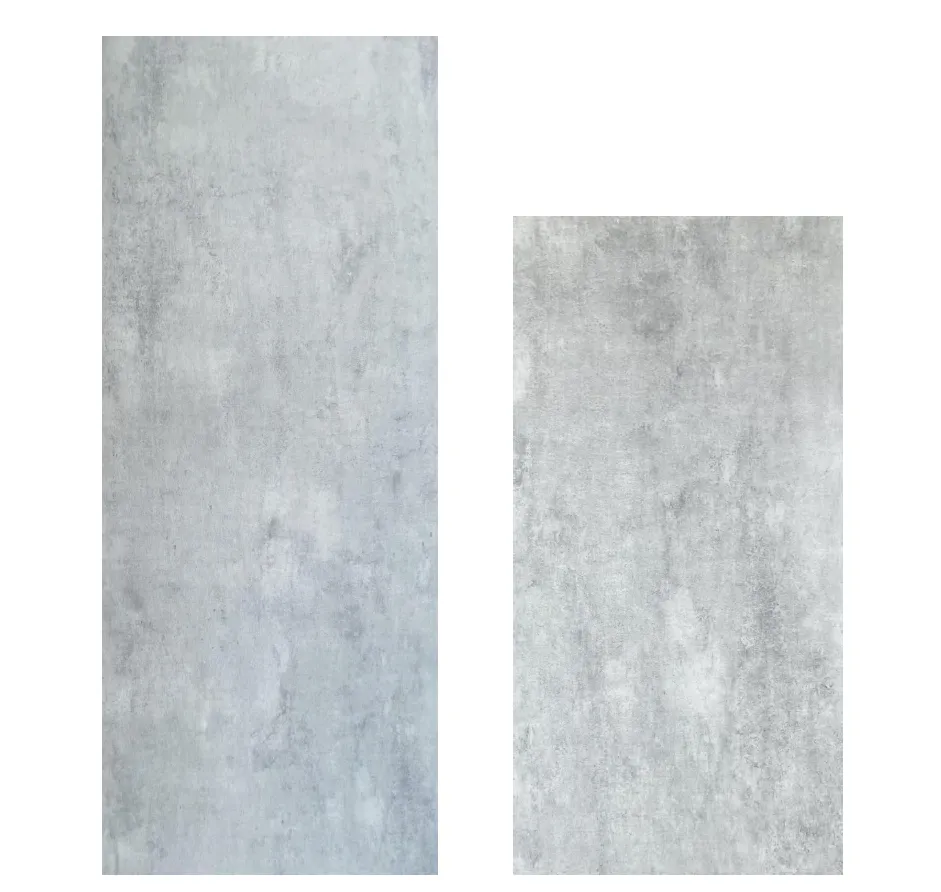
Walk into a modern boutique hotel lobby, and your eyes might linger on a wall that seems to glow from within—smooth, cool, yet warm, with subtle veins that echo the earth's own artistry. Or step into a sleek office building, and notice how the reception desk blends industrial edge with organic softness, as if carved from a single block of stone but light enough to float. Chances are, you're looking at marble concrete board. More than just a building material, it's a storyteller: a bridge between nature's raw beauty and human innovation, shaping spaces that feel both rooted in tradition and unapologetically forward-thinking. In recent years, this versatile material has surged in global demand, captivating architects, designers, and builders alike. Let's explore the markets fueling its rise, the forces driving its popularity, and why it's becoming the quiet star of construction's next chapter.
At its core, marble concrete board is a masterclass in balance. It marries the timeless elegance of marble—those delicate veining patterns, the depth of color—with the durability and practicality of concrete. Unlike solid marble, which is heavy, porous, and often expensive, marble concrete board is engineered: a blend of marble aggregates, cement, and sometimes fibers or resins, pressed into thin, lightweight panels. The result? A material that's tough enough to withstand harsh weather, easy to install (no need for cranes to hoist massive slabs), and infinitely customizable. Want a polished finish that mirrors a marble palace? Done. Prefer a rough, textured surface that feels like a sun-baked cliff? That's an option too. It's not just about looking good; it's about working hard, fitting into tight budgets, and adapting to the unique needs of every project.
Think of it as the "everyday luxury" of building materials. It doesn't demand attention like a flashy gold leaf or a rare imported stone, but it elevates spaces in quiet, meaningful ways. A café wall clad in marble concrete board feels inviting, not intimidating; a home's exterior wrapped in it stands out on the street without screaming for notice. And in a world where we crave both authenticity and efficiency, that balance is pure magic.
Marble concrete board's appeal isn't limited to one corner of the globe. It's a global citizen, thriving in diverse markets where its unique strengths—durability, design flexibility, sustainability—align with local needs. Let's zoom in on the regions leading the charge.
If there's a region that embodies "build fast, build smart," it's Asia Pacific. From the skyscrapers of Shanghai to the sprawling tech campuses of Bangalore, construction here is a race to keep up with urbanization—and marble concrete board is winning the sprint. In China, where green building standards are tightening, developers are ditching traditional heavy stone for lightweight panels that cut down on transportation emissions and installation time. In India, where mid-rise residential projects are booming, marble concrete board offers a cost-effective alternative to natural marble, letting homeowners add a touch of luxury without breaking the bank. Even in countries like Vietnam and Thailand, where tourism drives demand for boutique resorts, designers are choosing it for pool surrounds and outdoor patios—appreciating how it resists mold, saltwater, and the relentless tropical sun.
What's fueling this growth? A mix of necessity and ambition. Asia Pacific's cities are growing faster than anywhere else, and with that comes a need for materials that can keep up. Marble concrete board checks the boxes: it's quick to install, reduces construction waste, and can mimic the look of pricier stones (like travertine or granite) that would otherwise strain project budgets. In Singapore, for example, a recent mixed-use development used marble concrete board for its facade, saving 30% on installation costs compared to natural marble while still achieving the "high-end" aesthetic the developers wanted. It's not just about cutting corners; it's about building better.
Europe is a continent of contrasts: medieval castles stand steps from glass-and-steel museums, and cobblestone streets lead to futuristic airports. In this landscape, marble concrete board has found its niche as a bridge between old and new. Take Italy, the birthplace of marble craftsmanship—here, architects are using marble concrete board to restore historic buildings, matching the color and texture of centuries-old stone without risking damage to fragile structures. In Germany, where sustainability is non-negotiable, the material's low carbon footprint (thanks to recycled aggregates and energy-efficient manufacturing) has made it a favorite for eco-certified projects, from office buildings to public schools.
But it's not all about preservation. In Nordic countries like Sweden and Denmark, where minimalism reigns, marble concrete board's clean lines and neutral tones fit seamlessly into the "hygge" aesthetic—warm, understated, and functional. A restaurant in Copenhagen recently used it for its bar counter, pairing it with oak wood and soft lighting to create a space that feels both industrial and cozy. In France, designers are experimenting with bold colors, using pigmented marble concrete board to add pops of terracotta or sage green to otherwise monochromatic interiors. Here, the material isn't just a surface; it's a tool for storytelling, helping spaces feel rooted in place while embracing the future.
In North America, the demand for marble concrete board is being driven by a shift toward what some call "mindful luxury"—spaces that feel indulgent but not wasteful, beautiful but purposeful. In the U.S., commercial projects are leading the charge: hotels in New York and Los Angeles are using it for feature walls and lobby floors, drawn to its ability to make large spaces feel intimate. In Canada, where cold winters and humid summers test building materials, its resistance to freeze-thaw cycles and moisture has made it a go-to for exterior cladding. But it's not just big developments; homeowners are getting in on the action too. A recent trend in "modern farmhouses" and "industrial chic" homes has seen marble concrete board used for fireplaces, accent walls, and even kitchen backsplashes—offering the look of natural stone without the maintenance (no sealing, no staining, no stress).
Green building certifications like LEED and WELL are also playing a role. Builders in Portland, Oregon, for instance, used marble concrete board in a LEED Platinum apartment complex, citing its recycled content and low-VOC (volatile organic compound) emissions as key factors in meeting sustainability goals. It's a material that lets developers say, "We care about the planet—and we care about how this space makes you feel."
The Middle East is no stranger to opulence—think gold-leafed palaces, crystal chandeliers, and marble floors that shine like mirrors. But in recent years, there's a quiet shift toward "understated luxury," and marble concrete board is leading the way. In Dubai, where mega-projects like the Expo 2020 site set new standards for innovation, the material has been used in pavilions and public spaces, offering the grandeur of marble at a fraction of the weight and cost. In Saudi Arabia, as the country invests in Vision 2030—a plan to diversify its economy and build futuristic cities like NEOM—marble concrete board is being specified for everything from retail malls to cultural centers, valued for its ability to handle the region's extreme heat and sandstorms.
What's behind this shift? For one, practicality: in a region where temperatures soar above 120°F, heavy materials like solid marble absorb heat, making buildings harder to cool. Marble concrete board, being lighter and more insulating, helps reduce energy costs. For another, customization: developers here want projects that stand out, and marble concrete board delivers. A recent hotel in Abu Dhabi used custom-colored panels to mimic the hues of the desert at sunset—soft oranges, pinks, and golds—creating a facade that feels uniquely "local" without relying on traditional stone. It's luxury with a conscience: beautiful, but also smart.
While still an emerging market for marble concrete board, Latin America is catching on fast. Countries like Brazil, Mexico, and Colombia are seeing a surge in commercial construction—shopping centers, office towers, and hospitality projects—and builders are on the hunt for materials that offer "bang for the buck." Marble concrete board fits the bill: it's durable enough to handle the region's tropical rains and humidity, and its lightweight nature makes it ideal for projects in remote areas where transportation is a challenge. In Mexico City, a new cultural center used marble concrete board for its exterior, choosing a rough-hewn texture that echoes the country's ancient stone pyramids, while keeping costs low enough to fund additional community programs. In Brazil, a beachfront resort opted for the material in its guest rooms, appreciating that it resists saltwater damage and can be easily cleaned—no need to worry about sand scratching expensive surfaces.
As urbanization accelerates and the middle class grows, demand is only set to rise. Builders here aren't just looking for materials—they're looking for partners in progress, and marble concrete board is proving to be a reliable one.
| Region | Estimated CAGR (2023-2028) | Primary Demand Drivers | Leading Applications |
|---|---|---|---|
| Asia Pacific | 7.2% | Urbanization, cost efficiency, green building trends | Residential high-rises, commercial facades, hospitality |
| Europe | 6.5% | Heritage restoration, sustainability mandates, design flexibility | Historic building renovations, public infrastructure, luxury retail |
| North America | 5.8% | LEED/WELL certifications, commercial construction, residential "modern chic" | Office lobbies, hotel interiors, home accent walls |
| Middle East | 8.1% | Vision 2030 projects, extreme climate resilience, luxury development | Mega-projects, cultural centers, high-end hospitality |
| Latin America | 6.9% | Emerging middle class, infrastructure growth, affordability | Retail malls, community centers, beachfront resorts |
Numbers tell part of the story, but it's the "why" that makes marble concrete board's rise so compelling. Let's unpack the forces pushing demand higher—and why they're not slowing down anytime soon.
In 2023, no construction material succeeds without a sustainability story—and marble concrete board has a good one. Traditional marble mining is resource-intensive: it requires heavy machinery, uses vast amounts of water, and often leaves behind scarred landscapes. Marble concrete board, by contrast, often incorporates recycled marble chips (leftover from natural stone processing) and fly ash (a byproduct of coal power, which would otherwise end up in landfills) into its mix. This not only reduces waste but also cuts down on the need to extract new raw materials. What's more, its lightweight design means less fuel is used during transportation, and its durability translates to longer lifespans—no need to replace panels every decade. For builders chasing green certifications like LEED or BREEAM, these are more than just talking points; they're requirements. As consumers and governments alike demand more eco-friendly construction, marble concrete board is becoming the "responsible choice" without sacrificing style.
Architects are artists, and marble concrete board is their new canvas. Unlike natural stone, which is limited by what the earth provides, this material can be customized in ways that were once impossible. Want a panel that looks like a starry night sky? Add metallic flecks. Dream of a wall that mimics the texture of ocean waves? Mold it into ripples. Even color is no longer a constraint: manufacturers can tint the mix to match any shade, from soft pastels to bold primaries. This flexibility is a game-changer for designers working on projects that need to stand out. In Tokyo, a restaurant used marble concrete board to create a mural-like wall, embedding LED lights behind translucent panels to make the stone's veins glow at night. In Barcelona, a boutique hotel used custom-shaped panels to build a facade that curves like a wave, welcoming guests with a sense of movement. With marble concrete board, the only limit is creativity—and in a world where "unique" is the ultimate currency, that's priceless.
Beauty fades, but marble concrete board doesn't. Unlike natural marble, which stains easily and etches when exposed to acids (think lemon juice or rainwater), this material is engineered to resist wear and tear. It's water-resistant, fire-retardant, and scratch-proof—qualities that make it ideal for high-traffic areas like airports, schools, and hospitals. In coastal regions, where saltwater and humidity wreak havoc on traditional stone, marble concrete board holds its own; in cold climates, it stands up to freeze-thaw cycles without cracking. For homeowners, this means less time scrubbing stains and more time enjoying their space. For businesses, it means lower maintenance costs over the long haul. As one contractor put it: "You install it, and you forget about it. It just keeps looking good." In a world where we all want more from less, that reliability is golden.
By 2050, two-thirds of the global population will live in cities, according to the UN. That means more skyscrapers, more high-rise apartments, and more pressure to build efficiently. Marble concrete board is tailor-made for this urban future. Its lightweight panels reduce the load on building structures, allowing for taller, sleeker designs without compromising safety. Its ease of installation also speeds up construction timelines—critical in cities where delays cost money and disrupt communities. In Mumbai, a developer used marble concrete board for a 40-story residential tower, cutting construction time by 15% compared to using natural stone. In Toronto, a mixed-use high-rise chose the material for its balconies, appreciating that it's light enough to be installed without reinforcing the building's frame. As cities grow upward, marble concrete board is growing right alongside them.
Here's a trend that's reshaping how we think about spaces: biophilic design, the idea that connecting with nature indoors boosts our well-being, productivity, and happiness. Marble concrete board fits perfectly into this movement. Its natural stone aggregates and earthy textures create a visual link to the outdoors, even in the heart of a concrete jungle. A study by the World Green Building Council found that employees in offices with natural materials report 15% higher productivity—and marble concrete board, with its organic patterns and tactile surfaces, delivers that "nature fix" without the upkeep of live plants or the cost of rare stone. In healthcare settings, too, the material is making waves: hospitals are using it in patient rooms, where its calming colors and smooth surface help reduce stress. It's not just about looking natural; it's about feeling natural—and in a world where we spend 90% of our time indoors, that matters.
Of course, no success story is without hurdles. Marble concrete board faces its share of challenges, from cost to competition. For one, it's still pricier than basic concrete or drywall, which can be a barrier in budget-strapped markets. While it's cheaper than natural marble, some developers in emerging economies still see it as a "premium" option and opt for cheaper alternatives. Supply chain issues also pose a problem: raw material shortages (like marble aggregates) or shipping delays can slow production, leaving projects waiting. And in regions where awareness is low, builders may stick to what they know—brick, traditional concrete—rather than taking a chance on a newer material.
But these challenges are also opportunities. Manufacturers are already working on lower-cost formulations, using more recycled materials to bring prices down. Education efforts, too, are ramping up: trade shows, workshops, and online demos are helping builders see the long-term value (lower maintenance, faster installation) that offsets the upfront cost. As the material becomes more mainstream, these growing pains are likely to fade.
So, what's next for this rising star? The future looks bright—and busy. Expect to see marble concrete board branch out into new applications: furniture (think coffee tables, countertops), custom art installations, even outdoor furniture that can withstand rain and snow. Technological advancements will play a role too: 3D printing could soon allow for even more complex shapes, while improved coatings might make the material self-cleaning or even air-purifying. And as the world leans into circular economy models, we'll likely see more "closed-loop" systems, where old marble concrete boards are recycled into new ones, cutting waste further.
But perhaps the biggest trend will be personalization. As homeowners and businesses crave spaces that feel "one of a kind," manufacturers will offer more custom finishes, colors, and textures—turning marble concrete board from a "material" into a "statement." Imagine a home where the kitchen backsplash is printed with a family photo, embedded into the marble concrete mix. Or a hotel where each floor has a unique panel design, telling a different story about the local culture. The possibilities are endless.
Marble concrete board isn't just rising in demand; it's part of a larger shift in how we build. We're moving beyond "good enough" materials to ones that do more: that tell stories, that respect the planet, that adapt to our changing lives. It's a material for the optimists—those who believe we can have beauty without excess, durability without sacrifice, progress without forgetting where we came from.
So the next time you pass a building with a facade that catches your eye, or step into a room that feels both modern and timeless, take a closer look. It might just be marble concrete board—quietly, steadily, helping build a world that's a little more beautiful, a little more sustainable, and a lot more human. And that, more than any market report or growth projection, is why its story is just beginning.
Recommend Products












