
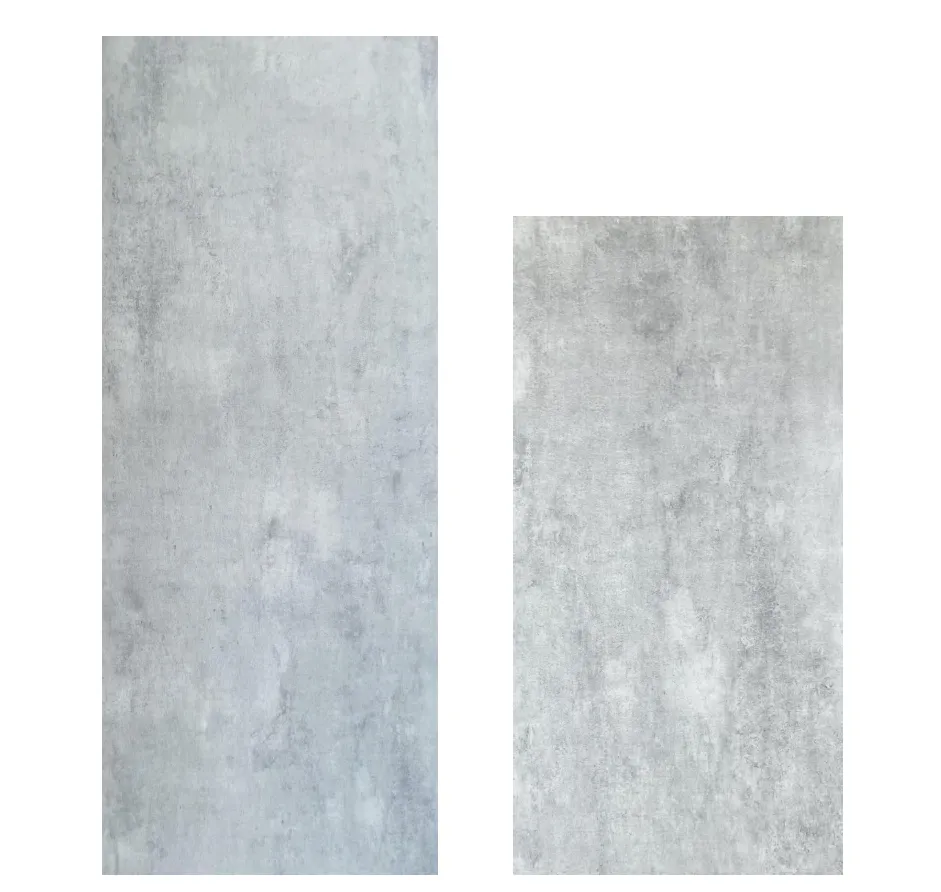
Walk into any modern office, boutique hotel, or even a trendy café, and you'll notice something: the walls, floors, and facades aren't just there to hold up a roof. They're telling a story. The materials we choose for our built environments shape how we feel—whether it's the warmth of wood, the elegance of marble, or the industrial edge of concrete. In recent years, one material has been quietly stealing the spotlight for its ability to blend tradition and innovation: marble concrete board. But it's not alone. A wave of advanced building materials, from flexible stone composites to 3D-printed panels, is redefining what's possible in architecture. Let's dive into the global marble concrete board market, explore the trends driving its growth, and peek into the future of how we'll build tomorrow's spaces.
First things first: What exactly is marble concrete board? At its core, it's a hybrid material that marries the timeless beauty of marble with the durability and versatility of concrete. Imagine the classic veining of marble—those soft, flowing patterns that have adorned palaces for centuries—now reinforced with concrete's strength, making it resistant to scratches, stains, and the wear and tear of busy spaces. It's not just for luxury buildings, either. Thanks to advancements in manufacturing, marble concrete board comes in a range of finishes, from high-gloss polished surfaces that mimic natural marble to matte, textured options that add depth to industrial-chic interiors.
But marble concrete board is just one star in a constellation of innovative materials. Take MCM flexible stone , for example. Short for Modified Composite Material, MCM flexible stone is a game-changer for architects and builders. Unlike traditional stone slabs, which are heavy and rigid, MCM flexible stone is lightweight (think 70% lighter than natural stone) and bendable, making it easy to install on curved surfaces or high-rise facades. It's made by compressing natural stone particles with a polymer binder, resulting in a material that's not only durable but also customizable—available in colors like lunar peak silvery , rust square line stone , and even travertine (starry blue) , which adds a touch of cosmic flair to any design.
Then there's the MCM big slab board series , designed for large-scale projects where seamless, uninterrupted surfaces are key. These slabs can span up to 3 meters in length, reducing the need for unsightly grout lines and giving buildings a sleek, modern look. Whether it's a shopping mall's grand facade or a hotel lobby's feature wall, MCM big slabs make a bold statement without sacrificing practicality.
| Material Type | Key Features | Common Applications | Sustainability Edge |
|---|---|---|---|
| Marble Concrete Board | Marble veining + concrete durability; scratch/stain-resistant | Kitchen countertops, bathroom walls, office floors | Often uses recycled marble chips; low maintenance reduces replacement needs |
| MCM Flexible Stone | Lightweight (70% lighter than natural stone); bendable; customizable colors | Curved facades, accent walls, furniture panels | Reduced transportation emissions (lightweight); recyclable polymer binders |
| MCM Big Slab Board Series | Large-format slabs (up to 3m); seamless appearance; high impact resistance | Commercial building facades, hotel lobbies, airport interiors | Fewer joints mean less material waste; energy-efficient manufacturing |
| Foamed Aluminium Alloy Board (Vintage Gold) | Metallic finish; lightweight; corrosion-resistant | Accent panels, signage, luxury retail interiors | Recyclable aluminium core; low VOC emissions during production |
Walk through any major city—Shanghai, Dubai, New York—and you'll see cranes dotting the skyline. By 2050, 68% of the world's population will live in urban areas, according to the UN. That means more apartments, offices, schools, and hospitals. But with space at a premium, builders need materials that are strong enough for high-rises, lightweight enough to reduce structural load, and attractive enough to stand out in a crowded cityscape. Marble concrete board and MCM products check all these boxes. For example, in Dubai's skyline, where every building seems to compete for attention, global MCM panel exporters are supplying materials like boulder slab (vintage gold) and foamed aluminium alloy board (vintage silver) to create facades that shimmer in the desert sun without weighing down the structure.
If there's one trend that's non-negotiable in today's market, it's sustainability. Governments, developers, and even homeowners are demanding materials that are eco-friendly, energy-efficient, and long-lasting. Enter green building materials like marble concrete board. Many manufacturers now use recycled marble dust and concrete aggregates in their production, reducing the need for quarrying new stone. MCM flexible stone takes it a step further: its lightweight nature cuts down on transportation emissions, and its durability means buildings need fewer repairs over time—lowering the carbon footprint of maintenance. In Europe, where strict green building codes (like LEED and BREEAM) are the norm, architects are swapping traditional stone for MCM and marble concrete board to meet sustainability targets without compromising on style.
Gone are the days when buildings were just boxes with windows. Today's architects are pushing boundaries—think curved skyscrapers, undulating facades, and interiors that feel more like art than infrastructure. To pull off these designs, they need materials that can keep up. MCM 3D printing series is a perfect example. Using 3D printing technology, manufacturers can create custom-shaped panels with intricate textures, from wave panels that mimic ocean swells to star gravel surfaces that sparkle like night skies. This level of customization was once impossible with traditional stone, but now, projects like the lunar peak series (silvery, golden, black) are turning futuristic designs into reality. Even in residential spaces, homeowners are craving uniqueness—hence the rise of niche products like bamboo mat board and rust mosaic stone for accent walls that tell a personal story.
One of the biggest trends in the marble concrete board market is the demand for "versatility without compromise." Designers don't want to choose between durability and beauty—and they don't have to. Marble concrete board now comes in finishes that range from marble veil white (soft, ethereal) to marble interstellar gray (bold, dramatic), with textures that mimic everything from polished marble to rough-hewn stone. MCM flexible stone takes this even further, with options like travertine (starry red) (think deep red with flecks of gold) and gobi panel (inspired by desert landscapes, with warm, earthy tones). It's not just about color, either—surface patterns matter. Linear travertine (claybank) adds subtle horizontal lines for a modern look, while ripple board (grey) introduces gentle waves that catch the light, making spaces feel dynamic.
Remember when installing stone meant hiring a team of workers to haul heavy slabs? Those days are fading. Today's builders prioritize materials that are easy to transport, handle, and install—and that's where MCM flexible stone and foamed aluminium alloy board (vintage gold) shine. Foamed aluminium, for example, is 80% lighter than solid aluminium but just as strong, making it ideal for high-rise facades where weight is a critical factor. MCM flexible stone, meanwhile, can be cut with standard tools and even bent around corners, reducing installation time by up to 40% compared to natural stone. This isn't just about convenience—it's about safety, too. Lighter materials mean less strain on building structures, lowering the risk of accidents during and after construction.
In a world where we're all craving authenticity, materials that tell a story are becoming increasingly popular. Take historical pathfinders stone , a marble concrete variant designed to look like ancient cobblestones, complete with weathered edges and uneven surfaces. It's not just for museums—restaurants and boutique hotels are using it to create "heritage-inspired" spaces that feel timeless. Similarly, relic rammed earth board mimics the texture of traditional rammed earth walls, connecting modern buildings to age-old construction techniques. Even ancient wood finishes, which replicate the look of reclaimed timber, are being integrated into marble concrete boards to add warmth to minimalist designs. It's a blend of old and new—and consumers can't get enough.
If there's one region leading the charge in marble concrete board adoption, it's Asia-Pacific. Countries like China, India, and South Korea are in the midst of massive urbanization drives, with cities expanding at a breakneck pace. In China, for example, the government's "New Urbanization Plan" aims to build 60% of the population into cities by 2025, fueling demand for affordable, durable building materials. MCM products, including MCM big slab board series and boulder slab (vintage black) , are particularly popular here, thanks to their cost-effectiveness and ability to scale for large projects like shopping malls and residential complexes. Southeast Asia is also booming—Vietnam and Indonesia are seeing a surge in luxury hotels and resorts using bali stone and marble stream stone to create tropical, beach-inspired interiors.
Europe has long been a leader in green building, and that's reflected in its marble concrete board market. Countries like Germany, France, and the UK have strict regulations on carbon emissions and waste, so materials with strong sustainability credentials are in high demand. Green building materials like marble concrete board made with recycled content and MCM flexible stone (which requires less energy to produce than natural stone) are top choices. The region is also a hotbed for architectural experimentation—Scandinavian designers, for example, are using slate veil white and marble veil white to create bright, minimalist spaces that maximize natural light, while Italian architects are sticking to their roots with italian travertine finishes that celebrate the country's marble heritage.
When you think of the Middle East, you think of opulence—and that's exactly what the region's construction market demands. Middle East building materials suppliers are seeing skyrocketing demand for high-end marble concrete boards and MCM products, particularly in cities like Dubai, Abu Dhabi, and Riyadh. Golden travertine (white golden) , with its warm, luminous finish, is a favorite for luxury hotels and palaces, while boulder slab (vintage silver) adds a touch of modern elegance to office towers. But it's not just about looks—the Middle East's harsh climate (extreme heat, sandstorms) requires materials that can withstand the elements. Marble concrete board's resistance to UV rays and temperature fluctuations makes it a practical choice, too.
Of course, no market is without its hurdles. One of the biggest challenges for marble concrete board and MCM products is cost. While these materials are often more durable than traditional options (meaning lower long-term maintenance costs), their upfront price can be 10-15% higher than natural stone or standard concrete. For budget-conscious projects, this can be a dealbreaker—though as manufacturing scales, prices are slowly coming down.
Another issue is awareness. In some regions, particularly in developing countries, builders and homeowners still associate "quality" with heavy, natural stone, and are hesitant to switch to newer materials like MCM flexible stone. Education is key here—manufacturers and suppliers are starting to invest in workshops and demo projects to showcase the benefits, but it's a slow process.
Finally, supply chain disruptions have plagued the industry, just like many others. Raw materials like marble dust and polymer binders can be hard to source during global crises, and shipping delays have pushed up costs. Companies are responding by localizing production—for example, global MCM panel exporters are setting up factories in Southeast Asia to serve the Asia-Pacific market, reducing reliance on long-distance shipping.
So far, marble concrete board and MCM products have been most popular in commercial projects—hotels, offices, retail spaces. But that's about to change. As prices drop and awareness grows, we'll see a surge in residential adoption. Imagine homeowners installing travertine (starry green) backsplashes in their kitchens or wood grain board (marble concrete with a wood-like finish) in their living rooms. Even outdoor spaces will get in on the action— oasis stone regular , with its slip-resistant surface and weatherproof properties, is perfect for patios and pool decks.
We've already touched on MCM 3D printing series , but the future of 3D-printed building materials is even more exciting. Imagine being able to design a custom marble concrete panel with a unique pattern—say, your company logo or a family crest—and have it printed and delivered in days. 3D printing will allow for hyper-personalization, making every building truly one-of-a-kind. We'll also see more complex shapes: curved panels that mimic natural rock formations, hollow structures that reduce weight without sacrificing strength, and even "smart" panels embedded with sensors to monitor temperature or humidity.
Green building materials aren't just about using recycled materials anymore—they're about circularity. In the future, manufacturers will design marble concrete boards and MCM products to be easily disassembled and recycled at the end of their lifespan. We'll also see more "carbon-negative" materials, where the production process actually removes CO2 from the atmosphere. For example, some companies are experimenting with adding algae-based binders to marble concrete, which absorb CO2 as they cure. It's early days, but the potential is huge.
The global marble concrete board market isn't just growing—it's evolving. It's a story of innovation, sustainability, and the human desire to create spaces that are both functional and beautiful. From MCM flexible stone that bends to our design whims to lunar peak black panels that make buildings look like they belong in a sci-fi movie, these materials are more than just construction supplies—they're tools for shaping the world we live in.
Challenges remain, of course—cost, awareness, supply chains. But as urbanization accelerates, sustainability becomes non-negotiable, and technology advances, the future looks bright. So the next time you walk into a building, take a closer look at the walls. Chances are, you're not just seeing stone or concrete—you're seeing the future of construction. And it's pretty impressive.
Recommend Products












