
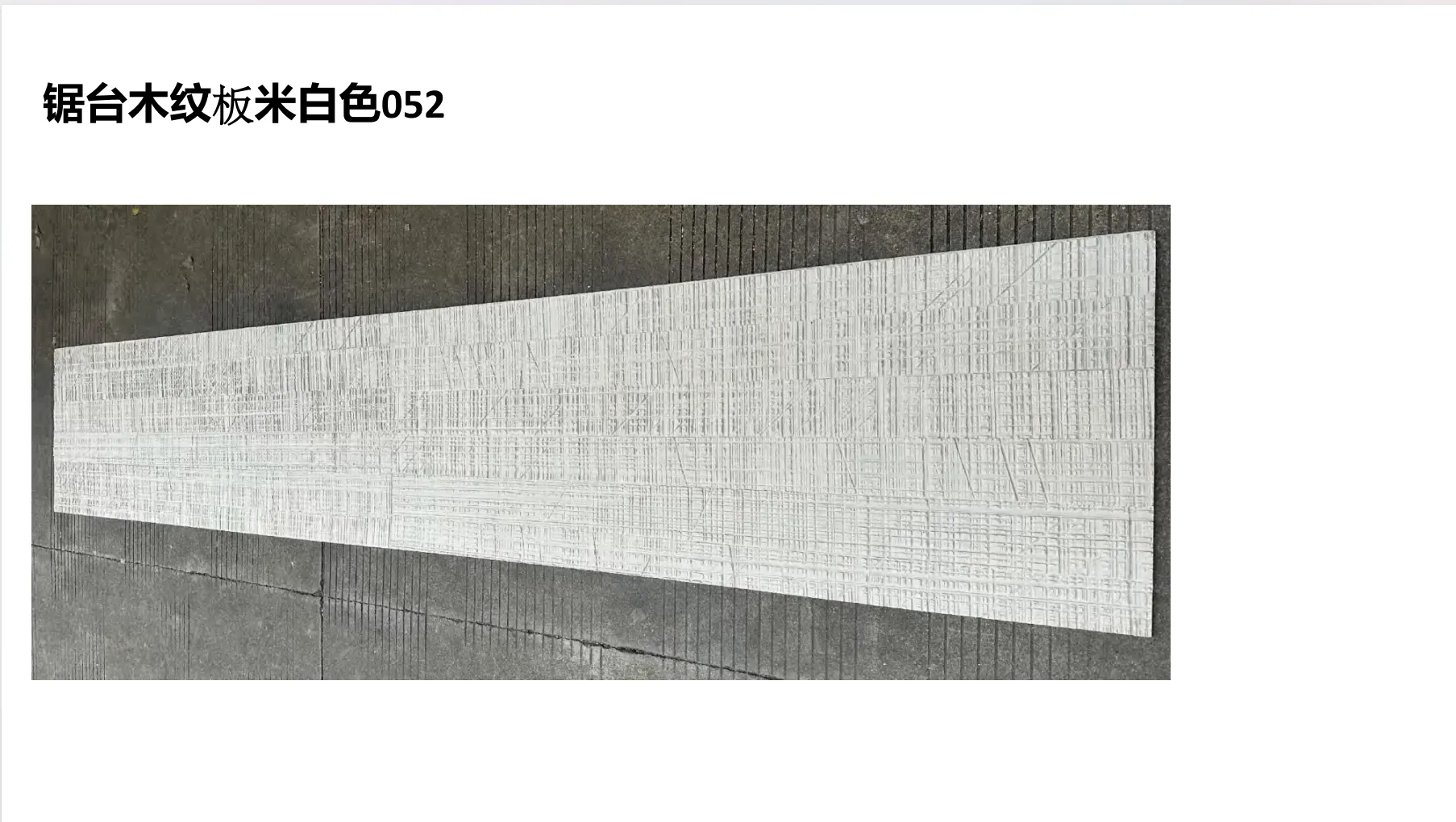
Wood has long been a cornerstone of architectural and interior design, cherished for its warmth, natural beauty, and versatility. For decades, sawing wood boards have been a go-to choice for everything from flooring and wall cladding to furniture and decorative accents. Their rustic charm and organic (texture) evoke a sense of timelessness, making them a staple in both traditional and modern spaces. However, as the global construction and design industries evolve—prioritizing durability, sustainability, and cost-efficiency—new materials are emerging to challenge the dominance of traditional wood products. Among these, Modified Composite Material (MCM) has emerged as a formidable competitor, offering a compelling blend of aesthetics, performance, and practicality. In particular, products like MCM flexible stone , MCM big slab board series , and wood grain board are redefining what's possible in material design, giving sawing wood boards a run for their money in markets worldwide.
Sawing wood boards, crafted by cutting and shaping solid wood into flat panels, have earned their place in design history for good reason. Their natural grain patterns—each unique, with swirls, knots, and color variations—add depth and character to any space. Whether used as flooring in a cozy living room, wall cladding in a trendy café, or decking in an outdoor patio, they bring a sense of warmth that synthetic materials have historically struggled to replicate. Homeowners and designers alike are drawn to their versatility: they can be stained, painted, or left untreated to age gracefully, adapting to a wide range of design styles from Scandinavian minimalism to rustic farmhouse.
Beyond aesthetics, sawing wood boards also boast perceived sustainability benefits, especially when sourced from responsibly managed forests. Many consumers associate natural wood with eco-friendliness, assuming it's a "green" choice compared to plastics or composites. In commercial settings, they're often used to create inviting, biophilic environments that promote well-being—a trend driven by research linking natural materials to reduced stress and improved productivity. For example, hospitality spaces like hotels and restaurants frequently use sawing wood boards to craft intimate, welcoming atmospheres, while offices incorporate them to soften sterile, corporate environments.
Despite their popularity, sawing wood boards are not without flaws. Their Achilles' heel lies in their vulnerability to the elements and everyday wear and tear. Solid wood is hygroscopic, meaning it absorbs and releases moisture with changes in humidity and temperature. This can lead to warping, cracking, or swelling over time—particularly in high-moisture environments like bathrooms, kitchens, or outdoor spaces. In regions with extreme weather, such as heavy rainfall or fluctuating temperatures, maintenance becomes a constant battle: regular sealing, staining, and repairs are necessary to prevent rot, mold, or insect infestations (think termites or wood-boring beetles).
Sustainability, too, is a double-edged sword for sawing wood boards. While responsibly sourced wood is renewable, the demand for large quantities of solid wood has led to deforestation in some regions, contributing to habitat loss and climate change. Additionally, the production process—from logging to sawing and finishing—consumes significant energy and water, and generates waste. For eco-conscious consumers and businesses, these factors are increasingly hard to overlook, especially as more sustainable alternatives enter the market.
Cost is another consideration. High-quality sawing wood boards, particularly those made from hardwoods like oak, teak, or walnut, can be expensive. When factoring in installation, maintenance, and replacement costs over time, their total lifecycle cost often exceeds that of more durable alternatives. For large-scale projects—such as commercial building cladding or outdoor decking—these expenses can quickly escalate, prompting project managers to seek more budget-friendly options.
Modified Composite Material (MCM) is a category of engineered materials designed to mimic the look and feel of natural substances—like wood, stone, or metal—while addressing their inherent limitations. Composed of a blend of minerals, polymers, and reinforcing fibers, MCM products are engineered for enhanced durability, weather resistance, and design flexibility. Unlike traditional composites, which often feel plastic-like or artificial, modern MCM leverages advanced manufacturing techniques to replicate the texture, color, and even the subtle imperfections of natural materials, making them nearly indistinguishable to the untrained eye.
Among the most popular MCM offerings are MCM flexible stone , MCM big slab board series , and wood grain board . These products are specifically tailored to compete with sawing wood boards, offering the aesthetic appeal of wood without the drawbacks of maintenance, sustainability concerns, or performance limitations. Let's take a closer look at what makes them stand out.
MCM flexible stone is a prime example of MCM's innovation. Despite its name, it's not actual stone but a lightweight, flexible composite that can mimic the appearance of wood grain, marble, or travertine. What sets it apart is its durability: resistant to moisture, UV rays, and temperature fluctuations, it's ideal for both indoor and outdoor use. Unlike sawing wood boards, which warp or rot in humid conditions, MCM flexible stone remains stable even in bathrooms, kitchens, or coastal areas. It's also impervious to pests, eliminating the need for toxic treatments to prevent termite damage. For designers, its flexibility is a game-changer: it can be bent or curved to fit non-linear surfaces, such as archways, columns, or rounded walls—something solid wood boards struggle to achieve without extensive (and expensive) customization.
The MCM big slab board series takes MCM's capabilities a step further, offering large-format panels that reduce installation time and seams. Traditional sawing wood boards are typically limited in size by the dimensions of the tree they're cut from, leading to more joints in flooring or cladding and a higher risk of uneven wear. MCM big slabs, by contrast, can be produced in sizes up to 3 meters in length, creating a seamless, modern look that's popular in commercial spaces like shopping malls, airports, and office lobbies. These slabs are also lighter than solid wood, making them easier to transport and install—reducing labor costs and construction timelines. Whether used as wall cladding in a luxury hotel or flooring in a high-traffic retail store, they offer the grandeur of large-scale wood without the weight or maintenance headaches.
For those who crave the warmth of wood but demand better performance, wood grain board is MCM's answer. Engineered to replicate the texture and color of sawing wood boards—complete with knots, grain patterns, and even the subtle variations of natural wood—it offers a convincing alternative. What makes it superior? It's scratch-resistant, so high heels, pet claws, or heavy furniture won't leave permanent marks (a common frustration with solid wood floors). It's also low-maintenance: a simple wipe with a damp cloth is enough to keep it clean, unlike wood boards, which require regular polishing, waxing, or refinishing. And because it's made from recycled materials and non-toxic binders, it's often more sustainable than solid wood, appealing to eco-conscious brands and homeowners.
To better understand why MCM is gaining ground on sawing wood boards, let's compare the two across key metrics that matter to designers, builders, and consumers:
| Metric | Sawing Wood Boards | MCM (e.g., Flexible Stone, Wood Grain Board) |
|---|---|---|
| Durability | Prone to warping, rot, and pest damage; requires sealing every 1–3 years. | Resistant to moisture, UV rays, and pests; lasts 20+ years with minimal maintenance. |
| Sustainability | Dependent on responsible sourcing; contributes to deforestation if not certified. | Often made from recycled materials; low energy use in production; reduces reliance on natural resources. |
| Design Flexibility | Limited by wood size and rigidity; difficult to curve or customize. | Flexible, large-format slabs; can mimic wood, stone, or metal; customizable colors and textures. |
| Cost (Lifecycle) | Lower upfront cost but high long-term expenses (maintenance, repairs, replacement). | Higher upfront cost but lower lifecycle cost (no maintenance, longer lifespan). |
| Installation | Requires skilled labor; may need acclimation to environment to prevent warping. | Lightweight and easy to install; no acclimation needed; faster installation times. |
The global market for MCM products is growing rapidly, driven by several key trends. First, sustainability is no longer a niche concern but a mainstream demand. Governments, corporations, and consumers are increasingly prioritizing materials with low environmental impact, and MCM—with its recycled content and reduced resource use—fits the bill. A 2024 report by the Global Construction Materials Association noted a 15% year-over-year increase in MCM adoption for commercial projects, with architects citing sustainability as the top reason for the shift.
Second, the rise of "biophilic design"—which seeks to connect people with nature in built environments—has created a demand for materials that mimic natural aesthetics without the ecological cost. Wood grain board and MCM flexible stone allow designers to incorporate the warmth of wood or stone into spaces while adhering to green building standards like LEED or BREEAM. For example, the new headquarters of a tech firm in Berlin uses MCM wood grain boards for its interior walls, creating a "forest-like" atmosphere that boosts employee well-being, without depleting real wood resources.
Third, cost efficiency is driving adoption in emerging markets. In regions like Southeast Asia and the Middle East, where humidity and extreme temperatures make sawing wood boards impractical, MCM products offer a durable, low-maintenance alternative. A luxury resort in Bali, for instance, replaced its traditional wood decking with MCM big slab board series panels, reducing upkeep costs by 40% and extending the deck's lifespan from 5 years to an estimated 25 years.
Despite its advantages, MCM still faces hurdles in overtaking sawing wood boards entirely. One common misconception is that MCM lacks the "authenticity" of real wood. Some designers and homeowners argue that the subtle imperfections of sawing wood boards—like knots or uneven grain—are part of their charm, and MCM, while realistic, can feel "too perfect." However, advancements in 3D printing and surface texturing are narrowing this gap: modern MCM wood grain boards now include intentional "flaws" like simulated knots or color variations, making them nearly identical to the real thing.
Another challenge is upfront cost. MCM products can be 20–30% more expensive to purchase than sawing wood boards, which can deter budget-conscious buyers. However, when factoring in long-term savings on maintenance, repairs, and replacement, MCM often proves more cost-effective over time. Education is key here: manufacturers and suppliers are increasingly highlighting lifecycle cost analyses to demonstrate MCM's value proposition.
Sawing wood boards are unlikely to disappear entirely—their natural beauty and cultural significance ensure they'll remain a choice for high-end, low-traffic spaces where authenticity is paramount. However, MCM products like MCM flexible stone , MCM big slab board series , and wood grain board are clearly emerging as a viable, and in many cases superior, alternative for most commercial and residential applications. By combining the aesthetic appeal of wood with the durability, sustainability, and flexibility of engineered materials, MCM is not just competing with sawing wood boards—it's redefining the future of material design.
As the global market continues to prioritize performance and sustainability, MCM's growth trajectory shows no signs of slowing. For designers, builders, and homeowners, the choice is no longer between "natural" and "synthetic"—it's between tradition and innovation. And in an era where both beauty and practicality matter, MCM is proving that you can have the best of both worlds.
Recommend Products












