
Bridging Quarries to Skylines—One Stone at a Time
Walk into any contemporary museum, luxury hotel, or iconic office building, and you'll likely find it: a stone that exudes quiet confidence, with a depth of color that shifts from charcoal to slate under different lights. Dark grey dolomitic travertine isn't just a building material—it's a design choice that speaks to durability, timelessness, and a connection to the earth. But for architects and developers, the real magic isn't just in the stone itself; it's in the journey that brings this geological wonder from remote quarries to bustling construction sites across the globe. And that journey? It's where COLORIA Group, a leading global construction solutions provider, turns complexity into seamless possibility.
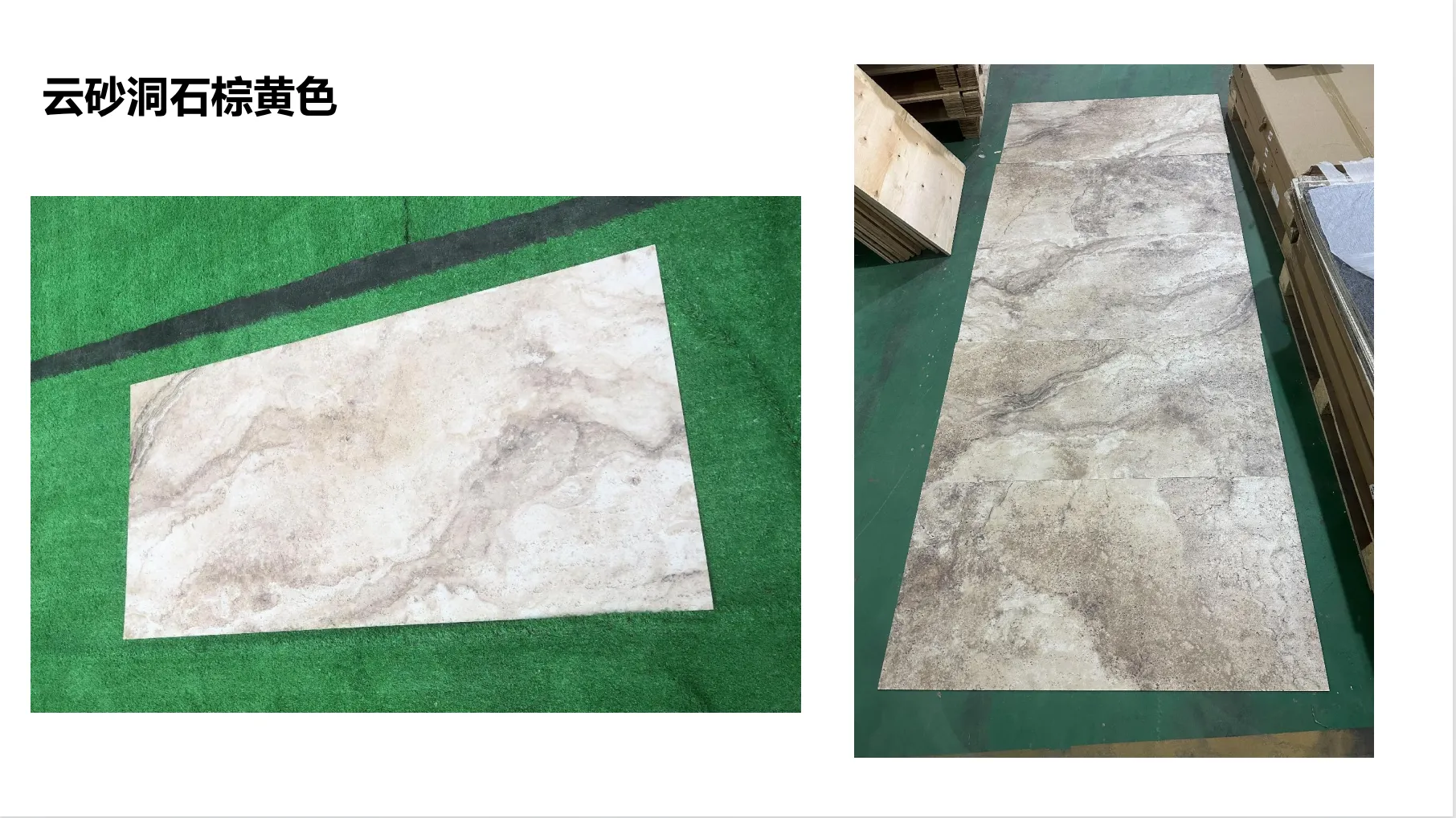
Imagine a stone that forms over millions of years, shaped by mineral-rich springs and tectonic whispers, then transformed by human hands into panels that clothe skyscrapers and cultural landmarks. Dark grey dolomitic travertine, with its unique blend of dolomite and calcium carbonate, offers both the strength of granite and the porosity of traditional travertine—making it ideal for everything from exterior cladding to interior feature walls. But getting it from a quarry in the Italian Apennines or Turkish Taurus Mountains to a construction site in Dubai or New York? That's where logistics become an art form.
The life of a dark grey dolomitic travertine slab begins long before it reaches a job site. Let's pull back the curtain on the steps that turn raw stone into a finished product—and how COLORIA Group ensures each step is executed with precision.
In the sun-baked hills of central Turkey, a team of quarry workers kneels beside a exposed vein of dark grey dolomitic travertine. Using diamond-tipped saws and hydraulic splitters, they carefully extract blocks—each weighing up to 10 tons—without compromising the stone's natural integrity. "It's like carving a sculpture from a mountain," says Mehmet, a quarry foreman with 25 years of experience. "One wrong move, and the stone cracks. We don't just work with rock; we work with history."
COLORIA Group partners with 12 select quarries across Europe, Asia, and the Middle East, each vetted for ethical practices and stone quality. For dark grey dolomitic travertine, the focus is on deposits with minimal iron oxide (which can cause discoloration) and consistent density—key for structural performance in high-rise applications.
Once extracted, the blocks are transported to COLORIA's state-of-the-art processing facilities in Italy and China. Here, automated gang saws slice the stone into slabs as thin as 12mm (for flexible stone cladding panels) or as thick as 100mm (for architectural big slab solutions). Water jets etch intricate patterns, while polishers bring out the stone's natural luster—all under the watchful eye of quality control experts.
"Dark grey dolomitic travertine has a unique 'grain'," explains Elena, a materials engineer at COLORIA's Milan facility. "If you cut against the grain, it weakens. Our laser scanning technology maps each block's internal structure first, so we cut with nature, not against it."
The real challenge? Moving thousands of slabs across continents without damage. A single cracked panel can derail a project timeline, so COLORIA's logistics team treats each shipment like a VIP. Slabs are crated in shock-absorbent foam, loaded into climate-controlled containers, and tracked via GPS from factory to port. For a recent project in Singapore, the team opted for air freight over sea to meet a tight deadline—cutting transit time from 45 days to 7, while using carbon-offset programs to mitigate the environmental impact.
"Logistics isn't just about moving boxes," says Raj, COLORIA's global logistics director. "It's about solving puzzles. Last year, we had to ship 500 custom-cut slabs to a ski resort in the Swiss Alps. The roads were too narrow for standard trucks, so we used a fleet of smaller vehicles and coordinated with local authorities for night deliveries. We even built temporary ramps to unload the stone safely. That's the COLORIA difference—we don't just deliver; we adapt."
What sets COLORIA apart as a global construction solutions provider isn't just its reach—it's the way it weaves technology, sustainability, and human expertise into every link of the supply chain. Here's how:
| Logistics Aspect | Traditional Methods | COLORIA's Approach |
|---|---|---|
| Transit Time | 45–60 days (sea freight only) | 14–30 days (multi-modal: sea + rail + air) |
| Damage Rate | 5–8% (standard crating) | 0.3% (custom foam + shock sensors) |
| Carbon Footprint | High (no offset programs) | 35% lower (carbon-neutral shipping + solar-powered facilities) |
| Traceability | Limited (paper manifests) | End-to-end (blockchain + QR codes for each slab) |
In an industry often criticized for its environmental impact, COLORIA is rewriting the rules. At its processing plant in Verona, Italy, 90% of the water used for cutting and polishing is recycled. Solar panels cover the facility's roof, powering everything from conveyor belts to office lights. Even the sawdust from stone cutting is repurposed as a soil additive for local farms.
"Sustainability isn't a buzzword for us—it's survival," says Clara, COLORIA's sustainability director. "When we ship dark grey dolomitic travertine to a project in California, we don't just send stone. We send a commitment: that this material's journey leaves the lightest possible footprint on the planet."
In 2024, a luxury hotel complex in Dubai needed 3,000 square meters of dark grey dolomitic travertine for its exterior facade—with a deadline of just 12 weeks. The challenge? The stone had to be sourced from Turkey, processed in Italy, and installed in time for the grand opening. Enter COLORIA Group.
First, the team identified a quarry in Denizli, Turkey, with a vein of dolomitic travertine that matched the project's exact color specifications. The blocks were extracted and shipped via rail to Istanbul, then loaded onto a cargo ship bound for Genoa, Italy—arriving in just 7 days. At the processing facility, 3D scanning technology ensured each slab was cut to the architect's precise dimensions, including custom curved panels for the hotel's signature dome.
The real logistical feat came next: shipping the finished panels to Dubai. COLORIA bypassed the traditional route through the Strait of Hormuz, instead using a combination of rail (Genoa to Marseille) and sea (Marseille to Dubai via the Suez Canal), reducing transit time by 10 days. On arrival, the panels were transported to the site in climate-controlled trucks, with a COLORIA technician on-site to oversee installation.
"We thought it was impossible," admits the project's lead architect, Zayed. "But COLORIA didn't just meet the deadline—they delivered stone that looked better than we'd imagined. The dark grey dolomitic travertine shifts color with the desert light, from deep charcoal at noon to a soft silver at sunset. It's the heart of the building."
As demand for unique, sustainable building materials grows, COLORIA is already looking ahead. The company is testing AI-powered demand forecasting tools to predict material needs for upcoming projects, reducing waste and overstock. It's also exploring drone deliveries for remote construction sites, where traditional trucks can't reach.
But for all the technology, Raj, the logistics director, insists the human element remains irreplaceable. "At the end of the day, it's people who quarry the stone, who design the shipping routes, who install the panels. Technology makes us faster and smarter, but passion makes us better. That's the secret to a supply chain that doesn't just deliver materials—it delivers dreams."
Recommend Products












