
In the heart of the Middle East, Saudi Arabia's construction sector is undergoing a transformation as ambitious projects like NEOM, the Red Sea Project, and Riyadh's King Abdullah Financial District redefine urban skylines. Behind these architectural marvels lies a critical decision for architects, contractors, and developers: choosing materials that balance durability, aesthetics, and availability. Among the most talked-about options are MCM (Modified Composite Material) products and traditional sawing wood board . While MCM offers cutting-edge flexibility and resilience, sawing wood board brings timeless warmth and natural charm. But how do their global supply chains stack up in Saudi Arabia's dynamic market? Let's dive into the world of these materials, exploring their journeys from factories to construction sites—and why their availability matters more than ever.
MCM has emerged as a game-changer in the construction industry, thanks to its unique blend of strength, versatility, and design freedom. Unlike traditional stone or wood, MCM products—such as the MCM project board series and MCM flexible stone —are engineered using advanced composite technology, combining minerals, polymers, and recycled materials to mimic the look of natural stone, wood, or metal without the associated drawbacks.
Walk into any MCM showroom, and you'll be greeted by a spectrum of textures and colors that cater to every design vision. Take, for example, the travertine (starry green) series—a crowd favorite among Saudi architects for its celestial, shimmering surface that adds depth to feature walls and facades. Then there's the lunar peak collection, with silvery, golden, and black hues that evoke the rugged beauty of moonlit mountain ranges, perfect for futuristic projects like NEOM's sci-fi-inspired districts.
But MCM's innovation doesn't stop at aesthetics. The MCM 3D printing series allows for custom, intricate designs that were once impossible with traditional materials. Imagine a curved facade shaped like desert sand dunes, or a lobby wall with geometric patterns that seem to shift as you walk by—all made possible by MCM's 3D-printable flexibility. Even more impressively, MCM flexible stone bends to fit curved surfaces, eliminating the need for complex cutting and reducing installation time by up to 30%.
Most MCM production is centered in manufacturing powerhouses like China, Italy, and the UAE, where state-of-the-art facilities churn out millions of square meters annually. Chinese factories, in particular, dominate the market, offering cost-effective options for large-scale projects, while Italian producers focus on high-end, artisanal MCM variants that mimic rare marbles and travertines.
Getting these materials to Saudi Arabia is a well-oiled process. From Shanghai or Milan, MCM boards are loaded into containers and shipped via the Strait of Hormuz to Jeddah Islamic Port or King Abdullah Port in Rabigh—Saudi's busiest entry points for construction materials. Once ashore, local distributors like Al Rajhi Trading or Bin Omran Group handle warehousing and last-mile delivery to job sites. Thanks to Saudi Arabia's streamlined customs procedures under Vision 2030, import duties on MCM products have been reduced by 15% since 2023, making them more accessible than ever.
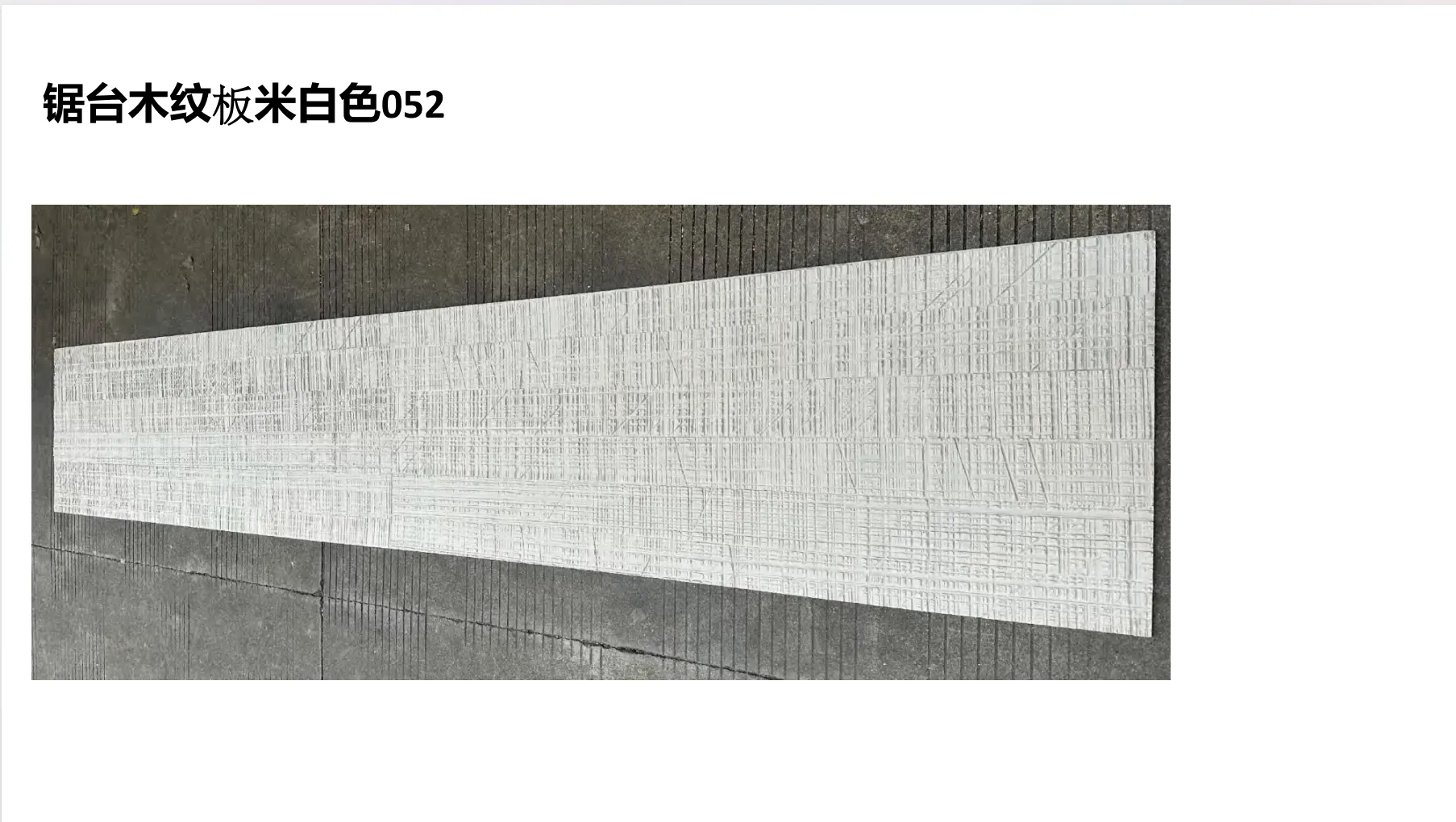
While MCM pushes the boundaries of technology, sawing wood board remains a beloved choice for projects seeking warmth, authenticity, and a connection to nature. These boards—crafted by sawing logs into planks of varying thicknesses—have been used in construction for millennia, and their popularity endures in Saudi Arabia's luxury hospitality and residential sectors.
The journey of a sawing wood board begins in the forests of Scandinavia, Canada, or Southeast Asia. Sustainable pine, oak, and teak logs are harvested (often under FSC certification to ensure eco-friendliness), then transported to sawmills where they're cut, dried, and treated to resist pests and moisture. In Saudi Arabia, where local wood resources are limited, almost 100% of sawing wood board is imported, making its supply chain heavily reliant on global trade.
Among the most sought-after variants are bamboo mat board (a fast-growing, sustainable alternative) and wood grain board , which mimics the look of rare hardwoods like teak or walnut at a fraction of the cost. These boards are prized for interiors—think hotel lobbies with vaulted wooden ceilings, or villa bedrooms with warm, paneled walls that soften the harshness of desert heat.
Unlike MCM, sawing wood board faces unique hurdles in reaching Saudi Arabia. For starters, wood is perishable: prolonged exposure to humidity during shipping can cause warping or mold, requiring climate-controlled containers that add 20-30% to transportation costs. Then there are seasonal fluctuations: European sawmills slow production in winter, leading to supply gaps in Q1 and Q2. Trade restrictions also play a role—Canada's recent tariffs on softwood exports to the Middle East have forced Saudi importers to source from pricier suppliers in Brazil and Malaysia.
Once in Saudi Arabia, storage becomes another challenge. Wood must be kept in air-conditioned warehouses to prevent cracking in the country's dry, hot climate—a luxury many small distributors can't afford. As a result, sawing wood board availability often hinges on the financial stability of local suppliers, with shortages common during peak construction seasons (typically autumn and spring).
To understand why these materials' availability differs, let's break down their supply chains side by side:
| Factor | MCM (e.g., Project Board Series, Flexible Stone) | Sawing Wood Board (e.g., Bamboo Mat Board, Wood Grain Board) |
|---|---|---|
| Global Production Hubs | China (60%), Italy (20%), UAE (15%), others (5%) | Canada (30%), Sweden (25%), Malaysia (20%), Brazil (15%), others (10%) |
| Lead Time to Saudi Arabia | 4-6 weeks (door-to-door) | 8-12 weeks (due to production, seasoning, and climate-controlled shipping) |
| Key Cost Drivers | Raw material (minerals, polymers), shipping | Log prices, FSC certification, climate-controlled transport, storage |
| Import Regulations | Low tariffs (5-10%), minimal documentation under Vision 2030 | Higher tariffs (15-20%), strict FSC certification requirements |
| Local Availability | Widely stocked in Jeddah, Riyadh, and Dammam; 90% of variants available year-round | Limited stock; 60% of variants require pre-ordering; seasonal shortages common |
| Sustainability | Often uses recycled materials; low carbon footprint in production | Dependent on FSC certification; risk of deforestation with uncertified sources |
In Saudi Arabia's construction market, MCM and sawing wood board cater to distinct needs. MCM dominates large-scale, high-tech projects where durability and consistency are non-negotiable. For example, the Riyadh Metro's station exteriors use lunar peak silvery MCM panels, chosen for their resistance to sandstorms and UV rays—qualities that would quickly degrade wood. Similarly, NEOM's "The Line" project relies on MCM flexible stone for its curved, futuristic facades, as traditional materials would crack under the structure's unique geometry.
Sawing wood board, on the other hand, thrives in luxury residential and hospitality projects. The Red Sea Project's beachfront villas, for instance, feature bamboo mat board ceilings and wood grain board flooring, creating a serene, tropical vibe that appeals to high-end tourists. Interior designers often pair these woods with MCM exteriors, blending natural warmth with modern resilience.
"Clients want the best of both worlds," says Lina Hassan, a Riyadh-based architect specializing in luxury resorts. "For a recent hotel project, we used travertine (starry green) MCM for the exterior cladding to withstand Jeddah's humidity, and sawing wood board for the lobby's accent walls to welcome guests with a cozy, earthy feel. The key was ensuring both materials were available on time—and MCM was far easier to source."
Despite MCM's advantages, challenges remain. Price sensitivity is one: MCM can cost 10-15% more than low-grade natural stone, which some contractors view as a barrier. "Smaller projects often opt for cheaper alternatives," notes Ahmed Al-Mansoori, a construction manager in Dammam. "But once they see MCM's longevity—no cracks after five years in the sun—they usually switch for future builds."
For sawing wood board, the biggest hurdle is sustainability. As Saudi Arabia aligns with global eco-goals under Vision 2030, developers are increasingly demanding FSC-certified wood, which limits supply and raises costs. "We had a client who insisted on non-certified teak for a villa project," recalls Yasmin Ali, a supplier in Jeddah. "By the time we secured it, the price had spiked 30%, and the project was delayed two months. Now, we always push for bamboo or wood grain board as alternatives."
Looking ahead, both materials have room to grow. MCM manufacturers are exploring regional production—with talks of a UAE-based factory to serve the Gulf market, cutting lead times to 2-3 weeks. For sawing wood, innovations like heat-treated timber (which reduces moisture sensitivity) could make it more viable in Saudi's climate, potentially boosting availability.
In Saudi Arabia's fast-paced construction industry, availability isn't just a logistical detail—it's a make-or-break factor for project timelines, budgets, and client satisfaction. MCM, with its global production hubs, durable nature, and streamlined supply chain, has emerged as the more reliable choice for most large-scale projects. Its versatility—from MCM 3D printing series to flexible stone —aligns perfectly with the kingdom's vision for innovative, future-ready cities.
Sawing wood board, meanwhile, retains its allure for projects where natural beauty and warmth are priorities. Its availability will depend on sustainable sourcing, technological advancements, and partnerships between global suppliers and local distributors. As one industry insider put it: "Wood tells a story, but MCM writes the future."
For architects, contractors, and developers, the message is clear: when choosing between MCM and sawing wood board, consider not just aesthetics, but the journey from factory to site. In Saudi Arabia's construction boom, the material that arrives on time, in budget, and ready to endure the desert's test of time is the one that will shape the skyline for decades to come.
Recommend Products












