
Walk down any bustling city street, and you'll notice that some buildings seem to blend into the background, while others demand a second glance. The ones that stand out? They're not just structures—they're storytellers. In a world where brand identity is shaped by every touchpoint, from social media feeds to physical spaces, a building's facade has become more than just a wall. It's the first chapter of a brand's narrative, a visual handshake with the world. And in this era of innovation, there's a material revolution quietly redefining how those stories are told: MCM, or Modified Composite Material, brought to life through 3D printing. Today, we're diving into how 3D printed MCM custom facades—showcased in stunning detail through Golden Faith Real Photos—are helping brands carve out their unique identity in the urban landscape.
Think about your favorite brand. Maybe it's a tech company known for cutting-edge innovation, a luxury fashion house steeped in tradition, or a sustainable café that prides itself on eco-consciousness. Now, picture their headquarters or flagship store. Chances are, the building itself feels like an extension of what the brand stands for. A sleek, glass-and-steel tower might scream "innovation," while a rustic, wooden facade could whisper "heritage" or "sustainability." That's the power of architecture in brand storytelling: it doesn't just house a business—it embodies it.
But here's the challenge: in a sea of generic concrete and repetitive designs, how do brands truly stand out? Traditional materials like stone, metal, or brick have their merits, but they often come with limitations. Heavy, expensive to customize, and slow to install, they can feel like a straitjacket for brands wanting to push boundaries. Enter MCM—Modified Composite Material—and its game-changing partner: 3D printing. Together, they're not just building facades; they're crafting brand experiences.
First, let's talk about MCM. Short for Modified Composite Material, MCM is a lightweight, durable alternative to traditional cladding materials. Made by combining natural minerals, polymers, and reinforcing fibers, it's engineered to be flexible yet tough—think of it as the "Swiss Army knife" of building materials. Unlike rigid stone or metal, MCM can be shaped, curved, and textured in ways that were once impossible, making it ideal for creating facades that are as unique as the brands they represent.
But what truly sets MCM apart is its versatility, especially when paired with 3D printing technology. The mcm 3d printing series takes this versatility to new heights, allowing designers to move beyond flat, uniform surfaces and into a world of intricate patterns, organic textures, and custom geometries. Want a facade that mimics the ripples of a wave to reflect a brand's fluidity? Or a geometric pattern that echoes your logo? With 3D printed MCM, it's not just possible—it's practical.
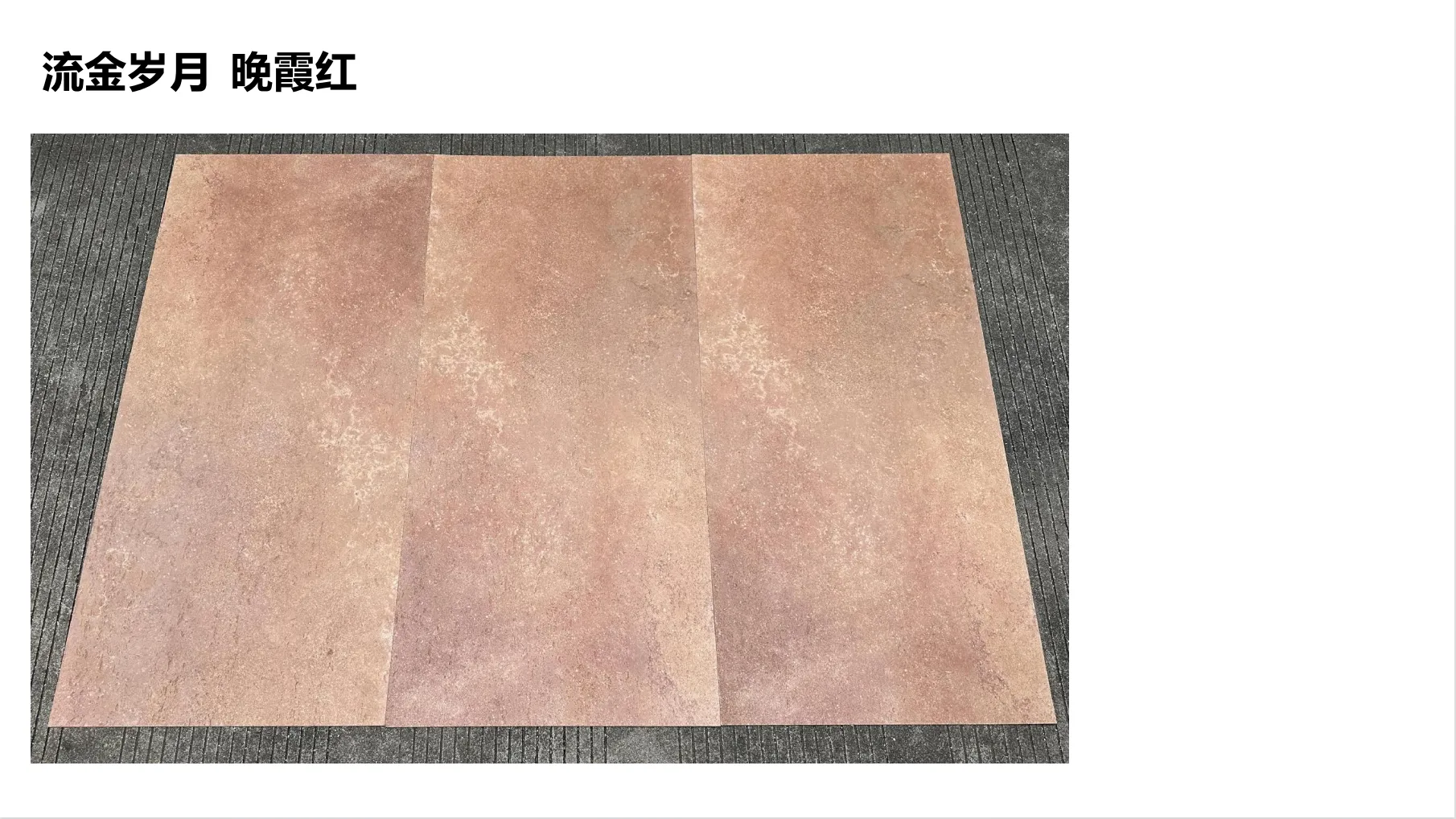
Take mcm flexible stone, for example. This variant of MCM is designed to mimic the look and feel of natural stone but with the added benefit of flexibility. Imagine wrapping a building in a facade that looks like weathered limestone but weighs a fraction of the real thing and can be curved around corners or molded into 3D shapes. It's the best of both worlds: the aesthetic warmth of natural materials with the performance of modern composites.
3D printing isn't new, but its application in architectural facades is where the magic happens. Traditional manufacturing methods—like casting or cutting—are limited by molds or tooling, which can be costly and time-consuming to change. 3D printing, on the other hand, builds objects layer by layer, using digital designs as its blueprint. This means that every panel can be unique, with no additional cost for complexity. A facade with a repeating pattern? Easy. One with a one-of-a-kind, brand-specific motif? Just as easy.
The mcm 3d printing series leverages this technology to create panels that are not just visually striking but also precision-engineered. Designers can tweak textures, adjust dimensions, or iterate on patterns in real time, all without slowing down production. For brands, this means faster turnaround times and the ability to refine their facade design until it perfectly aligns with their identity. No more compromising on vision—3D printing turns "what if" into "what is."
Consider the level of detail possible. With 3D printing, you can embed subtle brand cues into the facade itself: a pattern that spells out the brand's initials when viewed from a distance, or a texture that changes color depending on the angle of the light, reflecting the brand's dynamic personality. These are the kinds of details that stick in people's minds, turning a building into a landmark—and a brand into a memory.
At the heart of any strong brand identity is authenticity. Brands don't want to look like everyone else—they want to look like themselves . That's where custom mcm exterior panels come in. Unlike off-the-shelf materials, which force brands to choose from a limited palette of colors and textures, custom MCM panels are designed to fit a brand's unique DNA.
Let's say you're a tech company that prides itself on innovation and forward-thinking design. Your brand colors are electric blue and silver, and your logo features a sleek, geometric shape. With custom MCM panels, you could 3D print that geometric shape directly into the facade, in your signature blue, with a metallic silver texture that catches the light. The result? A building that doesn't just say "we're innovative"—it shows it.
Or maybe you're a luxury hospitality brand aiming for timeless elegance with a modern twist. You could opt for mcm flexible stone in a warm beige tone, 3D printed with a subtle, organic texture that mimics the look of aged travertine (starry green)—a nod to classic luxury—paired with clean, contemporary lines that feel fresh and current. It's a balance of old and new, just like your brand.
Of course, talking about custom facades is one thing—seeing them is another. That's where Golden Faith Real Photos come in. These images showcase real-world applications of 3D printed MCM facades, giving brands a tangible sense of what their own space could look like. From sleek corporate headquarters to boutique retail stores, the Golden Faith portfolio is a testament to the versatility of MCM 3D printing.
Take, for example, a recent project for a sustainable fashion brand. The brand wanted its flagship store to reflect its commitment to eco-consciousness and artisanal craftsmanship. Using custom MCM panels, the design team 3D printed a facade that mimicked the texture of woven bamboo (a nod to sustainable materials) in soft, earthy tones. The panels were lightweight enough to be installed quickly, reducing construction time and carbon footprint, and the result—captured in Golden Faith Real Photos—was a storefront that felt warm, inviting, and uniquely "on brand."
Another standout project in the Golden Faith collection features a tech startup's office building. The brand's identity revolves around "connectivity" and "flow," so the design team used 3D printed MCM panels to create a facade with undulating, wave-like patterns (echoing the "wave panel" texture) in gradient shades of blue and silver. From the street, the building looks like it's in motion—a visual representation of the brand's dynamic, forward-thinking ethos. It's not just a building; it's a billboard for the brand's values.
Still not convinced that 3D printed MCM is the right choice for your brand? Let's break down how it stacks up against traditional materials. The table below compares key factors like weight, customization, durability, and installation time—so you can see the difference for yourself.
| Material | Weight (per sqm) | Customization Level | Durability (Weather Resistance) | Installation Time (per 100 sqm) |
|---|---|---|---|---|
| Traditional Stone (Granite/Marble) | 40–60 kg | Low (Limited to natural patterns/colors) | High (Resistant to weather, but prone to cracking) | 5–7 days |
| Traditional Metal (Aluminum/Steel) | 15–25 kg | Medium (Can be painted/cut, but complex shapes are costly) | High (Resistant to rust with coatings) | 3–4 days |
| 3D Printed MCM Panels | 6–10 kg | Very High (Unlimited patterns, textures, colors, and shapes) | High (UV-resistant, waterproof, and flexible to prevent cracking) | 1–2 days |
As the table shows, 3D printed MCM panels are significantly lighter than traditional stone, making them easier and safer to install. They offer far more customization, allowing brands to create truly unique designs, and they're just as durable—if not more so—thanks to their flexible composition. Plus, installation time is cut by more than half, reducing labor costs and minimizing disruption to your business.
In today's world, brand identity isn't just about aesthetics—it's about values. More and more consumers care about sustainability, and brands are under pressure to align their actions with their promises. 3D printed MCM facades deliver here, too.
MCM materials are often made with recycled content, and their lightweight nature reduces the need for heavy supporting structures, cutting down on overall construction materials. 3D printing itself is inherently efficient, as it produces minimal waste compared to traditional manufacturing methods (no excess stone or metal shavings, just precise layers of material). Plus, MCM panels are low-maintenance and long-lasting, meaning fewer replacements over time—and less waste in the long run.
For brands looking to tell a story of sustainability, this is a powerful selling point. Imagine being able to say, "Our facade was 3D printed with recycled materials, using 70% less energy than traditional cladding." It's not just a building fact—it's a brand statement.
As technology advances, the possibilities for 3D printed MCM facades will only grow. We're already seeing experiments with interactive elements—panels that change color in response to light, or even integrate LED lighting for dynamic displays. Imagine a brand facade that lights up in the brand's colors at night, or shifts patterns to celebrate a new product launch. The line between architecture and digital experience is blurring, and MCM is at the forefront of that shift.
What's more, as 3D printing technology becomes more accessible, costs will continue to come down, making custom MCM facades a viable option for brands of all sizes—not just the big players. Whether you're a startup looking to make a splash or an established brand ready for a refresh, 3D printed MCM offers a way to turn your brand identity into a physical reality that resonates with customers.
At the end of the day, a brand's identity is about connection. It's about making people feel something—whether that's trust, excitement, or inspiration. And in a world where we're bombarded with messages, the physical spaces we inhabit have never been more important. They're not just places to work, shop, or gather—they're opportunities to tell your brand's story, loud and clear.
3D printed MCM facades, as showcased in Golden Faith Real Photos, are more than a construction trend—they're a tool for brands to express themselves authentically, creatively, and sustainably. With mcm 3d printing series, custom mcm exterior panels, and the flexibility of materials like mcm flexible stone, the only limit is your imagination.
So, the next time you walk down that city street, take a closer look at the buildings around you. The ones that stand out aren't just made of stone or metal—they're made of stories. And with 3D printed MCM, your brand's story could be the next one that stops people in their tracks.
Recommend Products












