
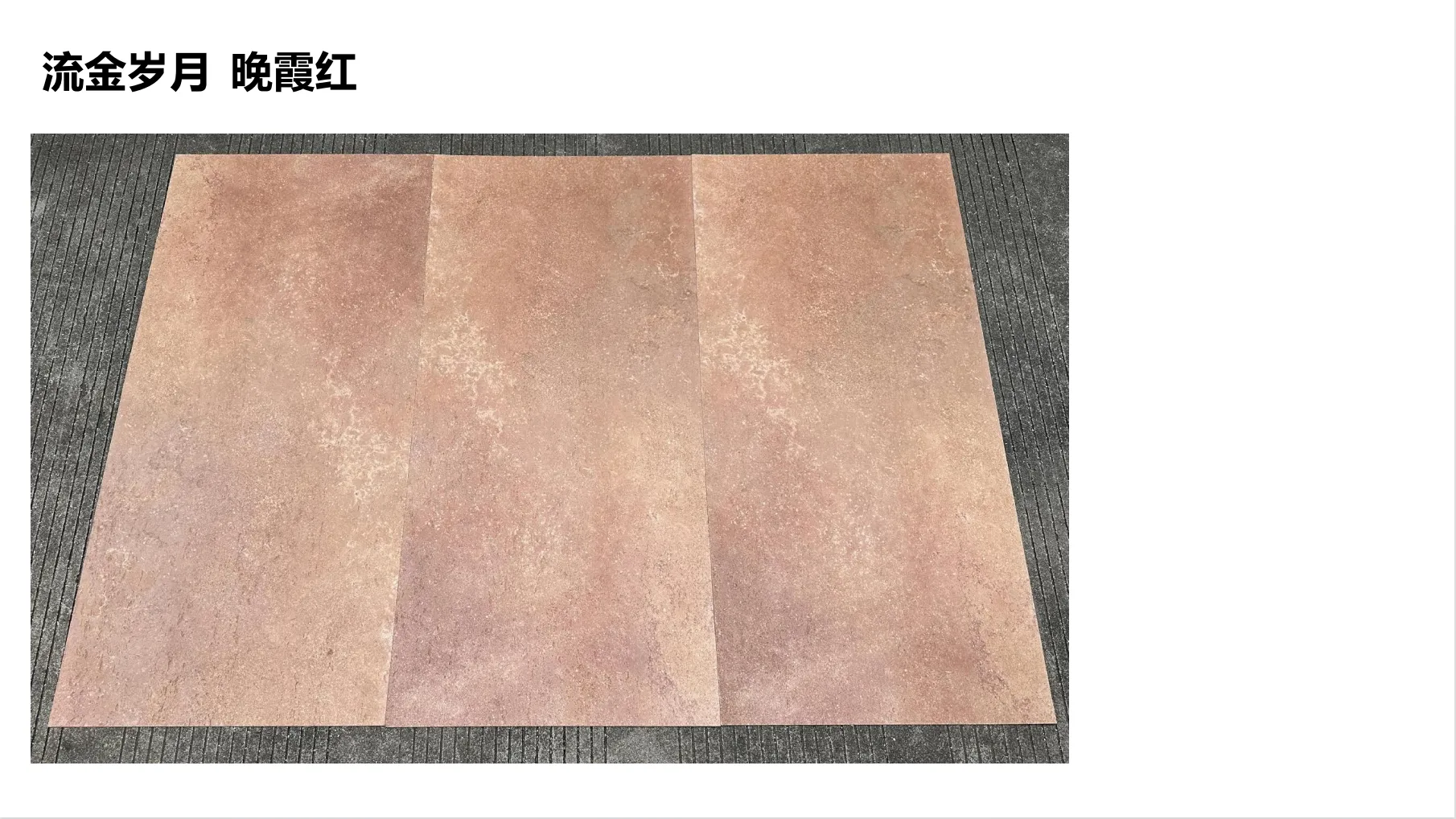
Where sustainability meets artistry—how COLORIA's MCM series is redefining green building, one textured panel at a time.
Walk into any space—a cozy café, a sleek office, a bustling school—and what do you notice first? The light, maybe. The way people move. But look closer. The walls, the floors, the surfaces that cradle our daily lives—they're more than just backdrops. They're stories. Stories of where materials came from, how they were made, and what they leave behind. In a world waking up to the weight of construction's environmental footprint, those stories matter more than ever.
That's where COLORIA steps in. Their MCM (Modified Composite Material) project board series isn't just about creating beautiful surfaces. It's about rewriting the narrative of building materials—proving that you don't have to choose between aesthetics and responsibility. And the best part? You don't have to take their word for it. The proof is in the projects: spaces captured in "Golden Faith Real Photos" that make sustainability visible, tangible, and undeniably stunning.
Let's start with the basics. MCM stands for Modified Composite Material, but don't let the technical name fool you. Think of it as nature's resilience meets human ingenuity. Traditional building materials—quarried stone, solid wood, even some concrete—often come with a heavy price tag for the planet: deforestation, carbon-heavy extraction, mountains of waste. MCM flips that script.
COLORIA's MCM flexible stone, for example, starts with recycled ingredients: crushed stone dust from old construction sites, reclaimed glass, even post-consumer plastics that would otherwise linger in landfills. These are bonded with a low-VOC (volatile organic compound) resin, creating a material that's lightweight, durable, and eerily good at mimicking the look and feel of natural stone, wood, or metal—without the environmental toll.
But here's the kicker: MCM isn't just "less bad" for the planet. It's actively good. Many of COLORIA's MCM products carry certifications that place them in the "green building materials" category, meeting strict standards for sustainability, indoor air quality, and resource efficiency. We're talking LEED credits, Greenguard certifications, and ISO 14001 compliance. These aren't just logos on a spec sheet—they're promises that every panel, every slab, is part of a larger commitment to the planet.
Words are one thing. Seeing sustainability in action? That's where the "Golden Faith Real Photos" come in. These aren't stock images or renderings. They're snapshots of real spaces—hotels, community centers, retail hubs—where COLORIA's MCM products take center stage. Let's zoom into a few standout examples, where the materials tell their own eco-friendly stories.
Picture a hotel lobby where the accent wall draws you in like a clear summer night. Swirls of deep blue interspersed with flecks of silver and white—travertine (starry blue) MCM panels. Traditional travertine is a beauty, no doubt, but extracting it from quarries can disrupt ecosystems, consume massive amounts of water, and leave behind 20-30% waste. COLORIA's version? It uses 85% recycled content, requires 70% less water to produce, and generates almost zero waste during manufacturing. In the Golden Faith photos, that wall isn't just stunning—it's a quiet rebellion against business-as-usual extraction.
Run your hand over it. The texture is there—the subtle pitting, the matte finish—because MCM is engineered to replicate natural stone's character without the need to dig it from the earth. "Clients often do a double-take," says Maria, a COLORIA designer. "They touch the panel, then ask, 'This is recycled?' It's fun to watch that moment of realization: sustainability doesn't mean sacrificing texture or depth."
Over in the conference wing of the same hotel, the flooring makes a statement: boulder slab MCM in vintage silver. Traditional boulders are heavy—literally and environmentally. Transporting them adds to carbon emissions, and installing them requires reinforced structures. COLORIA's boulder slab? It weighs up to 75% less than natural stone, cutting transportation emissions by half. Yet it's just as durable, resistant to scratches, moisture, and fading. In the Golden Faith photos, you can see how the slabs flow seamlessly, creating a sense of solidity without the environmental bulk.
"We used to avoid bold stone looks in high-traffic areas because of upkeep," says Raj, a project manager who worked on the hotel. "But with MCM boulder slab, we didn't have to compromise. It's handled coffee spills, rolling luggage, even the occasional skateboard (don't ask) and still looks brand new. And knowing it's made from recycled materials? That's the cherry on top."
Not all beauty is flashy. Sometimes it's in the understated. Take the café area of the Golden Faith project, where the walls are clad in fair-faced concrete MCM panels. Raw, minimalist, with a subtle grain that feels both modern and timeless. Traditional concrete is a staple of construction, but its production is a major source of CO2 emissions—accounting for about 8% of global carbon output. COLORIA's version? It replaces a portion of cement with fly ash (a byproduct of coal power plants) and uses recycled aggregates, slashing its carbon footprint by 40%. Plus, it's prefabricated, meaning less on-site waste and faster installation.
Sit at the counter, and you'll notice the panels aren't cold to the touch—another MCM perk. The material regulates temperature, keeping the space cooler in summer and warmer in winter, which reduces reliance on heating and cooling systems. "It's the little things," says Lila, the café owner. "Lower energy bills, walls that don't off-gas chemicals, and a look that customers can't stop Instagramming. Who knew 'green' could be this trendy?"
Curious how COLORIA's MCM products stack up against traditional building materials? Let's break it down. The table below compares key sustainability metrics, using data from third-party labs and certification bodies.
| Feature | Traditional Building Materials | COLORIA MCM Products |
|---|---|---|
| Raw Material Sourcing | Often virgin resources (quarried stone, solid wood, virgin plastics) | 80-90% recycled content (reclaimed stone, glass, post-consumer plastics) |
| Carbon Footprint (per m²) | High (e.g., natural travertine: ~50kg CO2; solid concrete: ~40kg CO2) | Low (e.g., MCM travertine: ~12kg CO2; MCM concrete: ~10kg CO2) |
| Recyclability | Limited (often ends up in landfills after use) | 100% recyclable at end-of-life; can be repurposed into new MCM panels |
| Indoor Air Quality | May emit VOCs (formaldehyde, benzene) from adhesives/sealants | Greenguard Gold certified; <0.1mg/m³ VOC emissions (safe for schools, hospitals) |
| Durability | Variable (natural stone prone to chipping; wood susceptible to rot) | 25+ year lifespan; resistant to moisture, UV rays, and impact |
These numbers aren't just statistics. They're the reason projects like Golden Faith are choosing MCM. When you opt for COLORIA's green building materials, you're not just building a space—you're building a legacy of lower emissions, less waste, and healthier indoor environments.
Sustainability claims are everywhere these days. So what makes COLORIA's MCM series different? It's the certifications—the rigorous, third-party checks that turn promises into proof. Let's unpack a few of the key ones you'll find on their products:
Take LEED (Leadership in Energy and Environmental Design), for example. To earn LEED points, materials must meet strict criteria for resource efficiency and environmental impact. COLORIA's MCM panels contribute to multiple LEED credits, including MR (Materials and Resources) for recycled content and IEQ (Indoor Environmental Quality) for low-VOC emissions. For developers aiming for LEED Platinum—the highest certification—these panels are a no-brainer.
Then there's Greenguard Gold, which focuses on indoor air quality. This certification ensures that materials emit minimal chemicals, making them safe for sensitive spaces like schools, hospitals, and homes. "We had a client who was building a pediatric clinic," recalls James, COLORIA's sustainability director. "They refused to use anything that might harm kids' health. Our MCM wood grain board, with its Greenguard Gold certification, was the perfect fit. It looked like warm, natural wood, but it was 100% non-toxic."
Let's be honest: sustainability is a priority, but no one's choosing a material that looks like it belongs in a recycling bin. The magic of COLORIA's MCM series is that it doesn't just check the eco-box—it elevates design. The "Golden Faith Real Photos" are a testament to that.
Take the travertine (starry blue) panels we mentioned earlier. Traditional starry blue travertine is rare and expensive, often requiring extensive quarrying in fragile ecosystems. COLORIA's version? It's customizable. Want more silver flecks? Done. A deeper blue hue? No problem. And because it's a composite, the color and pattern are consistent across every panel—no more "surprises" from natural stone's variability.
Or consider the boulder slab in vintage gold. Natural boulders have unique shapes, but that uniqueness can make installation a nightmare (and a budget-buster). MCM boulder slabs come in uniform sizes, cutting down on installation time and waste. Yet they retain that organic, weathered look—like stone that's been shaped by wind and rain, not a factory.
Even the little details matter. The "thread" texture on some MCM panels, for instance, mimics the look of handwoven fabric, adding softness to industrial spaces. The "lunar peak silvery" finish has a metallic sheen that catches light, turning a plain wall into a dynamic focal point. These aren't just materials—they're tools for designers to tell stories, evoke emotions, and create spaces that feel alive.
When you look at the Golden Faith Real Photos, you're not just seeing a hotel or a community center. You're seeing a vision of what construction can be: a force for good. A world where every wall, every floor, every surface is a choice—to protect the planet, to prioritize health, and to celebrate beauty.
COLORIA's MCM project board series, with its environmental certifications and showstopping aesthetics, is leading that charge. It's proof that green building materials don't have to be boring or compromise on style. In fact, they might just be the most exciting thing to happen to construction in decades.
So the next time you step into a space that takes your breath away, take a moment to look closer. What's the story in those walls? If it's a COLORIA MCM wall, chances are, it's a story worth celebrating—one of sustainability, creativity, and a future where we build not just for now, but for the generations who'll call these spaces home.
Recommend Products












