
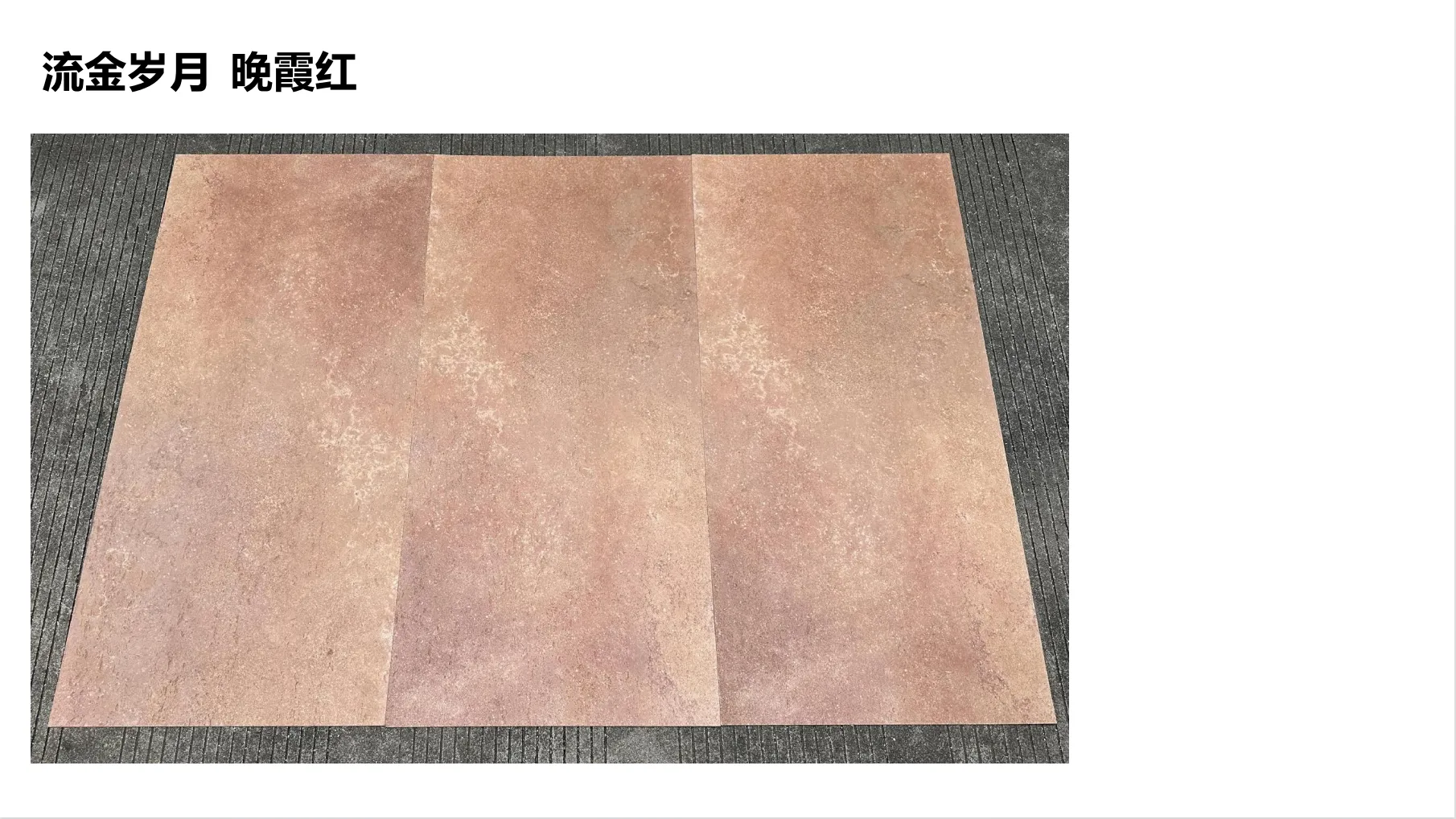
Walk into any space—a sunlit café, a bustling office, a cozy home—and the first thing that wraps around you isn't just the air, but the walls. They're more than mere dividers; they're storytellers. A wall's texture, color, and finish whisper tales of style, durability, and intent. For decades, homeowners, designers, and architects have grappled with a timeless question: which wall covering truly brings a space to life? Today, we're diving into two heavyweights in the game: MCM Flexible Stone and Vinyl Wall Coverings. And we're not just talking specs on paper—we're leaning into Golden Faith Real Photos to see how these materials perform in the wild, where light hits, fingers brush, and life unfolds.
Whether you're revamping a kitchen backsplash, designing a boutique hotel lobby, or simply want your living room to feel like "you," the choice between MCM and vinyl isn't just about aesthetics. It's about longevity, practicality, and even the subtle way a surface makes you feel when you step into a room. Let's start by getting to know each contender.
If you haven't heard of MCM Flexible Stone yet, prepare to meet a material that's redefining modern design. MCM stands for Modified Composite Material—a clever blend of natural minerals, polymers, and fibers that results in a product that's thin, lightweight, and surprisingly flexible. Think of it as nature's best textures (marble, travertine, even fair-faced concrete ) wrapped in a superpowered, adaptable shell. Unlike traditional stone slabs that are heavy and rigid, MCM bends, cuts, and installs with the ease of a much simpler material—without sacrificing that authentic, earthy vibe.
What makes MCM stand out? It's the details. Take, for example, travertine (starry green) —a MCM variant that mimics the look of natural travertine but with a twist: tiny, iridescent flecks that catch the light like stars in a dark forest. Run your hand over it, and you'll feel the subtle pits and grooves of real stone, not a flat, printed imitation. It's the kind of texture that makes you want to pause and touch, turning a wall into an experience rather than a background.
Vinyl wall coverings, on the other hand, are the old reliable of the design world. Made primarily from polyvinyl chloride (PVC), they're known for their affordability, versatility, and sheer range of patterns. Want a marble look? Vinyl can print it. A wood grain? Done. A bold geometric? Easy. Vinyl is the chameleon of wall coverings—quick to adapt to trends and budgets. But here's the catch: that adaptability often comes from a printed surface, not a material that is the texture it portrays. Run your hand over a vinyl "stone" wall, and you might feel a smooth, slightly plastic-y finish, missing the depth of the real thing.
Vinyl's popularity lies in its accessibility. It's lightweight, water-resistant, and comes in rolls that are easy to transport and install. For spaces on a tight timeline or budget, it's long been a go-to. But as design trends shift toward authenticity and sustainability, many are asking: does vinyl hold up when the camera (and real life) gets close? That's where Golden Faith Real Photos come in—they don't just show a product; they show how it lives.
Let's cut to the chase: how do these materials stack up in the beauty department? Golden Faith Real Photos are our secret weapon here, offering unfiltered snapshots of MCM and vinyl in real spaces. Let's start with texture—the unsung hero of design.
Flip through Golden Faith Real Photos of MCM installations, and one thing jumps out: depth. Take travertine (starry green) , for example. In the photos, you'll notice how sunlight plays across its surface—highlighting tiny indentations, casting soft shadows in its crevices, and making those "starry" flecks shimmer like they're embedded in the stone itself. It's not a flat image; it's a relief . Even fair-faced concrete , a more understated MCM variant, shows character: subtle variations in tone, tiny air bubbles frozen in time, the kind of "imperfections" that make a space feel alive.
MCM's magic lies in its ability to replicate natural materials at their best, minus the weight and fragility. A wall clad in MCM travertine (starry green) doesn't just look like it was quarried from a mountainside—it feels like it. In Golden Faith's photos of a boutique hotel lobby, this stone wraps around a curved wall, its flexibility allowing for seamless, organic lines that vinyl (with its rigid rolls) would struggle to match. The result? A space that feels grand yet grounded, like nature and design shook hands.
Now, look at Golden Faith Real Photos of vinyl installations, and you'll see a different story—one of consistency. A vinyl "wood grain" wall, for instance, will have perfectly repeating patterns, with each "knot" and "grain line" mirroring the one before it. In a small photo, it might pass, but up close? The repetition becomes obvious. Light doesn't play on it the same way; instead of shadows and highlights, you get a flat reflection, like looking at a high-quality sticker on a wall.
That's not to say vinyl can't be beautiful. In a modern office with sleek, minimalist vibes, a vinyl wall in a solid color or subtle geometric can look crisp and clean. But when the goal is warmth, texture, or a connection to nature, Golden Faith's photos reveal a gap. A restaurant using vinyl "stone" might look inviting in a catalog, but in real life, the lack of tactile depth can make the space feel less "lived-in" and more "staged."
Beauty fades, but durability endures—and this is where MCM and vinyl really start to diverge. Let's talk about the nitty-gritty: scratches, moisture, sunlight, and the wear and tear of daily life. Again, Golden Faith Real Photos give us a front-row seat to how these materials age.
MCM isn't just pretty—it's tough. Its composite structure resists scratches, stains, and even moisture, making it ideal for high-traffic areas like hallways, kitchens, and bathrooms. Golden Faith's photos of a family home with MCM fair-faced concrete walls tell the tale: after three years of kids, pets, and the occasional rogue soccer ball, the walls still look as sharp as the day they were installed. No peeling, no fading, just that same understated texture that gets better with time.
Sunlight is another test. Vinyl can fade when exposed to harsh UV rays over time, but MCM's color runs through the material, not just on the surface. A travertine (starry green) wall in a sunroom, as shown in Golden Faith's photos, still glows with that same deep, earthy hue after years of direct light. It's a material that ages gracefully, like a well-loved leather jacket—each small mark adds character, rather than detracting from it.
Vinyl holds up well in low-traffic, dry spaces, but it's no match for heavy use. Scratches can reveal the white PVC underneath, and moisture—think bathroom steam or a spilled glass of wine—can seep in at the seams, causing bubbling or peeling. Golden Faith Real Photos of a vinyl-clad café wall show this firsthand: after six months of daily wipe-downs and chair scrapes, the "wood grain" pattern has started to wear thin in high-contact areas, and a corner near the sink has begun to lift. It's not catastrophic, but it's a reminder that vinyl often requires more frequent replacement than MCM.
Sunlight is vinyl's other enemy. A vibrant vinyl "marble" wall in a storefront, once eye-catching, can start to look washed out after a year of direct sun, as seen in Golden Faith's comparison shots. It's a subtle fade at first, but over time, it can make a space feel dated before its time.
Installing wall coverings shouldn't feel like a second job. Both MCM and vinyl aim to be user-friendly, but their approaches differ—with big implications for time, cost, and even the final look.
MCM is thin (usually 3-5mm) and lightweight, which means it's easier to handle than traditional stone slabs. No need for heavy machinery or reinforced walls here. But because it's a textured material, installation requires a steady hand. The panels need to be aligned perfectly to maintain the natural flow of the pattern—especially important for stones like travertine (starry green) , where the "star" flecks should look random, not forced.
Golden Faith's photos of MCM installations highlight this precision. A boutique hotel in Tokyo used MCM to create a curved accent wall, and the result is seamless—no visible seams, no uneven edges. It took a skilled installer a day longer than vinyl would have, but the payoff is a wall that looks like it was carved from a single block of stone. For DIYers, MCM might be a stretch, but for professionals, it's a manageable project with stunning results.
Vinyl is the speed demon of installations. Rolls are lightweight, and as long as the wall is smooth and clean, you can have a room covered in a day. Peel-and-stick options make it even simpler for DIYers. But here's the catch: seams. Vinyl rolls are typically 2-3 feet wide, which means multiple seams running up and down the wall. In Golden Faith's photos, these seams are often visible, especially in direct light. Over time, they can lift or collect dust, breaking the illusion of a "seamless" surface.
Another issue? Vinyl's flexibility works against it here. If the wall isn't perfectly flat, the vinyl can bubble or warp, creating unsightly bumps. A restaurant in Chicago, as shown in Golden Faith's photos, opted for vinyl to save time during a renovation, but within a month, a section of wall behind the bar had bubbled due to moisture—requiring a patch job that's still visible today.
In 2024, sustainability isn't a "nice-to-have"—it's a must. Let's break down how MCM and vinyl stack up when it comes to the environment.
MCM gets major points here. Its production uses fewer natural resources than mining and cutting real stone, and its lightweight design reduces transportation emissions. Many MCM products, including fair-faced concrete variants, are also low in VOCs (volatile organic compounds), meaning they don't off-gas harmful chemicals into your space. Best of all, MCM is recyclable at the end of its long life, closing the loop on waste.
Golden Faith's photos of LEED-certified buildings often feature MCM walls, and it's no coincidence. Architects and designers are increasingly choosing materials that align with eco-friendly goals, and MCM fits the bill. A school in Portland, for example, used MCM travertine (starry green) in its classrooms, not just for its durability but for its low environmental impact. Parents and teachers alike noted the air felt cleaner, and the walls added a calming, nature-inspired vibe that vinyl simply couldn't match.
Vinyl's sustainability story is more complicated. Most vinyl is made from PVC, a plastic derived from petroleum—a non-renewable resource. Production can release toxic chemicals, and while some vinyl is recyclable, the reality is that much of it ends up in landfills, where it can take centuries to break down. Low-VOC vinyl options exist, but they're often pricier, eroding one of vinyl's main advantages: affordability.
Golden Faith's photos of "green" spaces rarely feature vinyl as the star. Instead, it's often used as a budget-friendly backup in areas where sustainability takes a backseat to cost. For businesses and homeowners prioritizing eco-conscious design, this can be a dealbreaker.
Let's talk money. Vinyl is often marketed as the "budget" option, but is that really the case when you factor in longevity? Let's crunch the numbers.
Vinyl is cheaper upfront: $2-$5 per square foot, compared to MCM's $8-$15 per square foot. Installation costs are lower too, since vinyl is easier to install. But here's the kicker: vinyl typically lasts 5-7 years before needing replacement, while MCM can go 20+ years with minimal maintenance. Do the math: over 20 years, vinyl would need to be replaced 2-3 times, adding up to $12-$30 per square foot (including installation). MCM, meanwhile, is a one-and-done investment at $8-$15 per square foot. Suddenly, that "budget" vinyl doesn't look so cheap.
"Clients often ask me, 'Why pay more for MCM?' I show them Golden Faith's photos of a restaurant that used vinyl 10 years ago versus one that used MCM. The MCM walls still look brand-new; the vinyl ones? They've been replaced twice, and the total cost is triple what MCM would have been." — Maria Gonzalez, Interior Designer
| Feature | MCM Flexible Stone | Vinyl Wall Coverings |
|---|---|---|
| Material | Modified composite (natural minerals + polymers) | PVC-based with printed patterns |
| Texture | Authentic, 3D depth (e.g., travertine (starry green) has embedded flecks) | Flat, printed texture; smooth to the touch |
| Durability | 20+ years; resists scratches, moisture, fading | 5-7 years; prone to scratches, fading, and peeling |
| Installation | Requires skilled labor; seamless on curves | DIY-friendly; visible seams, prone to bubbling |
| Sustainability | Low VOC, recyclable, reduces natural resource use | PVC-based, non-biodegradable, higher carbon footprint |
| Cost (20-Year Lifespan) | $8-$15/sq ft (one-time cost) | $12-$30/sq ft (replacement costs included) |
| Best For | High-traffic areas, eco-conscious spaces, projects prioritizing texture and longevity | Short-term renovations, budget projects, low-traffic areas with trendy designs |
Numbers and tables tell part of the story, but real life tells the rest. Let's look at two spaces featured in Golden Faith Real Photos —one using MCM, the other vinyl—and see how they've fared.
Café Luna, a cozy spot in Denver, wanted walls that felt like a mountain retreat. They chose MCM travertine (starry green) for their main dining area. Three years later, Golden Faith's follow-up photos show walls that still glow with that same earthy, star-flecked charm. The owner, Mia, says, "We get compliments daily. Families love how the kids can lean against the walls without us panicking about scratches. And in the winter, when the sun streams in, those green tones make the whole place feel warm—like sitting by a forest fire." Even the barista, who wipes down the walls daily, notes, "They clean up so easy. Coffee splatters? A damp cloth takes them right off. I don't think vinyl would've held up this well."
Tech startup ByteBurst needed a trendy office on a tight budget, so they went with vinyl "wood grain" walls. Golden Faith's photos from year one look sleek: the walls match the company's "modern cabin" vibe. But by year three? The seams are visible, a corner near the AC unit has warped from moisture, and the "wood grain" has faded in the sunlit conference room. "We're already planning to replace them," admits office manager Jake. "We saved money upfront, but now we're paying twice as much to fix the issues. If we'd gone with MCM, we could've invested that money in better chairs or a coffee machine—you know, things that make employees happy."
At the end of the day, there's no "one size fits all" answer—but there are clear scenarios where one material shines brighter than the other. Choose MCM Flexible Stone if:
Choose Vinyl Wall Coverings if:
Walls are more than just backdrops—they're part of the memories we make. A child's first steps, a first date, a big business deal—these moments unfold against the texture of our walls. When you choose MCM Flexible Stone , you're choosing a material that will grow with those memories, aging gracefully and adding depth to every story. When you choose vinyl, you're choosing convenience and trendiness, but at the cost of longevity and authenticity.
Golden Faith Real Photos don't lie. They show us that MCM isn't just a wall covering—it's an investment in beauty, durability, and sustainability. Vinyl has its place, but for spaces that matter—spaces where life happens—MCM is the clear winner. So the next time you stand in front of a blank wall, ask yourself: what story do I want to tell? And choose the material that will tell it best.
Recommend Products












