
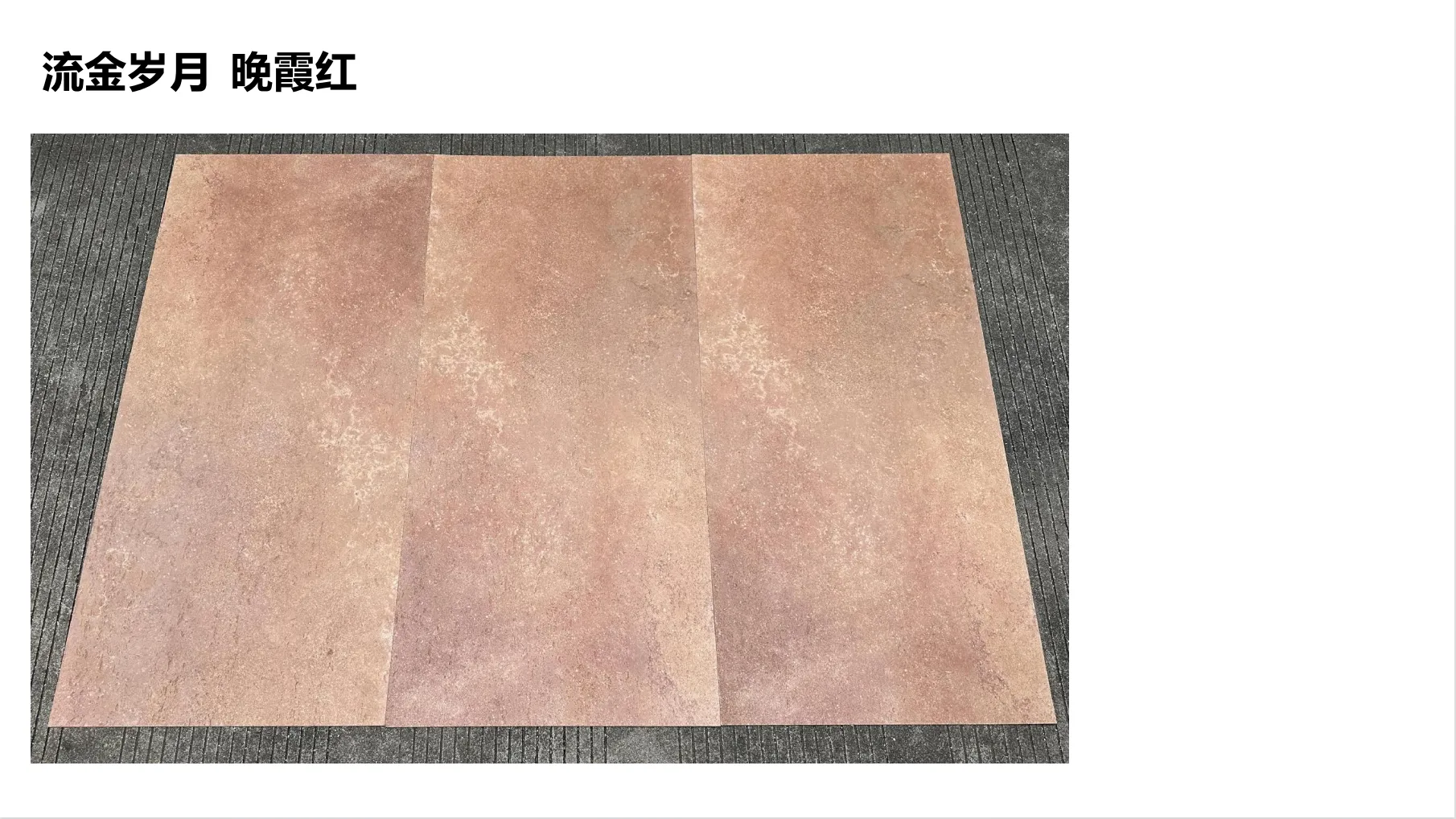
Walk into any design studio, and you'll likely find a table cluttered with samples—rough-hewn stone, sleek composites, weathered wood, and everything in between. For architects, interior designers, and homeowners alike, choosing the right material is more than a practical decision; it's about crafting a space that feels alive, that tells a story. But here's the catch: that story often comes with a price tag. This is where the debate between innovative MCM (Modified Composite Material) solutions and timeless natural stone—like the coveted Golden Faith or Travertine (Starry Green) —takes center stage. Today, we're diving deep into this showdown, not just to list facts, but to uncover which material truly delivers on cost-effectiveness when you factor in beauty, durability, and long-term value.
Let's start with a scenario we've all encountered (or will): a client dreams of a restaurant with walls that evoke the warmth of ancient stone, but their budget can't stretch to importing marble from Italy. Or a homeowner who wants their backyard patio to withstand harsh winters without requiring annual sealing. These are the moments when material choice stops being about aesthetics alone and becomes a puzzle of trade-offs. MCM, with its flexible stone technology, and natural stone, with its centuries-old legacy, each bring unique strengths to the table. But which one comes out on top when you add up every dollar spent—from initial purchase to years of maintenance?
If you're new to the term, MCM might sound like just another industry buzzword. But spend five minutes with a sample of MCM Flexible Stone , and you'll realize it's a game-changer. Imagine a material that mimics the texture of travertine or rustic slate but weighs a fraction of the real thing, bends without cracking, and installs in half the time. That's MCM in a nutshell: a blend of natural minerals, polymers, and fibers engineered to capture the look of stone, wood, or metal—without the drawbacks of traditional materials.
Take the MCM Project Board Series or 3D Printing Series , for example. These lines aren't just about replication; they're about reimagining what's possible. Want a wall that curves like a wave? MCM's flexibility makes it feasible, whereas natural stone would require custom cutting (and a small fortune). Or consider foamed aluminium alloy boards in vintage silver or gold—they offer the luxe sheen of metal without the risk of corrosion or the need for heavy structural support. MCM isn't trying to replace natural stone; it's expanding the toolkit for designers who refuse to choose between beauty and practicality.
Now, let's talk about the elephant in the room: natural stone. There's a reason it's been used in architecture for millennia, from the pyramids of Giza to the marble floors of the Taj Mahal. Natural stone isn't just a material—it's a piece of the earth, with unique veining, color variations, and a tactile quality that synthetic alternatives struggle to match. Golden Faith , for instance, gets its name from the warm, honeyed tones that shift with light, making every slab one of a kind. Travertine (Starry Green) dazzles with flecks of iridescent color, like a night sky trapped in stone. These aren't just surfaces; they're conversation starters.
But here's the reality check: that uniqueness comes with costs. Natural stone is heavy—really heavy. A single slab of boulder slab can weigh hundreds of pounds, requiring reinforced structures and specialized labor to install. Then there's the variability: order two "identical" pieces of Travertine (Starry Red) , and you might end up with one that's deep crimson and another that leans pink. For some projects, that's part of the charm. For others—like a commercial space needing uniform wall panels—it's a logistical nightmare.
Let's cut to the chase: cost-effectiveness isn't just about the sticker price. It's about the total cost of ownership—the initial investment, installation fees, maintenance expenses, and even replacement costs down the line. To make this tangible, we'll compare MCM Flexible Stone (a top contender in the MCM lineup) with two popular natural stone options: Golden Faith (a premium limestone variant) and Travertine (Starry Green) (a sought-after travertine type). We'll break it down by category, so you can see exactly where your money goes.
At first glance, natural stone often seems pricier—and for good reason. Golden Faith can cost anywhere from $80 to $150 per square foot, depending on rarity and sourcing. Travertine (Starry Green) is slightly more affordable, ranging from $60 to $120 per square foot, but still a significant investment. MCM Flexible Stone, on the other hand, typically clocks in at $30 to $70 per square foot. That's a 30-50% savings upfront for many projects.
But wait—there's more to the initial cost than the material itself. Natural stone requires specialized shipping (those heavy slabs need reinforced trucks) and often import fees if sourced internationally. MCM, being lightweight (think 3-5 pounds per square foot vs. 15-20 pounds for natural stone), slashes shipping costs by up to 60%. For a 1,000-square-foot project, that's a difference of thousands of dollars before installation even begins.
Installing natural stone is not a DIY weekend project. It requires skilled masons, specialized tools, and often structural modifications. For example, hanging Golden Faith slabs on an interior wall might require additional framing to support the weight, adding $2,000-$5,000 to a mid-sized project. Travertine, with its porous surface, needs to be sealed before installation to prevent staining during the process—another $300-$500 for sealing materials and labor.
MCM Flexible Stone, by contrast, is a installer's dream. Its flexibility means it can be cut with standard tools, and its light weight eliminates the need for structural reinforcement. Most MCM panels come with interlocking systems or adhesive backing, allowing installation teams to cover large areas in a fraction of the time. On average, installation costs for MCM are 40-60% lower than natural stone. For that same 1,000-square-foot project, you're looking at $5,000-$8,000 for natural stone installation vs. $2,000-$4,000 for MCM.
Here's where natural stone's charm becomes a financial commitment. Natural stone is porous, which means it stains easily. A spilled glass of red wine on Travertine (Starry Blue) can leave a permanent mark if not treated immediately. To prevent this, natural stone requires regular sealing—every 1-3 years for indoor use, and every 6 months to a year for outdoor spaces like patios or pool decks. Sealing products cost $20-$50 per bottle, and professional sealing services add $1-$3 per square foot each time. Over 10 years, that's $10,000-$30,000 in maintenance for a 1,000-square-foot area.
MCM Flexible Stone, on the other hand, is engineered to resist stains, moisture, and UV damage. Most MCM products come pre-sealed with a protective coating that lasts 10+ years. Even better: if a panel gets scratched or damaged, you can replace just that panel instead of an entire slab. Maintenance? A quick wipe with soap and water. Over a decade, MCM maintenance costs hover around $500-$1,000—less than 10% of natural stone's upkeep.
Natural stone is undeniably durable—when cared for properly. A well-maintained marble floor can last a century. But here's the caveat: "well-maintained" is the key phrase. Natural stone is prone to chipping, cracking, and erosion over time, especially in high-traffic areas or harsh climates. Freeze-thaw cycles can cause Golden Faith to spall (flake), and salt from de-icing can eat away at travertine's surface. MCM, by contrast, is designed to withstand the elements. Its composite structure resists cracking, fading, and impact, making it ideal for both indoor and outdoor use. In independent tests, MCM panels have shown minimal wear after 20+ years of exposure to rain, snow, and UV rays—all without the need for special treatments.
This is the million-dollar question: does MCM look "fake"? The short answer: no—at least, not anymore. Modern MCM technology uses high-definition printing and 3D texturing to replicate the look and feel of natural stone with stunning accuracy. Run your hand over an MCM Flexible Stone panel designed to mimic Travertine (Starry Green) , and you'll feel the same pitted surface, the same subtle color variations. Some MCM lines even incorporate real stone particles into the mix, enhancing authenticity.
But here's where MCM pulls ahead in versatility: it can do things natural stone can't. Want a curved wall clad in "stone"? MCM bends to your design. Need a lightweight facade for a high-rise? MCM panels weigh 70% less than natural stone, reducing structural load. Foamed Aluminium Alloy Board (Vintage Silver) , another MCM innovation, combines the industrial chic of metal with the flexibility of composite, opening doors to modern designs that natural stone simply can't accommodate.
| Category | MCM Flexible Stone | Natural Stone (Golden Faith/Travertine) |
|---|---|---|
| Initial Material Cost (per sq. ft.) | $30-$70 | $60-$150 |
| Installation Cost (per sq. ft.) | $2-$4 | $5-$10 |
| Annual Maintenance Cost (per sq. ft.) | $0.05-$0.10 | $1-$3 |
| Weight (per sq. ft.) | 3-5 lbs | 15-20 lbs |
| Durability (Expected Lifespan) | 20+ years (minimal wear) | 50+ years (with heavy maintenance) |
| Design Flexibility | Curved surfaces, lightweight applications, custom colors | Limited by weight and brittleness; color variation can be unpredictable |
Numbers tell a story, but real projects bring that story to life. Let's look at two case studies to see how MCM and natural stone perform in the wild.
A small café in Portland wanted to create an "alpine lodge" vibe with stone walls, but their budget was tight—$25,000 for materials and installation. Initially, they considered Golden Faith stone, but quickly realized the numbers didn't add up: 800 square feet of Golden Faith would cost $80,000+ (materials + installation + sealing). Instead, they opted for MCM Flexible Stone panels designed to mimic Golden Faith . Total cost? $18,000, including installation. Three years later, the walls still look brand-new, with no signs of fading or wear. The owner estimates they've saved $5,000+ in maintenance alone.
A homeowner building a heritage-style mansion in the countryside insisted on natural stone for the fireplace surround—a focal point meant to evoke old-world charm. They chose Travertine (Starry Red) for its rich color and unique veining. The total cost for materials and installation? $35,000. Was it worth it? For the homeowner, yes—the fireplace has become the centerpiece of their living room, a conversation starter that feels irreplaceable. They accept the annual sealing costs ($500/year) as part of preserving that legacy.
The takeaway? MCM is the clear choice for projects where budget, installation ease, and low maintenance are priorities—think commercial spaces, rental properties, or modern homes. Natural stone shines in projects where uniqueness, heritage, and "statement value" take precedence—like luxury homes, historical restorations, or spaces where cost is secondary to emotional impact.
At the end of the day, cost-effectiveness isn't just about dollars and cents. It's about regret—or the lack thereof. Will you look at your MCM walls in five years and wish you'd splurged on natural stone? Or will you breathe easy knowing you saved money without sacrificing beauty? For most projects, MCM offers the best of both worlds: the aesthetic appeal of natural stone with the practicality of modern engineering. It's a material that lets you dream big without the financial stress, that turns "I can't afford that" into "Let's make it happen."
Natural stone, of course, will always have its place. There's a magic in knowing your countertop was quarried from a mountain, that your floor has a geological history as rich as your own. But for the rest of us—designers, builders, and homeowners balancing vision with reality—MCM is a revolution. It's not just a material; it's a tool that empowers creativity, that lets more people bring their dream spaces to life.
When you add up initial costs, installation fees, maintenance expenses, and long-term durability, MCM Flexible Stone emerges as the most cost-effective choice for most projects. It's not that natural stone is "bad"—it's just that MCM solves too many of natural stone's pain points to ignore. From its lightweight design to its minimal upkeep, MCM delivers beauty without the burden, allowing you to invest in other aspects of your project—like lighting, furniture, or that dream kitchen island.
So the next time you're staring at that table of samples, remember: cost-effectiveness isn't about choosing the cheapest option. It's about choosing the option that gives you the most value—today, tomorrow, and for decades to come. And in that race, MCM isn't just a competitor; it's changing the game.
Recommend Products












